


Choosing the right pool plaster contractors can make the difference between a beautiful, durable pool finish that lasts decades and a costly mistake that requires early replacement. Pool plastering is both an art and a science, requiring specialized knowledge of cementitious materials, proper surface preparation, application techniques, and curing protocols. Whether you're building a new pool or resurfacing an existing one in Los Angeles, understanding what sets exceptional contractors apart from average ones will protect your investment and ensure you get the smooth, watertight finish your pool deserves.
Understanding Pool Plastering and Why Contractor Selection Matters
Pool plastering serves as the final waterproof barrier between your pool's structural shell and the water. This cementitious coating must withstand constant water exposure, chemical treatment, temperature fluctuations, and physical wear while maintaining a smooth, attractive surface.
The complexity of pool plastering demands specialized expertise. Unlike standard stucco or concrete work, pool plaster contractors must understand hydraulic cement chemistry, aggregate selection, water-to-cement ratios, and underwater curing processes. According to the ASTM C926 standard, which governs Portland cement-based plaster application, proper surface preparation and application technique directly impact finish longevity and performance.
What Pool Plaster Contractors Actually Do
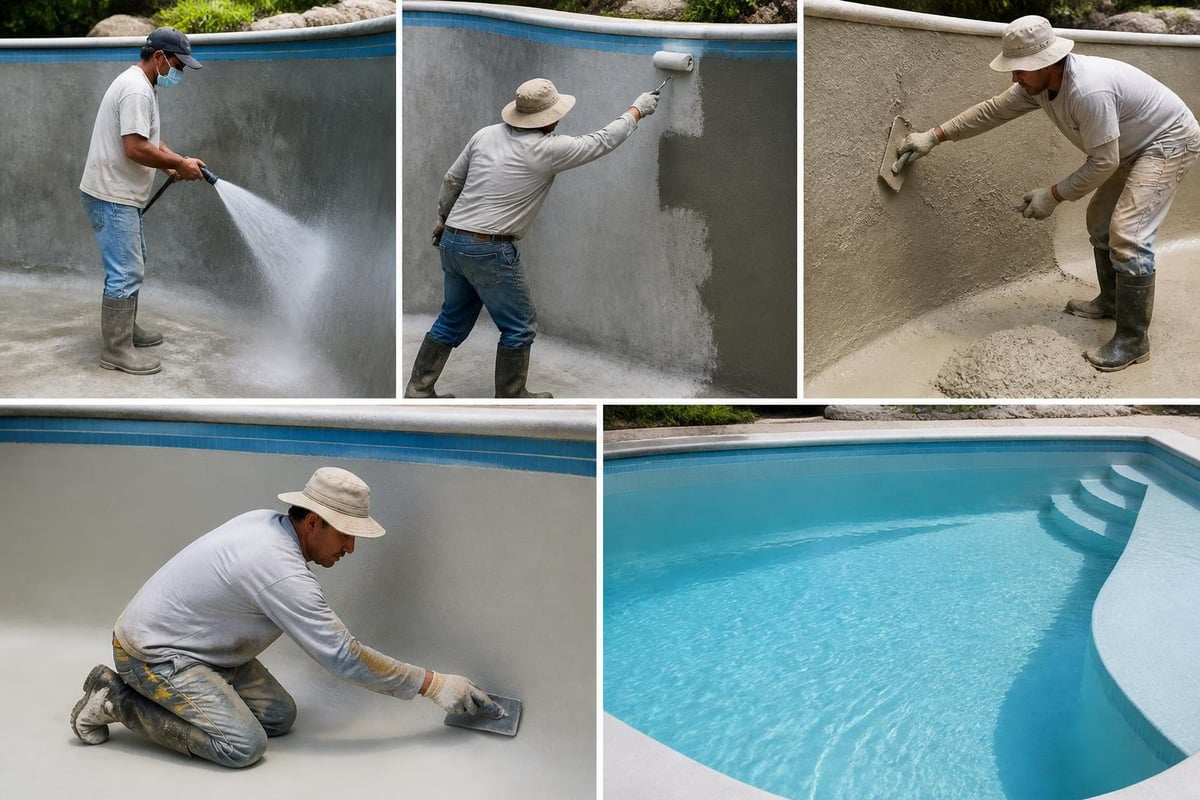
Professional pool plaster contractors handle every phase of the interior finish installation:
- Surface assessment and preparation: Evaluating the existing gunite or shotcrete shell, repairing structural cracks, and creating the proper profile for plaster adhesion
- Material selection and mixing: Choosing appropriate plaster formulations based on water chemistry, climate, and aesthetic goals
- Application: Hand-troweling or machine-spraying plaster to achieve uniform thickness and texture
- Finishing: Creating the desired surface texture, from smooth to exposed aggregate
- Start-up guidance: Providing detailed instructions for the critical first 28 days of curing
The PHTA-12 standard established by the Pool & Hot Tub Alliance outlines industry best practices for non-structural cementitious interior finishes, providing a framework that qualified pool plaster contractors follow to ensure proper installation.
Types of Pool Plaster Finishes and Material Options
Pool plaster contractors offer several finish types, each with distinct characteristics, costs, and longevity expectations. Understanding these options helps you make informed decisions aligned with your budget and aesthetic preferences.
Standard White Plaster
Traditional white plaster combines white Portland cement, white marble dust or sand, and water. This classic finish offers the most affordable option and creates a bright, clean appearance that reflects sunlight beautifully.
| Feature | Details |
|---|---|
| Lifespan | 7-10 years with proper maintenance |
| Cost | $3-$5 per square foot |
| Appearance | Bright white, smooth or slightly textured |
| Maintenance | Regular brushing required, susceptible to staining |
Colored and Quartz Plaster
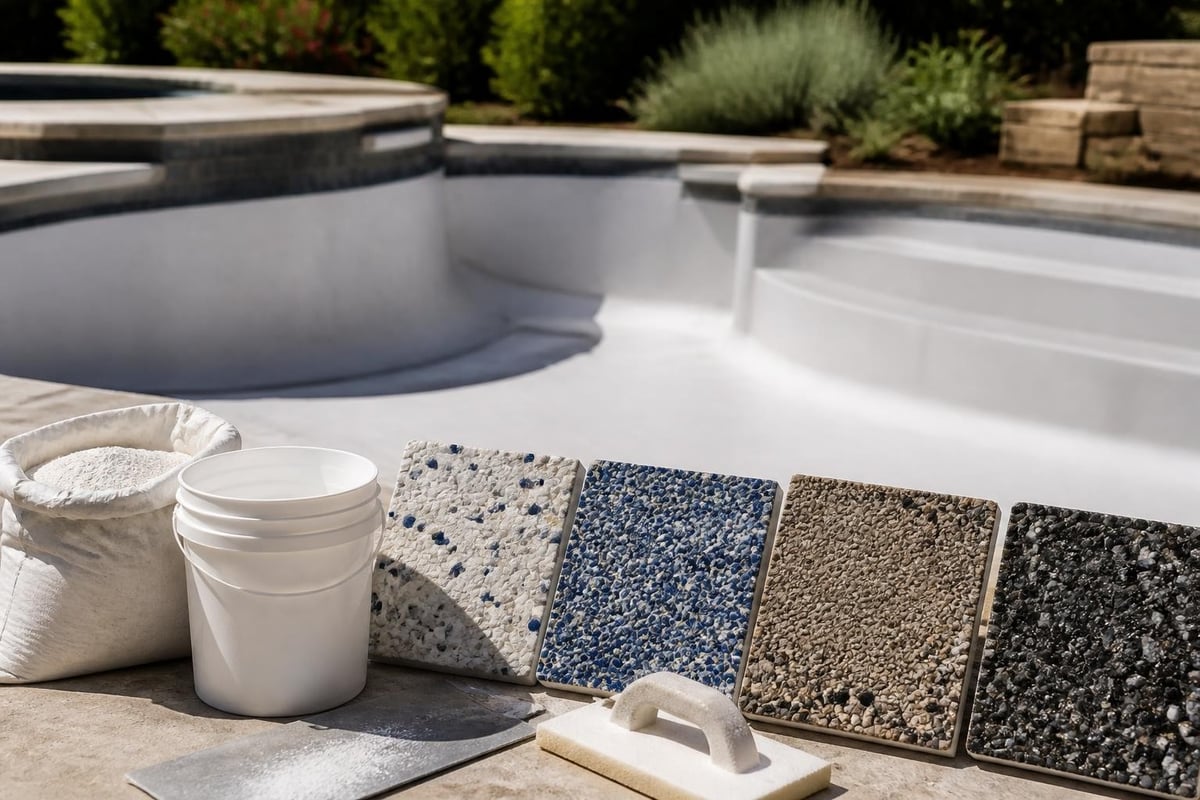
Colored plasters incorporate pigments and sometimes quartz aggregates for enhanced durability and aesthetic variety. Quartz finishes use crushed quartz crystals mixed with white cement and color, creating a harder, more stain-resistant surface.
- Extended lifespan of 10-15 years
- Greater resistance to chemicals and staining
- Wide range of color options from subtle blues to dark grays
- Enhanced texture that hides imperfections better than white plaster
Pebble and Aggregate Finishes
Premium aggregate finishes expose natural pebbles, glass beads, or mixed aggregates for the most durable and visually distinctive option. Experienced pool plaster contractors carefully select aggregate sizes and colors to achieve the desired aesthetic.
These finishes offer significant advantages:
- 15-20 year lifespan when properly installed
- Superior resistance to chemical etching and staining
- Natural, textured appearance with depth and variation
- Minimal maintenance requirements compared to traditional plaster
When planning an in-ground pool construction project, discussing finish options early helps coordinate timeline and budget expectations.
How to Evaluate and Select Pool Plaster Contractors
Finding qualified pool plaster contractors in Los Angeles requires careful vetting. The contractor you choose will directly impact your pool's appearance, functionality, and longevity for years to come.
Essential Qualifications and Credentials
Start with non-negotiable baseline requirements:
- Valid California contractor's license: Verify C-35 (lathing and plastering) or B (general building) license through CSLB
- Active insurance: Both general liability and workers' compensation coverage
- Industry affiliations: Membership in organizations like the National Plasterers Council demonstrates commitment to professional standards
- Specialized experience: Minimum 5 years specifically in pool plastering, not just general concrete or stucco work
- References: Recent projects with verifiable homeowner contacts
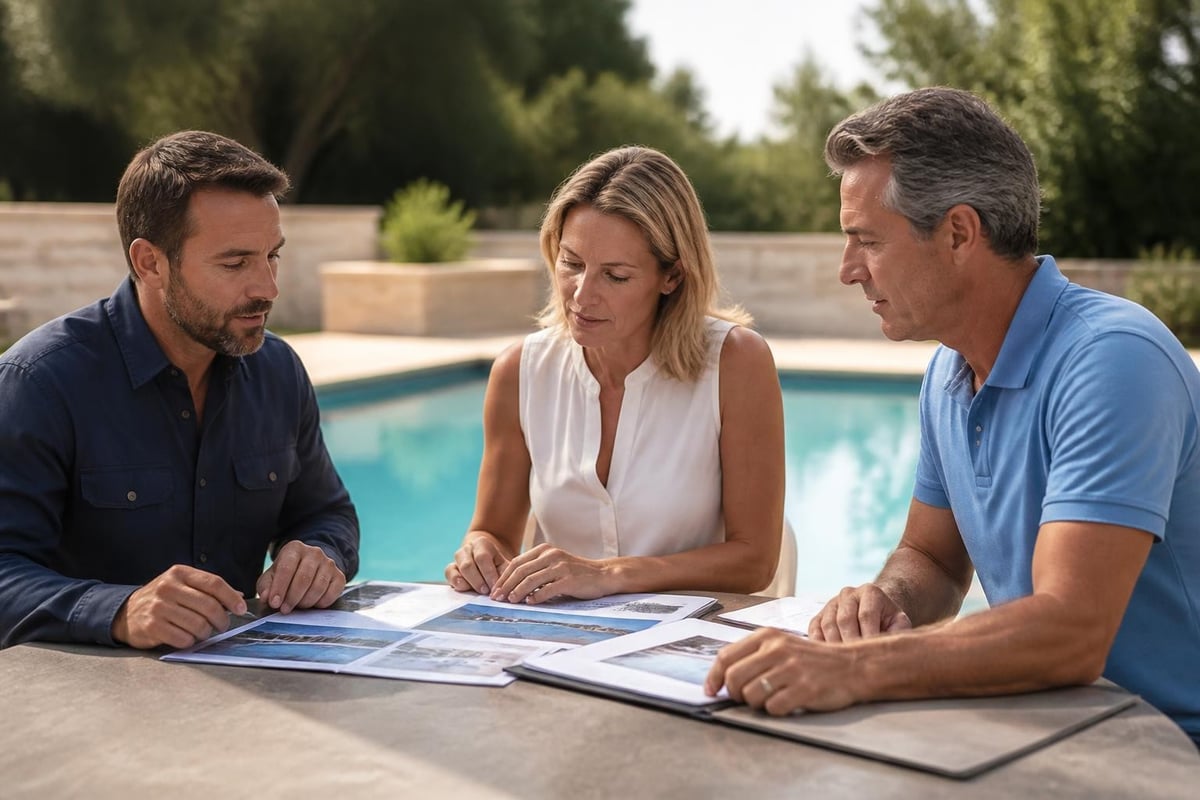
Questions to Ask During Contractor Interviews
The right questions reveal expertise and work standards:
Technical questions:
- What surface preparation steps do you perform before plastering?
- How do you determine proper plaster thickness for my pool?
- What water chemistry guidelines do you provide for start-up and long-term maintenance?
- How do you handle weather challenges during application and curing?
Process questions:
- How long will the project take from start to finish?
- Who will be on-site supervising the application?
- What warranties do you offer on materials and workmanship?
- How do you handle punch list items or concerns after completion?
The Pool Plastering Process: What to Expect
Understanding the complete plastering process helps homeowners recognize quality work and identify potential shortcuts that compromise results. Professional pool plaster contractors follow systematic procedures that ensure proper adhesion, uniform coverage, and long-term durability.
Pre-Application Preparation Phase
Preparation consumes approximately 40-50% of total project time but determines finish success:
Surface preparation steps include:
- Draining the pool completely and allowing the shell to dry
- Pressure washing to remove debris, oils, and loose material
- Acid washing or sandblasting to create proper surface profile
- Repairing structural cracks with appropriate epoxy or hydraulic cement
- Installing depth markers, returns, and other fixtures
- Masking tile lines, coping, and adjacent surfaces
The NPC Pool Interior Finish Disclosure provides detailed guidance on preparation requirements and homeowner expectations that qualified contractors should review with clients.
Application Day Coordination
Pool plaster application requires precise timing and coordination. Most residential pools need completion in a single continuous pour to avoid cold joints and visible seams.
Timeline for a typical 500-square-foot pool:
| Phase | Duration | Critical Factors |
|---|---|---|
| Bond coat application | 30-60 minutes | Must remain tacky for plaster application |
| Plaster mixing and delivery | Continuous | Fresh batches every 20-30 minutes |
| Hand troweling | 4-6 hours | Team of 3-5 skilled applicators |
| Final finishing | 2-3 hours | Creating desired texture and smoothness |
| Initial water fill | Begins immediately | Continuous fill to prevent drying |
Post-Application Curing and Start-Up
The 28-day curing period determines final finish quality and longevity. Pool plaster contractors should provide detailed written instructions covering:
- Immediate water fill procedures (continuous fill within 15 minutes of completion)
- Daily brushing requirements for the first 10 days
- Chemical balance parameters during curing
- Equipment operation restrictions
- Temperature maintenance guidelines
Scientific research on mortar and plaster degradation mechanisms demonstrates how improper curing leads to microcracking, efflorescence, and premature failure, making contractor guidance during this phase critical.
Common Pool Plaster Problems and How Good Contractors Prevent Them
Even with quality materials, poor installation technique causes preventable failures. Understanding common issues helps homeowners recognize warning signs and hold contractors accountable.
Surface Defects and Application Errors
Delamination occurs when plaster separates from the underlying gunite shell, typically caused by:
- Inadequate surface preparation or contamination
- Improper bond coat application or timing
- Insufficient plaster thickness (minimum 3/8 inch required)
- Premature drying before water fill completion
Discoloration and mottling appear as uneven color patterns across the pool surface, resulting from:
- Inconsistent mixing ratios between batches
- Varying trowel pressure or technique
- Hard water or calcium deposits during curing
- Chemical imbalance during the first weeks
Structural Compatibility Issues
The American Concrete Institute’s guidance on pool plaster and cementitious finishes emphasizes the importance of thermal expansion compatibility between the structural shell and interior finish. Experienced pool plaster contractors account for:
- Differential movement between gunite and plaster during temperature cycles
- Hydration heat management during large pours
- Crack isolation at stress concentration points
Quality contractors incorporate control joints, proper reinforcement coverage, and appropriate admixtures to minimize cracking risk.
Cost Factors and Budget Planning for Pool Plastering
Pool plastering costs vary significantly based on finish type, pool size, access difficulty, and regional labor rates. Los Angeles homeowners should expect premium pricing due to higher labor costs and stringent code requirements.
Price Ranges by Finish Type
| Finish Type | Material Cost per SF | Labor Cost per SF | Total per SF | 500 SF Pool Total |
|---|---|---|---|---|
| White plaster | $1.50-$2.50 | $2.00-$3.00 | $3.50-$5.50 | $1,750-$2,750 |
| Colored/quartz | $3.00-$4.50 | $2.50-$3.50 | $5.50-$8.00 | $2,750-$4,000 |
| Pebble finish | $5.00-$8.00 | $3.00-$4.00 | $8.00-$12.00 | $4,000-$6,000 |
| Premium aggregate | $8.00-$12.00 | $3.50-$5.00 | $11.50-$17.00 | $5,750-$8,500 |
Additional Cost Factors
Beyond base square footage pricing, several factors increase project costs:
- Preparation extent: Significant crack repair or calcium removal adds $500-$2,000
- Access difficulty: Limited equipment access requiring manual material transport increases labor 15-30%
- Tile replacement: Damaged waterline tile replacement runs $15-$40 per linear foot
- Drain and fill: Water disposal and refill fees typically add $200-$500
- Rushed timeline: Expedited scheduling may incur 10-20% premium
Value-based decision making means weighing initial costs against longevity. A $6,000 pebble finish lasting 18 years costs $333 annually, while a $2,500 white plaster finish lasting 8 years costs $312 annually, making the premium finish comparably affordable when accounting for lifespan.
Water Chemistry and Long-Term Plaster Maintenance
Even perfectly installed plaster requires proper water chemistry maintenance to achieve its expected lifespan. Pool plaster contractors should educate homeowners on the relationship between chemical balance and surface longevity.
Critical Water Balance Parameters
The Langelier Saturation Index (LSI) measures water's tendency to dissolve or deposit calcium, directly impacting plaster durability:
Target ranges for plaster pools:
- pH: 7.4-7.6
- Total alkalinity: 80-120 ppm
- Calcium hardness: 200-400 ppm
- LSI: -0.3 to +0.3 (balanced, neither aggressive nor scaling)
The EPA’s WaterSense guidance emphasizes proper chemical management for both water conservation and equipment longevity, principles that apply equally to pool plaster preservation.
Routine Maintenance Practices
Weekly maintenance requirements:
- Test and adjust pH and alkalinity
- Brush entire pool surface to prevent calcium buildup
- Vacuum debris that could stain plaster
- Monitor and maintain proper chlorine levels (1-3 ppm)
- Check for early signs of etching or staining
Seasonal considerations in Los Angeles include managing higher evaporation rates during summer months, which concentrate minerals and require more frequent water balance adjustments. Our pool remodeling resources provide additional maintenance guidance.
Recognizing When Replastering Is Needed
Plaster replacement becomes necessary when:
- Surface roughness makes the pool uncomfortable for bare feet
- Widespread staining that cannot be removed with acid washing
- Visible aggregate showing through worn plaster areas
- Structural cracks that hold algae despite chemical treatment
- Etching and pitting creating rough, porous surface texture
Most pools need replastering every 10-15 years depending on finish type, water chemistry history, and usage patterns. Homeowners exploring pool remodeling options can often upgrade to more durable finishes during replastering.
Regional Considerations for Los Angeles Pool Owners
Los Angeles presents unique challenges and opportunities for pool plastering projects. Local pool plaster contractors must navigate specific environmental, regulatory, and logistical factors that affect project execution.
Climate Impact on Application and Curing
Southern California's Mediterranean climate offers ideal conditions for most of the year but creates challenges during temperature extremes:
Summer considerations (June-September):
- High temperatures accelerate plaster curing, requiring faster work pace
- Low humidity increases evaporation risk during application
- Strategic scheduling for early morning starts maximizes workable time
- Enhanced water curing protocols prevent premature drying
Winter considerations (December-February):
- Cooler temperatures extend working time but slow curing
- Occasional rain requires weather monitoring and flexible scheduling
- Nighttime temperature drops may require heated water during initial fill
Permitting and Code Compliance
Los Angeles County and individual municipalities enforce specific requirements:
- Building permits: Major pool replastering typically doesn't require permits, but structural repairs might
- Water discharge: Drain water disposal must comply with local ordinances
- Contractor licensing: C-35 or B license required, with CSLB verification essential
- Safety barriers: Existing pool barrier compliance review during major remodels
Working with established contractors familiar with local jurisdictions streamlines the process. You can find experienced professionals through AM Builds CA who understand Los Angeles-specific requirements.
Warranty, Guarantee, and Contractor Accountability
Reputable pool plaster contractors stand behind their work with clear warranty terms and responsive customer service. Understanding what warranties cover helps homeowners evaluate contractor proposals and protect their investment.
Standard Warranty Components
Material warranties from manufacturers typically cover:
- White plaster: 1-2 years against delamination and structural defects
- Colored/quartz finishes: 2-3 years material performance
- Pebble finishes: 3-5 years against material failure
- Exclusions: Chemical damage, improper maintenance, physical abuse
Workmanship warranties from contractors should guarantee:
- Minimum 1-year coverage on application quality
- Delamination repair or replacement
- Significant color variation correction
- Structural defect remediation
Red Flags in Warranty Terms
Avoid contractors who:
- Offer no written warranty documentation
- Exclude "cosmetic" issues without clear definition
- Require specific maintenance products or services as warranty conditions
- Provide warranty periods significantly shorter than industry standards
- Include vague language about what constitutes warranty-voiding behavior
Documentation requirements protect both parties. Photograph the pool before, during, and after work. Maintain records of all chemical testing and maintenance. Save all contractor communications regarding specifications and promises.
Questions Homeowners Should Ask About Specific Projects
Beyond general contractor qualifications, ask project-specific questions that reveal how pool plaster contractors approach your unique situation.
For New Pool Construction
- How does the plastering timeline integrate with overall construction schedule?
- What coordination is needed between the shotcrete crew and plaster team?
- How long after gunite application should we wait before plastering?
- What factors determine the recommended finish type for my pool design?
For Pool Resurfacing Projects
Assessment questions:
- What is causing my current plaster failure?
- Do I have structural issues that need addressing before replastering?
- Can my existing plumbing and fixtures be preserved?
- Should I consider equipment or feature upgrades while the pool is drained?
Scope questions:
- Does my tile need replacement or can it be salvaged?
- Should we acid wash or sandblast for surface preparation?
- How will you protect surrounding hardscape and landscaping?
- What drainage and water refill logistics need planning?
Homeowners in areas from Studio City to Pacific Palisades benefit from contractors who understand neighborhood-specific access challenges and HOA requirements.
Modern Innovations in Pool Plastering Technology
The pool plastering industry continues evolving with new materials, application techniques, and durability enhancements. Progressive pool plaster contractors stay current with innovations that deliver better value to homeowners.
Advanced Material Formulations
Recent developments include:
Polymer-modified plasters that incorporate acrylic or latex additives for:
- Enhanced flexibility reducing crack susceptibility
- Improved adhesion to existing surfaces
- Greater resistance to chemical attack
- Extended color stability and brightness retention
Nano-technology additives creating:
- Denser, less porous surface structure
- Superior stain resistance
- Reduced calcium scaling tendency
- Antimicrobial properties inhibiting algae growth
Application Technology Improvements
Modern pool plaster contractors utilize:
- Pneumatic plaster pumps for consistent material delivery and reduced labor intensity
- Laser-guided depth measurement ensuring uniform thickness
- Climate-controlled mixing equipment maintaining optimal batch consistency
- Advanced troweling tools with ergonomic designs reducing installer fatigue and improving finish quality
These technologies don't replace skilled craftsmanship but enhance precision and consistency, particularly beneficial for large or complex pool geometries.
Selecting qualified pool plaster contractors requires careful evaluation of credentials, experience, material knowledge, and customer service commitment. The finish you choose and the contractor who installs it will determine your pool's beauty, functionality, and maintenance requirements for the next decade or longer. AM BUILDS CA brings 15+ years of pool construction expertise to Los Angeles homeowners, with licensed contractors (CSLB #1153503) who handle every detail from surface preparation through final curing with precision and accountability. Contact us at (424) 485-4548 for a free, no-obligation estimate on your pool plastering or construction project.


