


Building an in-ground pool in Los Angeles transforms your backyard into a private retreat, but understanding pool construction price is essential before breaking ground. Homeowners often receive quotes that vary by tens of thousands of dollars, leading to confusion about what constitutes fair market value. The reality is that pool construction pricing depends on dozens of variables-from soil conditions and municipal permit requirements to finish materials and equipment choices. This guide breaks down every cost factor so you can budget accurately, ask informed questions, and ensure your investment delivers lasting value.
Core Components That Drive Pool Construction Price
The foundation of any pool construction price begins with the physical structure itself. Excavation represents the first major expense, and in Los Angeles, it varies dramatically based on access, soil type, and disposal fees. Properties with narrow side yards require smaller equipment and hand-digging, which increases labor hours. Rocky soil or high water tables add engineering solutions that push costs upward.
Steel reinforcement forms the skeleton of a gunite pool. The rebar grid must meet structural engineering specifications and local seismic codes. California's earthquake requirements demand heavier reinforcement than many other regions, which directly impacts material and labor costs.
Shotcrete (gunite) application is a specialized trade. A typical residential pool requires 40 to 80 cubic yards of pneumatically applied concrete, depending on size and shape. The crew size, pumping equipment, and finish-smoothing work all contribute to this line item. Experienced shotcrete crews deliver fewer callbacks and longer-lasting shells, justifying premium pricing.
Plumbing and Circulation Systems
Modern pool plumbing is far more complex than simple suction and return lines. A complete system includes:
- Main drains with anti-vortex covers compliant with pool safety codes
- Multiple return fittings for balanced circulation
- Skimmers sized to the pool volume
- Dedicated spa plumbing if applicable
- Gas lines for heaters
- Electrical conduit for lighting and automation
Premium PVC and pipe-sizing choices affect long-term reliability. Undersized plumbing creates inefficient flow, forcing pumps to work harder and raising lifetime operating costs. Quality contractors specify properly engineered systems even when they add to the upfront pool construction price.
Finishes, Features, and Aesthetic Choices
Interior finish selection heavily influences both appearance and budget. Plaster remains the most economical choice, with standard white plaster offering decades of service at the lowest cost. Colored plaster, pebble finishes, and glass-bead aggregates create premium aesthetics but increase the pool construction price by $3,000 to $15,000 or more.
Tile selection ranges from simple waterline tile to full perimeter band or accent features. Imported glass tile, hand-cut mosaics, and custom designs add craftsmanship hours. Durable porcelain tile costs less than glass but still elevates the finished appearance beyond basic coping alone.
| Finish Type | Typical Lifespan | Price Impact | Aesthetic Character |
|---|---|---|---|
| White plaster | 10–15 years | Base cost | Clean, classic |
| Colored plaster | 10–15 years | +10–15% | Subtle enhancement |
| Pebble aggregate | 15–20 years | +30–50% | Textured, natural |
| Glass bead | 15–20+ years | +50–75% | Brilliant shimmer |
Coping and decking materials frame the pool and define the outdoor living space. Poured concrete offers the most economical solution, while natural stone, pavers, and travertine bring premium aesthetics. Homeowners who prioritize hardscape design often select slip-resistant pavers that integrate seamlessly with patios and walkways.
Water Features and Lighting
Water features transform a basic pool into a sensory experience. Deck jets, sheer descents, and rock waterfalls each carry distinct price tags. Simple laminar jets may add $1,500 to $3,000, while custom rock grottos with lighting and planting pockets can exceed $25,000.
LED lighting has revolutionized pool ambiance and energy efficiency. Color-changing LED systems allow homeowners to set mood lighting from a smartphone app. Quality fixtures carry higher upfront costs but consume a fraction of the electricity of older incandescent bulbs and last years longer.
Fire features-bowls, sconces, or integrated fire-and-water combinations-have grown popular in Southern California's outdoor-living culture. Gas or propane fire elements require dedicated utility lines and fire-safe engineering, adding complexity and cost.
Equipment Selection and Energy Efficiency
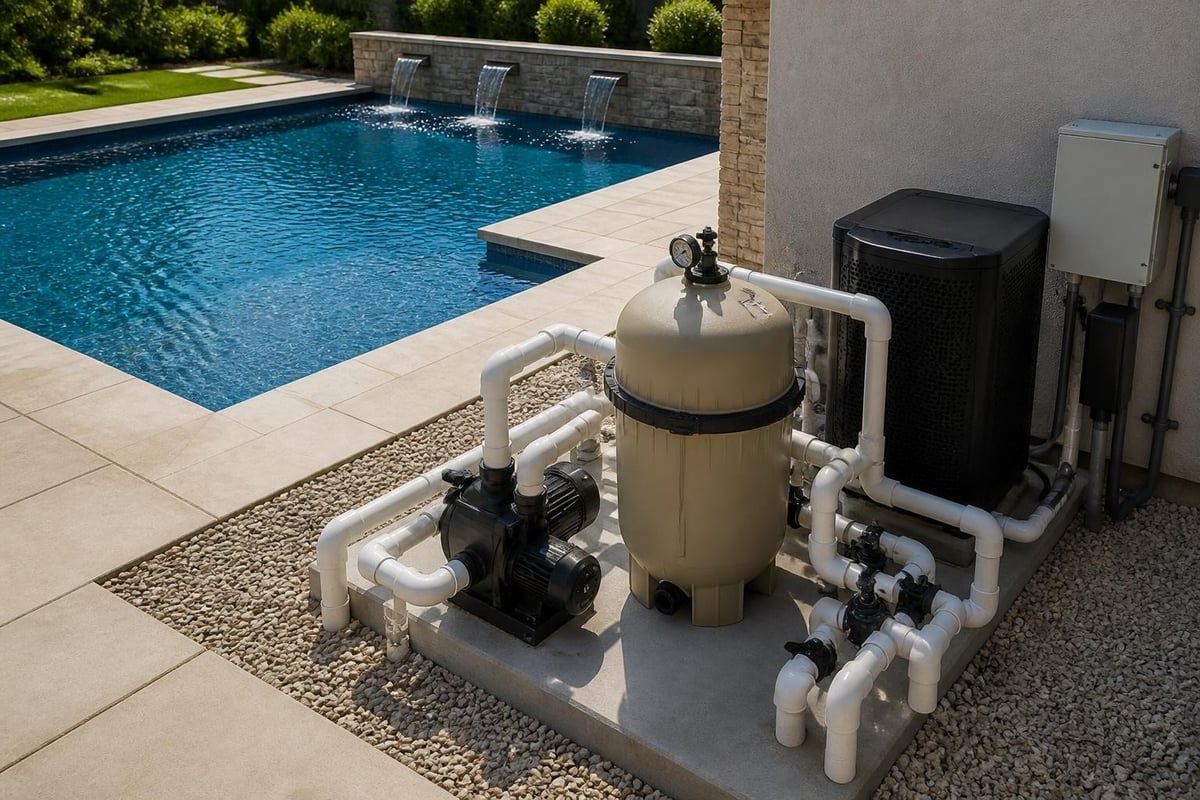
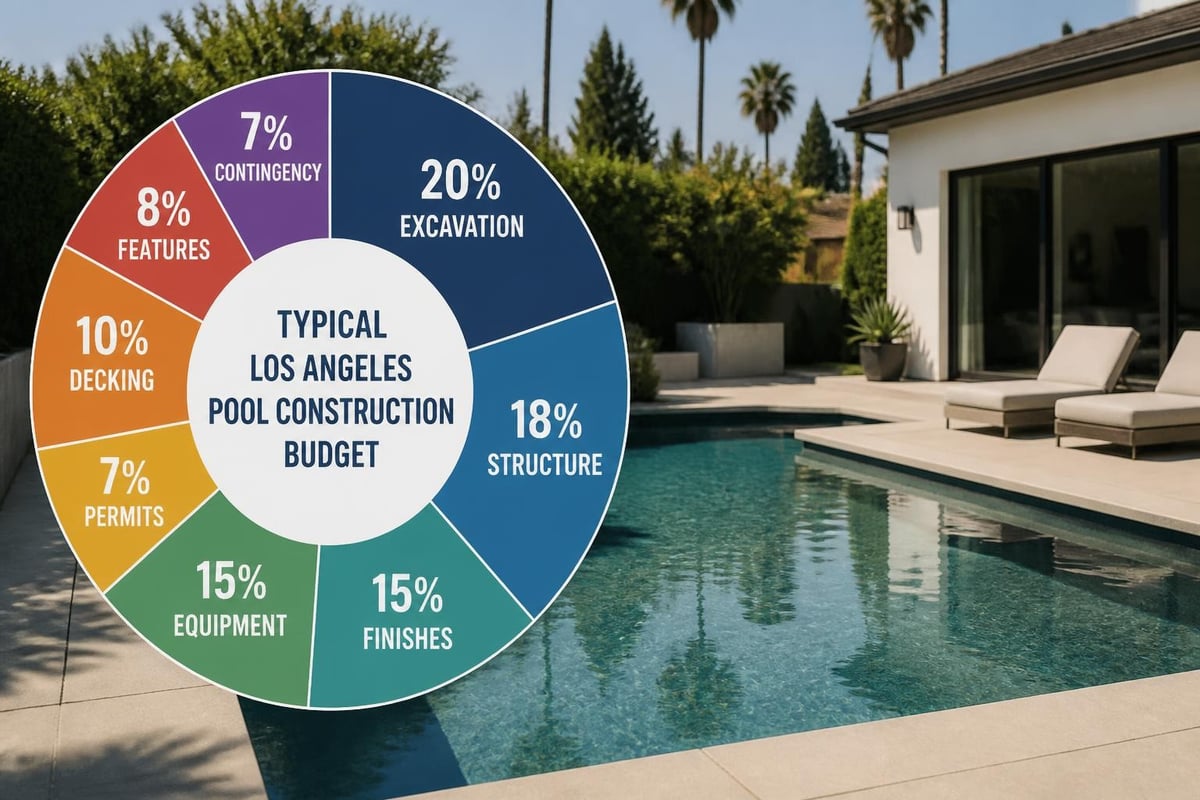
Mechanical equipment represents roughly 10 to 15 percent of total pool construction price, but its impact on operating costs extends for decades. The pump, filter, heater, and automation system must be sized correctly to the pool volume and feature set.
Variable-speed pumps have become the California standard due to energy regulations and utility incentives. ENERGY STAR certified pool pumps reduce electricity consumption by up to 70 percent compared to single-speed models. While variable-speed units cost $800 to $1,500 more than basic pumps, operating-cost savings typically recover the premium within two to three years.
Heater choices-gas, electric heat pump, or solar-each offer trade-offs in installation cost, heating speed, and operating expense. Southern California's mild climate allows heat pumps to operate efficiently most of the year, but gas heaters still dominate for rapid heat-up and spa applications.
Filtration systems range from sand filters (lowest cost, moderate performance) to cartridge filters (mid-range, better fine-particle removal) to diatomaceous earth filters (highest filtration quality, more maintenance). The right choice depends on pool use, aesthetic expectations, and maintenance tolerance.
Automation and Smart Controls
Modern pool automation consolidates control of pumps, heaters, lights, cleaners, and water features into a single interface. Homeowners adjust settings from smartphones or wall-mounted touchscreens, schedule equipment run times, and monitor energy usage.
Entry-level automation adds $1,200 to $2,500 to pool construction price, while full-featured systems with remote access, voice control, and integrated landscape lighting can reach $5,000 or more. The convenience and energy savings justify the investment for many homeowners, particularly those managing spas, waterfalls, and complex lighting scenes.
Permits, Engineering, and Regulatory Compliance
Los Angeles County and individual municipalities enforce strict permitting requirements for pool construction. Plan-check fees, permit costs, and inspection schedules vary by jurisdiction but typically range from $1,500 to $4,000 for a standard residential pool.
Engineering requirements include soils reports, structural calculations for the pool shell, and setback verification. Properties on hillsides or in high-groundwater zones require additional geotechnical analysis, sometimes adding $3,000 to $8,000 to the project.
Building safety codes mandate specific barrier requirements-fencing, self-closing gates, and alarms-to prevent unsupervised child access. Compliance with these life-safety provisions is non-negotiable and must be factored into every budget. Automated safety covers offer an alternative to traditional fencing in some cases but carry their own premium cost.
Utility connections for electricity, gas, and water may require trenching, metering upgrades, or coordination with municipal providers. Older homes sometimes need electrical panel upgrades to support the pool's 240-volt equipment, adding $1,500 to $5,000.
Site Conditions and Access Challenges
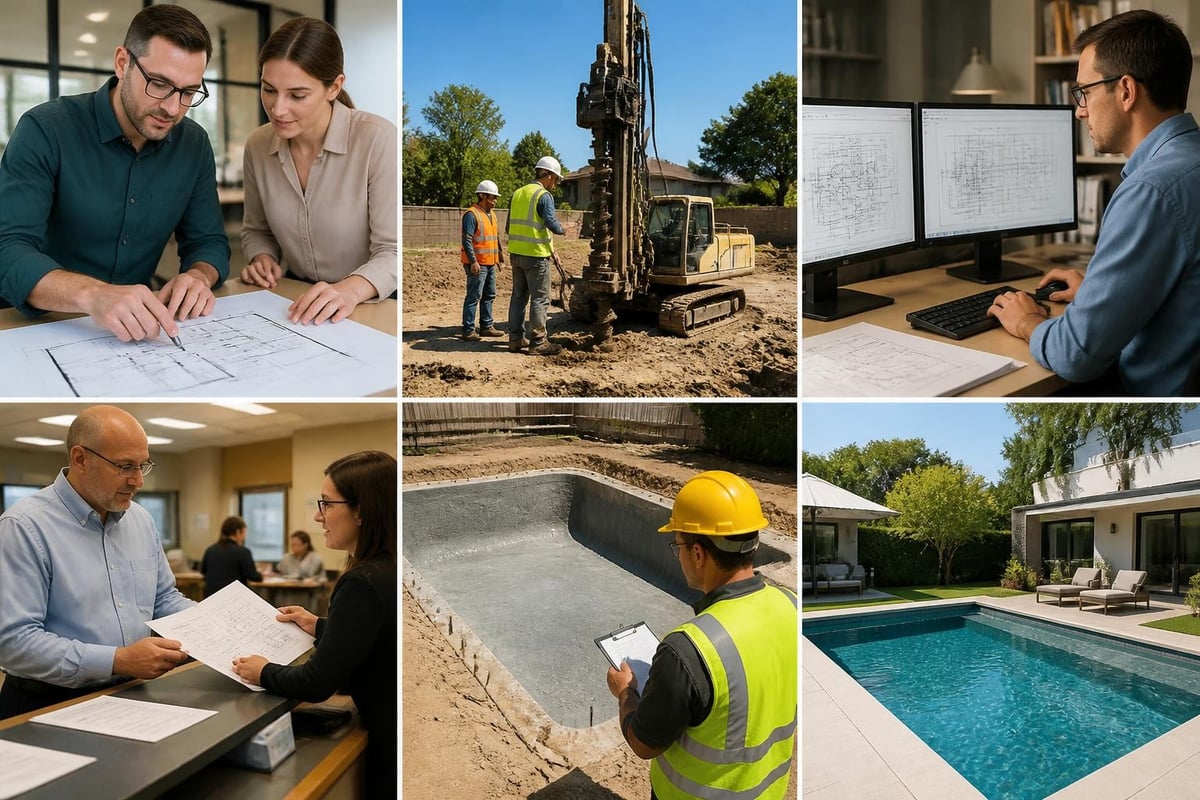
Every property presents unique site conditions that influence pool construction price. Slope and grading affect excavation difficulty and may require retaining walls or engineered soil stabilization. Flat lots simplify the process, while hillside properties often demand shoring, caissons, or stepped designs that increase engineering and labor.
Access limitations force contractors to use smaller equipment or hand-carry materials. Homes with narrow side gates, mature landscaping, or overhead obstructions prevent heavy machinery from reaching the backyard. In extreme cases, cranes or conveyors are required to move shotcrete and steel over the house, adding thousands of dollars in specialized equipment rental.
Underground utilities-sewer, water, gas, electric, and telecommunications-must be located and protected. Unexpected conflicts require rerouting, which delays the schedule and increases costs. Properties with septic systems, wells, or private utility easements introduce additional coordination challenges.
Rock excavation is one of the most unpredictable cost variables. Soil reports reveal bedrock depth, but localized boulders or decomposed granite layers sometimes surprise contractors during digging. Hydraulic hammers, chemical rock-splitting, or controlled blasting (where allowed) add premium charges.
Labor, Materials, and Market Conditions
Labor costs dominate pool construction pricing in Los Angeles. Construction wage trends show that skilled trades-plumbers, electricians, shotcrete finishers, tile setters-command premium hourly rates in high-cost urban markets. A typical pool project involves six to ten specialized trades, each billing at different rates.
Material costs fluctuate with commodity markets. Steel rebar, copper pipe, and PVC resin all respond to global supply-and-demand cycles. The 2026 construction industry outlook highlights persistent supply-chain pressures and inflation trends that contractors must account for in fixed-price bids.
Lead times for custom features-tile, coping stone, water features, automation panels-extend project duration and carry holding costs. Contractors often phase payments to align with material deliveries and construction milestones, balancing cash flow with schedule certainty.
Seasonal and Regional Factors
Pool construction in Los Angeles peaks during spring and early summer as homeowners aim for completion before the warm season. Contractors' schedules fill months in advance during high season, sometimes limiting availability or introducing premium pricing.
Winter construction offers advantages: more flexible scheduling, potential off-season discounts, and readiness for the following summer. Rain delays are the primary risk, but Southern California's dry winters minimize weather-related disruptions compared to other regions.
Regional market conditions also influence pool construction price. Neighborhoods with high property values and strong demand for outdoor amenities support premium pricing and custom features. Homeowners in markets like Pacific Palisades or Calabasas often prioritize design and quality over budget constraints, while suburban markets emphasize value engineering.
Size, Shape, and Design Complexity
Pool size directly correlates with cost-more excavation, more shotcrete, more plumbing, more finish material. A compact 300-square-foot pool costs substantially less than a sprawling 600-square-foot resort pool, even with identical finishes and equipment.
Geometric pools-rectangles, ovals, classic kidney shapes-are simpler to form, shoot, and finish than highly customized freeform designs. Tight radius curves, vanishing edges, beach entries, and integrated spas require additional forming labor and specialized shotcrete expertise.
Depth variation affects volume and structural engineering. A shallow play pool with a 4-foot deep end requires less material and simpler construction than a diving pool with an 8- or 9-foot deep end. Deep excavation introduces shoring requirements and increases shotcrete yardage.
| Pool Size | Typical Dimensions | Volume Range | Construction Time | Approximate Cost Range |
|---|---|---|---|---|
| Small | 12'×24' to 14'×28' | 10,000–15,000 gal | 6–8 weeks | $50,000–$75,000 |
| Medium | 16'×32' to 18'×36' | 18,000–25,000 gal | 8–10 weeks | $75,000–$110,000 |
| Large | 20'×40' to 24'×48' | 30,000–45,000 gal | 10–14 weeks | $110,000–$175,000+ |
Attached spas add approximately $10,000 to $20,000 to pool construction price, depending on size, jet count, and spillover design. Standalone spas cost less but sacrifice the integrated aesthetic and shared equipment efficiency.
Hidden Costs and Contingency Planning
Unforeseen conditions account for a significant portion of budget overruns. Soil contamination, abandoned utilities, or archaeological discoveries can halt work and require remediation. Prudent homeowners budget a 10 to 15 percent contingency to cover unknowns without derailing the project.
Landscaping replacement is often overlooked. Excavation and equipment access damage lawns, plants, and irrigation. Re-sodding, planting, and irrigation repair can add $3,000 to $10,000 to the total investment, depending on yard size and existing landscape maturity.
Municipal fee increases sometimes occur mid-project if permit expiration triggers re-filing. Keeping the project on schedule minimizes this risk, but extended weather delays or material shortages can push timelines beyond initial permit validity.
Warranty and maintenance programs represent an optional cost with long-term value. Some contractors offer extended warranties on structure and equipment for an additional fee. Weekly maintenance service costs $100 to $200 per month but protects the investment and ensures water chemistry, equipment performance, and surface longevity.
Financing and Payment Structures
Most homeowners finance pool construction through home equity lines of credit, cash-out refinancing, or specialized pool loans. Interest rates and terms vary, but amortizing the cost over five to ten years makes the monthly payment manageable while preserving cash reserves.
Contractors typically structure payments in milestones: a deposit at contract signing, payments at excavation, steel placement, shotcrete, tile, and equipment installation, with a final payment upon completion and inspection approval. This protects both parties and aligns cash flow with work progress.
Fixed-price contracts provide budget certainty but require detailed specifications upfront. Any changes during construction trigger change orders with pricing adjustments. Cost-plus contracts offer flexibility but shift risk to the homeowner. Most residential pool projects use fixed-price agreements with a defined scope and allowances for finish selections.
Transparent contractors provide detailed line-item estimates that break down labor, materials, permits, and subcontractor costs. Vague lump-sum quotes make it difficult to compare bids or understand where value is delivered. AM Builds Inc., a licensed general contractor with over 15 years of experience, provides clear, itemized pricing so homeowners understand every component of their pool construction price.
Comparing Quotes and Selecting a Contractor
When evaluating multiple bids, the lowest pool construction price rarely represents the best value. Licensing, insurance, references, and portfolio quality matter more than bottom-line cost. California requires general contractors to hold a valid CSLB license (like #1153503), carry liability and workers' compensation insurance, and comply with labor laws.
Ask potential contractors about their warranty terms, change-order policies, and project management approach. How do they handle delays? Who supervises daily work? What is the typical timeline from contract to completion?
Check references and visit completed projects. Speak with past clients about communication, cleanliness, problem-solving, and post-completion support. Online reviews offer insights, but direct conversations reveal more nuanced experiences.
Verify that the bid includes all necessary permits, inspections, and compliance work. Some low-ball quotes omit engineering, barrier compliance, or utility connections, creating sticker shock when those costs surface mid-project.
Long-Term Value and Return on Investment
Pool construction represents a significant financial commitment, but it also enhances property value and quality of life. Real estate market analysis shows that pools in warm climates like Los Angeles recover a substantial portion of their cost upon resale, particularly in neighborhoods where pools are standard amenities.
Beyond resale value, pools deliver lifestyle benefits: family recreation, fitness, entertaining, and relaxation. Homeowners who use their pools regularly report high satisfaction and justify the investment through daily enjoyment rather than pure financial return.
Energy-efficient equipment, durable finishes, and quality construction minimize long-term operating and maintenance costs. A well-built pool with ENERGY STAR pumps and heaters costs less to operate each month, compounding savings over decades of ownership.
Proactive maintenance preserves the investment. Regular water chemistry management, equipment servicing, and surface care prevent costly repairs. Resurfacing every 10 to 15 years, equipment replacement on recommended schedules, and periodic tile and coping refresh keep the pool looking and functioning like new.
Understanding pool construction price empowers homeowners to make informed decisions, set realistic budgets, and choose contractors who deliver quality and transparency. Every project is unique, shaped by site conditions, design preferences, and feature selections, but the core principles remain consistent: invest in proper engineering, select durable materials, prioritize energy efficiency, and work with experienced professionals. AM BUILDS CA brings 15+ years of family-owned expertise to custom in-ground pool construction across Los Angeles, offering clear pricing, direct owner involvement, and meticulous craftsmanship. Contact us at (424) 485-4548 for a free, no-obligation estimate tailored to your backyard vision.


