


Above ground pools offer homeowners an affordable, flexible alternative to permanent in-ground installations, delivering summer recreation without the extensive excavation and construction timeline. Over ground pool installation has evolved significantly in recent years, with improved materials, safety standards, and installation techniques that extend pool lifespan and enhance backyard aesthetics. Whether you're considering a temporary cooling option or a semi-permanent backyard feature, understanding the installation process, site requirements, and ongoing maintenance obligations ensures your investment delivers years of reliable service.
Site Selection and Preparation Requirements
Choosing the right location determines installation success and long-term pool stability. The ideal site must be level, accessible to utilities, and positioned to maximize sun exposure while minimizing debris accumulation.
Evaluating Ground Conditions
Before committing to a location, assess soil composition and drainage patterns. Clay-heavy soils retain moisture and may shift seasonally, while sandy soils drain effectively but require stabilization. University extension guidance on soil preparation emphasizes the importance of proper compaction to prevent settling.
Critical site evaluation factors:
- Distance from overhead power lines (minimum 20 feet clearance)
- Proximity to trees and root systems that may puncture liners
- Ground slope (maximum 1 inch variance across the pool footprint)
- Access for equipment delivery and future maintenance
- Local setback requirements from property lines and structures
Ground Leveling Techniques
Proper leveling prevents structural stress and water distribution problems. Even a 2-inch variance can create uneven water depth and strain the pool wall on the deeper side.
| Leveling Method | Best For | Typical Cost | Difficulty |
|---|---|---|---|
| Manual tamping with sand | Small pools (12-18 ft) | $150-300 | Moderate |
| Compacted crushed stone base | Medium pools (18-24 ft) | $300-600 | Moderate-High |
| Professional grading | Large pools (24+ ft) | $600-1,200 | Requires equipment |
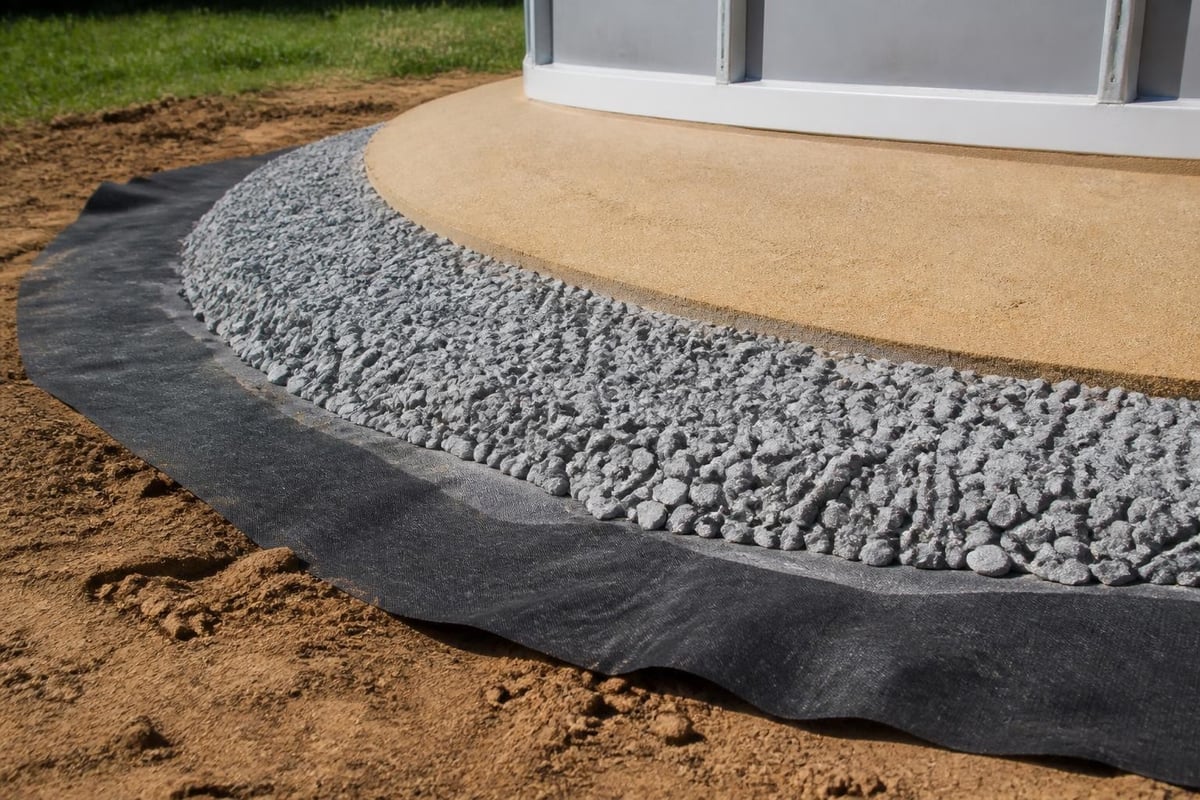
The installation area should extend 2-3 feet beyond the pool perimeter to accommodate the track system and provide maintenance access. Remove all vegetation, roots, and rocks larger than ½ inch, then compact the soil in 2-inch lifts using a plate compactor for optimal stability.
Frame Assembly and Structural Components
Modern over ground pool installation relies on engineered wall systems and support structures designed to withstand hydrostatic pressure from thousands of gallons of water. The assembly sequence directly impacts structural integrity.
Wall and Support Installation
Pool walls arrive in sections or as a continuous roll, depending on the manufacturer. Steel walls require rust-resistant coatings, while resin-composite systems offer superior corrosion resistance in humid climates.
Assembly sequence:
- Install bottom track or rail system perfectly level
- Unroll and secure wall material in the track
- Connect wall sections using manufacturer-specific hardware
- Install vertical support posts at designated intervals
- Secure top rail system to stabilize the wall
- Attach stabilizer bars and skimmer/return fittings
Quality installations use stainless steel hardware throughout to prevent rust staining. The U.S. Consumer Product Safety Commission has established safety standards for above-ground pool construction that address structural requirements and ladder climbability to prevent unauthorized access.
Liner Installation Best Practices
The vinyl liner creates the waterproof barrier and defines the pool's interior finish. Temperature affects liner pliability significantly. Installing in 70-85°F weather allows the material to stretch properly without cracking or tearing.
Spread the liner inside the assembled frame, ensuring the seams align with the pool's center. Use a vacuum or blower to draw the liner against the walls before adding water. Once the liner seats properly, begin filling while smoothing wrinkles from the center outward. The water's weight will hold the liner in place, but wrinkles set during filling become permanent.
Plumbing and Filtration System Setup
Over ground pool installation requires a complete circulation system to maintain water clarity and chemical distribution. Unlike in-ground pools with integrated plumbing, above-ground systems typically use external pumps and filters connected via flexible hoses.
Pump and Filter Selection
The pump must circulate the entire pool volume in 8-10 hours. Calculate your pool's gallonage (length × width × average depth × 7.5 for rectangular pools), then select a pump rated for at least that turnover rate.
Energy-efficient pool pump standards have evolved significantly, with variable-speed models reducing operating costs by 65-75% compared to single-speed units. The Department of Energy has implemented new efficiency requirements for pool equipment that affect 2026 purchases, making energy considerations essential for long-term cost management.
Filter comparison:
| Filter Type | Micron Rating | Maintenance | Best For |
|---|---|---|---|
| Sand | 20-40 | Backwash weekly | Basic filtration, larger pools |
| Cartridge | 10-15 | Clean monthly | Moderate debris, water conservation |
| DE (Diatomaceous Earth) | 3-5 | Backwash/recharge | Crystal-clear water, willing to maintain |
Installation Configuration
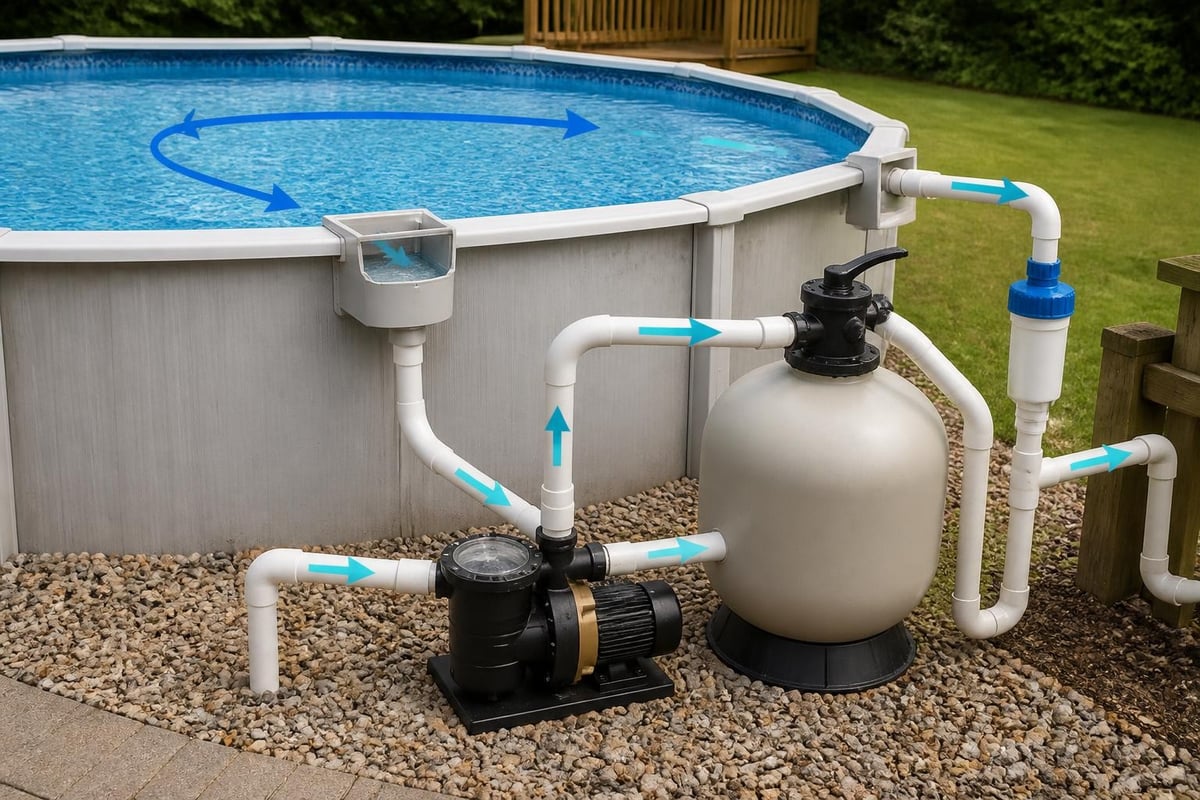
Position the pump and filter on a stable, level surface within 3-6 feet of the pool to minimize friction loss. Never place equipment directly on soil; use a concrete pad or composite base to prevent settling and moisture damage.
Connect the skimmer to the pump inlet using rigid PVC or reinforced flexible hose secured with stainless steel clamps. The return line flows from the filter back to the pool, creating circulation. Install unions at all connection points to simplify future maintenance and equipment replacement.
For homeowners in Los Angeles considering permanent aquatic features, in-ground pool construction offers integrated plumbing systems and customization options that above-ground installations cannot match.
Electrical Requirements and Safety Compliance
Proper electrical installation protects swimmers from shock hazards and ensures code compliance. Over ground pool installation must follow National Electrical Code (NEC) Article 680, which governs all pool-related electrical work.
GFCI Protection Requirements
All pool equipment requires ground-fault circuit interrupter (GFCI) protection, which detects current leakage and shuts off power within milliseconds. Pumps, lights, and any receptacles within 20 feet of the pool must have GFCI protection at the breaker or device level.
NEC electrical requirements for pools specify:
- Dedicated 15-20 amp circuit for pump and filter
- GFCI protection on all pool-related circuits
- Proper bonding of all metal components
- Minimum clearances from pool edge to receptacles and switches
Equipotential Bonding Systems
Bonding connects all metal components (ladder, pool frame, pump housing, filter tank) to a common grounding system, preventing voltage differences that could energize pool water. This requirement often confuses homeowners because bonding serves a different purpose than grounding.
Understanding equipotential bonding clarifies that the system creates electrical equilibrium, not necessarily a path to ground. Use solid copper wire (minimum #8 AWG) to connect all metal components, securing connections with listed lugs and clamps.
Most jurisdictions require electrical permits for pool installations. Licensed electricians ensure compliance with local amendments to the NEC and can document installation for insurance purposes. Attempting DIY electrical work without proper licensing exposes homeowners to liability if accidents occur.
Water Chemistry and Initial Startup
Once the structural and mechanical systems are complete, filling and balancing the pool prepares it for safe swimming. Water chemistry directly affects equipment longevity, surface integrity, and swimmer comfort.
Filling Process Guidelines
Fill using a garden hose or water delivery service, monitoring the liner for shifting or wrinkles during the first 2-3 inches of water. Once the bottom is covered, you lose the ability to smooth wrinkles, so work quickly during this critical phase.
Total fill time for a typical 24-foot round pool (13,500 gallons) ranges from 12-24 hours depending on water pressure. Avoid filling during extreme heat, which can soften and stretch the liner unevenly.
Chemical Balancing Procedures
Test and adjust water parameters before adding swimmers. Proper storage and handling of pool chemicals prevents accidents and maintains chemical effectiveness, as outlined in EPA chemical safety guidance.
Initial chemistry targets:
- pH: 7.4-7.6
- Total Alkalinity: 80-120 ppm
- Calcium Hardness: 200-400 ppm
- Free Chlorine: 2-4 ppm
- Cyanuric Acid (stabilizer): 30-50 ppm
Add chemicals in specific order to prevent reactions. Adjust alkalinity first, then pH, followed by calcium hardness. Run the circulation system continuously for 24 hours after adding chemicals to ensure thorough mixing. Test daily for the first week, then 2-3 times weekly once chemistry stabilizes.
Maintain detailed records of test results and chemical additions. This log helps identify trends and troubleshoot water quality issues before they become serious problems.
Decking and Surround Options
The area surrounding your pool affects aesthetics, safety, and functionality. While over ground pool installation doesn't require permanent hardscape like in-ground projects, thoughtful surround planning enhances usability.
Temporary and Semi-Permanent Solutions
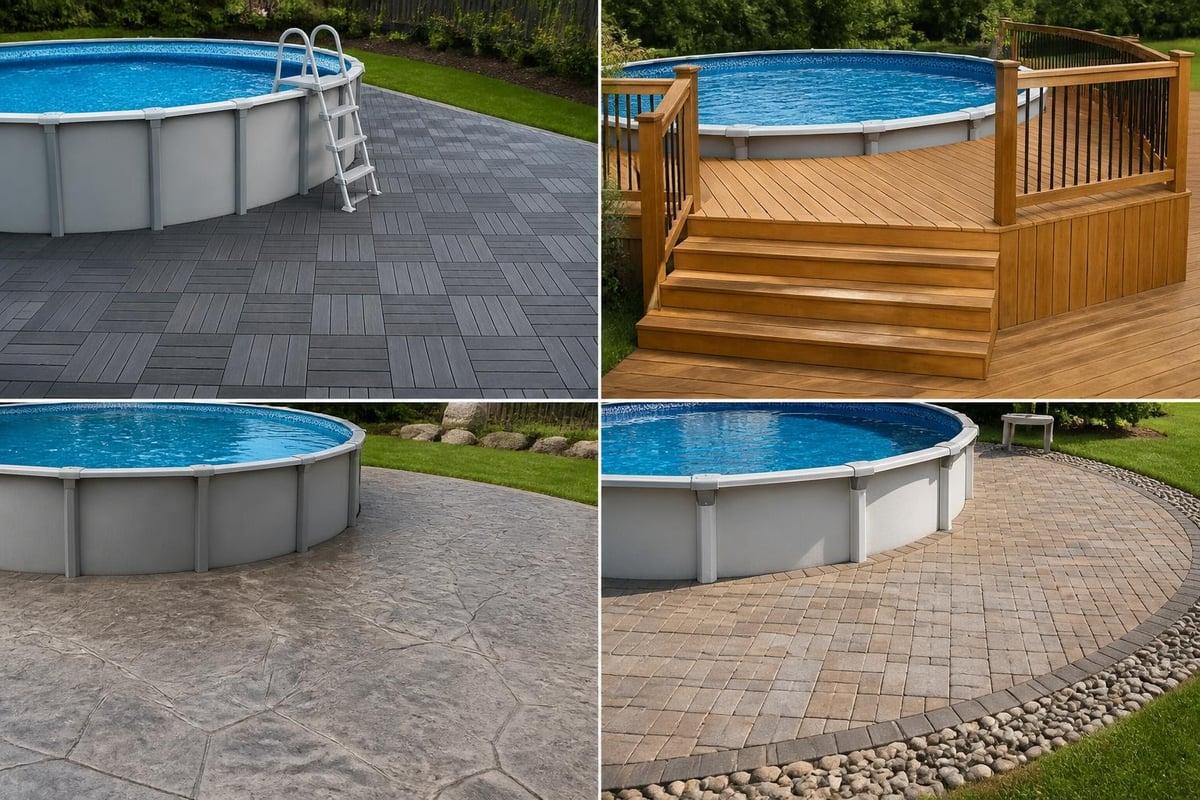
Popular surround options:
- Interlocking composite deck tiles (no tools required)
- Pressure-treated wood deck platforms
- Poured concrete pads with textured finish
- Pavers over compacted base
- Natural grass with designated entry points
Wood decks provide traditional aesthetics but require annual maintenance and eventual replacement. Composite materials resist rot and splintering while maintaining appearance with minimal upkeep. For permanent installations, consider how the deck integrates with existing hardscape elements in your landscape design.
Safety and Access Considerations
All decks and platforms require railings if elevated more than 30 inches above grade. Stair systems must meet building code specifications for tread depth, riser height, and handrail placement.
Install slip-resistant surfaces on all pool access points. Textured concrete, rubberized deck coatings, and grooved composite boards provide traction when wet. Drainage is equally critical; design the deck with minimum 2% slope away from the pool to prevent water accumulation.
Maintenance Systems and Long-Term Care
Successful over ground pool installation extends beyond initial setup to include ongoing maintenance protocols. Establishing routines during the first season creates habits that preserve equipment and water quality for years.
Daily and Weekly Tasks
Daily maintenance checklist:
- Empty skimmer basket
- Check water level (maintain at skimmer midpoint)
- Verify pump operation and pressure gauge reading
- Remove visible debris with skimmer net
- Test chlorine and pH levels
Weekly maintenance tasks:
- Vacuum pool floor and walls
- Brush walls to prevent algae attachment
- Backwash or clean filter (based on pressure increase)
- Test complete water chemistry panel
- Shock pool to oxidize contaminants
| Maintenance Item | Frequency | Time Required | Skill Level |
|---|---|---|---|
| Skimmer basket | Daily | 2 minutes | Beginner |
| Chemical testing | Daily | 5 minutes | Beginner |
| Vacuuming | Weekly | 20-30 minutes | Beginner |
| Filter cleaning | Bi-weekly | 15-20 minutes | Intermediate |
| Equipment inspection | Monthly | 30 minutes | Intermediate |
Seasonal Winterization
Properly closing your pool prevents freeze damage and simplifies spring opening. Begin winterization when temperatures consistently drop below 65°F.
Lower water level below return fittings and skimmer, then blow out plumbing lines using a shop vacuum or air compressor. Add winterizing chemicals to prevent algae growth and maintain pH balance. Cover the pool with a fitted winter cover secured with cable and winch system to keep debris out and prevent accidental entry.
For pools in moderate climates like Los Angeles, winterization may be unnecessary, but reduced maintenance schedules during cooler months extend equipment life and reduce chemical consumption. Many homeowners interested in pool construction projects appreciate the year-round usability that Southern California's climate provides.
Advanced Upgrades and Enhancements
While basic over ground pool installation provides functional recreation, strategic upgrades enhance convenience, aesthetics, and enjoyment. Many additions install easily without professional assistance.
Lighting Systems
LED pool lights transform evening swimming while consuming minimal electricity. Modern systems offer color-changing options controlled via smartphone apps or remote controls.
Installation options include:
- Magnetic wall-mount lights (no tools required)
- Floating solar lights (zero electrical cost)
- Above-deck pathway lighting for safety
- Underwater fixtures requiring electrical connection
All underwater electrical fixtures must comply with NEC requirements and use GFCI-protected circuits. Solar-powered perimeter lighting provides ambiance without electrical installation.
Water Features and Entertainment
Popular enhancement options:
- Pool fountains that aerate and circulate water
- Waterfall attachments that create focal points
- Volleyball or basketball sets for active recreation
- Floating speakers for music
- Pool alarms for safety monitoring
Automation systems now include above-ground models that control filtration schedules, chemical dispensing, and lighting from mobile devices. These systems typically cost $300-800 but deliver convenience and ensure consistent maintenance cycles even when homeowners travel.
Regulatory Compliance and Permit Requirements
Over ground pool installation regulations vary by jurisdiction, but most municipalities classify pools holding more than 24 inches of water as structures requiring permits. Understanding local requirements prevents expensive corrections and legal complications.
Building Permits and Inspections
Contact your building department before purchasing equipment. Some jurisdictions require stamped engineering plans, fence systems, and electrical inspections before allowing pool filling.
Common permit requirements:
- Site plan showing pool location and setbacks
- Fence or barrier meeting ASTM standards
- Electrical permit for pump and lighting circuits
- Plumbing permit for fill/drain connections (some areas)
- Final inspection before use authorization
ASTM F2666 standards define technical specifications for above-ground pools, addressing structural integrity, barrier requirements, and safety features. Manufacturers design products to meet these standards, but local amendments may impose additional requirements.
Barrier and Safety Code Requirements
Most jurisdictions adopt some version of the International Swimming Pool and Spa Code (ISPSC), which requires barriers preventing unsupervised access by children under five years old.
Acceptable barriers include:
- Property fence meeting height and gap specifications (minimum 4 feet tall)
- Removable pool ladder stored when not in use
- Pool cover capable of supporting 80 pounds
- Door alarms if pool is accessible through residence
Some communities allow the pool wall itself to serve as a barrier if it meets height requirements and the ladder removes completely. Verify your specific jurisdiction's interpretation before assuming compliance.
Cost Analysis and Budget Planning
Understanding the complete financial picture of over ground pool installation helps homeowners make informed decisions and avoid budget surprises. Initial purchase price represents only part of the total investment.
Initial Installation Costs
| Pool Size | Equipment Package | Site Prep | Installation Labor | Total |
|---|---|---|---|---|
| 18' Round | $800-1,500 | $200-500 | $300-600 (DIY: $0) | $1,300-2,600 |
| 24' Round | $1,200-2,500 | $300-800 | $500-1,000 | $2,000-4,300 |
| 15×30 Oval | $1,800-3,500 | $400-1,000 | $800-1,500 | $3,000-6,000 |
These estimates include basic filtration systems and standard liners. Upgraded equipment, heaters, and enhanced filtration systems add $500-2,000 to base costs.
Ongoing Operating Expenses
Annual operating costs include electricity, chemicals, water, and maintenance supplies. Energy-efficient pumps reduce electrical consumption from $300-500 annually to $100-200 for comparable filtration performance.
Annual cost estimates:
- Electricity (variable-speed pump): $150-250
- Chemicals and testing supplies: $200-400
- Water (refills and evaporation): $50-150
- Replacement parts and repairs: $100-300
- Winter closing supplies: $50-100
Budget for liner replacement every 5-7 years ($300-800 depending on size and quality) and pump/filter replacement every 8-12 years ($400-1,200). Proper maintenance extends equipment life significantly, making consistent care a wise financial investment.
For homeowners exploring permanent aquatic features, comparing these ongoing costs against in-ground pool projects reveals the value proposition of both options across ownership timelines.
Troubleshooting Common Installation Issues
Even carefully planned over ground pool installation encounters occasional challenges. Recognizing problems early and implementing correct solutions prevents minor issues from becoming major failures.
Structural and Stability Problems
Leaning walls indicate uneven ground support or inadequate compaction. Address this immediately by draining the pool partially, releveling the affected area, and refilling. Continuing to operate with leaning walls will buckle the frame and rupture the liner.
Wrinkled liners occur when installation happens in cold weather or when the liner wasn't properly smoothed during filling. Small wrinkles cause premature wear but remain cosmetic. Large wrinkles create weak points that develop holes within months.
Water Quality Challenges
Cloudy water despite proper filtration suggests inadequate circulation, insufficient filtration capacity, or chemical imbalance. Test all parameters, backwash or clean the filter, and verify the pump runs sufficient hours daily.
Green water indicates algae growth, typically from low chlorine levels or poor circulation in dead zones. Brush all surfaces, shock the pool with triple the normal chlorine dose, and run the filter continuously for 24-48 hours until clarity returns.
Equipment failure diagnostics:
- Pump won't start: Check GFCI, verify power supply, inspect connections
- Low pressure: Clogged skimmer basket or impeller blockage
- High pressure: Dirty filter requiring cleaning or backwash
- Noisy pump: Air leak in suction line or failing bearings
Maintain spare parts inventory including skimmer baskets, filter cartridges or sand, pump seals, and basic hose clamps. Many problems resolve quickly with common replacement parts available locally.
Over ground pool installation delivers recreational value and cooling relief when approached with proper planning, attention to standards, and commitment to ongoing maintenance. From initial site selection through daily water care, each decision impacts longevity and enjoyment. Whether you're installing your first above-ground pool or upgrading an existing setup, following manufacturer specifications and local codes ensures safe, reliable operation. While above-ground options offer flexibility and affordability, homeowners seeking permanent aquatic features may find that custom in-ground construction better matches their long-term vision and property value goals. AM BUILDS CA specializes in custom in-ground pool construction throughout Los Angeles, delivering engineered solutions with clear pricing and experienced craftsmanship. Contact us at (424) 485-4548 for a free consultation on transforming your backyard into a lasting recreational retreat.


