


Natural swimming pools are transforming residential landscapes across Los Angeles, offering homeowners an eco-friendly alternative to traditional chlorinated pools. Unlike conventional systems that rely on chemical sanitization, natural pool installation creates a balanced aquatic ecosystem where plants and beneficial microorganisms purify the water. This approach eliminates harsh chemicals while delivering crystal-clear water that's gentle on skin, eyes, and the environment. For California homeowners seeking sustainable outdoor living spaces, understanding the natural pool installation process is essential to making informed decisions about design, construction, and long-term maintenance.
Understanding Natural Pool Systems
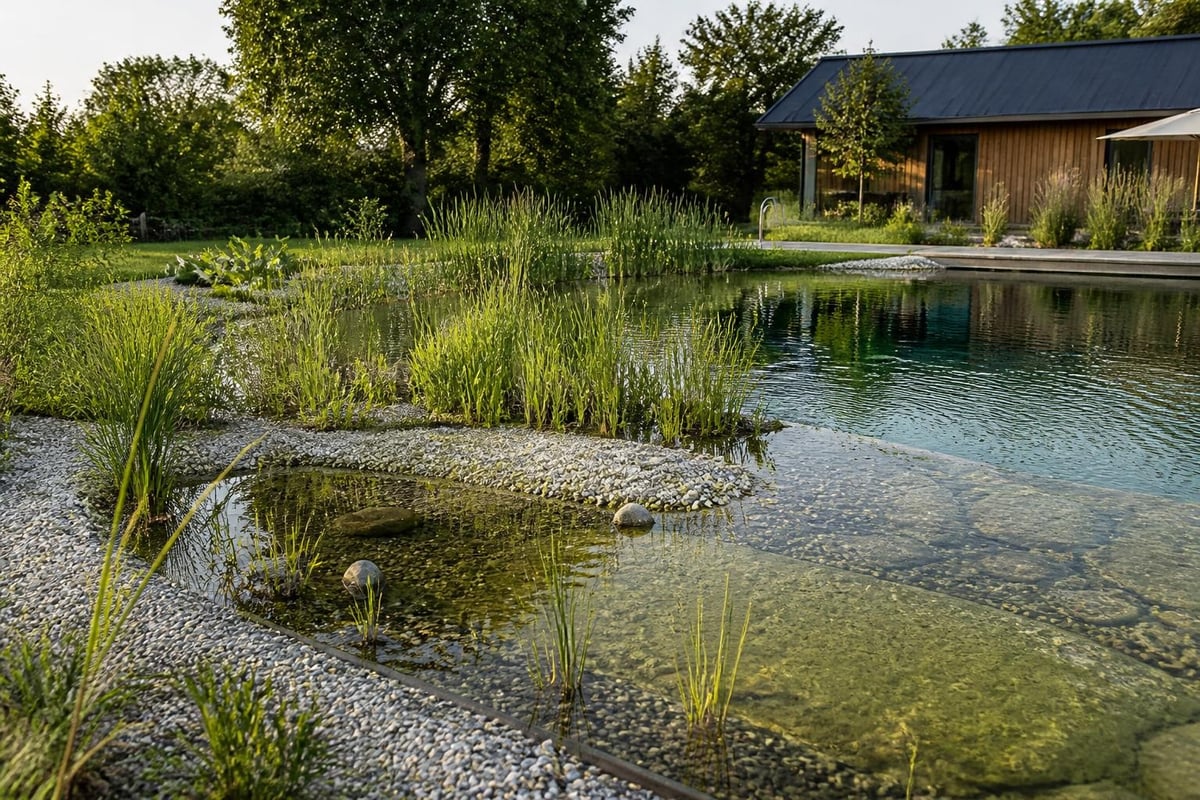
Natural swimming pools combine two distinct zones that work together to create clean, swimmable water without chlorine or other chemical treatments. The swimming zone provides the recreation area, while the regeneration zone houses aquatic plants and microorganisms that filter and purify the water naturally.
The Association for Swimming Ponds & Natural Swimming Pools provides comprehensive guidance on these systems, explaining how biological filtration mimics natural wetland processes. Water circulates continuously between zones, passing through gravel beds where beneficial bacteria break down organic matter and remove contaminants.
Key Components of Natural Pool Design
Natural pool installation requires careful integration of multiple systems working in harmony:
- Swimming zone: The primary recreation area, typically designed with depth variations and clean-lined edges
- Regeneration zone: Contains aquatic plants, gravel substrates, and beneficial microorganisms
- Circulation system: Pumps and skimmers that move water between zones
- Hydraulic balance: Proper flow rates ensuring adequate filtration without stagnation
- Edge treatments: Natural stone, wood, or concrete that blend with landscape design
The regeneration zone typically occupies 30-50% of the total water surface area. This ratio ensures sufficient biological filtration capacity while maximizing swimming space. Smaller regeneration zones require more intensive mechanical filtration support, while larger zones provide more robust natural purification.
Planning Your Natural Pool Installation
Successful natural pool installation begins long before excavation. Los Angeles homeowners must consider site analysis, zoning requirements, design preferences, and budget parameters when planning their project.
Site Assessment and Feasibility
Professional contractors evaluate several critical factors during initial site visits:
| Assessment Factor | Key Considerations |
|---|---|
| Topography | Slope, drainage patterns, excavation access |
| Soil Conditions | Stability, permeability, load-bearing capacity |
| Sunlight Exposure | Hours of direct sun, shade patterns affecting plant growth |
| Space Requirements | Minimum 400-600 sq ft for functional natural pool systems |
| Utilities | Location of gas, electric, water, sewer lines |
| Access | Equipment clearance for excavation and material delivery |
The International Organization for Natural Bathing Waters publishes technical standards used globally for planning and constructing natural pools. These guidelines inform proper sizing, circulation rates, and safety considerations essential to long-term performance.
Los Angeles County and local municipalities enforce specific building codes and permit requirements. Natural pool installation typically requires standard swimming pool permits covering structural design, electrical work, and plumbing. Some jurisdictions classify natural pools as decorative ponds, which may trigger different regulatory pathways.
Design Development Process
Working with experienced contractors helps homeowners navigate design choices that impact aesthetics, functionality, and maintenance requirements. Natural pools offer remarkable design flexibility, from formal geometric layouts to organic, free-form configurations that mimic natural water bodies.
The in-ground pool construction process adapts traditional pool-building methods to accommodate biological filtration zones and specialized planting areas. Designers must account for proper depth profiles, circulation patterns, and integration with surrounding hardscape elements.
Edge treatments significantly influence the pool's visual character. Options include:
- Natural stone coping blending into surrounding landscape
- Timber decking creating clean, modern lines
- Beach entries with gradually sloping pebble bottoms
- Infinity edges overlooking valleys or gardens
- Integrated spa areas using the same filtration system
Construction Methods and Techniques
Natural pool installation follows a structured sequence that differs from conventional pool construction. The process requires specialized knowledge of hydraulic engineering, aquatic botany, and ecosystem management alongside traditional construction skills.
Excavation and Structural Work
The construction phase begins with precise excavation creating both swimming and regeneration zones. Contractors must achieve exact grades and contours specified in engineering plans. The swimming zone typically reaches 6-8 feet depth, while regeneration zones remain shallow (18-36 inches) to support plant growth and biological activity.
Structural systems vary based on soil conditions and design preferences:
- Shotcrete/Gunite: Sprayed concrete creating monolithic, waterproof shells
- Concrete Block: Reinforced masonry construction with waterproof coatings
- Preformed Liners: EPDM or reinforced polyethylene membranes
- Natural Clay: Compacted bentonite clay layers (less common in residential applications)
Shotcrete construction provides maximum design flexibility and long-term durability, particularly valuable in Los Angeles's seismic zone. Steel reinforcement schedules must meet structural engineering specifications accounting for hydrostatic pressure, soil loads, and earthquake forces.
Filtration and Circulation Systems
The biological filtration system represents the heart of any natural pool installation. Water flows from the swimming zone through strategically placed skimmers and bottom drains, then passes through the regeneration zone before returning purified.
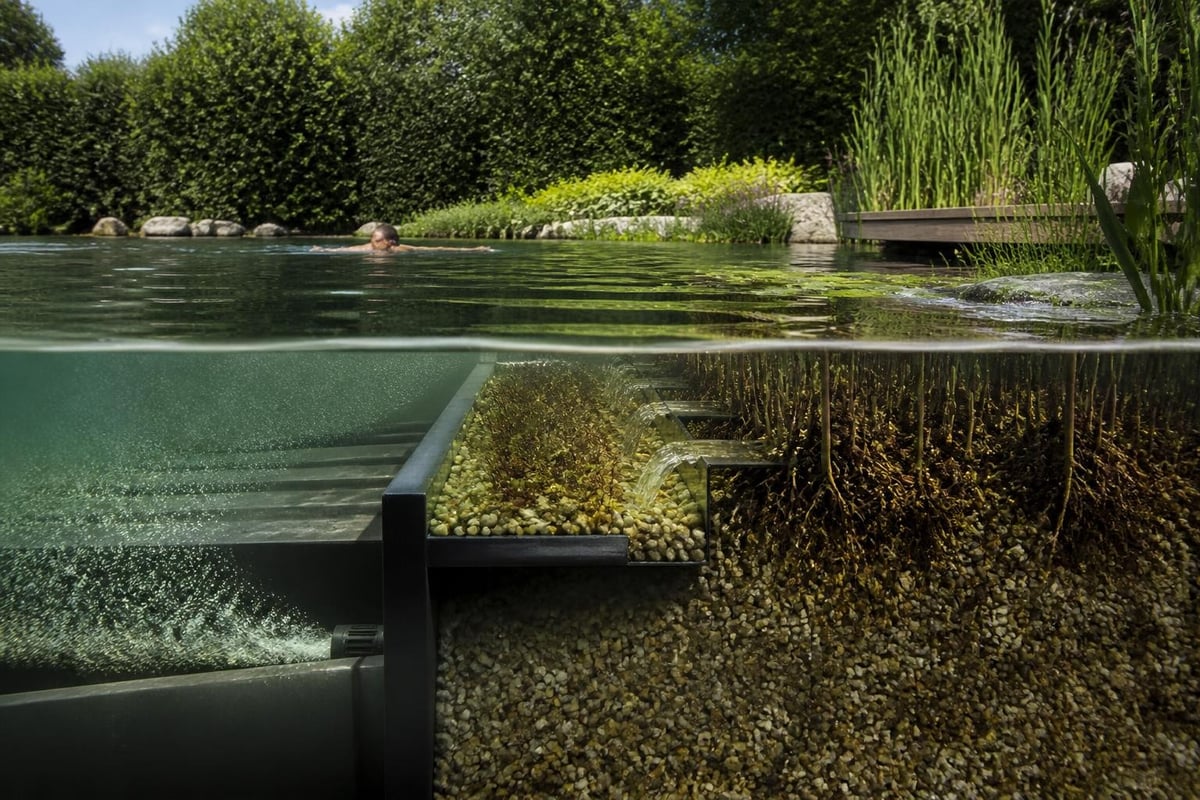
Key circulation components include:
- Variable-speed pumps: Energy-efficient circulation at optimized flow rates
- Pre-filters: Removing larger debris before biological filtration
- Gravel substrate beds: Housing beneficial bacteria colonies
- Distribution manifolds: Ensuring even flow through regeneration zones
- Surface skimmers: Capturing floating organic matter
Proper sizing of circulation equipment ensures adequate turnover rates without excessive water velocity that could damage plants or disrupt biological processes. Most natural pool installations target complete water turnover every 12-24 hours, though specific requirements depend on pool volume, bather load, and climate conditions.
Planting and Ecosystem Establishment
Plant selection represents a critical decision point in natural pool installation. Species must tolerate submersion, provide effective nutrient uptake, and thrive in Southern California's Mediterranean climate. The Gardenista guide explores how plant choices integrate with overall landscape design and material selections.
Submerged Plants (oxygenators): Release oxygen, absorb nutrients, inhibit algae
- Water violet (Hottonia palustris)
- Hornwort (Ceratophyllum demersum)
- Water starwort (Callitriche species)
Emergent Plants (marginal zone): Root in substrate, foliage extends above water
- Rushes (Juncus species)
- Sedges (Carex species)
- Pickerelweed (Pontederia cordata)
Floating Plants: Free-floating, provide shade and nutrient uptake
- Water lettuce (Pistia stratiotes)
- Water hyacinth (Eichhornia crassipes)* – restricted in California, check regulations
Initial planting density affects ecosystem establishment timeline. Higher plant populations accelerate biological maturation but increase upfront costs. Most natural pool installations require 3-6 months of biological cycling before swimming, allowing microbial colonies to develop and plants to establish robust root systems.
Cost Considerations and Investment Analysis
Natural pool installation typically costs 20-40% more than comparable conventional pool construction due to the regeneration zone, specialized filtration systems, and aquatic planting requirements. Los Angeles homeowners should budget $80,000-$150,000 for professionally designed and constructed natural pools, with variations based on size, complexity, and finish selections.
| Cost Component | Typical Range | Notes |
|---|---|---|
| Design & Engineering | $3,000-$8,000 | Plans, permits, structural calculations |
| Excavation & Grading | $8,000-$15,000 | Access, soil conditions impact costs |
| Structure & Waterproofing | $30,000-$60,000 | Shotcrete, reinforcement, finishes |
| Filtration & Circulation | $8,000-$15,000 | Pumps, manifolds, skimmers, controls |
| Planting & Substrate | $5,000-$12,000 | Plants, gravel, installation |
| Hardscape Integration | $10,000-$25,000 | Decking, coping, pathways |
| Contingency | 10-15% | Unforeseen conditions, changes |
Long-term operating costs favor natural pools significantly. Chemical elimination saves $500-$1,200 annually, while energy-efficient circulation pumps reduce electricity consumption by 30-50% compared to conventional systems. The U.S. Environmental Protection Agency’s water quality research provides technical background on monitoring requirements and health considerations that inform ongoing maintenance protocols.
Maintenance expenses run 40-60% lower than traditional pools when considering chemical costs, equipment replacement, and service requirements. Natural pool installation represents an investment in sustainable infrastructure that appreciates with the property while delivering environmental and health benefits.
Integration with Landscape and Hardscape
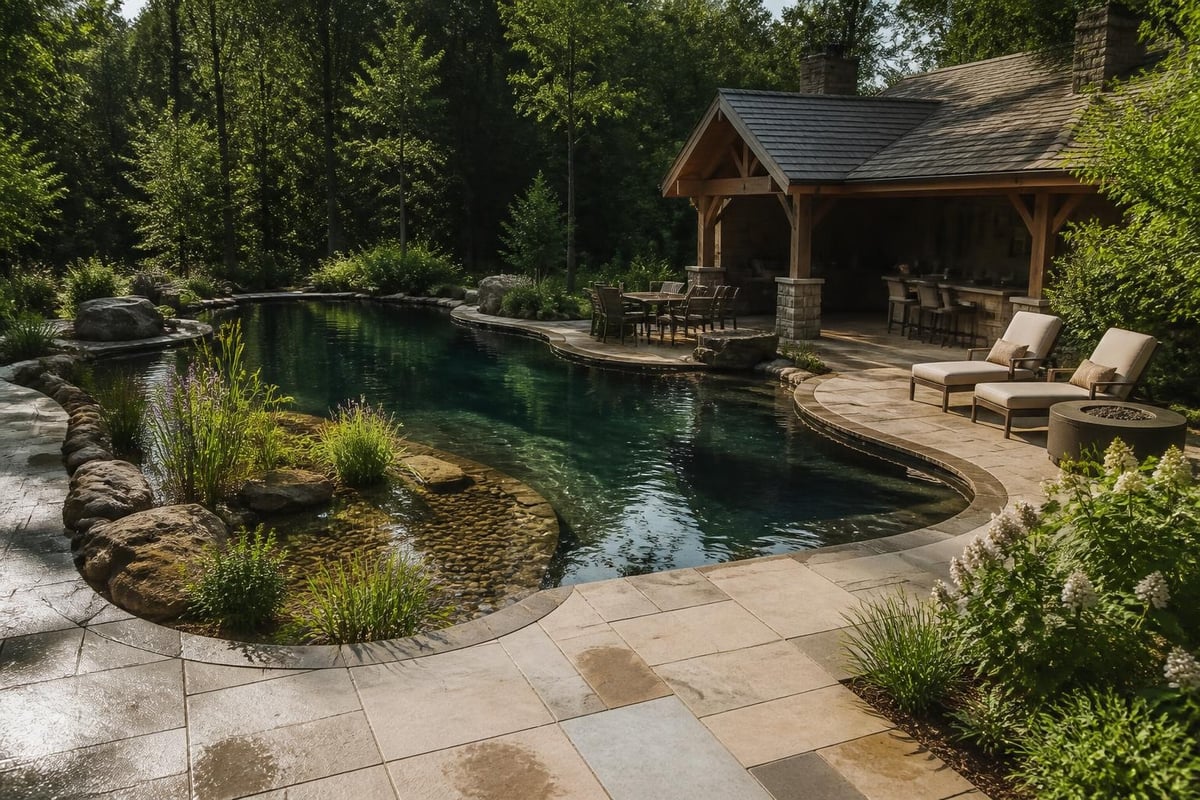
Natural pools achieve their greatest impact when thoughtfully integrated with surrounding landscape elements. The hardscape and landscape services that frame and complement the pool significantly influence the overall aesthetic and functional experience.
Strategic hardscape selections enhance both beauty and performance:
- Permeable paver decking: Manages runoff while providing stable walking surfaces
- Natural stone coping: Creates organic transitions between water and land
- Timber platforms: Deliver contemporary aesthetics with natural materials
- Native plantings: Extend the ecological theme beyond the pool itself
- Outdoor living areas: Patios, fire features, outdoor kitchens integrated into the design
The regeneration zone offers unique opportunities for visual interest. When planted with diverse aquatic species displaying varying heights, textures, and seasonal colors, this functional area becomes a water garden feature rather than utilitarian infrastructure.
Performance Monitoring and Water Quality
Successful long-term operation of natural pool installations requires regular monitoring of water quality parameters. Unlike chlorinated pools with narrow acceptable ranges, natural systems exhibit broader variation while maintaining safe, clean conditions.
Essential Water Quality Parameters
Homeowners or service providers should track these indicators monthly:
- pH: Target 6.5-7.8 (natural systems trend slightly acidic)
- Total phosphorus: Below 0.03 mg/L prevents excessive algae growth
- Nitrate: Ideally under 5 mg/L, managed through plant uptake
- Turbidity: Measured visually (Secchi depth) or instrumentally
- Total coliform bacteria: Periodic testing ensures safe bathing conditions
The IOB technical guidance provides detailed operational standards and monitoring protocols used internationally for natural bathing waters. These technical specifications inform professional maintenance practices and help homeowners understand normal system behavior.
Modern natural pool installations often incorporate automated monitoring systems tracking pH, temperature, and circulation performance. Smart controllers can adjust pump speeds, activate supplemental aeration, or alert owners to conditions requiring attention.
Seasonal Management in Southern California
Los Angeles's Mediterranean climate offers significant advantages for natural pool installation and operation. Mild winters minimize seasonal shutdown requirements, while year-round growing seasons keep biological filtration active.
Spring (March-May): Peak planting season for new installations. Increased daylight triggers active growth, accelerating ecosystem development. Monitor nutrient levels as plants break dormancy and biological activity increases.
Summer (June-September): Highest bather loads and warmest water temperatures. Maintain adequate circulation to prevent stagnation. Some algae visibility is normal; excessive growth indicates nutrient imbalance requiring plant management or system adjustments.
Fall (October-November): Falling leaves create maintenance demands. Skim frequently and remove debris before decomposition increases nutrient loading. Trim back declining perennial growth.
Winter (December-February): Reduced biological activity but systems remain functional. Lower circulation rates conserve energy while maintaining adequate filtration. Los Angeles's frost-free climate eliminates winterization concerns affecting northern installations.
Emerging Technologies and Best Practices
Natural pool installation continues evolving as designers, builders, and researchers refine techniques and develop new technologies. Recent European innovations documented in the Polyplan technical summary showcase advanced approaches gaining adoption in North America.
Notable developments influencing 2026 natural pool construction include:
- Hybrid systems: Combining biological filtration with UV clarification or supplemental ozonation for enhanced clarity
- Modular regeneration zones: Prefabricated planting modules simplifying installation and maintenance
- Smart circulation: AI-driven pump controls optimizing flow rates based on real-time water quality data
- Cold-climate adaptations: Heating systems and plant selections extending natural pool viability into northern regions
- Public facilities: Scaling residential concepts to commercial and municipal installations
Professional organizations like Watershapes track industry trends and showcase how natural pools fit within broader landscape architecture practice. These resources help homeowners understand where natural pool technology is heading and inform long-term investment decisions.
Permitting and Regulatory Compliance
Los Angeles County and municipal jurisdictions regulate natural pool installation under existing swimming pool codes with some unique considerations. While biological filtration systems differ from conventional equipment, structural requirements, safety features, and electrical installations follow standard protocols.
Required Permits and Approvals
Typical permit requirements for natural pool installation include:
- Building permit: Structural construction, plumbing, electrical
- Grading permit: If moving more than 50 cubic yards of soil
- Electrical permit: For pumps, lighting, control systems
- Plumbing permit: Water supply, drainage connections
- HOA approval: If applicable, often requiring design review
Some jurisdictions may classify natural pools as decorative water features rather than swimming pools, potentially triggering different safety requirements. Early consultation with building departments clarifies specific local expectations and prevents costly mid-construction revisions.
Setback requirements, fencing, barrier specifications, and drain safety devices mandated for conventional pools generally apply equally to natural pool installations. Licensed contractors navigate these requirements routinely, ensuring compliant construction that protects homeowner investments.
Finding Qualified Natural Pool Contractors
Natural pool installation demands expertise spanning conventional pool construction, aquatic ecology, and landscape design. Relatively few contractors in Los Angeles possess comprehensive experience with these systems, making contractor selection particularly important.
When evaluating potential builders for your natural pool project, consider:
- Documented natural pool experience: Request references from completed projects
- Licensing and insurance: Verify active contractor's license and liability coverage
- Design capabilities: In-house design or collaboration with specialized designers
- Plant knowledge: Understanding aquatic botany, not just construction
- Warranty coverage: Structure, equipment, and ecosystem establishment guarantees
- Ongoing support: Availability for questions during ecosystem maturation
The Mother Earth News guide offers practical homeowner perspective on evaluating contractors and understanding what questions to ask during initial consultations. While some adventurous homeowners tackle DIY natural pool construction, most benefit from professional expertise ensuring proper hydraulic design, structural integrity, and biological balance.
Maintenance Requirements and Time Investment
Natural pool installation creates lower long-term maintenance burdens than conventional pools, though the type of work differs significantly. Instead of chemical balancing and equipment-intensive cleaning, natural pools require ecological management and plant care.
Weekly Tasks (30-45 minutes):
- Skim floating debris from both zones
- Remove leaves and organic matter before decomposition
- Check pump operation and flow rates
- Visual inspection of plant health and growth
Monthly Tasks (1-2 hours):
- Test water quality parameters
- Trim or thin overgrown plants
- Clean pre-filters and skimmer baskets
- Inspect circulation equipment
- Remove accumulated sediment from swim zone bottom
Seasonal Tasks (4-6 hours quarterly):
- Major plant management (division, removal, replacement)
- Deep cleaning of gravel beds if needed
- Equipment servicing (pumps, valves, controls)
- Comprehensive water testing panel
Many homeowners find natural pool maintenance more enjoyable than conventional pool service, as tasks involve gardening and ecosystem observation rather than chemical management. The work connects owners with their landscape while delivering visible improvements in water clarity and ecological health.
Natural pool installation offers Los Angeles homeowners a sophisticated, sustainable alternative to chemical-dependent swimming pools, combining recreation with environmental stewardship and landscape beauty. The process requires careful planning, skilled construction, and commitment to ecological management, but delivers decades of chemical-free swimming in water purified by nature itself. Whether you're interested in exploring natural pool options or prefer traditional construction methods, AM BUILDS CA brings 15+ years of licensed, family-owned expertise to every custom pool project across Los Angeles and surrounding communities, handling everything from initial design through final permits with clear pricing and meticulous attention to detail.


