


Searching for "natural pool builders near me" signals a shift in how Los Angeles homeowners think about backyard aquatics. Unlike conventional chlorinated pools, natural swimming pools use biological filtration-plants, beneficial bacteria, and carefully designed regeneration zones-to keep water clean without harsh chemicals. This approach mirrors the self-cleaning mechanisms found in healthy lakes and ponds, creating a swim environment that's gentler on skin, eyes, and the ecosystem. For homeowners in Los Angeles and surrounding communities, selecting the right contractor means finding someone who understands both the engineering complexity of natural pool systems and the local permitting landscape. This guide walks through what makes natural pool construction unique, how to evaluate builders, and what to expect from the design and installation process in 2026.
Understanding Natural Pool Systems and Why They're Different
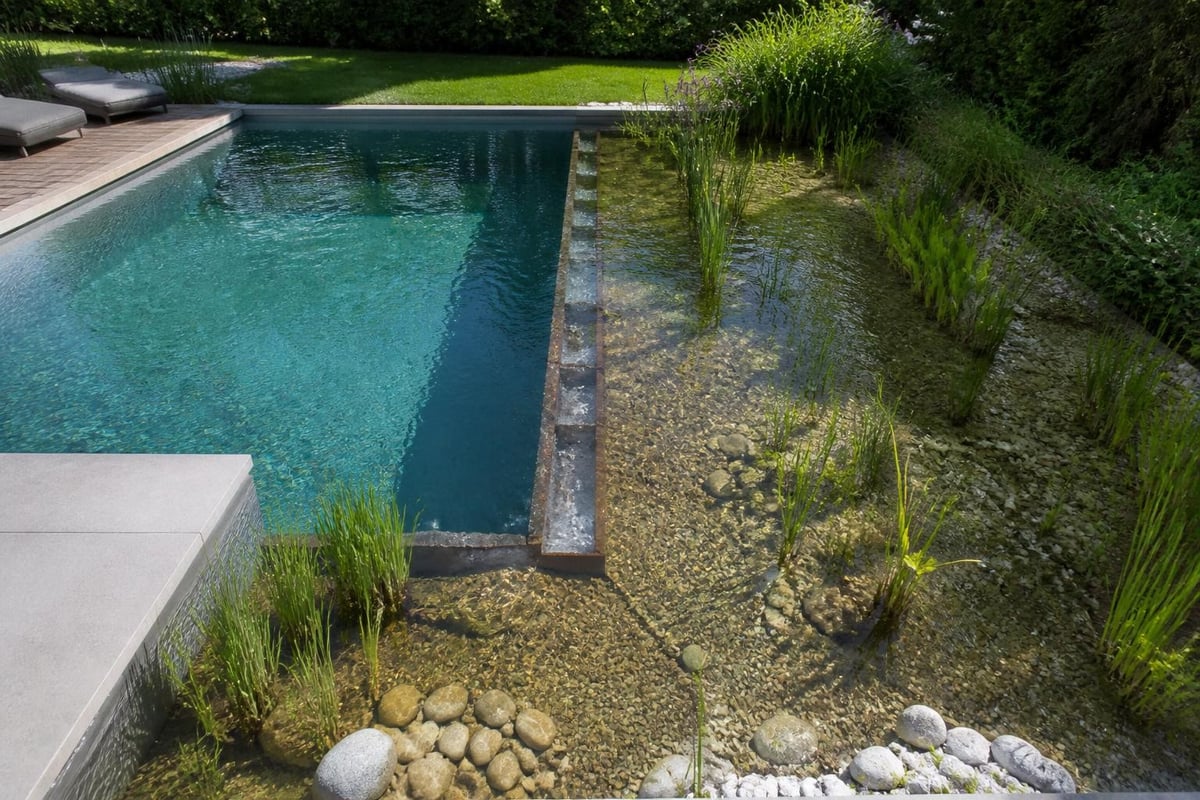
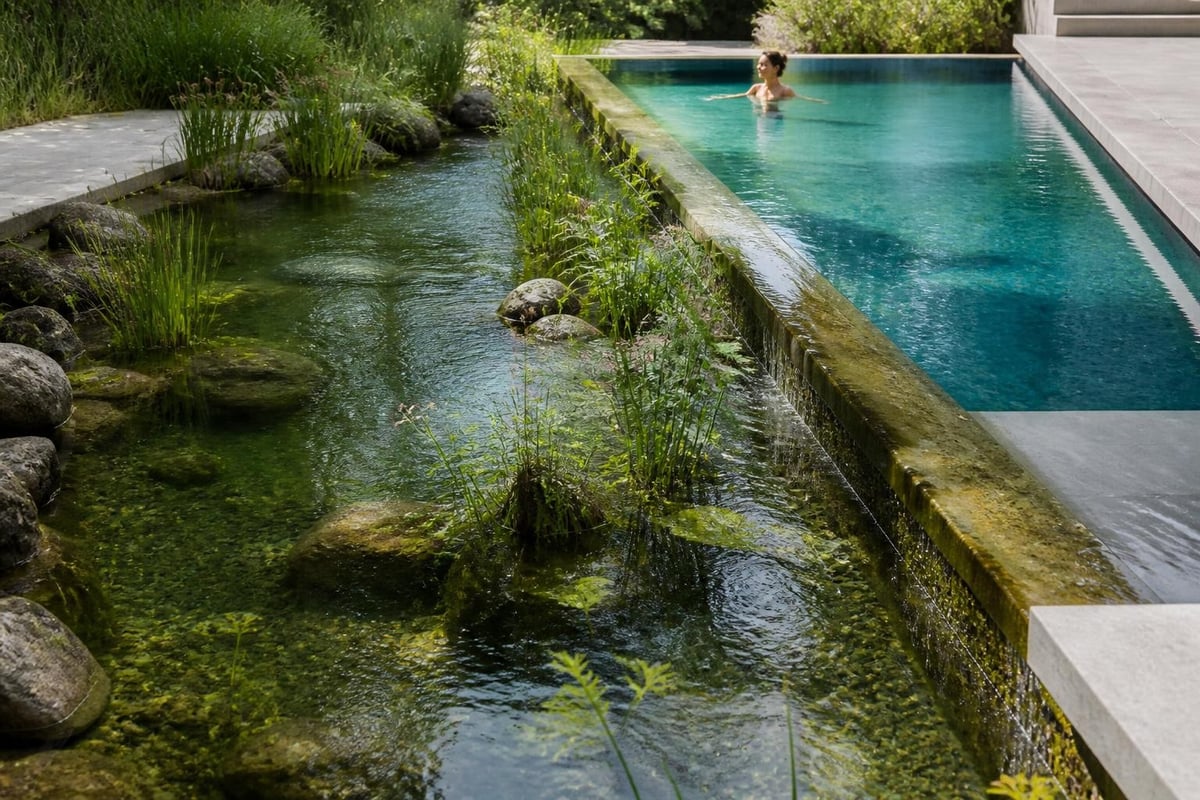
Natural pools consist of two interconnected zones: a deep swimming area and a shallower regeneration zone where aquatic plants and gravel biofilters purify the water. Water circulates continuously between these zones, allowing microorganisms and plant roots to break down organic matter and absorb nutrients that would otherwise fuel algae growth.
The WHO’s recreational water quality guidelines outline health standards that apply to natural bathing waters, emphasizing proper circulation, filtration capacity, and monitoring protocols. Because natural pools rely on ecological balance rather than chemical disinfection, builders must design systems with adequate surface area in the regeneration zone-typically equal to or greater than the swimming zone-to maintain clarity and microbial safety.
Key Components of a Natural Pool
- Regeneration zone with native aquatic plants (cattails, rushes, water lilies)
- Biofilm substrate (gravel or specialized media) where beneficial bacteria colonize
- Skimmers and circulation pumps to move water through biological filters
- Liner or natural clay seal to contain water and separate zones
- Intake and return manifolds to ensure even flow distribution
Professional natural pool builders near me understand that Southern California's climate, water chemistry, and native plant palette require region-specific design adjustments. The EPA’s wetlands overview provides background on constructed wetland functions that inform regeneration zone design, showing how properly sized planted areas support water clarity and nutrient cycling.
How to Evaluate Natural Pool Builders Near Me
Not every pool contractor has the expertise to design and build a functioning natural pool. The biological systems, plant selection, and hydraulic engineering involved differ substantially from traditional gunite or fiberglass installations. When evaluating natural pool builders near me, homeowners should prioritize contractors who demonstrate specific technical knowledge and a portfolio of completed natural pool projects.
| Evaluation Criteria | What to Look For | Red Flags |
|---|---|---|
| Experience | 3+ completed natural pools; references from recent projects | Only conventional pool work; no plant/biofilter knowledge |
| Licensing | Valid contractor license (CSLB in CA); bonded and insured | Unlicensed; no insurance documentation |
| Design Process | Site assessment; custom hydraulic calculations; plant palette | One-size-fits-all plans; no mention of regeneration zone sizing |
| Permits | Handles all local permits; familiar with LA County/city codes | Vague about permitting; suggests skipping inspections |
| Post-Install Support | Seasonal maintenance guidance; water-quality monitoring | No follow-up; unclear about plant establishment period |
The Association for Swimming Ponds and Natural Swimming Pools offers technical resources and professional standards for North American natural pool contractors, serving as a benchmark for evaluating builder qualifications. Contractors who participate in industry associations or have completed training specific to natural pool construction demonstrate commitment to staying current with best practices.
Questions to Ask During Consultations
- How many natural pools have you built in Los Angeles County?
- What regeneration zone to swimming zone ratio do you recommend for my site?
- Which aquatic plants perform best in Southern California year-round?
- How do you size pumps and calculate turnover rates for biological filtration?
- What water-quality testing protocol do you follow during the first year?
- Can you provide references from clients whose pools are at least two years old?
Homeowners should request detailed proposals that break out costs for excavation, liner installation, plumbing, pumps, plant material, and the regeneration zone's gravel or biofilter media. Transparent pricing signals a builder's familiarity with the scope of work and reduces the risk of cost overruns mid-project.
Design Considerations for Los Angeles Natural Pools
Southern California's Mediterranean climate-hot, dry summers and mild, wet winters-shapes natural pool design in several ways. The regeneration zone must support plants that tolerate both seasonal flooding and summer evaporation, while the system's circulation must compensate for higher evaporation rates and reduced winter plant activity.
Sun exposure plays a critical role: too much direct sunlight can raise water temperatures above comfortable levels and promote algae blooms, while too little restricts photosynthesis in the regeneration zone. Most natural pool builders near me recommend strategic shading with pergolas, shade sails, or deciduous trees on the south and west sides.
Soil conditions in Los Angeles vary widely-from sandy coastal soils to heavy clay in valley areas-affecting excavation difficulty, liner stability, and drainage planning. A site assessment should include soil analysis and water table evaluation to prevent future settlement or groundwater intrusion.
Plant Selection for Southern California Natural Pools
- Emergent plants: California bulrush, soft rush, blue flag iris
- Floating plants: Water lilies (provide shade and habitat)
- Submerged oxygenators: Eelgrass, hornwort (supplement oxygen levels)
- Marginal accent plants: California fuchsia, cardinal flower (attract pollinators)
The American Society of Landscape Architects’ water resources highlight nature-based design solutions that integrate natural pools into broader landscape plans, ensuring the pool complements patios, walkways, and garden beds. When working with in-ground pool construction specialists, homeowners can explore hybrid designs that incorporate naturalistic regeneration zones alongside more structured swimming areas.
Permitting and Code Compliance in Los Angeles
Building a natural pool in Los Angeles requires navigating city and county codes that were written primarily for conventional pools. Most jurisdictions classify natural pools under the same regulations as traditional swimming pools, meaning they must meet fencing requirements, setback rules, and structural standards-even though the construction methods differ.
Key permit considerations:
- Fencing: Four-foot minimum height with self-closing, self-latching gates
- Setbacks: Typically five feet from property lines (varies by zone)
- Electrical: GFCI protection for all pumps and lighting; licensed electrician required
- Plumbing: Backflow prevention on any makeup water lines
- Structural: Engineered design for liner retention and excavation stability
Some Los Angeles neighborhoods have additional design review requirements or homeowners association (HOA) restrictions. Natural pool builders near me with local experience can navigate these layers of approval, ensuring the project stays on schedule and meets all compliance checkpoints.
The EPA’s recreational water quality criteria offer technical guidance on microbial indicators and monitoring protocols that inform how natural pools can meet public health standards, even in private residential settings where formal testing may not be mandated.
Cost Breakdown: What to Expect in 2026
Natural pool construction costs in Los Angeles typically range from $80,000 to $150,000 for a mid-sized residential installation, depending on site conditions, finish materials, and regeneration zone complexity. This pricing reflects both the specialized labor involved and the need for high-quality filtration media and plant materials.
Typical Cost Components
| Line Item | Price Range | Notes |
|---|---|---|
| Design & Engineering | $3,000 – $8,000 | Site survey, hydraulic calculations, planting plan |
| Permits & Fees | $2,000 – $5,000 | Varies by city; includes plan check and inspections |
| Excavation | $8,000 – $15,000 | Depth, access, soil disposal; higher in rocky areas |
| Liner Installation | $10,000 – $20,000 | EPDM or reinforced PVC; includes underlayment |
| Plumbing & Pumps | $8,000 – $12,000 | Circulation, skimmers, manifolds, energy-efficient pumps |
| Biofilter Media | $5,000 – $10,000 | Gravel, expanded clay, or proprietary substrates |
| Plants & Installation | $4,000 – $8,000 | Nursery stock, planting, initial fertilization |
| Decking & Edging | $12,000 – $25,000 | Pavers, natural stone, or wood; affects aesthetics and safety |
| Electrical & Lighting | $4,000 – $8,000 | Low-voltage LED, transformer, GFCI panels |
| Misc. & Contingency | $5,000 – $10,000 | Unforeseen site conditions, change orders |
Natural pool builders near me often point out that while upfront costs exceed conventional pools, long-term savings on chemicals, reduced pump energy (biological filters require gentler flow), and minimal resurfacing can offset the initial premium over 10–15 years.
Construction Timeline and What Happens When
A typical natural pool installation in Los Angeles takes 10 to 16 weeks from permit approval to water fill, assuming no major delays. This timeline includes excavation, structural work, plumbing installation, liner placement, biofilter media loading, and plant establishment.
Phase-by-Phase Breakdown
- Permitting (2–6 weeks): Submit plans, respond to plan-check comments, receive approval
- Excavation (1 week): Dig swimming zone and regeneration zone; grade slopes and benches
- Plumbing rough-in (1 week): Install intake and return lines, skimmer plumbing, drain connections
- Liner installation (1 week): Place underlayment, weld liner seams, secure edges
- Biofilter media loading (3–5 days): Place gravel or substrate in regeneration zone; create planting pockets
- Planting (1 week): Install aquatic plants, establish root zones, add initial beneficial bacteria
- Deck and edging (2–3 weeks): Pavers, coping, or natural stone; integrate with landscape
- Electrical and lighting (1 week): Wire pumps, install LEDs, final inspection
- Water fill and startup (1 week): Fill pool, start circulation, monitor chemistry, allow biofilm to establish
The Definitive Guide to Natural Swimming Pools published by the International Organization for Natural Bathing Waters provides technical planning and construction essentials that many professional builders reference during the build process.
Maintenance Requirements and Seasonal Care
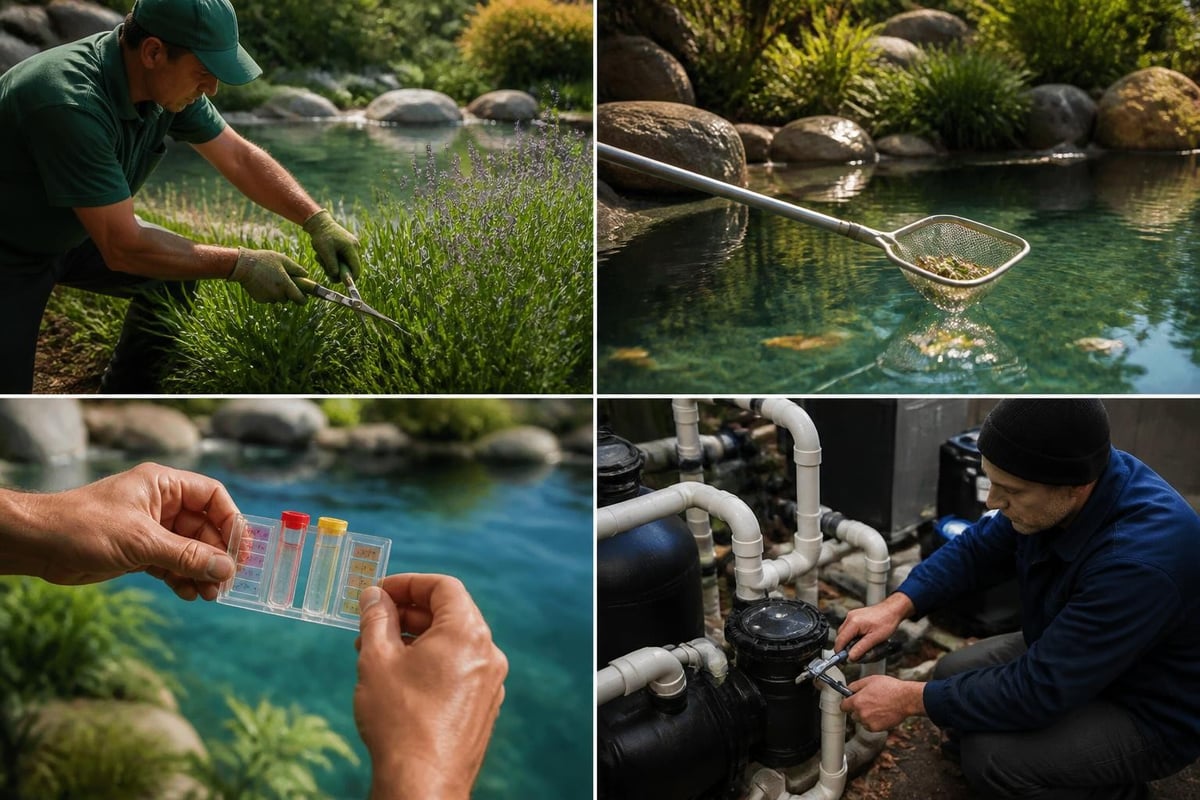
Natural pools require different maintenance than chlorinated pools-less chemistry management but more attention to plant health and biological balance. During the first year, the biofilm community establishes itself, and plants develop robust root systems. Homeowners should expect to monitor water clarity weekly and adjust circulation if needed.
Year-round maintenance tasks:
- Weekly: Skim surface debris; check pump operation and flow rates
- Monthly: Test pH, alkalinity, and nutrient levels; remove excess plant growth
- Quarterly: Inspect liner for punctures; prune plants; clean skimmer baskets
- Annually: Thin plant colonies; top-dress biofilter gravel; service pumps
In Los Angeles, where winters are mild, most aquatic plants remain semi-active year-round, reducing the dramatic seasonal die-back common in colder climates. However, summer heat can accelerate evaporation, requiring regular top-ups and occasional nutrient supplementation if plants show stress.
Natural pool builders near me often provide a maintenance schedule and initial coaching on water-quality testing, ensuring homeowners feel confident managing their pool's ecosystem. Some contractors offer seasonal service packages, especially during the critical first year when biological balance is still stabilizing.
Integrating Natural Pools into Landscape Design
A well-designed natural pool doesn't sit in isolation-it becomes the focal point of a cohesive backyard ecosystem. Natural pool builders near me collaborate with landscape architects to ensure the regeneration zone blends with native plantings, patios connect visually to the water's edge, and hardscape materials complement the naturalistic aesthetic.
Design integration strategies:
- Tiered plantings: Transition from poolside grasses to taller perennials to background shrubs
- Natural stone edging: Use locally sourced boulders or flagstone to soften the pool perimeter
- Shade structures: Pergolas with native vines (California grape, wisteria) provide cooling and habitat
- Wildlife habitat: Bird baths, pollinator gardens, and log piles near the regeneration zone
The British Association of Natural Swimming Pools showcases European case studies where natural pools anchor garden designs, demonstrating how thoughtful planning creates spaces that feel like natural ponds while delivering the performance of engineered swim environments.
Homeowners in neighborhoods like Pacific Palisades, Brentwood, and Calabasas often integrate natural pools into larger outdoor living projects, combining them with hardscape and landscape services to create resort-style backyards that prioritize sustainability and low-impact recreation.
Energy Efficiency and Sustainability Advantages
Natural pools align with California's emphasis on water conservation and energy efficiency. Because biological filtration relies on slow, continuous circulation rather than high-velocity turnover, pumps can operate at lower speeds, reducing electricity consumption by 30–50% compared to conventional pool systems that power sand filters and chlorinators.
Sustainability highlights:
- No chemical inputs: Eliminates chlorine, algaecide, and pH adjusters
- Reduced water waste: Backwashing is unnecessary; evaporation is the primary loss
- Habitat creation: Provides food and shelter for beneficial insects, amphibians, and birds
- Carbon sequestration: Aquatic plants absorb CO₂ and release oxygen
- Permeable integration: Often paired with permeable paving to reduce stormwater runoff
Variable-speed pumps paired with timers allow homeowners to run circulation during off-peak electricity hours, further lowering operating costs. Solar panels can offset pump energy entirely, creating a net-zero swim environment.
Common Challenges and How Builders Address Them
Even experienced natural pool builders near me encounter site-specific challenges that require creative problem-solving. Los Angeles' hilly terrain, restrictive lot sizes, and variable soil conditions present obstacles that don't exist in flatter, more rural settings.
Challenge: Limited Space for Regeneration Zone
Solution: Vertical biofilters using stacked planters or wall-mounted media; hybrid systems that combine gravel filtration with compact planted beds.
Challenge: High Evaporation in Summer Heat
Solution: Shade sails, floating plants, or automatic fill valves tied to moisture sensors; recommending deeper swimming zones to slow heat absorption.
Challenge: Neighbor Concerns About Mosquitoes
Solution: Continuous circulation prevents stagnant conditions; mosquito fish (Gambusia affinis) or native dragonfly larvae provide biological control without chemicals.
Challenge: Hard Water from Municipal Supply
Solution: Pre-filtration on makeup water; plant species selection favoring alkaline tolerance; periodic acid washing of liner surfaces.
Transparent communication about potential challenges during the design phase helps set realistic expectations and allows homeowners to make informed decisions about site modifications or system upgrades.
Red Flags to Avoid When Hiring
Not all contractors advertising as natural pool builders near me have the necessary expertise. Homeowners should watch for warning signs that indicate a builder may lack the specialized knowledge required for successful natural pool construction.
Avoid contractors who:
- Claim natural pools "never need maintenance" or "clean themselves completely"
- Propose regeneration zones smaller than 50% of the swimming area without justification
- Suggest using tap water without discussing chlorine/chloramine removal
- Offer no guidance on plant species or seasonal care
- Cannot explain how biological filtration differs from mechanical sand filters
- Provide vague timelines or "ballpark" estimates without site visits
Reputable natural pool builders near me provide detailed contracts, staged payment schedules tied to milestones, and clear warranties on workmanship. They also carry general liability insurance and workers' compensation coverage, protecting homeowners from liability if accidents occur on-site.
Future Trends in Natural Pool Design
As environmental awareness grows and Los Angeles homeowners seek alternatives to chemical-heavy pool systems, natural pool adoption is accelerating. Builders report increasing interest in hybrid designs that incorporate UV clarification or ozone supplementation to boost water clarity without resorting to chlorine.
Emerging trends for 2026 and beyond:
- Modular biofilter systems: Prefabricated filter modules that simplify installation and reduce costs
- Smart monitoring: IoT sensors that track pH, temperature, and nutrient levels with smartphone alerts
- Native-only plantings: Regeneration zones stocked exclusively with California native species
- Pool-spa combinations: Natural swimming areas with adjacent hot tubs using separate filtration
- Regenerative landscapes: Pools that double as graywater treatment zones for landscape irrigation
The WHO’s full technical guidelines on recreational water environments continue to evolve, influencing how natural pool builders near me approach design, monitoring, and safety protocols to align with public health best practices.
Finding qualified natural pool builders near me requires careful vetting, a clear understanding of biological filtration principles, and realistic expectations about costs and maintenance. When you're ready to explore how a natural pool can transform your Los Angeles backyard into a sustainable, chemical-free oasis, AM BUILDS CA brings 15+ years of licensed, family-owned expertise in custom pool construction, site assessment, and transparent project management-call (424) 485-4548 for a free, no-obligation consultation.


