


Hiring the right contractor for a custom pool project in Los Angeles is one of the most important decisions a homeowner will make. With hundreds of firms claiming expertise, the real challenge is separating licensed professionals from unlicensed operators, understanding what makes a quality build, and knowing which questions will reveal a contractor's true capabilities. Whether you're building your first in-ground pool or replacing an aging one, the contractor you choose will determine the timeline, budget accuracy, permit compliance, and final quality of your backyard investment.
What Sets Professional Los Angeles Pool Contractors Apart
The difference between a professional contractor and a subpar operator becomes clear the moment you request an estimate. Licensed los angeles pool contractors carry active Contractors State License Board credentials, maintain current liability and workers' compensation insurance, and provide verifiable references from recent projects. They also demonstrate fluency with local code requirements and the City's permitting workflow.
Licensing and Legal Compliance
California law requires anyone constructing, altering, or repairing pools valued over $500 to hold an active contractor's license. For swimming pool work specifically, contractors typically hold a C-53 Swimming Pool classification or a B General Building license. Before signing any contract, verify the contractor's license number through the CSLB public database and confirm there are no outstanding disciplinary actions or liens.
Key credentials to verify:
- Active CSLB license number
- Classification appropriate to scope (C-53 or B)
- Current general liability insurance ($1M minimum recommended)
- Workers' compensation coverage
- Bonding status and bond amount
Los Angeles County also enforces pool safety ordinances under the Health and Safety Code. Professional contractors stay current with these requirements and factor compliance costs into their bids, rather than treating permits as optional.
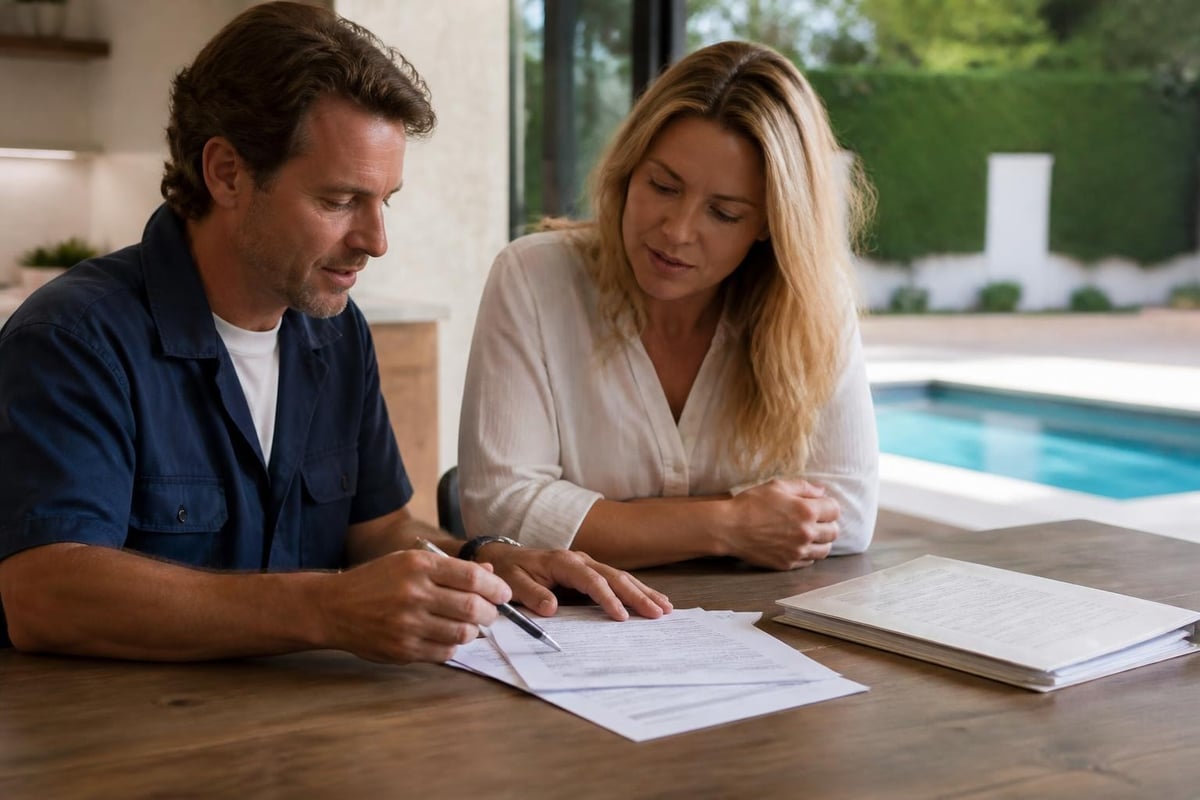
Permit Knowledge and City Relationships
Anyone who has navigated LADBS plan‑check and permit processes knows that Los Angeles enforces strict construction standards. Experienced los angeles pool contractors maintain working relationships with plan checkers, understand ePlanLA submission requirements, and anticipate common correction cycles. They also coordinate inspections for grading, steel placement, plumbing, electrical, and final sign-off without delays.
A contractor unfamiliar with LA's permitting workflow will generate costly change orders when the inspector red-tags work that doesn't meet code. Ask candidates how many pools they've permitted in the past 24 months and request permit numbers you can verify with the City. If you’re comparing options, our guide on how to choose the best pool builder near me in Los Angeles covers licenses, permits, contracts, and pricing.
How to Evaluate Contractor Bids and Proposals
Not all estimates are created equal. Some los angeles pool contractors provide line-item breakdowns showing equipment models, material grades, labor allocations, and permit fees. Others submit vague lump-sum figures that obscure exactly what you're paying for and leave room for surprise charges mid-project.
What a Complete Proposal Should Include
A thorough written proposal documents every aspect of the project, from excavation to final cleanup. It should specify pool dimensions, depth profile, equipment brands and models, finish materials, decking type, and all optional features such as attached spas, lighting, or water features.
| Proposal Element | What to Look For | Red Flag |
|---|---|---|
| Site Preparation | Excavation method, soil export plan, utility locates | "Excavation included" with no details |
| Structural | Steel schedule (rebar size/spacing), gunite/shotcrete specs, engineering stamp | Generic "reinforced concrete" language |
| Equipment | Specific pump model, filter type, heater BTU, automation system brand | "Standard equipment" or no brands listed |
| Finish | Plaster type/color or tile specification, coping material | "Pool finish" with no material named |
| Decking | Paver brand, concrete mix design, square footage, drainage plan | Missing entirely or listed as "optional" |
| Permits & Engineering | Itemized city fees, third-party plan check, engineering costs | Permits listed as homeowner responsibility |
Compare at least three written bids and look beyond the bottom-line number. The lowest bidder often omits permit costs, skimps on steel reinforcement, or plans to substitute inferior equipment. The highest bidder may include luxury upgrades you don't need.
Understanding Payment Schedules and Lien Releases
California law caps the initial down payment at 10% of the contract price or $1,000, whichever is less, for home improvement contracts. Reputable los angeles pool contractors structure progress payments tied to completed milestones (steel inspection, gunite completion, equipment installation, final inspection) and provide unconditional lien releases from all subcontractors and material suppliers at each payment stage.
Never make a final payment until the building department issues a certificate of occupancy or final approval and you've received a full set of lien releases. This protects you from mechanics' liens filed by unpaid subcontractors.
Essential Questions to Ask Before You Hire
Even with a solid proposal in hand, interviews reveal how a contractor handles communication, problem-solving, and client expectations. The answers to these questions will tell you whether a firm is a good fit for your project.
Experience and Specialization
- How many pools have you completed in Los Angeles in the past two years? Look for contractors who focus primarily on residential pool construction rather than juggling pools as a side business.
- Can I visit a recently completed project or speak with a recent client? The best contractors provide multiple references and welcome site visits.
- Do you self-perform the work or subcontract all trades? Firms that employ their own steel crew, plumbers, and shotcrete specialists maintain tighter quality control than those who rely entirely on subcontractors.
When you're ready to move forward, companies offering in-ground pool construction in Los Angeles should walk you through design options, site constraints, and realistic timelines before you commit.
Process and Timeline Transparency
- What is your typical timeline from contract signing to final inspection? Standard in-ground pool projects in LA take 10 to 16 weeks depending on size, complexity, and permit approval speed.
- How do you handle plan-check corrections or unexpected site conditions? Experienced contractors budget contingency time and maintain open communication when issues arise.
- Who will be my primary point of contact during construction? Ideally, you work directly with the owner or a dedicated project manager, not a rotating cast of field supervisors.
Code Compliance and Safety Standards
Los Angeles enforces Title 24 energy standards for pool equipment, requiring variable-speed pumps and efficient heaters. The California Energy Commission regulations mandate specific motor efficiency ratings, and qualified contractors factor these requirements into equipment selection from the start.
Ask candidates:
- How do you ensure compliance with Title 24 energy codes? They should specify variable-speed pumps and high-efficiency heaters that meet state minimums.
- What safety barriers and fencing do you install to meet LA pool safety ordinances? Code requires barriers, self-closing gates, and alarms on certain access points.
- Do you pull all necessary permits, including grading, plumbing, electrical, and final pool permits? Any answer other than "yes" is disqualifying.
Common Pitfalls When Hiring Pool Contractors
Even diligent homeowners fall into traps when vetting los angeles pool contractors. Recognizing these red flags early can save you tens of thousands of dollars and months of frustration.
Unlicensed Operators and Cash-Only Deals
Unlicensed contractors often offer rock-bottom prices and request cash payments to "save on taxes." This arrangement leaves you with zero recourse if the work is defective, no access to the Contractors State License Board complaint process, and potential liability if a worker is injured on your property. It also voids your homeowner's insurance coverage for construction-related claims.
California's underground economy costs homeowners millions annually in abandoned projects, code violations, and legal fees. Always verify licensing before any money changes hands.
Vague Contracts and Scope Creep
Contracts that lack detail create opportunities for disputes. When the agreement says "install pool equipment" without specifying brands or models, the contractor can legally install the cheapest pump and filter available. When it omits timelines, you have no leverage if the project drags on for months.
Protect yourself by insisting on:
- Complete equipment specifications (brand, model, efficiency rating)
- Material grades and finishes (plaster type, coping stone, tile)
- Work schedule with milestone dates
- Change-order process in writing
- Warranty terms for labor and materials
Ignoring Soil and Site Conditions
Los Angeles sits on diverse geology, from stable alluvial fans to expansive clay soils and hillside lots requiring extensive engineering. Contractors who skip soil testing or ignore geotechnical reports set projects up for structural failure. Proper los angeles pool contractors conduct site evaluations, recommend soil tests when conditions warrant, and adjust their construction approach based on findings.
Expansive soils require deeper footings, additional steel reinforcement, and sometimes soil stabilization. Hillside sites need retaining walls, drainage systems, and careful grading. Cutting corners on these fundamentals leads to cracked shells, settling decks, and costly repairs within a few years.
Specialized Services and Advanced Features
Modern pool projects often extend beyond the basic shell and equipment. Homeowners invest in integrated spas, custom water features, advanced automation, and outdoor living areas that require coordination across multiple trades.
Design-Build Advantages
Los angeles pool contractors offering design-build services handle the entire project from concept through completion. This integrated approach streamlines communication, reduces finger-pointing between designers and builders, and often shortens overall timelines. You work with a single point of contact who coordinates architects, engineers, equipment suppliers, and trade contractors.
Benefits of design-build include:
- Unified responsibility for design feasibility and constructability
- Fewer change orders due to design conflicts
- Faster permitting when the builder understands City requirements
- Coordinated aesthetics between pool, decking, landscaping, and hardscape
For homeowners planning comprehensive backyard remodeling in Los Angeles, this approach integrates the pool with outdoor kitchens, fire features, and entertainment areas in a cohesive plan.
Energy Efficiency and Smart Controls
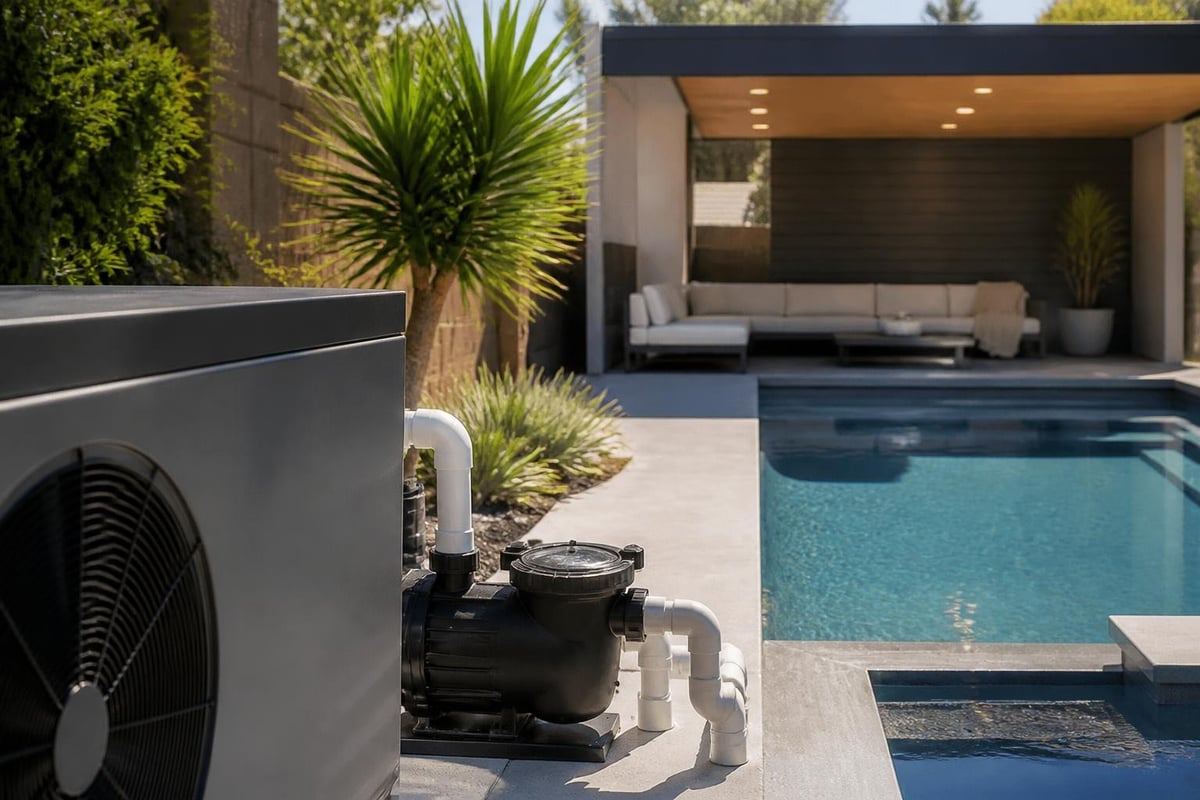
Energy costs for heating, filtering, and sanitizing a pool can exceed $1,200 annually in Southern California. Forward-thinking contractors specify variable-speed pumps that reduce energy consumption by 60% to 80% compared to single-speed models, high-efficiency gas or heat pump heaters, and LED lighting systems.
Smart automation systems allow you to control pumps, heaters, lights, and water features from your smartphone. They also enable scheduling to run equipment during off-peak electricity hours and integrate with home automation platforms.
| Feature | Energy Savings | Typical Cost Premium | Payback Period |
|---|---|---|---|
| Variable-speed pump | 60-80% vs. single-speed | $800-$1,200 | 2-3 years |
| Heat pump heater | 50-70% vs. gas | $3,500-$5,000 | 4-6 years |
| LED pool lighting | 85% vs. incandescent | $400-$800 | 1-2 years |
| Automation system | 10-15% overall | $1,500-$3,000 | 5-7 years |
Navigating Permits and Inspections
The City of Los Angeles requires permits for virtually all pool construction, and the inspection process involves multiple sign-offs at critical construction phases. Understanding this workflow helps you hold your contractor accountable and avoid delays.
The Permit Application Process
Once you approve final plans, your contractor submits applications through ePlanLA, the City's online permitting portal. The package typically includes:
- Architectural site plan showing pool location, setbacks, and drainage
- Structural engineering calculations and steel schedules
- Plumbing layout with equipment specifications
- Electrical plan for lighting, pumps, and controls
- Grading and drainage plan
- Energy compliance documentation (Title 24)
Plan check can take four to eight weeks, depending on City workload and plan complexity. Experienced los angeles pool contractors anticipate common correction requests and submit clean, complete packages that minimize review cycles.
Required Inspections
Los Angeles requires inspections at each critical construction stage:
- Footing and grading inspection after excavation and before steel placement
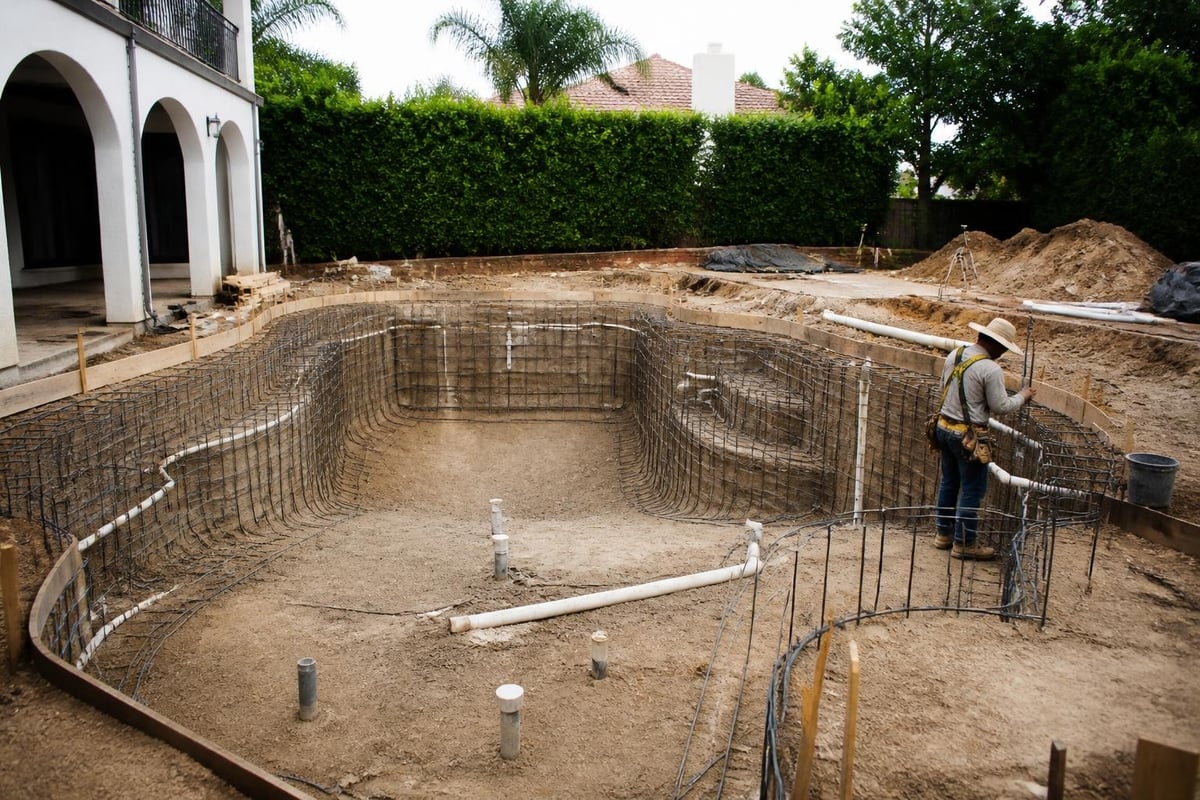
- Reinforcing steel inspection before shotcrete application
- Plumbing rough-in inspection before backfill and decking
- Electrical rough-in inspection before cover-up
- Final inspection after completion and before water fill
Missing an inspection or covering work prematurely can result in expensive demolition to expose hidden elements. Professional contractors schedule inspections in advance, notify you of upcoming visits, and address corrections immediately.
For pools used by the public or as part of multi-family properties, additional inspections under the Los Angeles County Public Health pool inspection program apply, covering water quality, barrier compliance, and safety equipment.
Understanding Construction Methods and Materials
The construction method and materials your contractor uses directly impact the pool's longevity, maintenance requirements, and resale value. Los Angeles pool contractors primarily build gunite (shotcrete) pools, though fiberglass and vinyl liner options exist for specific applications.
Gunite vs. Shotcrete Construction
Gunite and shotcrete refer to pneumatically applied concrete. Gunite uses a dry mix with water added at the nozzle, while shotcrete uses a wet mix. Both create a monolithic, reinforced concrete shell that conforms to any shape and withstands decades of use when properly constructed.
Key quality factors include:
- Steel reinforcement schedule: Minimum #3 rebar on 12-inch centers, with closer spacing on curves and deep ends
- Concrete mix design: Minimum 3,500 PSI compressive strength with appropriate slump and air entrainment
- Application technique: Certified nozzlemen who maintain proper spray angle and compaction
- Curing process: Keeping the shell moist for at least seven days to achieve full strength
Inferior contractors skimp on steel, use weak concrete mixes, or rush the curing process. These shortcuts lead to cracking, leaks, and structural failure.
Finish Options and Longevity
The interior finish affects both aesthetics and maintenance. Standard white plaster lasts 7 to 10 years before resurfacing is needed. Upgraded finishes extend service life and offer enhanced appearance:
- Quartz plaster: Polished quartz aggregates blended into plaster; lasts 10-15 years
- Pebble finish: Exposed aggregate surfaces; 15-20 year lifespan; slip-resistant texture
- Glass bead finish: Crushed recycled glass; 15-20 years; smooth, reflective surface
- Tile: Porcelain or glass tile; 25+ years; highest cost but longest life
Discuss finish options with your contractor early, as they affect both the budget and the pool's long-term maintenance cost.
Working with Family-Owned vs. Large Firms
Los angeles pool contractors range from solo owner-operators to firms employing dozens of workers. Each model offers distinct advantages depending on your project size, timeline, and desired level of personal attention.
Benefits of Family-Owned Contractors
Family-owned firms often provide direct access to the owner throughout the project. You're not handed off to a project manager who juggles 15 other jobs. Decision-making is faster, communication is clearer, and quality control is tighter when the owner has personal accountability.
Typical advantages:
- Owner directly oversees critical construction phases
- Faster response to questions or concerns
- Greater flexibility on design modifications
- Pride of workmanship tied to personal reputation
- Long-term relationship for future service or remodeling
Family businesses also tend to maintain cleaner job sites, respect your property, and treat your project as a reflection of their personal standards rather than just another contract.
When Larger Firms Make Sense
Large contractors with multiple crews can complete projects faster and may offer lower prices due to volume purchasing power. They're better equipped to handle complex commercial projects, manage concurrent residential jobs, and provide extensive warranty support through dedicated service departments.
For standard residential pools without custom features, a larger firm may deliver a quality product efficiently. However, you sacrifice personal attention and may deal with high employee turnover that affects project continuity.
Maintenance Planning and Long-Term Relationships
The contractor relationship doesn't end when the final inspection passes. Reputable los angeles pool contractors provide comprehensive handoff training, clear warranty documentation, and ongoing support for equipment questions or minor issues.
Warranty Coverage
California law requires a one-year warranty on workmanship and materials for home improvement contracts. Quality contractors exceed this minimum, often providing:
- 10-year structural warranty on the shell
- 3-5 year warranty on plaster or finish
- Manufacturer warranties on equipment (pumps, heaters, automation)
- 1-2 year warranty on plumbing and electrical installations
Review warranty terms carefully. Some exclude coverage for water chemistry damage, freeze damage, or failure to maintain proper operating conditions. Understand what's covered, what's excluded, and how to file a claim if problems arise.
Establishing a Maintenance Routine
Your contractor should provide detailed startup instructions covering:
- Water chemistry targets (pH, alkalinity, calcium hardness, sanitizer levels)
- Filter cleaning schedule and backwash procedures
- Equipment operation and troubleshooting
- Winterization steps if you close the pool seasonally
- Recommended service intervals for pumps, heaters, and automation
Many homeowners hire pool service companies for weekly maintenance, but understanding basic operations helps you identify problems early and communicate effectively with service technicians. Ask your contractor for referrals to reputable maintenance providers they've worked with on past projects.
Insurance and Risk Management
Pool construction involves significant risk, from worker injuries to property damage to post-completion liability. Proper insurance protection safeguards both you and the contractor from catastrophic financial loss.
Required Coverage Types
Licensed los angeles pool contractors maintain several insurance policies:
- General liability insurance covers property damage and third-party injuries during construction (minimum $1M recommended)
- Workers' compensation covers medical costs and lost wages if a worker is injured on your property
- Auto insurance covers vehicles and equipment used on the job site
- Builder's risk insurance protects the project from theft, vandalism, or weather damage during construction
Request certificates of insurance listing you as an additional insured on the general liability policy. This ensures you receive notification if the policy is cancelled and provides direct coverage if a claim arises.
Post-Completion Liability
Once your pool is operational, your homeowner's insurance should cover injuries and property damage. However, notify your insurance carrier before construction begins. Many policies require additional coverage or endorsements for pools, trampolines, and other "attractive nuisances."
Los Angeles County requires specific safety barriers, alarms, and signage to reduce drowning risk. For properties with pools accessible to the public or used for commercial purposes, additional liability coverage and compliance with ADA accessibility standards may apply.
Regional Considerations Across Los Angeles
Los Angeles County encompasses diverse microclimates, soil conditions, and municipal jurisdictions that affect pool construction. What works in the flat, stable soils of the San Fernando Valley may not work on a Malibu hillside or in the coastal fog belt.
Climate and Design Adaptations
Inland areas experience temperature swings of 30-40°F between day and night, making heaters essential for year-round use. Coastal zones stay moderate but deal with marine layer moisture that accelerates corrosion on metal fittings and equipment.
Smart contractors adapt equipment specifications based on location:
- Inland (San Fernando Valley, Pasadena): Larger heaters, shade structures, evaporation covers
- Coastal (Santa Monica, Manhattan Beach): Corrosion-resistant materials, dehumidification for indoor spas
- Hillside (Hollywood Hills, Bel Air): Advanced engineering, retaining walls, infinity edges
Wind exposure also matters. Pools in exposed hilltop locations lose heat rapidly and accumulate more debris, requiring stronger covers and larger skimmers.
Jurisdictional Variations
While most of Los Angeles operates under City jurisdiction, some areas like West Hollywood, Culver City, and Beverly Hills maintain independent building departments with unique requirements. Verify that your contractor is familiar with the specific jurisdiction's codes and has successfully permitted projects there recently.
Certain municipalities also enforce stricter water conservation rules, drought-tolerant landscaping requirements, or design review board approvals that add time and cost to the permitting process. Experienced local contractors navigate these variations routinely.
Choosing among los angeles pool contractors requires careful research into licensing, experience, construction methods, and communication style. The right contractor brings expertise in local codes, soil conditions, and permitting workflows while maintaining transparency throughout the design and construction process. If you're ready to transform your backyard with a custom in-ground pool built to the highest standards, AM BUILDS CA combines 15 years of experience, direct owner involvement, and meticulous attention to detail. As a licensed family-owned contractor serving Los Angeles and surrounding communities, we deliver clear pricing, clean job sites, and quality workmanship on every project. Contact us at (424) 485-4548 for a free, no-obligation estimate.


