


Choosing the right contractor for your backyard oasis is one of the most important decisions you'll make as a homeowner. Local swimming pool builders bring specialized knowledge of regional regulations, soil conditions, and climate factors that national franchises often overlook. In Southern California markets like Los Angeles, where building codes are stringent and lot conditions vary dramatically from the hillsides to coastal areas, working with an experienced local team can mean the difference between a smooth installation and a project plagued by permit delays and structural issues. This guide walks you through everything you need to know about finding, vetting, and hiring local swimming pool builders who will deliver quality work at a fair price.
Understanding What Local Swimming Pool Builders Offer
The scope of services varies significantly across contractors. Some specialize exclusively in gunite construction, while others offer turnkey solutions that include hardscape, landscaping, and outdoor living features.
Comprehensive Project Management
Reputable local swimming pool builders coordinate every phase of construction from design through final inspection. They handle permit applications, schedule inspections, manage subcontractors, and ensure compliance with municipal codes. In Los Angeles County, for instance, pools must meet specific setback requirements, barrier regulations, and energy-efficiency standards that require intimate knowledge of local ordinances.
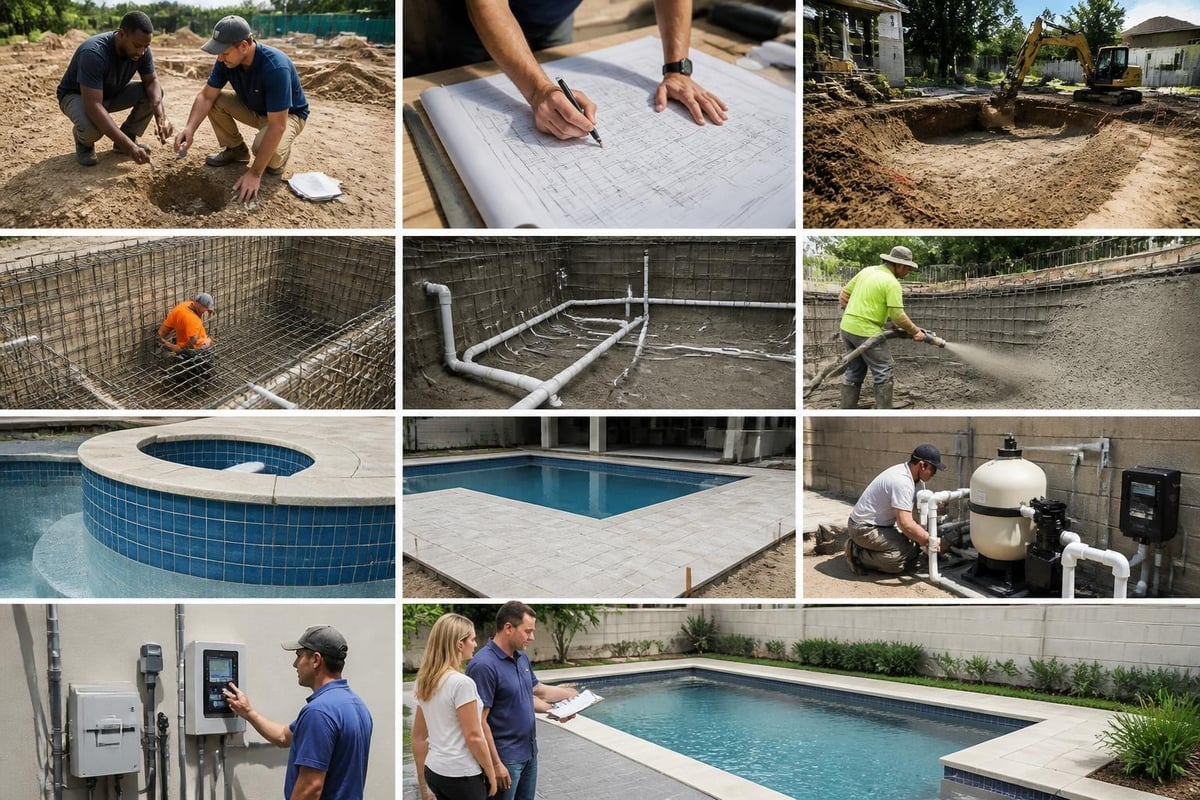
Working directly with the owner of a family-operated business often streamlines communication. You get consistent answers, faster decisions, and accountability that disappears when you're routed through sales reps and project managers who have never visited your property.
Design Flexibility and Customization
Local contractors typically offer more design flexibility than national chains working from template catalogs. They can:
- Adapt plans to irregular lot shapes and challenging topography
- Integrate existing landscape features and mature trees
- Customize depths, entries, and benches to match how your family will actually use the pool
- Source regional materials that perform better in your specific climate
Many Southern California builders have deep relationships with local tile suppliers, stone yards, and equipment distributors, giving you access to materials and pricing that out-of-area contractors can't match.
Vetting Credentials and Experience
Not all contractors who advertise pool services are equally qualified. California requires a C-53 swimming pool contractor license for anyone building, repairing, or remodeling pools. Always verify active licensure through the Contractors State License Board (CSLB) website before signing any agreement.
License, Insurance, and Bonding Requirements
| Credential | Why It Matters | How to Verify |
|---|---|---|
| C-53 License | Legal authority to build pools in California | CSLB website lookup |
| General Liability | Protects your property during construction | Request certificate of insurance |
| Workers' Compensation | Covers crew injuries on your property | Verify with contractor's insurer |
| Bond | Financial protection if contractor fails to complete work | Included with active license |
The Better Business Bureau recommends checking complaint history, arbitration records, and customer reviews across multiple platforms. Look for patterns in feedback rather than isolated negative experiences.
Portfolio and References
Ask to see completed projects similar to what you envision. Seasoned local swimming pool builders maintain photo galleries organized by style, size, and feature type. Visit job sites if possible, especially projects completed 3-5 years ago, to assess how materials and finishes have weathered.
Request at least three references from projects completed in the past 18 months. Ask those homeowners:
- Did the project finish on schedule and within budget?
- How did the contractor handle unexpected issues or change orders?
- Was the job site kept clean and secure?
- Would you hire this contractor again?
Comparing Bids and Understanding Pricing
Pool construction represents a significant investment, and pricing structures can be confusing. Local swimming pool builders should provide itemized proposals that break down costs by phase and material.
What Detailed Estimates Should Include
A professional estimate goes beyond a single lump-sum number. It specifies dimensions, materials, equipment brands and models, finish options, and construction methods. Watch for vague line items like "standard pool finish" or "typical decking" that leave room for substitutions.
- Excavation and engineering: Soil conditions dramatically affect foundation costs
- Steel and shotcrete: The structural shell, including thickness and rebar schedule
- Plumbing and equipment: Pump, filter, heater, automation, and energy-efficiency ratings
- Interior finish: Plaster type, color, aggregate exposure, or alternative finishes
- Coping and tile: Linear footage, material, and installation method
- Decking: Square footage, material type, and finish options
For those exploring in-ground pool construction in Los Angeles, understanding the distinction between budget-conscious builds and premium installations helps set realistic expectations. Quality contractors explain where you can save money and where cutting corners creates long-term problems.
Red Flags in Pool Contractor Proposals
Extremely low bids often signal trouble. Underbidding contractors may plan to nickel-and-dime you with change orders, substitute inferior materials, or lack proper insurance. Be wary of:
- Pressure to sign immediately or "lose" a special price
- Requests for large upfront deposits (California law limits initial payments to $1,000 or 10% of contract price, whichever is less)
- Reluctance to provide proof of license and insurance
- No written warranty on workmanship or materials
- Absence of a detailed scope of work and specifications
Navigating Permits and Code Compliance
Building a pool without proper permits creates liability nightmares and can tank your property value. Local swimming pool builders familiar with your jurisdiction shepherd projects through plan review and inspection processes efficiently.
Los Angeles County Permit Requirements
Pool permits in LA County typically require:
- Plot plan showing setbacks and easements
- Structural calculations stamped by a licensed engineer
- Electrical plan for bonding, grounding, and equipment
- Barrier compliance (fencing, alarms, or pool covers)
- Energy compliance for pumps and heaters
The Pool & Hot Tub Alliance standards provide the technical foundation for many local codes. The IAPMO Uniform Swimming Pool, Spa and Hot Tub Code is adopted by numerous California jurisdictions and sets minimum requirements for safety, sanitation, and equipment.
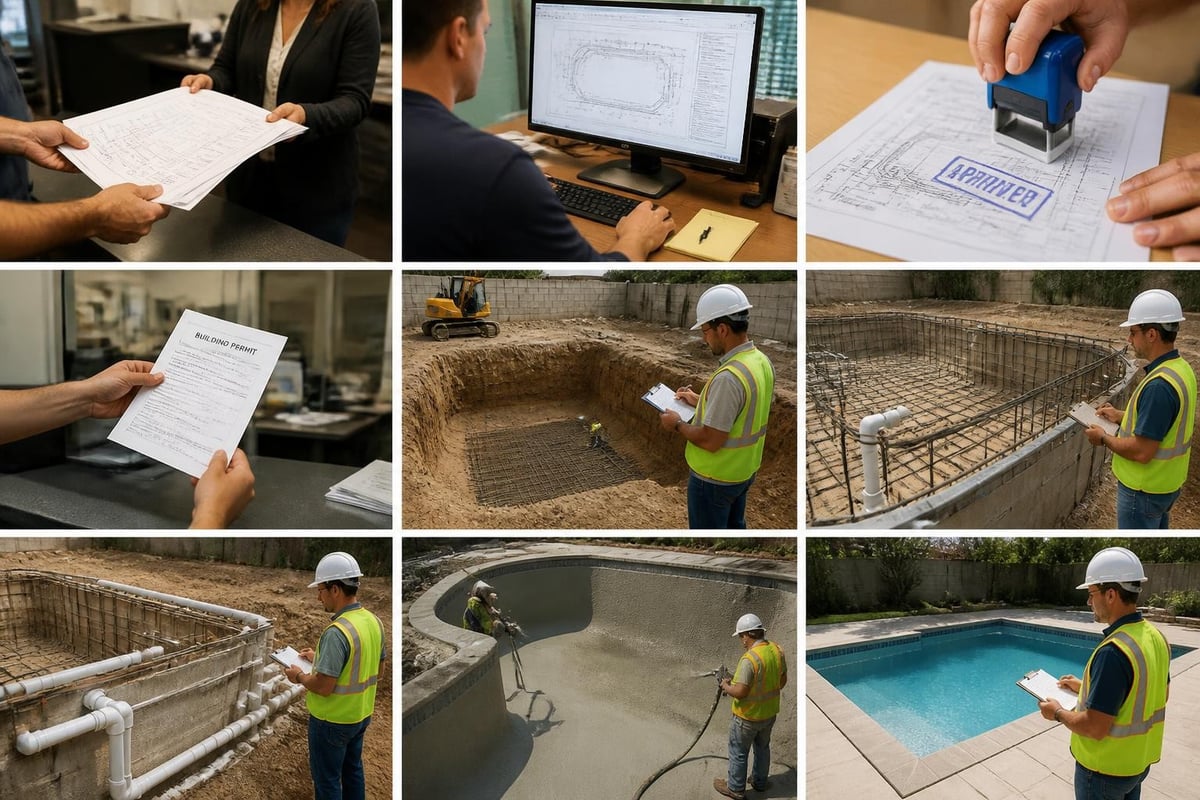
Experienced contractors build inspection schedules into project timelines and know which details inspectors scrutinize. They won't rush phases or hide work that requires sign-off.
Construction Timeline and Project Phases
Understanding the construction sequence helps you plan around disruption and monitor progress. Standard timelines in Southern California run 10-16 weeks from permit issuance to swim-ready, weather permitting.
Typical Build Sequence
The process unfolds in distinct phases, each dependent on the previous work being completed and inspected:
Week 1-2: Layout, excavation, and engineering
Week 3: Steel installation and plumbing rough-in
Week 4: Electrical conduit and bonding
Week 5-6: Shotcrete application and curing
Week 7-9: Tile, coping, and deck construction
Week 10-12: Equipment installation and startup
Week 13-16: Interior finish and fill
Weather, inspection delays, and material availability all affect schedules. Professional local swimming pool builders communicate proactively when delays occur and adjust crew schedules to maintain momentum.
Energy Efficiency and Operating Costs
Initial construction cost is only part of the total investment. Monthly operating expenses for pumps, heaters, and chemicals add up quickly. Forward-thinking contractors help you balance upfront and lifecycle costs.
Variable-Speed Pumps and Efficient Equipment
The U.S. Department of Energy requires that pool pumps manufactured after July 2021 meet strict efficiency standards. Variable-speed pumps use 50-75% less energy than older single-speed models and qualify for utility rebates in many areas.
Other efficiency upgrades to discuss with your builder:
- LED lighting (uses 80% less energy than incandescent)
- Solar heating systems (extend swim season without gas costs)
- Automated controls (optimize filtration schedules)
- Insulated equipment pads (reduce heat loss)
Calculate operating costs across multiple scenarios. A $1,200 premium for a variable-speed pump typically pays back in 18-24 months through lower electric bills.
Safety Features and Regulations
California's drowning-prevention laws are among the nation's strictest. Local swimming pool builders must ensure every installation meets barrier requirements outlined in Health and Safety Code Section 115922.
Required Safety Barriers
New pools need at least one of these seven barrier options:
- Perimeter fence (60" minimum height) with self-closing, self-latching gate
- Removable mesh fence surrounding pool
- Pool safety cover meeting ASTM F1346 standards
- Exit alarms on house doors leading to pool area
- Sliding glass door monitoring devices
- Enclosure of pool area with walls of residence serving as barrier
- Approved pool enclosure structure
The American Red Cross swimming safety resources provide guidance homeowners should review before construction begins. Discuss additional safety features like slip-resistant decking, shallow entries for children, and proper lighting for night use.
Warranty and Post-Construction Support
Quality work should come with comprehensive warranty coverage. Local swimming pool builders who plan to stay in business stand behind their installations with multi-tiered protection.
Standard Warranty Coverage
| Component | Typical Coverage | What to Expect |
|---|---|---|
| Structural shell | 10+ years | Cracks, leaks, or structural failure |
| Interior finish | 1-3 years | Delamination or premature degradation |
| Equipment | 1-3 years | Manufacturer warranty plus labor |
| Tile and coping | 1-2 years | Installation defects |
| Plumbing | 2-5 years | Leaks in installed lines |
Get warranty terms in writing before signing your contract. Understand what's covered, exclusion clauses, and required maintenance to keep warranties valid.
Financing Your Pool Project
Pool construction typically costs $60,000-$150,000+ in Los Angeles, depending on size, features, and site conditions. Most homeowners finance through home equity loans, cash-out refinancing, or construction loans.
Payment Schedules and Contractor Financing
Legitimate contractors structure payments around completed milestones, not arbitrary calendar dates:
- 10% deposit upon contract signing
- 25% after excavation and steel
- 25% after shotcrete and tile
- 25% after decking and equipment
- 15% upon final completion and inspection
Avoid contractors who demand large upfront payments or cash-only transactions. Track payments against actual progress and don't let payments get ahead of completed work.
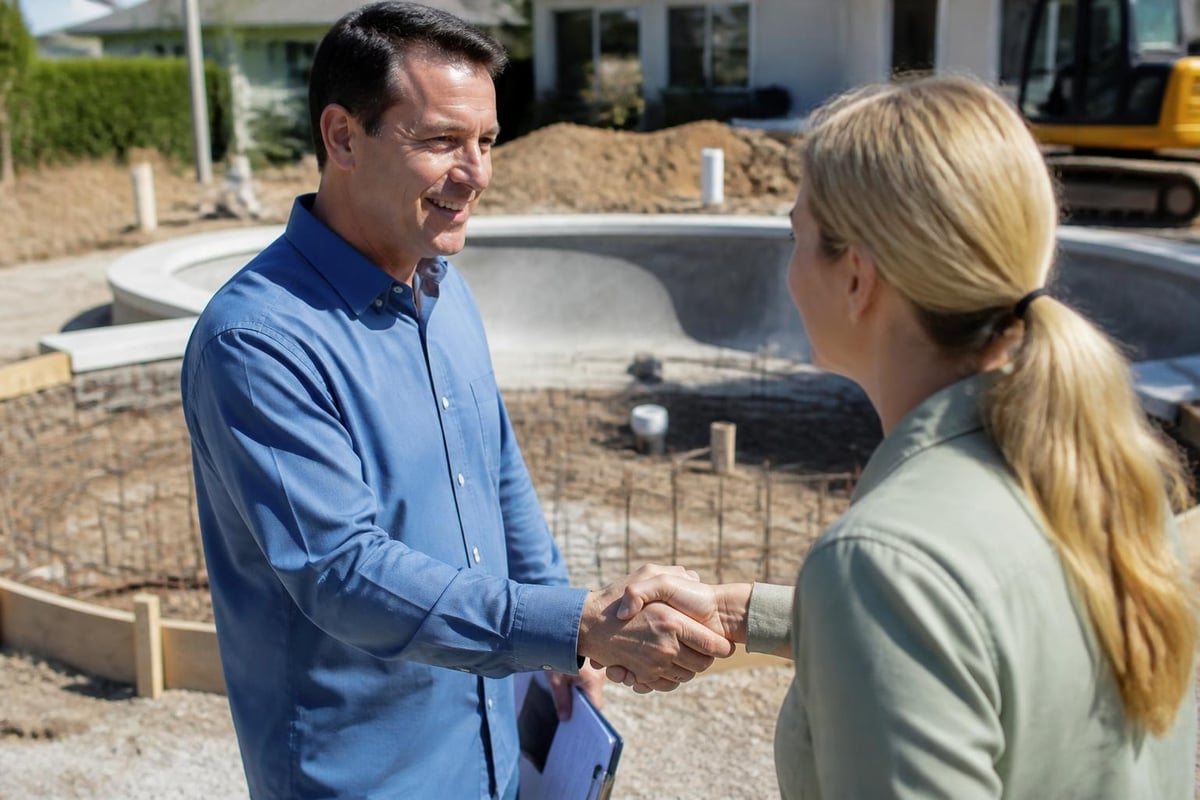
Some local swimming pool builders offer in-house financing or partnerships with pool-specific lenders. Compare rates, terms, and prepayment penalties against traditional home equity products.
Working With Neighborhood-Specific Contractors
Different LA communities present unique challenges. Hillside properties in Studio City require extensive engineering and retaining walls. Coastal homes in Pacific Palisades face corrosion from salt air. Estates in Brentwood often include complex automation and vanishing edges.
Regional Expertise Matters
Contractors who regularly work in your area understand:
- Soil composition and drainage patterns
- Historical architecture that influences design
- HOA architectural review processes
- Local inspector preferences and interpretation of code
- Access limitations for equipment and concrete trucks
Whether you're building in Calabasas, Encino, or Sherman Oaks, ask contractors how many projects they've completed within a five-mile radius and request addresses to verify.
Hardscape Integration and Outdoor Living
The best pool projects seamlessly blend water features with surrounding hardscape. Thoughtful integration creates cohesive outdoor spaces rather than a pool dropped randomly into a yard.
Coordinating Pool and Patio Construction
Consider these elements during design:
- Paver decks: Travertine, bluestone, or concrete pavers offer slip resistance and cool-to-touch properties
- Seating walls: Built-in benches with accent lighting frame the space
- Fire features: Fireplaces or fire pits extend usability into cooler months
- Outdoor kitchens: Dedicated cooking and dining areas complement pool entertainment
- Shade structures: Pergolas or covered patios provide relief from midday sun
Many pool builders partner with hardscape specialists or offer integrated services. For homeowners exploring comprehensive outdoor transformations, reviewing backyard remodeling options alongside pool plans ensures cohesive design and efficient construction.
Material Selection and Longevity
Material choices impact aesthetics, maintenance requirements, and long-term durability. Local swimming pool builders guide you through options that perform well in Southern California's climate.
Interior Finish Comparisons
| Finish Type | Lifespan | Characteristics | Maintenance |
|---|---|---|---|
| White plaster | 7-10 years | Classic, economical, smooth | Annual acid wash |
| Colored plaster | 8-12 years | Enhanced aesthetics, UV stable | Gentle cleaning |
| Pebble aggregate | 15-20 years | Durable, textured, slip-resistant | Minimal upkeep |
| Quartz aggregate | 12-18 years | Smooth, stain-resistant, vibrant | Low maintenance |
| Glass bead | 10-15 years | Reflective, smooth, premium | Regular brushing |
Tile selection affects both appearance and longevity. Porcelain tile resists fading and chemical damage better than ceramic. Glass tile creates stunning visual effects but costs 2-3 times more than standard porcelain.
Understanding Soil and Site Conditions
Ground conditions dictate engineering requirements and construction costs. Areas with high water tables, expansive clay, or unstable slopes need additional structural support.
Common Southern California Soil Challenges
Los Angeles geology varies dramatically across short distances. Sandy soils near the coast drain well but require deeper footings. Clay soils in the valley expand and contract with moisture, creating pressure on pool shells. Hillside properties need soil tests and engineering calculations to ensure stability.
Reputable contractors order geotechnical reports for complex sites and adjust designs based on findings. Skipping soil analysis to save a few hundred dollars can lead to cracking, settlement, and expensive repairs.
Ongoing Maintenance and Service
Construction is just the beginning. Pools require weekly chemical testing, equipment monitoring, and seasonal adjustments to stay clean and safe.
Establishing Maintenance Routines
Most homeowners choose between self-maintenance and weekly service contracts. Weekly service costs $100-200 monthly and includes:
- Water testing and chemical balancing
- Skimming debris and brushing surfaces
- Backwashing filter and cleaning baskets
- Equipment inspection and minor adjustments
Local swimming pool builders often provide startup training covering basic water chemistry, equipment operation, and troubleshooting. Some offer service packages or referrals to trusted pool service companies.
Quality Indicators During Construction
Monitoring quality during construction protects your investment. Watch for these indicators of professional workmanship:
- Steel spacing and tie patterns: Rebar grid should be uniform with proper coverage
- Shotcrete thickness: Walls typically 8-10 inches, floors 10-12 inches
- Clean plumbing runs: Lines should be straight, supported, and properly sloped
- Tile layout: Consistent grout lines with proper waterline alignment
- Equipment pad organization: Neat plumbing manifolds with unions for service access
Don't hesitate to ask questions during inspections. Quality contractors welcome owner involvement and explain their methods. Those who bristle at questions or rush you away from active work areas may be cutting corners.
Selecting the right contractor transforms a major construction project into an exciting journey toward your dream backyard. By thoroughly vetting credentials, comparing detailed proposals, and maintaining clear communication throughout construction, you'll avoid common pitfalls and enjoy years of worry-free pool ownership. When you're ready to explore your options with a licensed, family-owned team that handles every detail from design through final inspection, AM BUILDS CA brings 15+ years of experience to Los Angeles pool projects, working directly with homeowners to deliver quality construction at transparent pricing. Call (424) 485-4548 for a free, no-obligation estimate.


