


Searching to install swimming pools near me has become one of the most common queries for Los Angeles homeowners looking to transform their outdoor spaces in 2026. The decision to add an in-ground pool represents a significant investment in your property and lifestyle, requiring careful planning, proper contractor selection, and a clear understanding of local regulations. From the initial design consultation through permit approval, excavation, construction, and finishing touches, the pool installation process involves multiple phases that demand expertise, coordination, and strict adherence to California building codes. Understanding what to expect at each stage helps homeowners make informed decisions, avoid costly mistakes, and ensure their project delivers the quality and value they expect.
Understanding Local Pool Installation Requirements
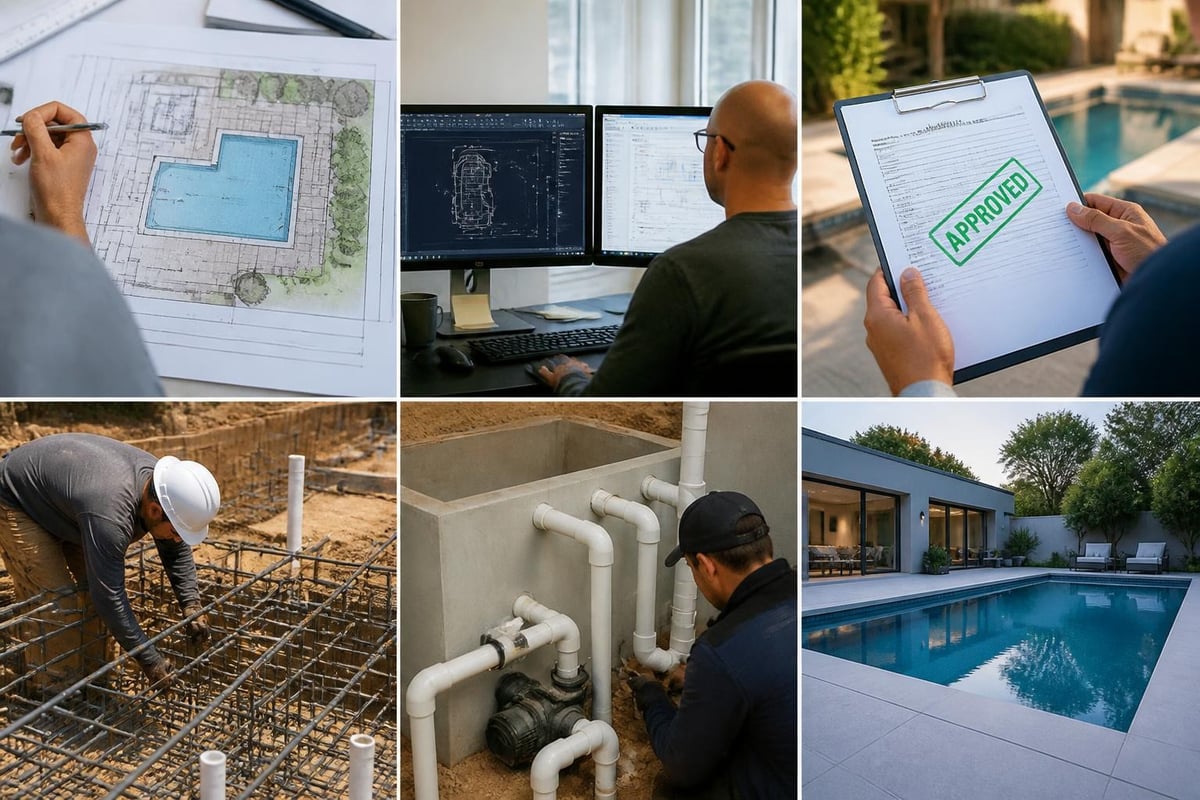
Los Angeles County enforces stringent building codes and zoning regulations that govern pool construction. Every pool project requires a building permit, structural engineering approval for gunite shells, electrical permits for lighting and equipment, and plumbing permits for circulation systems.
Permit Process and Timeline
The permit process typically takes four to six weeks from submission to approval in 2026. Your contractor submits architectural drawings, engineering calculations, plot plans showing setbacks, and equipment specifications to the Los Angeles Department of Building and Safety.
Required permits include:
- Building permit for the pool structure
- Electrical permit for all wiring and fixtures
- Plumbing permit for water circulation systems
- Mechanical permit for heating equipment
- Grading permit if excavation exceeds specific thresholds
Most municipalities require pools to maintain a five-foot setback from property lines, though specific requirements vary by jurisdiction. Homeowners must also comply with safety regulations including barrier requirements, gate latches, and pool covers.
Before any excavation begins, contractors must contact 811 to mark underground utilities, preventing damage to gas lines, water mains, electrical conduits, and telecommunications cables. This free service protects both workers and homeowners from potentially catastrophic accidents.
Code Compliance and Inspections
Los Angeles requires multiple inspections throughout construction. Inspectors verify steel placement before shotcrete, plumbing rough-in before backfill, electrical installation before equipment startup, and final construction before homeowner occupancy.
Understanding these requirements upfront prevents delays and additional costs. Licensed contractors navigate the permitting process efficiently, maintaining project timelines while ensuring full code compliance.
Choosing the Right Pool Installation Contractor
Selecting a qualified contractor represents the most critical decision in your pool project. The difference between a properly built pool and one plagued by leaks, cracks, and equipment failures often comes down to contractor expertise and integrity.
Licensing and Credentials
California requires pool contractors to hold either a C-53 Swimming Pool Contractor license or, for full-service builders, a Class B General Building Contractor license. Verify any contractor's license status through the Contractors State License Board (CSLB) website, checking for active status, workers' compensation insurance, and bonding.
Licensed contractors carry liability insurance protecting homeowners from construction accidents and property damage. They also provide mechanics lien protection, ensuring subcontractors and suppliers cannot place liens on your property for unpaid bills.
| Verification Item | Why It Matters | How to Check |
|---|---|---|
| CSLB License | Legal requirement; ensures minimum competency | CSLB.ca.gov license lookup |
| Insurance | Protects your property and workers | Request certificate of insurance |
| Workers' Comp | Covers injured workers; prevents homeowner liability | Verify through carrier |
| Bond | Guarantees completion or compensation | Confirm with CSLB |
| References | Real-world performance evidence | Contact recent clients |
Evaluating Experience and Specialization
Not all contractors excel at every pool type. Some specialize in simple rectangular pools, while others handle complex geometric designs, vanishing edges, and integrated water features. Review portfolios showing projects similar to your vision.
Ask detailed questions about their construction methods, equipment preferences, and warranty coverage. Experienced contractors explain their process clearly, answer technical questions confidently, and provide realistic timelines without overpromising.
Key questions to ask:
- How many pools have you completed in the past 12 months?
- What is your typical timeline from contract to completion?
- Which subcontractors handle steel, plumbing, electrical, and finish work?
- What warranty do you provide on structure, equipment, and finishes?
- How do you handle change orders and unexpected conditions?
Family-owned contractors often provide more direct communication and accountability than large franchises. When homeowners work directly with the owner, they receive personalized attention and faster decision-making throughout construction.
Pool Design Options and Customization
Modern pool design extends far beyond the standard rectangular shape. Homeowners in 2026 increasingly choose custom configurations that complement their architecture, landscape, and lifestyle preferences.
Shape and Size Considerations
Pool dimensions balance available space, intended use, and budget constraints. Lap pools measure 40 to 75 feet long with widths of 8 to 10 feet, optimizing swimming exercise. Family recreation pools typically range from 12 by 24 feet to 16 by 32 feet, accommodating multiple swimmers comfortably.
Freeform designs soften the backyard aesthetic with curved lines and natural edges. Geometric pools deliver clean, contemporary lines that complement modern architecture. L-shaped and kidney-shaped pools maximize usable space while creating distinct areas for different activities.
Depth planning requires careful consideration of diving activities, children's safety, and heating costs. Shallow end depths of 3 to 4 feet transition to deep ends of 5 to 6 feet for standard recreation. Diving pools require minimum depths of 8 to 9 feet.
Integrated Features and Amenities
Today's pools incorporate multiple features enhancing aesthetics, functionality, and enjoyment:
- Tanning ledges: Shallow (6 to 12 inches) sunbathing platforms
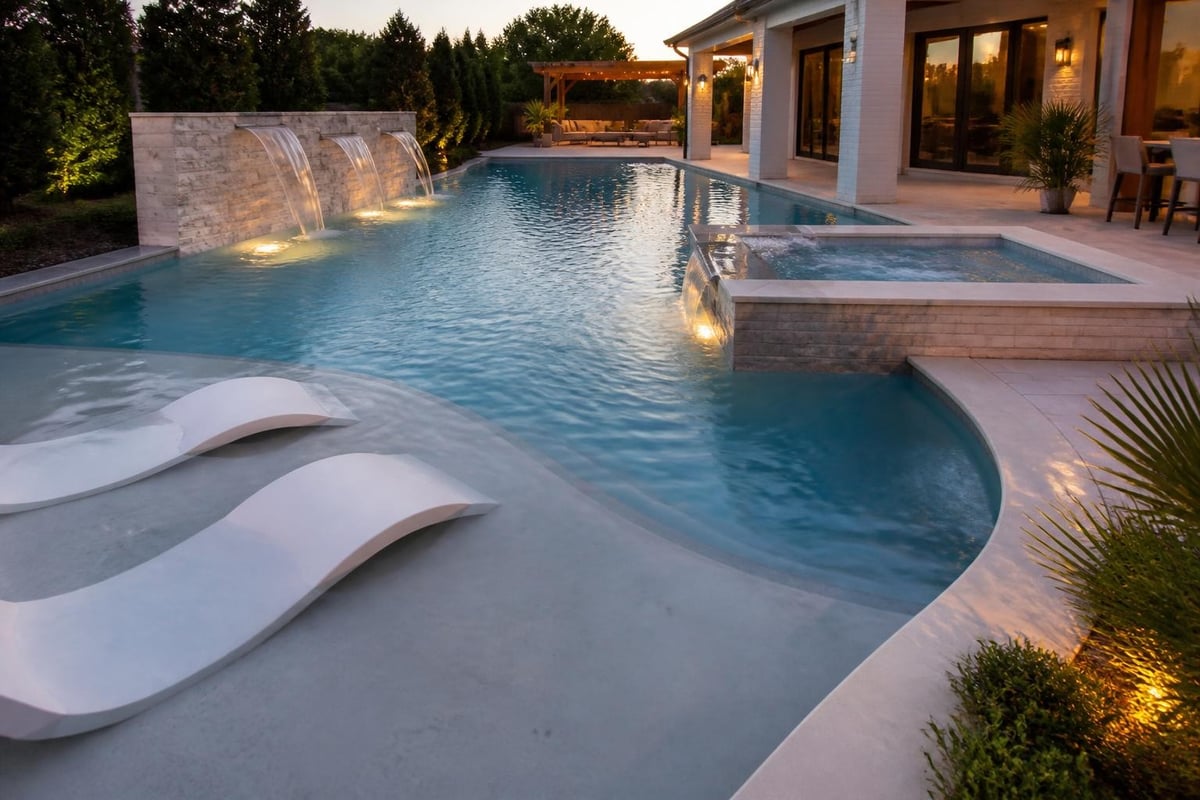
- Attached spas: Elevated hot tubs spilling into the main pool
- Beach entries: Gradual zero-depth access mimicking natural shorelines
- Waterfalls and grottos: Natural stone features creating visual and auditory appeal
- Fire bowls and fire pits: Dramatic nighttime ambiance around the pool perimeter
- LED lighting: Color-changing systems illuminating water and landscape
- Bubblers and deck jets: Interactive water features for children
When planning in-ground pool construction in Los Angeles, designers consider how each feature integrates with the overall backyard vision, ensuring cohesive aesthetics and practical functionality. Features add both upfront costs and ongoing maintenance requirements, requiring homeowners to prioritize based on budget and preferences.
Construction Methods and Timeline
Understanding how contractors build pools helps homeowners set realistic expectations and recognize quality workmanship throughout the process.
Gunite Construction Process
Gunite (shotcrete) construction remains the gold standard for custom in-ground pools in Southern California. This method offers maximum design flexibility, structural strength, and longevity.
Step-by-step construction sequence:
- Layout and excavation (3-5 days): Contractors mark pool outline, excavate to specified depths, and establish rough grade for plumbing installation
- Plumbing installation (2-3 days): Main drains, return lines, skimmer connections, and equipment plumbing placed and tested
- Steel reinforcement (2-4 days): Rebar cage constructed following engineering specifications, typically #3 or #4 bars on 8 to 12-inch centers
- Shotcrete application (1 day): Pneumatic spray of concrete mixture over steel framework, building 6 to 8-inch thick shell
- Coping and decking (5-7 days): Concrete or stone edge treatment and surrounding deck installation
- Tile installation (3-5 days): Waterline tile application preventing staining at water surface
- Equipment installation (2-3 days): Pump, filter, heater, automation, and sanitization systems
- Plaster or finish (1-2 days): Interior surface application in traditional plaster, pebble, or glass bead
- Startup and training (1 day): Water fill, chemical balance, equipment orientation
Total timeline from excavation to completion typically ranges from 8 to 12 weeks, depending on weather, inspection schedules, and custom feature complexity. Delays can occur due to permit processing, utility conflicts, or unexpected soil conditions.
Alternative Construction Methods
While gunite dominates the Los Angeles market, homeowners occasionally consider alternative methods:
| Method | Advantages | Disadvantages | Typical Cost |
|---|---|---|---|
| Gunite/Shotcrete | Maximum flexibility; custom shapes; long lifespan | Longer construction; higher cost | $$$ – $$$$ |
| Vinyl liner | Lower initial cost; smooth surface; faster install | Limited shapes; periodic liner replacement | $$ |
| Fiberglass | Quick installation; low maintenance; smooth finish | Limited sizes; transportation constraints | $$$ |
For custom installations in Los Angeles, gunite provides the design freedom, durability, and property value enhancement that homeowners expect from premium pools.
Cost Factors and Budget Planning
Pool installation costs vary significantly based on size, features, site conditions, and finish selections. Understanding these variables helps homeowners establish realistic budgets and avoid surprises.
Base Construction Costs
In 2026, basic gunite pool installation in Los Angeles typically ranges from $65,000 to $95,000 for a standard 14 by 28-foot rectangular pool with basic finishes and equipment. This baseline includes excavation, steel, shotcrete, basic coping, standard plaster, tile, and code-required equipment.
Custom shapes, larger sizes, and premium features increase costs substantially. A 16 by 36-foot freeform pool with attached spa, raised walls, and waterfall features might range from $110,000 to $160,000 or higher.
Major cost components include:
- Excavation and disposal: $8,000 to $15,000
- Steel and shotcrete: $18,000 to $28,000
- Plumbing and equipment: $12,000 to $22,000
- Electrical work: $5,000 to $9,000
- Tile and coping: $6,000 to $12,000
- Interior finish: $4,000 to $15,000
- Decking and hardscape: $10,000 to $30,000
Premium Features and Upgrades
Homeowners customizing their pools should budget for common upgrades:
- Attached spa: $15,000 to $25,000 additional
- Vanishing edge: $20,000 to $40,000 additional
- Water features: $3,000 to $15,000 each
- Fire features: $4,000 to $12,000 each
- Advanced automation: $2,500 to $8,000
- Heating systems: $4,000 to $10,000
- LED lighting packages: $2,000 to $6,000
- Premium finishes (pebble, glass): $3,000 to $10,000 over standard plaster
According to the National Association of REALTORS® 2023 Remodeling Impact Report, in-ground pool installation typically recovers 40% to 60% of costs at resale in warm climates, with higher recovery in premium markets where pools are expected amenities.
Financing Options
Installing a swimming pool qualifies as home improvement under federal lending regulations, making it eligible for various financing vehicles. Homeowners typically fund pools through cash reserves, home equity loans, home equity lines of credit (HELOCs), or personal loans.
Home equity financing offers lower interest rates and potential tax advantages compared to personal loans. Current rates and qualification requirements vary by lender, credit score, and loan-to-value ratios.
Energy Efficiency and Operating Costs
Beyond construction costs, pools require ongoing investment in utilities, chemicals, maintenance, and repairs. Smart equipment selection minimizes these expenses while maintaining water quality and comfort.
Equipment Selection
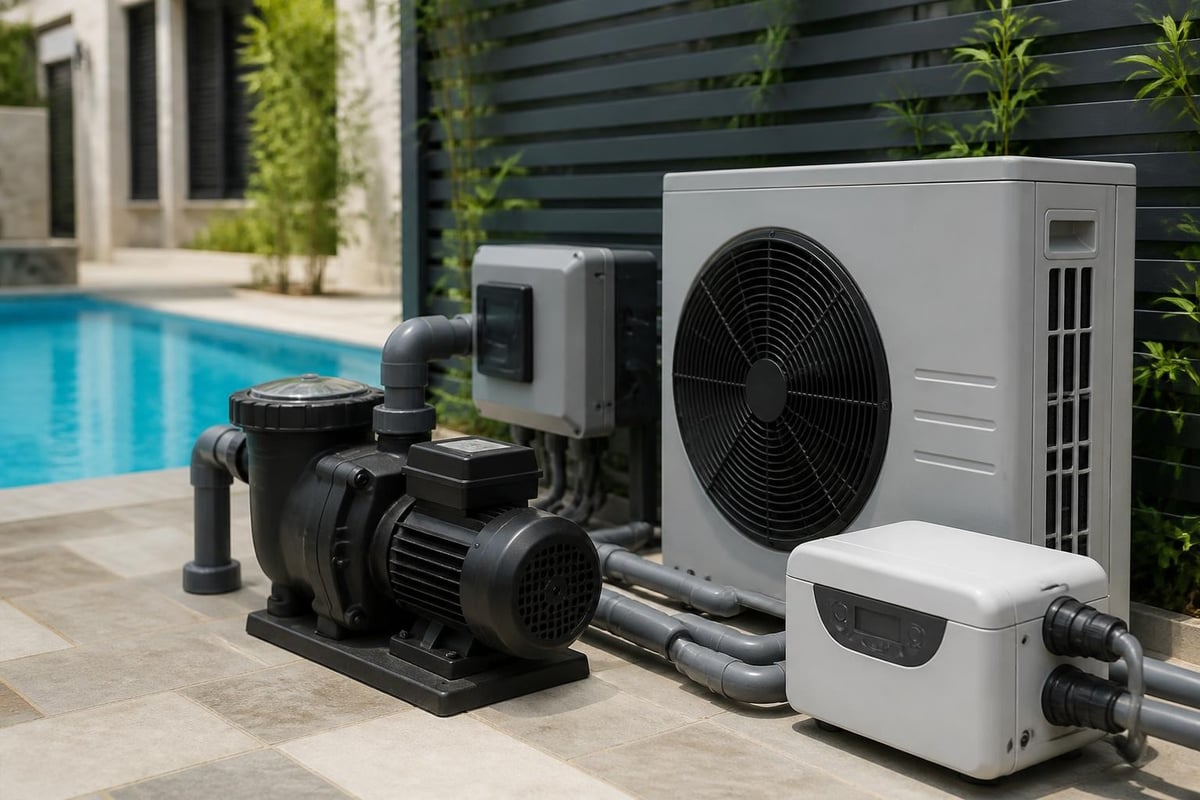
Modern pool equipment delivers significant efficiency improvements over older technology. Variable-speed pumps consume 50% to 75% less energy than single-speed models, qualifying for ENERGY STAR certification and reducing annual operating costs by $300 to $700.
Heat pumps efficiently warm pool water using ambient air temperature, while solar heating systems eliminate energy costs entirely after installation. LED lighting consumes 80% less energy than incandescent bulbs while providing superior color options and longer service life.
Saltwater chlorine generators reduce chemical purchases and handling while maintaining consistent sanitization. Automation systems optimize pump runtime, heating schedules, and cleaning cycles, reducing waste and extending equipment lifespan.
Typical annual operating costs (Los Angeles climate):
- Electricity (pump, heater, lights): $800 to $1,800
- Water and sewer: $300 to $600
- Chemicals: $400 to $800
- Routine service (if contracted): $1,200 to $2,400
- Repairs and replacement parts: $200 to $800
Water Conservation
California's ongoing water management challenges make efficient pool operation increasingly important. Following EPA WaterSense guidelines, homeowners can minimize water consumption through pool covers reducing evaporation by 90% to 95%, proper chemical balance preventing the need for partial draining, efficient backwashing schedules, and leak detection and repair.
Covers also reduce heating costs, prevent debris accumulation, and enhance safety. Automatic covers provide convenience and consistent use, though they add $8,000 to $18,000 to project costs.
Deck and Landscape Integration
Pool installation extends beyond the water's edge. Thoughtful deck design and landscape integration create cohesive outdoor living spaces that maximize functionality and aesthetic appeal.
Decking Material Options
Pool deck selection balances aesthetics, safety, budget, and maintenance requirements. Popular materials in 2026 include:
Concrete: Poured or stamped concrete offers versatility and value, with costs ranging from $8 to $18 per square foot installed. Stamped patterns mimic natural stone at lower costs. Cool-deck coatings reduce surface temperatures in direct sun.
Pavers: Concrete or natural stone pavers deliver premium aesthetics with excellent slip resistance and easy repairs. Individual units can be replaced if damaged without affecting surrounding areas. Costs range from $15 to $35 per square foot installed. Hardscape and landscape professionals create custom patterns and color combinations that complement both pool finishes and home architecture.
Natural stone: Travertine, flagstone, and slate provide luxury aesthetics with natural color variation and texture. Heat resistance makes stone comfortable for bare feet. Costs range from $20 to $50 per square foot installed.
Composite decking: Wood-alternative materials work well for elevated decks and integrated seating. Limited ground-level pool deck applications due to drainage requirements.
Safety Considerations
California law and ADA accessibility requirements mandate specific safety features for residential pools. Barrier requirements include fencing at least 5 feet tall completely surrounding the pool, self-closing, self-latching gates opening outward, and latch mechanisms at least 54 inches above grade.
Additional safety measures include:
- Non-slip surface textures on all deck areas
- Adequate drainage preventing water accumulation
- Proper lighting for nighttime visibility
- Pool alarms on doors and gates
- Safety covers or nets when pool is not supervised
Planning for accessibility from initial design stages costs less than retrofitting later. Gradual entries, handrails, and accessible equipment controls accommodate family members and guests with mobility limitations.
Selecting Your Installation Partner
When homeowners search to install swimming pools near me, they seek more than construction services. They need trusted partners who deliver transparent communication, quality workmanship, and long-term support.
What to Expect During Construction
Professional contractors maintain organized job sites with clear staging areas, daily cleanup, and minimal landscape disruption. They communicate proactively about schedules, weather delays, and any unexpected conditions requiring decisions.
Expect weekly progress updates, photos documenting each construction phase, and scheduled walkthroughs at key milestones. Contractors should welcome questions, explain technical details in understandable terms, and document all agreements in writing.
Red Flags to Avoid
Certain warning signs indicate contractors homeowners should avoid:
- Requests for large upfront deposits exceeding 10% or $1,000
- Lack of proper licensing, insurance, or bonding
- Reluctance to provide references or portfolio
- Pressure tactics or unrealistic promises
- Vague contracts without detailed specifications
- No written warranty or guarantee
- Poor communication during estimate phase
Quality contractors build reputations through completed projects and satisfied clients. They provide detailed proposals, honor commitments, and stand behind their work long after project completion.
Maximizing Your Investment
Strategic planning ensures your pool delivers maximum enjoyment, functionality, and property value for decades.
Design for Long-Term Enjoyment
Consider how your pool use might evolve over time. Young families prioritize shallow areas and safety features, while empty-nesters might prefer lap swimming or spa therapy. Flexible designs accommodate changing needs without requiring major reconstruction.
Future-proof installations include:
- Oversized equipment pads for upgraded systems
- Conduit for adding lighting or water features later
- Plumbing stubs for potential spa additions
- Electrical capacity for heaters and automation
- Quality construction preventing premature repairs
Maintenance and Care
Establishing good maintenance habits from day one preserves your investment and prevents costly repairs. Daily skimming, weekly chemical testing, monthly equipment inspection, and seasonal professional service keep pools operating efficiently.
Many homeowners choose professional service contracts for routine maintenance, reserving their time for enjoyment rather than chores. Service costs average $100 to $200 monthly depending on pool size and service frequency.
Understanding basic troubleshooting helps identify problems early. Recognizing declining water levels (potential leaks), poor circulation (pump or filter issues), cloudy water (chemistry or filtration problems), and equipment noises (mechanical wear) enables prompt professional intervention before minor issues become major repairs.
Successfully planning and executing a pool installation project requires understanding local requirements, selecting qualified contractors, making informed design decisions, and budgeting for both construction and ongoing operation. When Los Angeles homeowners search to install swimming pools near me, they deserve partners who deliver expertise, transparency, and quality craftsmanship. AM BUILDS CA brings 15+ years of licensed pool construction experience, owner-direct communication, and detail-driven execution to every custom gunite pool project across Los Angeles and surrounding communities. Contact us at (424) 485-4548 for your free, no-obligation estimate and discover how our family-owned team can transform your backyard vision into reality.


