


Building a custom inground pool represents one of the most significant investments you'll make in your property. The difference between a successful project and a costly headache often comes down to one critical decision: selecting the right inground pool contractor. With construction costs, permitting complexities, and technical requirements continuing to evolve in 2026, homeowners need to approach this decision with thorough research and clear expectations. A qualified contractor brings not only construction expertise but also navigates local codes, manages subcontractors, sources quality materials, and delivers a finished pool that enhances your property for decades.
What Makes a Qualified Inground Pool Contractor
Finding a legitimate, experienced inground pool contractor requires looking beyond marketing promises to verify actual credentials and capabilities. California law requires all pool contractors to hold a valid C-53 Swimming Pool Contractor license or operate under a general contractor license with proven pool construction experience. If you are comparing pool installation companies, our 2026 buyer’s guide covers credentials, costs and working relationships in detail.
Licensing and Insurance Requirements
Every reputable contractor must carry current licensing through the California Contractors State License Board (CSLB). This license demonstrates they've met education requirements, passed examinations, and maintain financial responsibility bonds. Equally important, comprehensive liability insurance and workers' compensation coverage protect homeowners from potential job-site accidents or property damage.
Essential credentials to verify:
- Active CSLB license (C-53 or General B)
- Current general liability insurance (minimum $1-2 million coverage)
- Workers' compensation insurance for all employees
- Local business license for your municipality
- Bonding appropriate to project size
Beyond paperwork, experience matters significantly. An inground pool contractor with 15+ years in the business has navigated economic cycles, worked with evolving building codes, and refined construction techniques through hundreds of installations. This accumulated knowledge proves invaluable when challenges arise during your project.
Technical Expertise and Specialization
Pool construction demands specialized knowledge across multiple disciplines. The best contractors maintain expertise in hydraulic engineering, structural concrete work, electrical systems compliant with National Electrical Code requirements, plumbing systems, and finish applications.
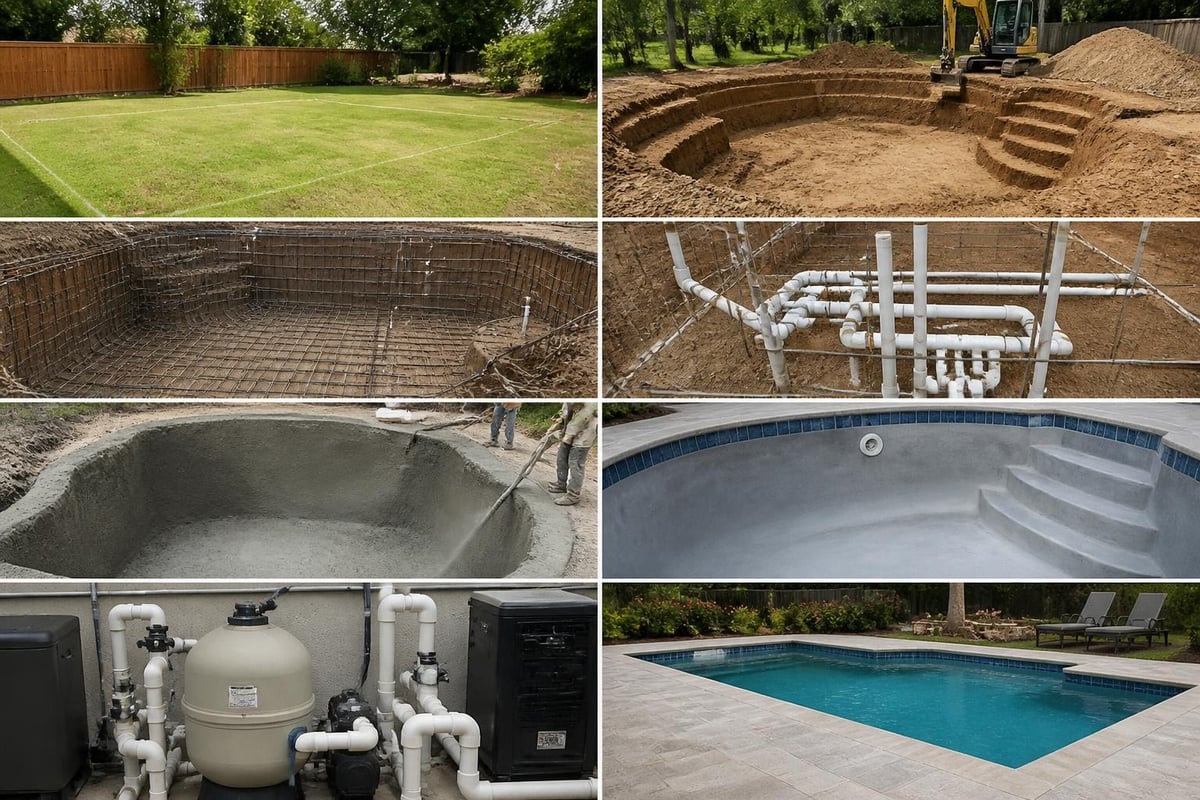
| Construction Phase | Technical Requirements | Typical Duration |
|---|---|---|
| Design & Permits | Structural engineering, municipal approvals | 2-6 weeks |
| Excavation | Soil analysis, grade management, access planning | 1-3 days |
| Steel & Plumbing | Rebar placement, bond beam, equipment plumbing | 3-5 days |
| Gunite/Shotcrete | Pneumatic concrete application, thickness control | 1-2 days |
| Tile & Coping | Waterline tile, coping installation, finish prep | 5-7 days |
| Decking & Finish | Surface finishing, equipment startup, final grading | 2-4 weeks |
A skilled inground pool contractor coordinates these phases seamlessly, ensuring each step meets quality standards before advancing. They understand soil conditions specific to Los Angeles, manage water table considerations, and select appropriate concrete mixes for local climate conditions.
The Design and Planning Process
Professional pool contractors begin every project with comprehensive design consultation. This phase establishes project scope, budget parameters, and realistic timelines while incorporating your vision into buildable plans.
Initial Consultation and Site Assessment
During the first meeting, experienced contractors evaluate your property's unique characteristics. They assess lot dimensions, existing utilities, drainage patterns, soil composition, and access points for equipment. This evaluation identifies potential challenges early, such as easements, setback requirements, or underground utilities that impact pool placement.
Quality contractors ask detailed questions about your intended use, desired features, and long-term maintenance preferences. They explain trade-offs between different pool shapes, depths, and materials, helping you make informed decisions that align with both budget and lifestyle goals. When you work directly with a pool construction specialist, you receive personalized attention throughout this critical planning phase rather than dealing with rotating sales representatives.
Engineering and Permit Documentation
Los Angeles County and individual municipalities maintain strict requirements for pool construction permits. Your inground pool contractor handles this complex documentation process, including structural engineering calculations, drainage plans, safety barrier specifications, and equipment placement diagrams. Professional contractors maintain established relationships with local building departments, understanding specific inspector expectations and requirements.
The permit process typically requires:
- Structural engineering calculations stamped by licensed engineer
- Plot plan showing pool location, setbacks, and easements
- Equipment specifications and placement details
- Electrical plans meeting current NEC standards
- Drainage and grading plans
- Safety barrier (fence/alarm) compliance documentation
Experienced contractors build permit review time into project schedules, communicating realistic start dates only after approvals are secured.
Construction Methods and Quality Standards
The construction method your contractor employs fundamentally impacts your pool's longevity and performance. In Southern California, gunite (dry-mix shotcrete) dominates the custom pool market due to its structural strength and design flexibility.
Gunite Pool Construction Excellence
Gunite pools involve pneumatically applying a concrete mixture over steel reinforcement framework. This method allows complete design freedom-creating custom shapes, integrated spas, beach entries, and built-in features impossible with prefabricated alternatives. A qualified inground pool contractor maintains relationships with certified gunite crews who understand proper mix ratios, application techniques, and curing requirements specific to California's climate.
Critical quality factors in gunite application:
- Steel reinforcement density and placement accuracy
- Proper concrete mix design (compressive strength minimum 4,000 PSI)
- Consistent application thickness (minimum 8-10 inches walls, 6-8 inches floor)
- Adequate curing time before finishing work begins
- Professional nozzleman technique to minimize rebound and voids
The Pool & Hot Tub Alliance publishes industry standards that top contractors follow, ensuring construction quality meets or exceeds baseline requirements. These standards cover everything from equipment sizing to finish application procedures.
Plumbing and Equipment Integration
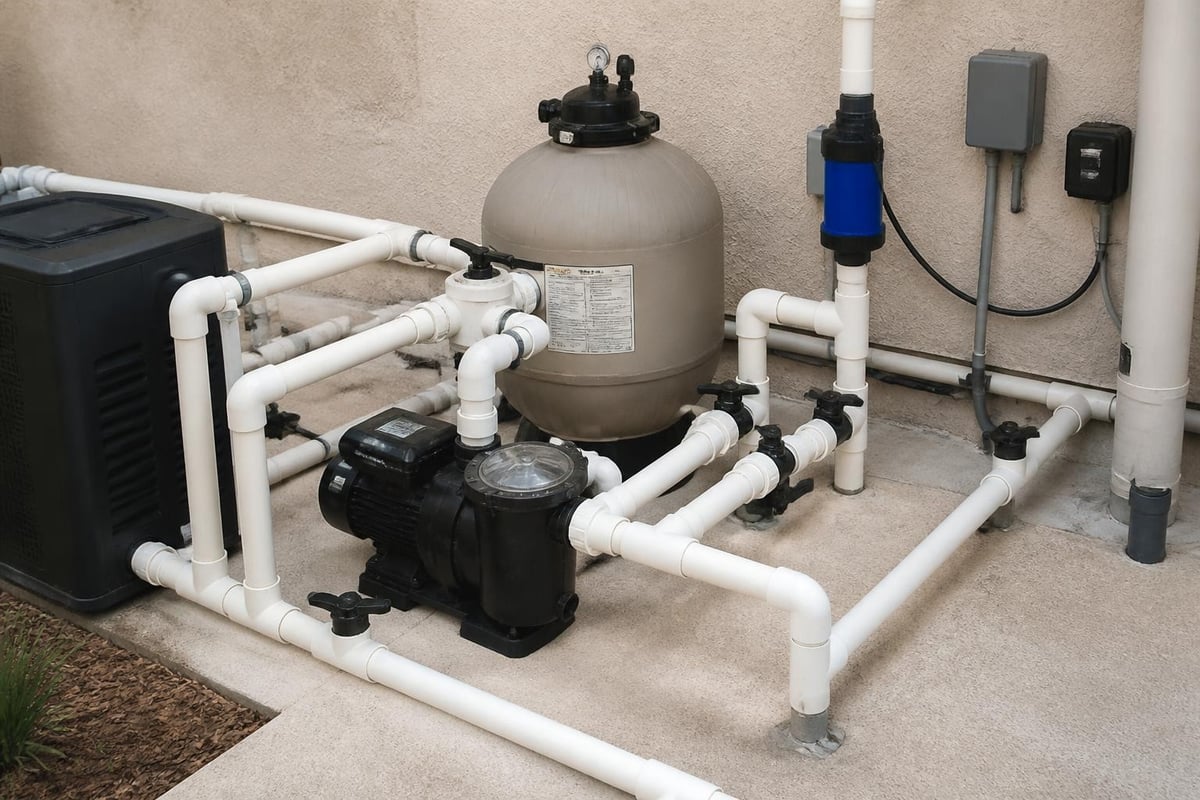
Modern pool systems require sophisticated plumbing designs that balance circulation efficiency, equipment accessibility, and long-term serviceability. Professional contractors design systems with appropriately sized pumps, proper pipe diameter calculations, and minimal restriction points that maximize energy efficiency.
Equipment selection significantly impacts operational costs. Energy-efficient variable-speed pumps, LED lighting, and properly sized heaters reduce monthly expenses while meeting performance expectations. Your contractor should explain equipment options, efficiency ratings, and realistic operational cost projections based on your pool size and usage patterns.
Selecting Finishes and Hardscape Elements
The finishes you select transform structural concrete into a beautiful, functional outdoor environment. An experienced inground pool contractor guides these decisions, explaining performance characteristics alongside aesthetic considerations.
Interior Surface Options
Pool interiors demand durable, waterproof finishes that withstand constant water exposure and chemical treatment. Standard plaster provides economical coverage lasting 7-10 years, while upgraded options like quartz or pebble finishes extend longevity to 15-20 years with enhanced aesthetics and stain resistance.
When considering in-ground pool installation cost, remember that finish selection represents a relatively small percentage of total budget but significantly impacts long-term satisfaction and maintenance requirements. Professional contractors help you evaluate options within budget constraints, explaining maintenance implications of each choice.
Decking and Paver Integration
The area surrounding your pool receives as much use as the water itself. Quality contractors incorporate slip-resistant surfaces, proper drainage away from the pool, and materials that remain comfortable underfoot during hot summer months. Hardscape & Landscape options include brushed concrete, natural stone, pavers, and specialized pool deck materials, each offering distinct advantages in appearance, maintenance, and budget.
Paver installations provide excellent drainage, replace damaged sections easily, and offer unlimited design flexibility through pattern and color combinations. Concrete decking delivers seamless integration with modern aesthetics and various finish options including stamping, staining, or exposed aggregate.
Accessibility and Safety Compliance
Modern pool projects must address accessibility requirements and safety standards that protect all users. Knowledgeable contractors incorporate these elements during design rather than retrofit solutions later.
ADA Compliance Considerations
While residential pools don't always require full ADA-compliant accessibility features, many homeowners choose to include accessible entry points for aging-in-place considerations or family members with mobility limitations. The U.S. Access Board provides detailed recommendations for pool lifts, ramps, transfer walls, and other accessibility solutions that integrate beautifully into custom designs.
Professional contractors familiar with these standards can incorporate:
- Zero-entry beach access slopes
- Built-in transfer platforms and grab rail systems
- Pool lift anchor points and clearance zones
- Wide deck pathways accommodating mobility devices
- Accessible control locations for pool equipment
Barrier and Safety Requirements
California law mandates safety barriers around residential pools to prevent unsupervised child access. Your inground pool contractor should understand current regulations and help design compliant solutions that complement your property's aesthetics. Options include pool fencing with self-closing gates, door alarms on house entries, safety covers, or combinations meeting local code requirements.
Managing Costs and Payment Structures
Understanding project costs and establishing clear payment terms protects both homeowner and contractor interests. Reputable professionals provide detailed, itemized estimates that break down material and labor costs across construction phases.
Transparent Pricing Components
Quality contractors explain where your investment goes, typically distributed across:
| Cost Category | Percentage of Total | What It Covers |
|---|---|---|
| Excavation & Steel | 15-20% | Site preparation, digging, rebar, bond beam |
| Gunite & Structure | 20-25% | Concrete application, curing, structural integrity |
| Plumbing & Equipment | 20-25% | Pumps, filters, heaters, sanitization, automation |
| Finishes | 15-20% | Interior surface, tile, coping materials, application |
| Decking & Hardscape | 15-20% | Surrounding surfaces, grading, drainage |
| Permits & Engineering | 5-8% | Design, engineering, permit fees, inspections |
This transparency allows you to understand value received and make informed decisions when considering upgrades or modifications during construction. When reviewing proposals from multiple contractors, compare scope carefully-lowest price often indicates reduced quality, missing elements, or contractors planning change orders later.
Payment Schedules and Protection
California law limits initial deposits to 10% of contract price or $1,000, whichever is less. Legitimate contractors structure payments tied to completion milestones rather than front-loading costs. Standard payment schedules include deposits at contract signing, payments after excavation, steel/plumbing installation, gunite application, and final payment upon completion.
Never pay the full amount before work is complete. Maintain 10-15% retention until you've verified all punch-list items are addressed, permits are finalized, and you've received operator training and warranty documentation.
Communication and Project Management
The best technical skills mean little if your contractor can't communicate effectively. Successful projects require regular updates, responsive problem-solving, and transparent discussion when challenges arise.
Expectations for Owner Involvement
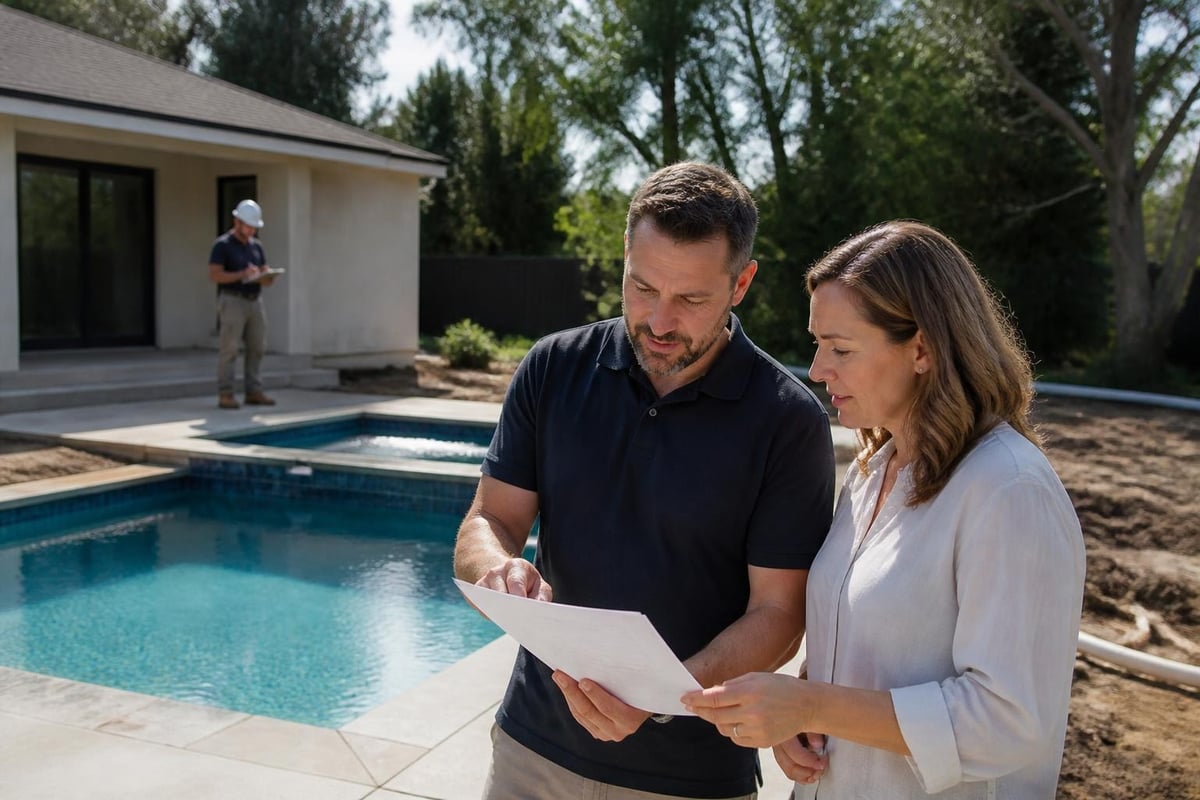
Professional contractors establish clear communication protocols from the start. You should expect weekly progress updates minimum, with daily communication during active construction phases. Quality contractors proactively share schedule changes, weather delays, or material lead time issues rather than leaving you guessing about project status.
Working directly with the business owner rather than project managers ensures consistency and accountability. Family-owned contractors often provide more personalized service, as their reputation depends directly on your satisfaction and referrals within the community.
Problem Resolution and Change Orders
Even well-planned projects encounter unexpected conditions-utility conflicts, soil issues, or design modifications requested mid-construction. Professional contractors document these situations thoroughly, provide written change orders with cost and schedule impacts before proceeding, and work collaboratively to find solutions that serve your best interests.
Red flags include contractors who dismiss your questions, make verbal-only agreements, or pressure quick decisions without adequate information. Quality professionals welcome your involvement and treat your investment with the respect it deserves.
Long-Term Value and Warranty Support
Your relationship with your inground pool contractor extends beyond construction completion. Reputable builders stand behind their work with comprehensive warranties and remain available for questions as you learn to operate and maintain your new pool.
Warranty Coverage Standards
Quality contractors provide tiered warranty coverage addressing different system components. Structural warranties on gunite shells typically extend 10 years or more, while equipment warranties vary by manufacturer (usually 1-3 years). Finish warranties depend on material selected, ranging from 1-2 years for standard plaster to longer coverage for upgraded surfaces.
Ensure your contract specifies warranty terms in writing, including who handles warranty service (contractor or equipment manufacturer), response times for issues, and any maintenance requirements that void coverage.
Maintenance Education and Resources
Before final payment, your contractor should provide comprehensive operational training covering:
- Equipment operation and control settings
- Chemical testing and balancing procedures
- Routine maintenance schedules and procedures
- Winterization requirements (if applicable)
- Emergency shutdown procedures
- Filter cleaning and equipment care
This education empowers you to protect your investment through proper operation. Some contractors maintain long-term relationships by offering maintenance services, equipment upgrades, or pool remodeling when you're ready to refresh finishes or update features years later.
Regional Considerations for Los Angeles Pool Construction
Los Angeles presents unique challenges and opportunities for pool construction. Climate advantages allow year-round construction schedules, but water restrictions, seismic requirements, and hillside lot considerations require local expertise.
Climate and Environmental Factors
Southern California's Mediterranean climate means minimal freeze concerns but significant evaporation management. Smart contractors incorporate features that reduce water loss-proper covers, windbreak landscaping, and efficient circulation systems. They also understand local water quality, recommending appropriate filtration and sanitization systems for area-specific mineral content and hardness levels.
Energy efficiency takes priority given California's utility costs. Variable-speed pumps, solar heating options, and LED lighting reduce operational expenses while meeting increasingly strict energy codes. Contractors familiar with local utility rebate programs can help you capture available incentives for efficient equipment choices.
Navigating Municipal Requirements
Each Los Angeles-area municipality maintains unique requirements beyond state minimums. Some cities require additional setbacks, specific fence heights, or supplementary inspections. Experienced local pool contractors understand these nuances, preventing delays from non-compliant plans or construction practices.
Hillside lots introduce additional complexity-engineering requirements for retaining walls, drainage management, and access challenges for equipment. Contractors experienced with challenging sites bring creative solutions that others might avoid entirely.
Evaluating Contractor Proposals and References
Once you've narrowed candidates, thorough vetting prevents costly mistakes. Smart homeowners look beyond price to evaluate overall value, capability, and fit.
Reference Checks and Portfolio Review
Request contact information for recent clients (within past 12 months) whose projects resemble yours in scope and complexity. When speaking with references, ask specific questions about communication quality, how challenges were handled, cleanliness during construction, budget adherence, and post-completion support.
Review physical portfolio examples or visit completed projects when possible. Photos can be misleading-seeing finished work in person reveals attention to detail in tile alignment, coping joints, deck integration, and overall craftsmanship quality.
Critical questions for contractor references:
- Did the project finish on schedule, and if not, why?
- Were there surprise costs beyond the original contract?
- How did the contractor handle problems or unexpected conditions?
- Was the job site maintained cleanly throughout construction?
- Would you hire this contractor again for another project?
- How was communication throughout the project?
Red Flags and Warning Signs
Certain behaviors indicate contractors you should avoid regardless of price. Be cautious of anyone who:
- Pressures immediate decisions or time-limited discounts
- Requests large upfront deposits exceeding legal limits
- Cannot provide proof of licensing and insurance
- Offers only verbal estimates without detailed written proposals
- Shows reluctance to provide references or portfolio examples
- Suggests skipping permits to save money
- Operates without physical business address or established office
Trust your instincts. If something feels off during initial interactions, it rarely improves once construction begins and money changes hands.
Maximizing Your Investment
Strategic decisions during planning and construction ensure your pool delivers maximum enjoyment and property value for decades. Consider future needs alongside current desires.
Future-Proofing Design Decisions
Smart homeowners build flexibility into initial designs rather than facing expensive retrofits later. Consider roughing in future features even if budget doesn't allow immediate installation-automation system conduit, additional lighting circuits, or plumbing for water features or fire bowls. These minor upfront costs provide options later at fraction of retrofit expense.
Similarly, equipment pad sizing should accommodate future upgrades. Pool heaters, advanced sanitization systems, or automation controllers require space that's difficult to expand once decking is complete. Discuss potential future additions with your inground pool contractor during planning to incorporate appropriate infrastructure.
Value-Adding Features
Certain features significantly enhance enjoyment while adding relatively modest cost during initial construction. Integrated spas share equipment with pools, providing year-round use with minimal additional operational expense. Tanning ledges or beach entries create shallow areas perfect for young children or relaxation.
LED color-changing lighting transforms evening ambiance while consuming minimal energy. Automation systems provide convenient control while optimizing equipment operation for efficiency. When considering cost to build inground pool, evaluate these features based on actual usage patterns rather than initial price impact alone.
Selecting the right inground pool contractor determines whether your backyard transformation becomes a cherished investment or an ongoing source of frustration. By prioritizing credentials, communication, and proven expertise over price alone, you position your project for success from initial consultation through decades of enjoyment. AM BUILDS CA brings 15+ years of licensed pool construction experience to Los Angeles homeowners, handling every aspect from design and permits through gunite installation and finishing with the attention to detail that comes from direct owner involvement. Contact us at (424) 485-4548 for a free, no-obligation consultation and discover how family-owned craftsmanship delivers the custom pool you envision.


