


Infinity pools represent the pinnacle of modern aquatic design, creating a seamless visual connection between water and horizon. These architectural marvels require specialized expertise that extends far beyond conventional pool construction. The complexity of vanishing-edge systems, structural engineering demands, and hydraulic precision means that selecting qualified infinity pool builders is one of the most critical decisions in any luxury outdoor project. With 15 years of experience in Los Angeles, where hillside properties and spectacular views create ideal conditions for these installations, understanding what separates competent contractors from true specialists can protect your investment and ensure lasting results.
Understanding Infinity Pool Engineering and Design
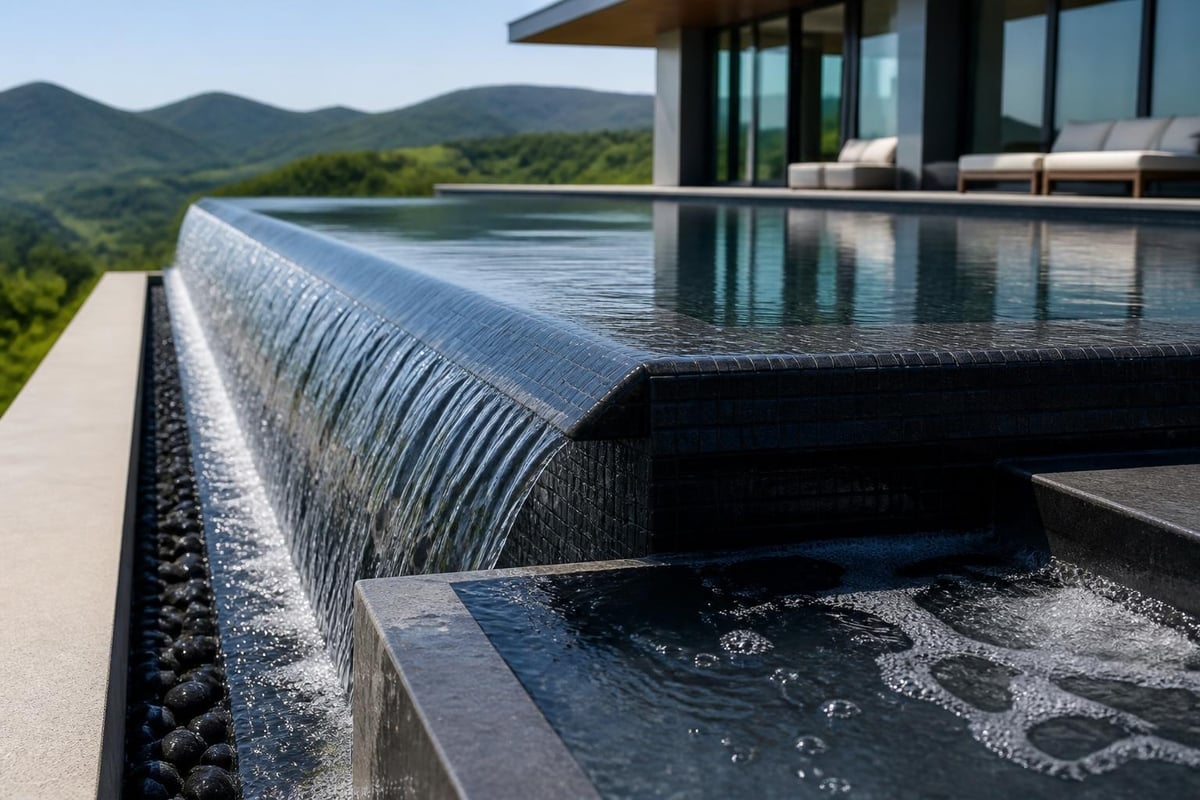
The vanishing edge effect relies on precision engineering that manages thousands of gallons of overflow water while maintaining perfect visual symmetry. Unlike traditional pools where water remains contained within the shell, infinity pool builders must design and construct a secondary system that captures overflow, stores it temporarily, and returns it to the main vessel through dedicated pumps and filtration.
The Perimeter Overflow System
The heart of any infinity edge involves a catch basin or surge tank positioned below the weir edge. This basin must hold enough water to accommodate displacement when swimmers enter the pool, prevent pump cavitation during high-use periods, and maintain circulation during backwashing cycles. The ANSI/PHTA standards establish minimum surge capacity calculations based on pool surface area and anticipated bather load.
Critical design elements include:
- Weir elevation tolerance within 1/8 inch across the entire edge
- Catch basin depth and volume calculations
- Dedicated overflow pump sizing separate from main circulation
- Structural cantilever or retaining wall design for hillside installations
- Waterproofing systems that accommodate differential settlement
For Los Angeles hillside properties, the geological challenges multiply. In-ground pool construction on sloped terrain requires caisson foundations, reinforced shotcrete shells, and engineering calculations that account for lateral earth pressure, seismic loads, and soil bearing capacity.
Structural Considerations for Cantilevered Edges
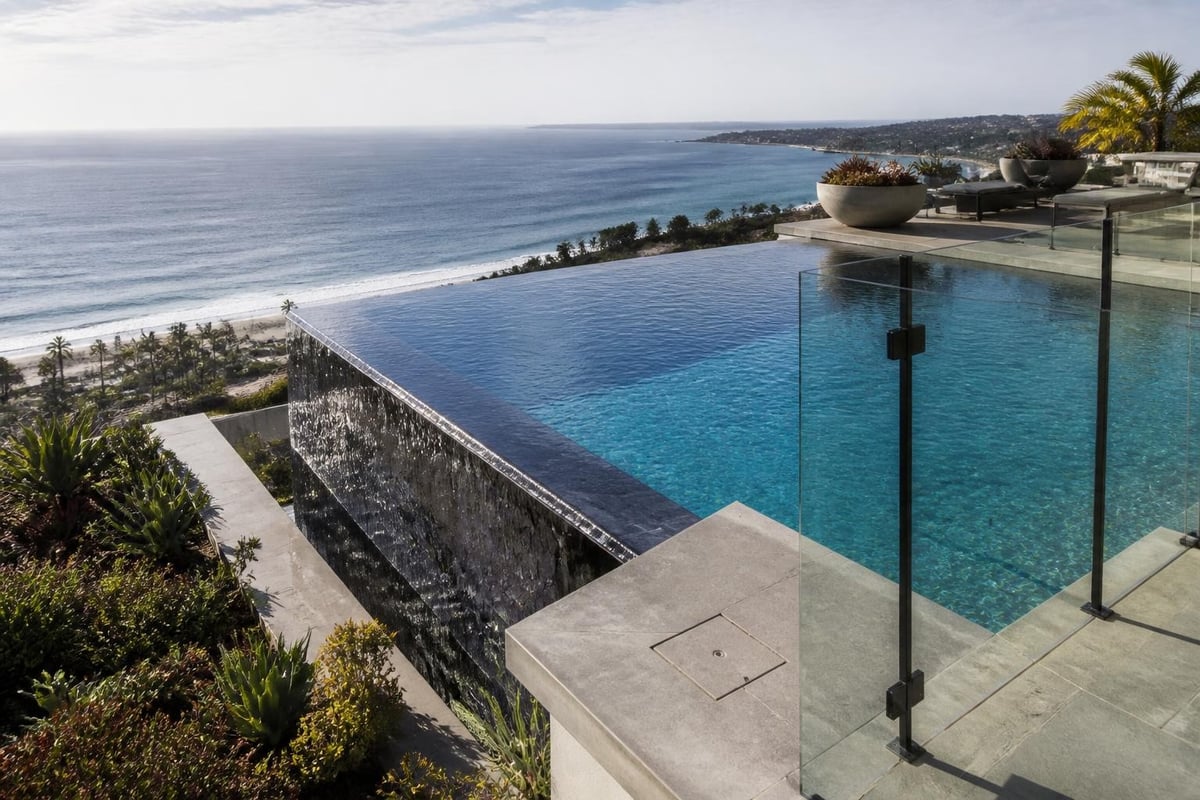
When the pool edge extends over a slope or elevated site, the structural demands intensify dramatically. Infinity pool builders must work with structural engineers to design reinforced concrete or shotcrete shells capable of supporting the cantilevered section without deflection. The Shotcrete Magazine technical resources detail application techniques for heavily reinforced curved and cantilevered pool shells.
| Structural Element | Standard Pool | Infinity Pool |
|---|---|---|
| Steel reinforcement | #3-#4 rebar, 12" grid | #5-#6 rebar, 8" grid + post-tension |
| Shell thickness | 8-10 inches | 12-18 inches at edge |
| Foundation depth | 12-18 inches | Caissons 8-15 feet |
| Engineering required | Optional | Always mandatory |
The visual drama of iconic installations like the Marina Bay Sands SkyPark pools demonstrates what precision engineering makes possible. While residential projects operate at smaller scale, the same principles of structural integrity, precise leveling, and hydraulic management apply.
Selecting Qualified Infinity Pool Builders
Credentials and experience form the foundation of contractor evaluation. In California, all infinity pool builders must hold a valid C-53 Swimming Pool Contractor license or operate under a B General Contractor license. The California Contractors State License Board (CSLB) requires bonding, insurance, and demonstrated experience for these classifications.
Beyond licensing, proven infinity edge experience separates qualified contractors from those attempting their first vanishing-edge project on your property. Request portfolio examples with verifiable references, preferably including projects with similar site conditions, edge configurations, and design complexity. Builders working across neighborhoods from Pacific Palisades to La Cañada Flintridge accumulate diverse experience with hillside challenges and municipal requirements.
Technical Competency Evaluation
Competent infinity pool builders should demonstrate fluency in several specialized areas during initial consultations. Their responses to technical questions reveal depth of experience and engineering understanding.
Key evaluation questions:
- How do you calculate surge basin volume for this specific pool size and edge length?
- What weir profile will you use, and how does it affect overflow rate and sound?
- How will you achieve level tolerance across a 30-foot vanishing edge on sloped ground?
- What pump redundancy do you recommend for the overflow system?
- How do you address differential settlement between the main shell and catch basin?
Detailed answers citing code requirements, manufacturer specifications, and project-specific calculations indicate genuine expertise. Vague responses or inability to explain design decisions suggest insufficient experience. The 2024 International Swimming Pool and Spa Code provides comprehensive requirements for perimeter overflow systems that qualified contractors should reference routinely.
Design-Build vs. Design-Bid-Build Approaches
Infinity pools benefit significantly from integrated design-build delivery where the same firm handles architectural design, engineering coordination, and construction. This approach reduces conflicts between design intent and constructability, streamlines permit coordination, and establishes single-source accountability.
Design-bid-build separates design from construction, potentially creating finger-pointing when vanishing edge details don't perform as specified. However, this approach allows architectural firms specializing in luxury pools to create highly refined designs. Architectural Digest’s coverage of luxury pool design showcases how architectural integration elevates infinity pools beyond mere construction to true outdoor art.
Cost Factors and Budget Considerations
Infinity pool construction costs significantly exceed standard pool installations due to engineering complexity, additional excavation, dual hydraulic systems, and precision construction requirements. Los Angeles area projects typically range from $150,000 to $500,000+ depending on size, site conditions, edge configuration, and finish selections.
Primary Cost Drivers
Site preparation and foundation work represent the largest variable cost factor. Hillside sites requiring extensive excavation, retaining walls, caisson foundations, and engineered backfill can add $50,000-$150,000 compared to flat-lot installations. Geotechnical investigation and engineered soils reports cost $3,000-$8,000 but prove essential for long-term structural integrity.
The overflow system components include the catch basin construction, dedicated overflow pumps, separate filtration, additional plumbing runs, and control automation. These systems add $30,000-$75,000 to base pool costs, scaling with edge length and complexity.
Precision construction requirements increase labor costs 25-40% compared to standard pools. Achieving 1/8-inch level tolerance across a vanishing edge requires laser-guided formwork, multiple elevation checks, and experienced crews. Rushing this phase leads to uneven overflow, visual inconsistencies, and expensive remediation.
| Cost Component | Standard Pool | Infinity Pool |
|---|---|---|
| Engineering & design | $5,000-$8,000 | $12,000-$25,000 |
| Excavation & foundation | $15,000-$25,000 | $30,000-$80,000 |
| Steel & shotcrete | $35,000-$50,000 | $60,000-$95,000 |
| Hydraulic systems | $18,000-$28,000 | $35,000-$65,000 |
| Finish & details | $25,000-$45,000 | $40,000-$75,000 |
Finish selections dramatically impact final costs. Glass tile on the vanishing edge creates stunning visual effects but costs $80-$150 per square foot installed. Pebble finishes run $15-$35 per square foot, while premium plasters cost $8-$18 per square foot. The Laticrete technical pool design manual provides detailed specifications for waterproofing and tile systems that ensure long-term performance.
Operating Cost Considerations
Monthly operating expenses increase with infinity pool complexity. Dual pump systems consume more electricity, larger water volumes increase heating costs, and evaporation rates typically run 20-30% higher than standard pools due to exposed edge surfaces.
- Electricity: $120-$250/month with variable-speed pumps
- Heating: $150-$400/month for year-round use (gas)
- Chemistry: $40-$80/month
- Maintenance: $150-$300/month professional service
Energy-efficient equipment selection reduces long-term costs significantly. Variable-speed pumps cut electricity consumption 50-70% compared to single-speed models, while heat pumps reduce heating costs 40-60% versus natural gas, especially relevant given California's energy rates.
Permitting and Code Compliance
Los Angeles infinity pool projects require multiple permits and inspections throughout construction. Understanding this process helps set realistic timelines and prevents costly delays.
Required Approvals and Documentation
Building permits necessitate engineered plans stamped by a California-licensed structural engineer and soils report from a certified geotechnical engineer. The Los Angeles Department of Building and Safety reviews structural calculations, hydraulic designs, and code compliance before issuing permits. This process takes 4-8 weeks for complete submittals, longer if plan check identifies deficiencies.
Typical permit package includes:
- Site plan showing pool location and setbacks
- Structural calculations for shell and foundations
- Hydraulic design with pump curves and flow rates
- Electrical plans for lighting and equipment
- Plumbing schematics showing supply and drainage
- Soils report with bearing capacity and recommendations
- Energy compliance calculations (Title 24)
Hillside properties in Brentwood and Calabasas often require additional environmental review, especially in Very High Fire Hazard Severity Zones or hillside ordinance areas. These reviews assess brush clearance, water supply for fire protection, and geologic stability.
Inspection Points and Timeline
Construction progresses through mandatory inspection hold points. Infinity pool builders coordinate these inspections to maintain schedule momentum while ensuring code compliance.
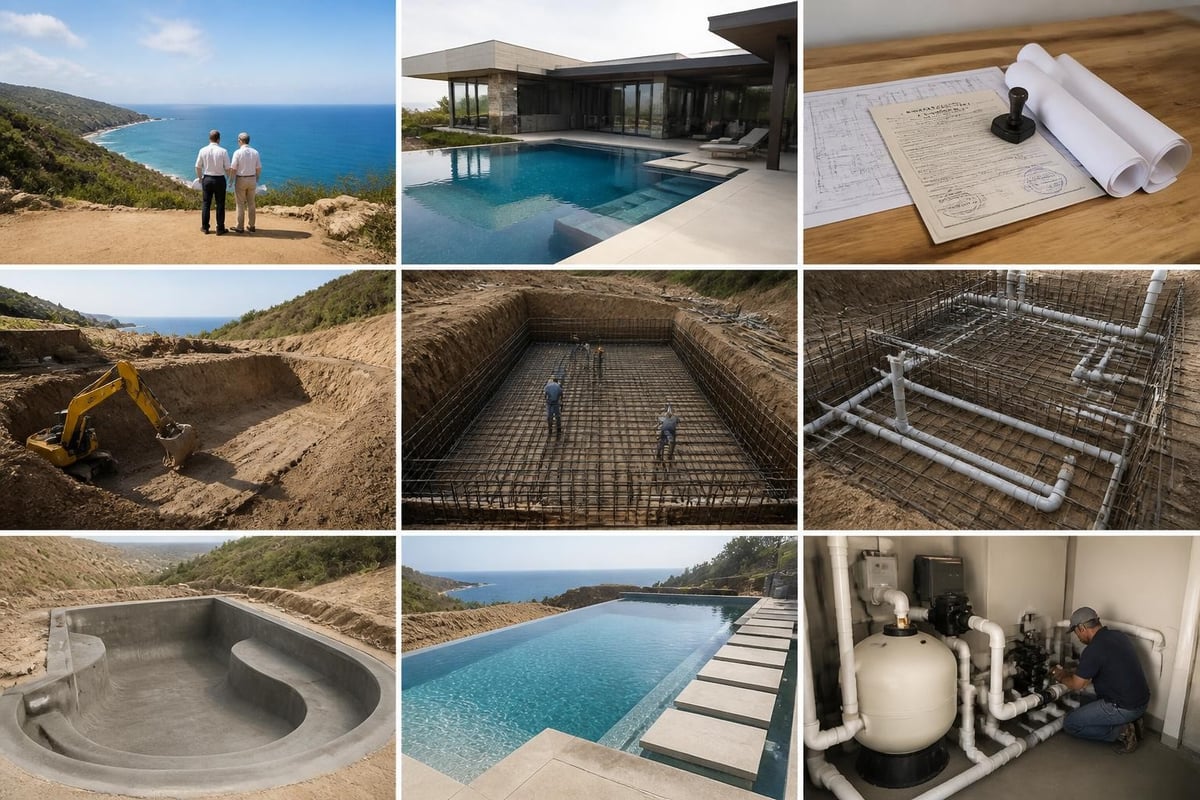
- Excavation and foundation inspection: Verifies soil bearing, caisson depth, and steel placement
- Steel and plumbing rough inspection: Confirms rebar size/spacing, embedments, and plumbing before shotcrete
- Shotcrete/gunite inspection: May occur during shooting or immediately after
- Electrical rough inspection: Verifies bonding, grounding, and conduit installation
- Final inspection: Tests equipment operation, verifies barriers, and confirms completion
Total construction timelines for infinity pools span 4-6 months from permit issuance to completion, longer if site access challenges exist or weather delays occur.
Hydraulic Design and Equipment Selection
The hydraulic system determines operational reliability and user experience. Infinity pool builders must size pumps, configure plumbing, and select equipment that maintains consistent flow over the vanishing edge while supporting main pool circulation and filtration.
Overflow Pump Sizing and Configuration
Dedicated overflow pumps move water from the catch basin back to the main pool. Flow rate calculations depend on edge length, desired overflow depth, and weir profile. Most residential infinity edges require 100-200 gallons per minute per linear foot of edge to maintain consistent overflow appearance.
A 20-foot vanishing edge operating at 150 GPM per foot requires 3,000 GPM overflow capacity. Commercial-grade pumps or multiple residential pumps in parallel configuration meet these demands. Variable-speed pumps allow flow adjustment for different visual effects and reduce energy consumption during low-use periods.
Overflow system considerations:
- Pump redundancy (dual pumps vs. single larger unit)
- Suction configuration to prevent air entrainment
- Check valves to prevent reverse flow during shutdown
- Flow meters for monitoring and troubleshooting
- Automation integration for remote monitoring
Main pool circulation operates independently, typically requiring 75-125 GPM for adequate turnover and filtration. Combined hydraulic demand requires careful electrical planning to avoid overloading service panels and excessive energy costs.
Filtration and Water Quality Management
Dual circulation paths require thoughtful filtration design. Some infinity pool builders use separate filters for overflow and main circulation, while others combine flows after the catch basin. Separate filtration allows independent maintenance schedules and troubleshooting but increases equipment costs and space requirements.
High-rate sand filters handle 15-20 GPM per square foot of filter area, while cartridge filters operate at 0.375-0.5 GPM per square foot. For a combined flow of 4,000 GPM, this requires 200-267 square feet of sand filter area or multiple commercial-grade filter tanks.
Water chemistry management grows more complex with increased surface area and evaporation. Automated chemical controllers maintain consistent pH and sanitizer levels, reducing manual testing and adjustment. Salt chlorine generators provide convenient sanitization but require careful monitoring to prevent corrosion on metal components and fixtures.
Material Selection and Finish Details
Finishes define the visual impact and long-term durability of infinity pools. Choices extend beyond aesthetics to affect maintenance requirements, longevity, and operational characteristics.
Edge Profile and Weir Design
The weir profile controls water flow characteristics and visual effect. Sharp-edge weirs create thin water sheets with minimal sound, while rounded profiles produce thicker flows with more audible water movement. Knife-edge stainless steel weirs offer the thinnest possible overflow but require precise fabrication and installation.
Cast-in-place concrete weirs provide the most flexibility for custom profiles and curves. Properly formed and finished concrete edges cost less than prefabricated components while allowing site-specific adjustments during construction. However, achieving consistent profiles across long edges requires experienced crews and proper quality control.
Shell Finishes and Waterproofing
Interior finishes range from traditional marcite plaster ($8-$12/sq ft) through pebble aggregates ($15-$35/sq ft) to glass tiles ($80-$150/sq ft). Each material offers distinct aesthetics, texture, and durability characteristics.
Finish comparison:
| Material | Lifespan | Maintenance | Appearance | Cost |
|---|---|---|---|---|
| Marcite plaster | 5-10 years | High | Smooth, classic | $ |
| Quartz aggregate | 10-15 years | Medium | Sparkle, durable | $$ |
| Pebble finish | 15-20 years | Low | Natural texture | $$$ |
| Glass tile | 25+ years | Low | Stunning, custom | $$$$ |
Waterproofing systems beneath finishes prevent water migration into the structural shell and surrounding soil. Cementitious membranes, liquid-applied elastomers, and bentonite panels each offer advantages depending on site conditions and installation sequence. Proper waterproofing proves especially critical where infinity pools cantilever over slopes, as water intrusion can undermine foundations and compromise structural integrity.
Project Management and Construction Oversight
Successful infinity pool projects require rigorous oversight and clear communication throughout the construction process. Experienced infinity pool builders establish systems that keep projects on schedule, within budget, and built to specification.
Communication Protocols and Decision Points
Regular progress meetings align expectations and address emerging issues before they impact schedule or cost. Weekly on-site meetings with the contractor, monthly review meetings including designers or architects, and prompt responses to RFIs (requests for information) maintain momentum.
Critical decision points requiring owner input:
- Exact pool positioning and edge orientation
- Equipment location and screening approach
- Finish selections and sample approval
- Lighting layout and control programming
- Landscape integration and hardscape materials
- Accessory selections (heating, automation, water features)
Documenting decisions through meeting minutes, email confirmations, and change orders prevents misunderstandings and scope creep. When modifications arise during construction, written change orders specifying cost, schedule impact, and scope details protect all parties.
Quality Control Checkpoints
Beyond required inspections, proactive quality control identifies issues during construction when correction costs remain minimal. Infinity pool builders committed to quality establish internal checkpoints throughout the process.
Elevation surveys verify proper grading and weir levelness before concrete placement. Post-shotcrete thickness testing confirms adequate shell depth. Pressure testing plumbing before backfilling reveals leaks when repairs remain accessible. Pre-startup equipment testing prevents failures during initial operation.
For homeowners working with luxury pool builders across Los Angeles, requesting documented quality control processes during contractor selection reveals commitment to excellence beyond minimal code compliance.
Long-Term Maintenance and Performance
Post-construction care determines whether infinity pools deliver decades of reliable service or require premature repairs. Understanding maintenance requirements helps set realistic expectations and budgets.
Seasonal Maintenance Requirements
Southern California's mild climate allows year-round pool operation, but seasonal attention optimizes performance and efficiency. Spring preparation includes filter cleaning, equipment inspection, and chemistry balancing after winter low-use periods. Summer high-use months require frequent skimming, increased chemistry monitoring, and equipment checks.
Fall maintenance focuses on leaf management and preparing covers if applicable. Winter represents ideal timing for equipment service, tile cleaning, and addressing minor repairs before spring use resumes.
Quarterly maintenance tasks:
- Clean filter media (sand change every 3-5 years)
- Inspect and clean overflow weir and catch basin
- Test and calibrate automated controllers
- Check pump seals and motor bearings
- Verify proper water level in surge tank
- Clean skimmer and pump baskets thoroughly
Professional maintenance services cost $150-$300 monthly depending on service level, chemistry included, and equipment complexity. While higher than standard pool service, this investment protects six-figure construction investments.
Common Issues and Solutions
Despite quality construction, infinity pools occasionally develop performance issues. Understanding common problems helps identify normal wear versus construction defects.
Uneven overflow across the vanishing edge often results from settling, typically appearing 6-24 months after construction as backfill consolidates. Minor settlement may self-correct; significant unevenness requires weir leveling or pool shell adjustment.
Surge basin overflow during heavy use indicates undersized catch basin or insufficient overflow pump capacity. Solutions include installing larger pumps, adding surge capacity, or implementing bather load management.
Excessive water loss beyond normal evaporation suggests leaks in the shell, plumbing, or overflow system. Pressure testing isolates plumbing leaks, while dye testing identifies shell cracks or separation joints requiring repair.
Selecting qualified infinity pool builders requires evaluating technical expertise, reviewing proven portfolios, and understanding the engineering complexity these projects demand. From hydraulic design through structural engineering and precision construction, every phase requires specialized knowledge and meticulous execution. AM BUILDS CA brings 15 years of experience building custom in-ground pools across Los Angeles, including the hillside and architectural challenges that infinity edge installations present. Our family-owned, licensed team (CSLB #1153503) handles complete design, engineering coordination, permitting, and construction with direct owner involvement and transparent pricing. Call (424) 485-4548 for a free consultation to discuss your infinity pool vision.


