


Building an indoor pool transforms your property into a year-round aquatic retreat, but understanding the financial commitment is essential before breaking ground. The indoor pool construction cost depends on dozens of interconnected decisions, from structural engineering and mechanical systems to finish materials and local code requirements. Unlike outdoor pools, indoor installations demand climate-controlled enclosures, sophisticated dehumidification equipment, and careful integration with your home's existing systems. Homeowners in Los Angeles and throughout Southern California increasingly explore covered pool options to extend swim seasons, protect water quality, and create resort-style spaces that function regardless of weather.
Primary Cost Components for Indoor Pool Projects
Indoor pool construction cost divides into several major categories, each carrying significant weight in your final investment. The pool shell itself represents only a portion of total expenses.
Structure and Enclosure
Building or converting space to house your pool typically consumes 40-50% of total project budgets. New construction requires foundation work, framing, roofing, and exterior cladding designed to withstand constant humidity and temperature fluctuations. Converting existing space-such as a basement, garage, or unused wing-reduces structural costs but often requires extensive reinforcement, waterproofing, and access modifications.
Key structural considerations include:
- Foundation engineering for pool weight (approximately 100-150 pounds per square foot when filled)
- Floor-to-ceiling height requirements (minimum 12-14 feet to prevent condensation on ceiling surfaces)
- Vapor barriers and moisture-resistant building materials throughout
- Adequate access for excavation equipment and material delivery
- Structural load calculations for elevated or second-story installations
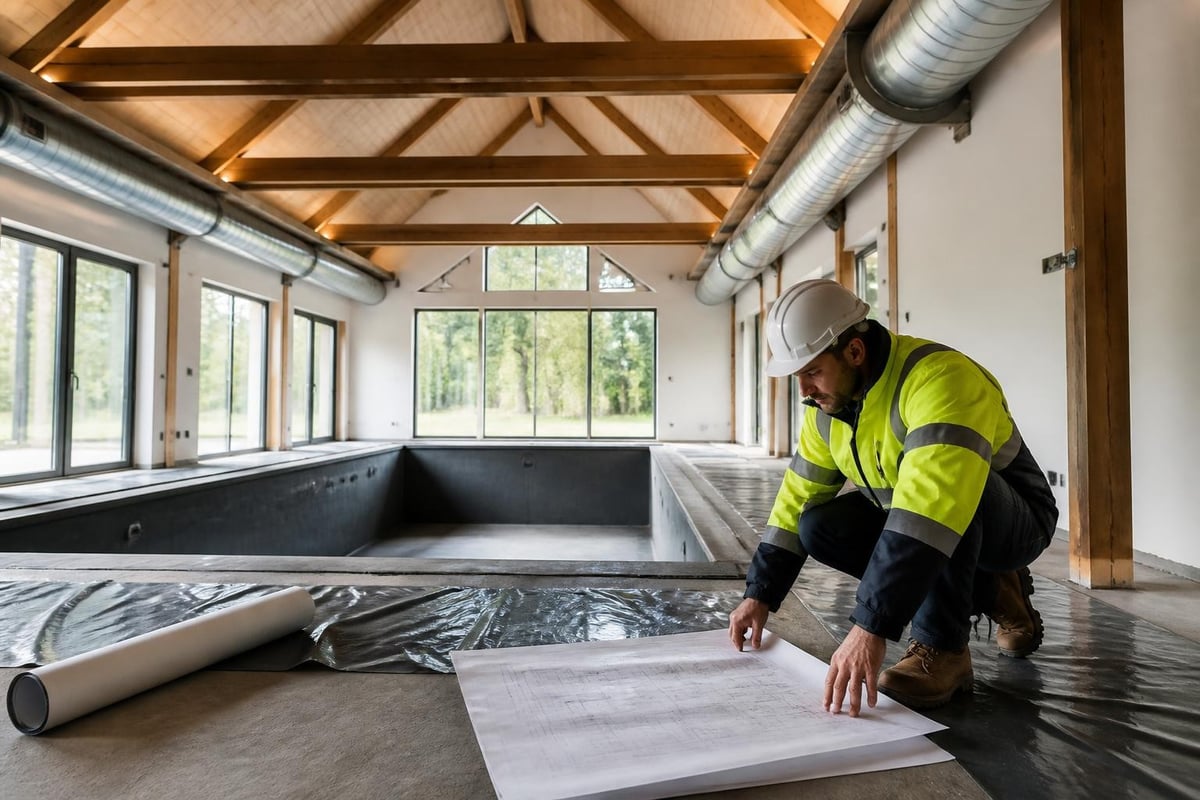
Permit requirements in Los Angeles County add layers of review for structural, plumbing, electrical, and mechanical systems. Working with licensed pool contractors who understand local code streamlines approval processes and prevents costly revisions during inspection phases.
Pool Shell Construction
The basin itself follows similar construction methods to outdoor gunite pools but requires coordination with enclosure schedules. Shell costs range from $50 to $150 per square foot depending on size, depth, shape complexity, and finish materials.
| Pool Size | Shell Cost Range | Total Water Volume |
|---|---|---|
| 12' × 24' (288 sq ft) | $14,400 – $43,200 | 17,280 gallons |
| 16' × 32' (512 sq ft) | $25,600 – $76,800 | 30,720 gallons |
| 20' × 40' (800 sq ft) | $40,000 – $120,000 | 48,000 gallons |
Excavation inside existing structures presents unique challenges. Limited equipment access often requires hand-digging or compact machinery, increasing labor hours significantly. Soil removal logistics-including haul routes through your home-must be planned meticulously to protect finishes and minimize disruption.
Mechanical Systems That Define Operating Costs
Mechanical infrastructure represents the most complex and often underestimated component of indoor pool construction cost. These systems run continuously, making upfront investment and long-term efficiency equally important.
Dehumidification and HVAC
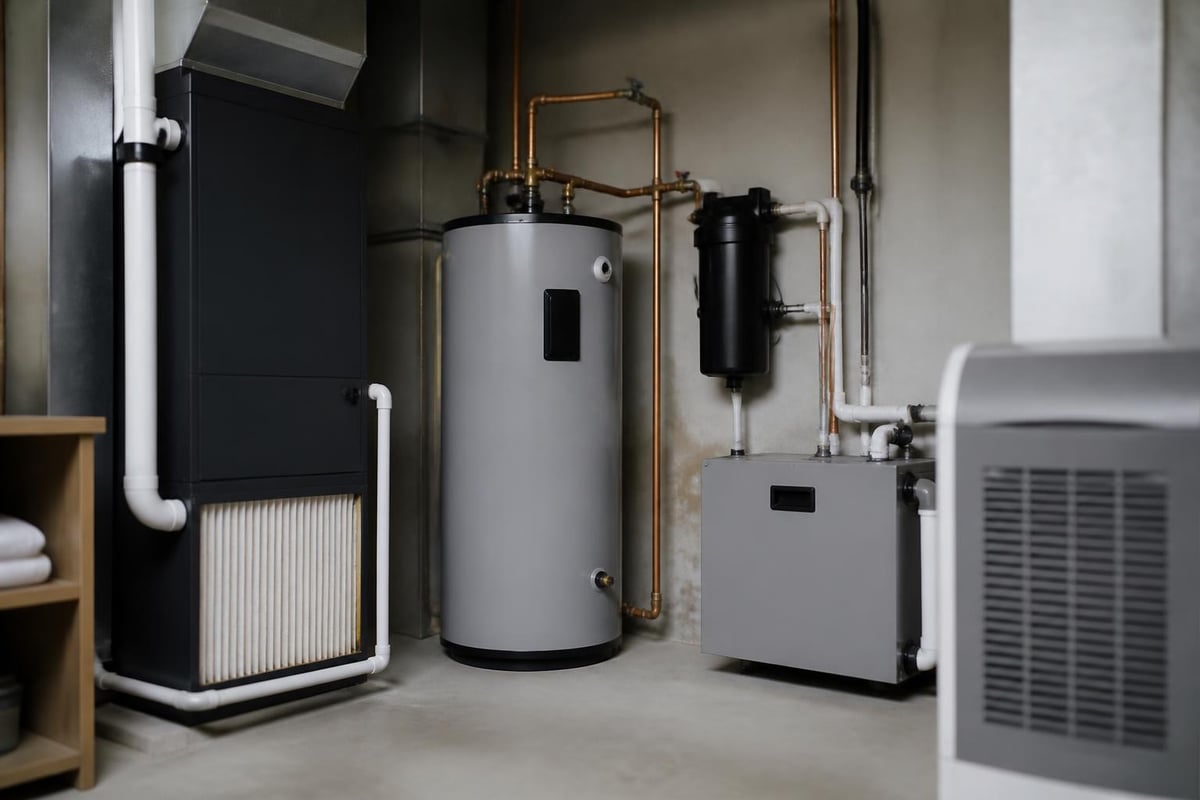
Indoor pools release substantial moisture through evaporation-typically 0.1 to 0.2 gallons per hour per square foot of water surface. A 400-square-foot pool can evaporate 40-80 gallons daily, creating humidity levels that damage buildings and create uncomfortable conditions without proper control.
Professional-grade dehumidification systems cost $8,000 to $25,000 for residential installations. The ASHRAE Handbook provides engineering guidance on calculating evaporation loads and sizing equipment appropriately. Undersized systems lead to condensation damage, mold growth, and accelerated structural deterioration.
Modern units integrate multiple functions:
- Dehumidification (moisture removal)
- Fresh air ventilation (indoor air quality)
- Heating and cooling (temperature control)
- Heat recovery (energy recapture from exhaust air)
Energy-efficient models with heat recovery reduce operating costs substantially. Recent updates to ANSI/ASHRAE/IES Standard 90.1-2022 establish minimum efficiency requirements and heat-recovery mandates for pool dehumidification systems, affecting equipment selection and installation details.
Water Heating Systems
Maintaining comfortable water temperatures year-round requires dedicated heating capacity. Indoor pools typically operate between 78-82°F, demanding consistent energy input.
Primary heating options include:
- Natural gas heaters ($2,500-$5,000) – Fast heating, lower upfront cost, higher operating expense
- Heat pumps ($4,000-$7,000) – Energy-efficient, climate-dependent performance, slower heating
- Solar-assisted systems ($3,000-$8,000) – Reduced operating cost, requires roof area, weather-dependent
- Combined heat-recovery (integrated with dehumidifier) – Maximum efficiency, higher initial investment
The ACCA Manual SPS offers detailed procedures for sizing heating equipment based on pool volume, surface area, air temperature, and usage patterns. Proper sizing prevents short-cycling, extends equipment life, and maintains comfortable conditions efficiently.
Filtration and Water Treatment
Standard pool filtration systems ($1,500-$4,000) handle circulation and cleaning, but indoor environments benefit from enhanced water quality management. Enclosed spaces amplify chemical odors and off-gassing, making saltwater chlorination systems ($1,200-$2,500) or UV sanitation ($800-$2,000) attractive upgrades for indoor installations.
Pump efficiency directly impacts operating costs. Variable-speed models consume 50-75% less energy than single-speed alternatives, saving hundreds of dollars annually while meeting California energy codes.
Finish Materials and Aesthetic Choices
Interior finishes affect both initial indoor pool construction cost and long-term satisfaction. Enclosed environments showcase every detail, making material selection particularly important.
Pool Surfaces
Premium finishes create the visual centerpiece of your natatorium:
| Finish Type | Cost per Sq Ft | Lifespan | Maintenance Level |
|---|---|---|---|
| White plaster | $4-$6 | 7-10 years | Moderate |
| Colored quartz | $8-$12 | 10-15 years | Low-moderate |
| Glass tile | $15-$30 | 20+ years | Low |
| Pebble aggregate | $10-$18 | 15-20 years | Low |
Glass and ceramic tile offer exceptional durability and aesthetic appeal but increase shell costs substantially. Many homeowners select tile accents combined with quartz or pebble finishes to balance budget and visual impact.
Decking and Surrounds
Slip-resistant, moisture-tolerant decking materials create safe, attractive pool perimeters. Concrete pavers, natural stone, and specialized composite materials ($15-$45 per square foot installed) withstand constant humidity while providing secure footing.
Drainage design prevents standing water and directs condensation away from structural elements. Deck drains, perimeter gutters, and sloped surfaces integrated during construction prevent moisture accumulation that damages finishes and creates safety hazards.
Lighting and Ambiance
LED pool lighting ($500-$2,500) and architectural lighting design ($2,000-$8,000) transform indoor pools into stunning architectural features. Dimmable controls, color-changing options, and layered lighting schemes accommodate different activities and moods throughout the day.
Natural daylighting through windows, skylights, or glass walls reduces artificial lighting needs and creates healthier, more appealing spaces. However, glazing must be specified for high-humidity environments with appropriate thermal breaks and condensation resistance.
Permits, Engineering, and Professional Services
Professional fees and regulatory compliance add 10-20% to indoor pool construction cost but ensure safe, code-compliant installations that protect your investment.
Design and Engineering
Architectural design ($5,000-$15,000) and structural engineering ($3,000-$10,000) establish construction parameters and produce permit-ready drawings. Licensed professionals coordinate pool placement, mechanical systems, structural modifications, and accessibility features while optimizing layout and functionality.
MEP (mechanical, electrical, plumbing) engineering ($4,000-$12,000) sizes and specifies climate control equipment, ensures adequate electrical service, designs plumbing networks, and coordinates system integration. Professional design prevents conflicts during construction and ensures equipment operates efficiently.
Permits and Inspections
Building permit fees in Los Angeles vary by project scope but typically range from $2,000 to $8,000 for indoor pool additions. Multiple inspection phases verify structural work, pool shell installation, mechanical systems, electrical installations, and final safety features before occupancy approval.
The Pool & Hot Tub Alliance publishes industry standards that inform code requirements and construction practices nationwide. Compliance with PHTA standards demonstrates professional installation methods and quality benchmarks recognized by inspectors and insurance carriers.
Budget Planning and Cost Control Strategies
Realistic budget development requires understanding both obvious expenses and hidden cost drivers that emerge during indoor pool projects.
Total Investment Ranges
Complete indoor pool construction cost typically falls within these ranges for Los Angeles-area projects:
- Basic enclosed pool (existing space, simple design): $80,000-$150,000
- Mid-range new construction (purpose-built enclosure, standard finishes): $150,000-$300,000
- Luxury custom natatorium (architectural design, premium finishes, spa integration): $300,000-$600,000+
These figures include structure, pool shell, mechanical systems, finishes, permits, and professional services. Consumer cost guides provide additional benchmarking data, though regional variations and project-specific factors create significant range.
Value Engineering Opportunities
Strategic decisions control costs without compromising functionality:
- Convert existing space rather than building additions (saves $30,000-$100,000 on structure)
- Select standard pool shapes instead of complex custom designs (reduces shell costs 15-25%)
- Invest in efficient mechanical systems that reduce operating expenses (recovers premium through lower utility bills)
- Phase construction by completing structure first, then finishing pool during a later season
- Optimize size since smaller pools substantially reduce all connected costs
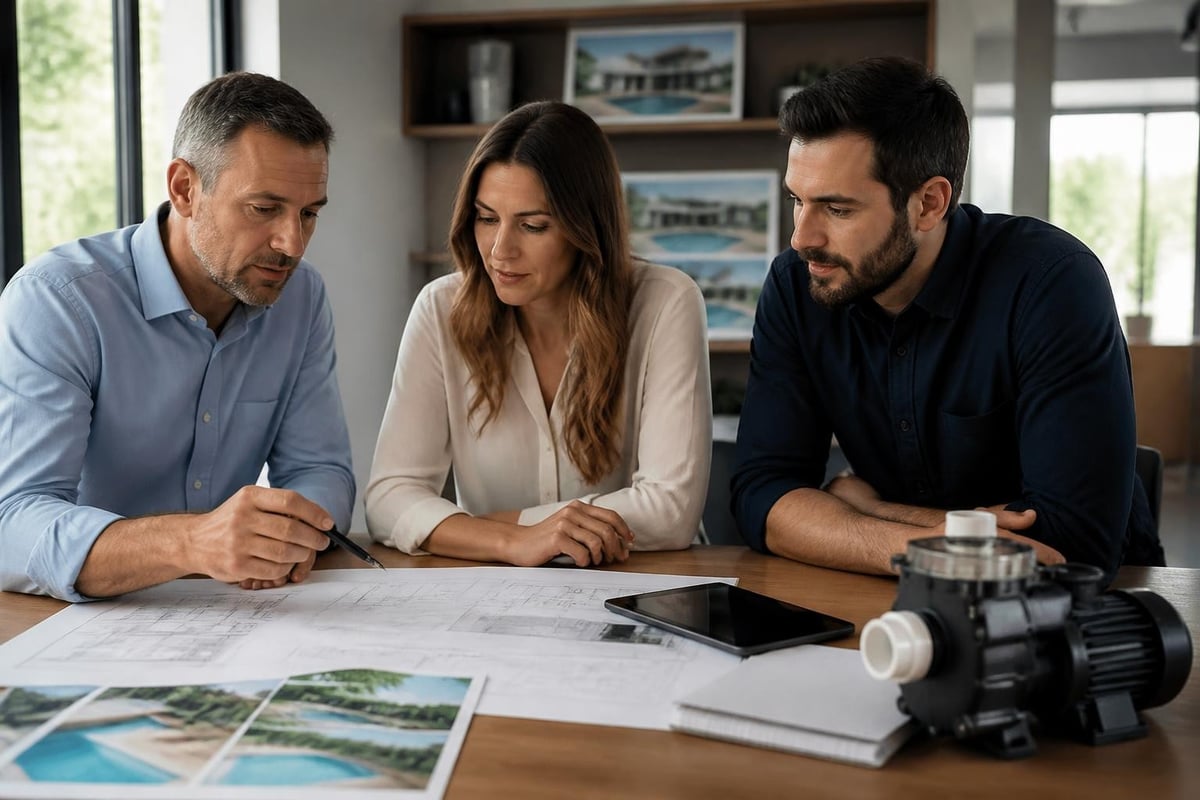
Working directly with experienced general contractors who specialize in pool construction eliminates markup layers and provides transparent pricing throughout the project.
Long-Term Operating Costs
Monthly operating expenses affect total ownership cost significantly. Plan for:
- Energy (dehumidification, heating, filtration): $200-$600 monthly
- Water and chemicals: $50-$150 monthly
- Maintenance and service: $100-$300 monthly
- Equipment replacement reserves: $100-$200 monthly
Energy-efficient equipment and heat recovery systems reduce consumption by 30-50%, creating substantial savings over system lifespans. Initial investment in premium mechanical systems typically recovers within 5-8 years through reduced operating costs.
Selecting the Right Construction Partner
Indoor pool projects demand coordination across multiple trades and deep understanding of both pool construction and building science. Licensed general contractors with specific experience in natatorium projects bring essential expertise to complex installations.
Credentials and Experience
Verify contractors hold active California contractor licenses (CSLB), maintain adequate insurance coverage, and demonstrate successful indoor pool completions. Review portfolios specifically showing enclosed pool projects rather than only outdoor installations, since mechanical complexity and building integration require specialized knowledge.
References from recent clients provide insight into communication quality, schedule reliability, budget management, and problem-solving capabilities during challenging phases. Projects completed in your geographic area demonstrate familiarity with local permitting processes and inspection requirements.
Transparent Pricing and Communication
Detailed, line-item proposals allow accurate comparison between contractors and reveal how each allocates project budgets. Vague lump-sum pricing often hides surprises that emerge during construction, leading to change orders and budget overruns.
Established communication protocols-regular progress meetings, photo documentation, decision tracking-keep projects moving smoothly and prevent misunderstandings. Family-owned contractors often provide more direct owner involvement and responsive communication than larger companies with multiple management layers.
Site-Specific Factors in Southern California
Geographic and regulatory conditions in Los Angeles affect both indoor pool construction cost and design parameters.
Building Code Requirements
California's energy codes impose strict efficiency standards for pool equipment and building envelopes. Title 24 requirements mandate high-efficiency pumps, LED lighting, and insulation values that exceed minimums in many other states. Compliance adds upfront cost but reduces long-term operating expenses significantly.
Seismic design provisions require structural engineering that accounts for earthquake loads, particularly for elevated pools or second-story installations. Foundation connections, structural anchoring, and flexible utility connections prevent damage during seismic events.
Climate Considerations
Southern California's mild climate reduces heating demands compared to northern regions but creates unique challenges. High summer temperatures increase cooling loads for indoor pool spaces. Marine layer effects in coastal areas affect humidity levels and mechanical system sizing.
Year-round construction seasons allow flexible scheduling, though summer months see highest contractor demand and potentially longer lead times. Planning projects during shoulder seasons (spring, fall) often provides better availability and more competitive pricing.
Water Conservation and Regulations
Indoor pools reduce evaporative water loss by 70-90% compared to outdoor installations, supporting water conservation goals important throughout Southern California. Covered configurations qualify for drought-related incentives in some municipalities, offsetting portions of construction cost through rebates or reduced permit fees.
Pool covers-even over indoor pools-further reduce evaporation, chemical consumption, and heating costs. Automated cover systems ($8,000-$18,000) integrate seamlessly with indoor designs while maximizing efficiency benefits.
Sizing and Configuration Decisions
Pool dimensions directly influence every cost category while determining functionality and user experience.
Optimal Size Ranges
Residential indoor pools typically range from 250 to 800 square feet, balancing swim functionality against enclosure costs. Lap pools (10-12 feet wide by 30-50 feet long) maximize exercise capability in compact footprints. Family recreation pools (14-20 feet wide by 24-40 feet long) accommodate multiple users and varied activities.
Depth variations from 3.5 feet to 6+ feet create zones for different uses while affecting excavation volumes and shell costs proportionally. Constant-depth configurations reduce complexity and expense compared to graduated or deep-end designs.
Integrated Features
Popular enhancements add functionality and appeal:
- Attached spas ($15,000-$35,000) – Shared equipment, elevated temperatures, therapeutic jets
- Tanning ledges ($3,000-$8,000) – Shallow lounging areas, family-friendly zones
- Swim jets ($4,000-$12,000) – Current generation for stationary swimming, compact installations
- Waterfalls and features ($2,500-$15,000) – Visual interest, sound masking, aeration
Each addition compounds indoor pool construction cost while requiring coordination with mechanical systems, structural design, and overall space planning. Prioritize features that align with primary use patterns rather than including every possible option.
Understanding indoor pool construction cost empowers informed decision-making as you plan your year-round aquatic retreat, balancing initial investment against long-term value and enjoyment. Whether converting existing space or designing purpose-built natatoriums, professional guidance ensures efficient systems, code-compliant construction, and installations that perform reliably for decades. AM BUILDS CA brings 15+ years of custom pool expertise to Los Angeles homeowners, handling design through completion with transparent pricing, direct owner communication, and meticulous attention to mechanical integration and finish quality-call (424) 485-4548 for your free consultation and detailed project estimate.


