


Building a custom in ground swimming pool transforms your backyard into a personal retreat while adding significant value to your property. The construction process involves careful planning, precise engineering, and skilled execution across multiple specialized trades. Whether you're considering a simple lap pool or an elaborate resort-style design with spas and water features, understanding the construction phases, material choices, and regulatory requirements helps ensure your investment delivers lasting enjoyment. This comprehensive guide examines every aspect of in ground swimming pool construction, from initial site assessment through final finishing touches.
Planning Your Pool Construction Project
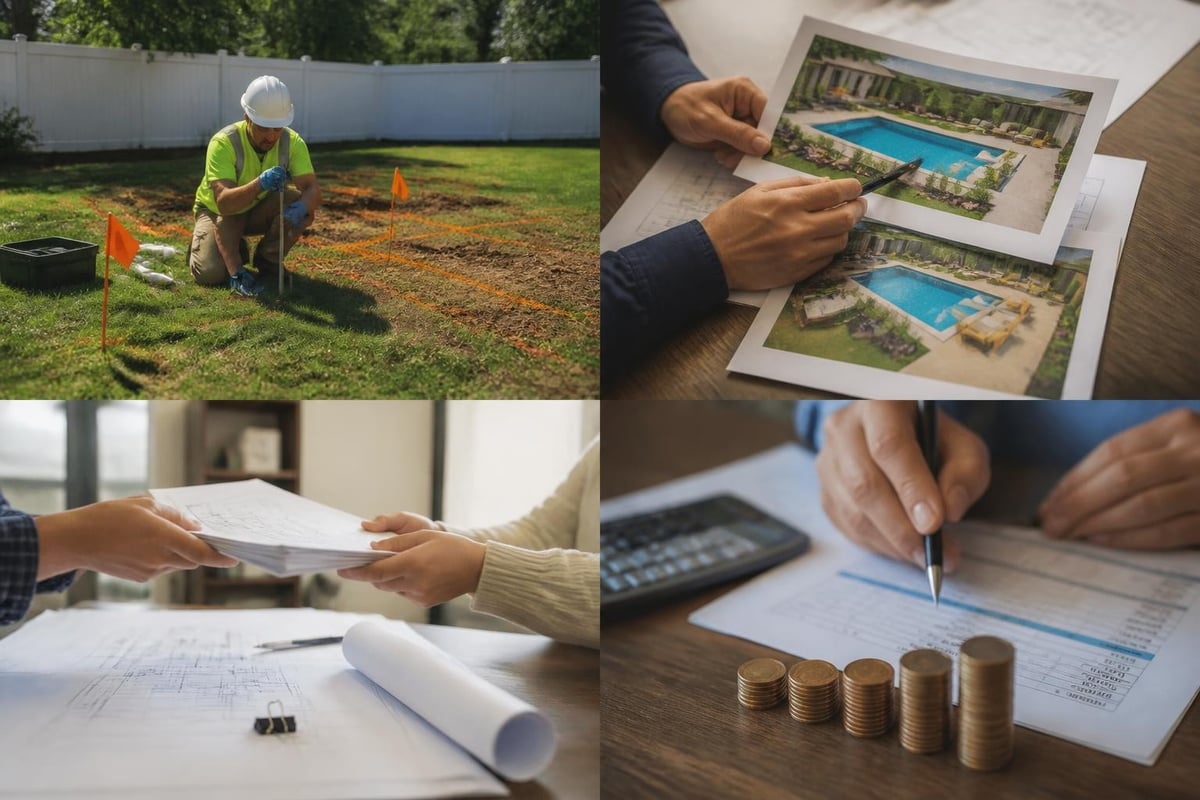
The planning phase establishes the foundation for successful in ground swimming pool construction. Before breaking ground, homeowners must consider site conditions, design preferences, budget constraints, and local regulations.
Site Assessment and Design Considerations
Professional contractors begin every project with a thorough site evaluation. Soil composition, drainage patterns, slope, and access all influence construction methods and costs. Rocky terrain requires additional excavation equipment, while high water tables may necessitate specialized drainage systems. The property's relationship to neighboring structures, utility lines, and setback requirements shapes pool placement and dimensions.
Design decisions made during planning affect both construction complexity and long-term satisfaction:
- Pool shape and size (rectangular, freeform, geometric)
- Depth variations (shallow lounging areas, deep ends for diving)
- Integrated features (attached spas, tanning ledges, swim-up bars)
- Water features (waterfalls, deck jets, bubblers)
- Lighting systems (LED perimeter, underwater, landscape)
Budget allocation during planning prevents costly mid-project changes. Construction costs vary by region, materials, size, and complexity, but realistic budgets account for the pool shell, equipment, decking, fencing, and landscaping.
Permits and Regulatory Compliance
In ground swimming pool construction requires multiple permits and inspections across most jurisdictions. Los Angeles County, for instance, mandates building permits, health department approval, and compliance with specific safety codes. The permitting process typically includes submittal of engineered plans, structural calculations, and equipment specifications.
Licensed contractors handle permit applications, ensuring compliance with:
- Setback requirements from property lines and structures
- Barrier requirements including fencing height, gate specifications, and self-closing mechanisms
- Electrical codes for bonding, GFCI protection, and equipment grounding
- Plumbing regulations governing drainage, backflow prevention, and water supply
Working with licensed pool contractors in Los Angeles who understand local regulations accelerates approvals and prevents compliance issues. Engineering stamps, soils reports, and structural plans form the technical foundation that inspectors review.
Construction Methods and Materials
Modern in ground swimming pool construction employs several distinct methods, each offering specific advantages regarding durability, design flexibility, and installation timeline.
Gunite and Shotcrete Construction
Gunite and shotcrete represent the dominant construction methods for custom pools, particularly in California markets. Both processes involve pneumatically applied concrete reinforced with steel rebar, creating monolithic, watertight shells. The American Shotcrete Association provides technical guidance on proper application techniques, mix designs, and quality control measures.
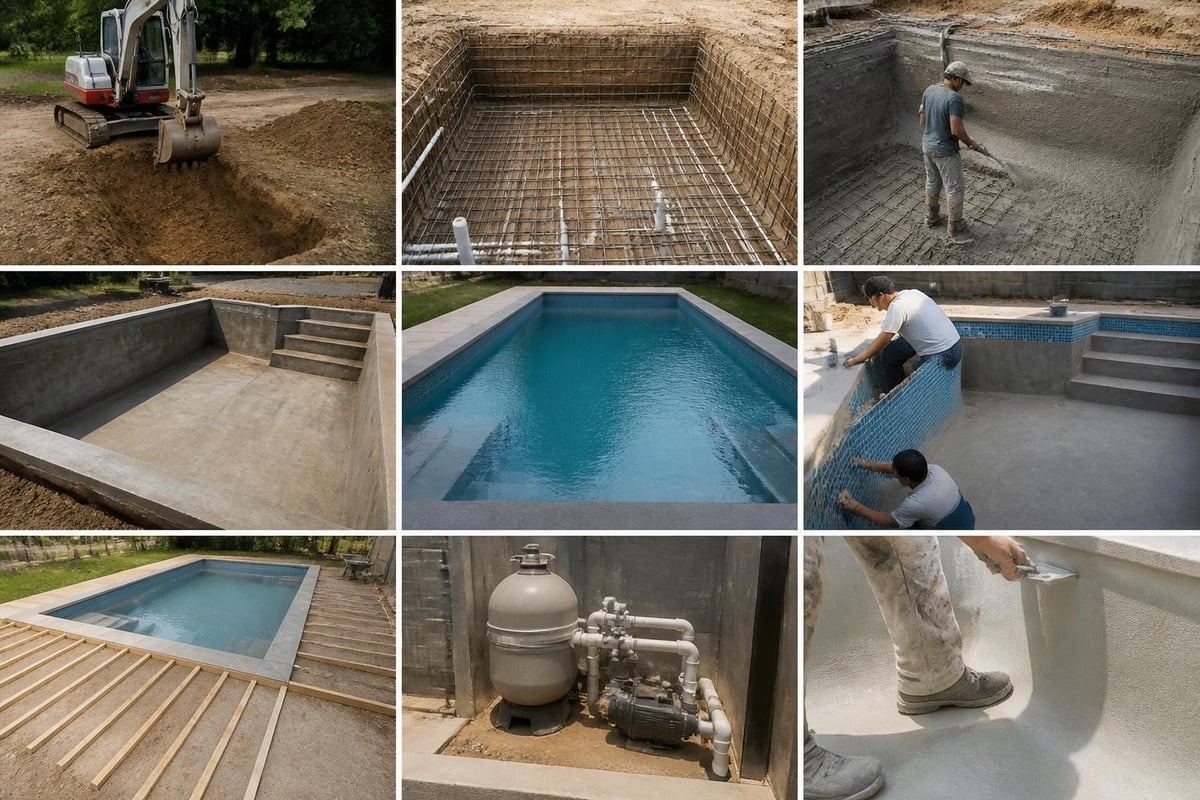
Gunite combines dry cement and sand that mix with water at the application nozzle, while shotcrete uses pre-mixed wet concrete. Both methods deliver comparable strength and longevity when properly installed. The construction sequence follows this pattern:
- Excavation to designed depth with allowance for structural thickness
- Steel reinforcement installation with proper spacing and chairs
- Plumbing installation including main drains, return lines, and suction ports
- Concrete application in multiple passes building to specified thickness
- Curing period with moisture retention for proper strength development
| Feature | Gunite | Shotcrete |
|---|---|---|
| Mix timing | Dry mix, water added at nozzle | Pre-mixed wet concrete |
| Application control | Greater nozzle operator discretion | More consistent mix |
| Typical thickness | 8-10 inches walls, 10-12 inches floor | 8-10 inches walls, 10-12 inches floor |
| Curing requirements | 28 days minimum | 28 days minimum |
Professional installation following ACI shotcrete guidelines ensures structural integrity and prevents common issues like honeycomb voids or delamination.
Alternative Construction Methods
While gunite dominates custom pool construction, vinyl liner and fiberglass pools serve specific market segments. Vinyl liner pools use metal or polymer panel walls with vinyl membranes forming the waterproof barrier. They offer lower initial costs but require liner replacement every 7-10 years.
Fiberglass pools arrive as pre-manufactured shells that cranes lower into excavated sites. Limited to standard sizes and shapes, they install quickly but lack customization options. Neither method matches gunite's design flexibility or longevity in high-end residential applications.
Concrete pools finished with plaster, tile, or aggregate surfaces provide unlimited aesthetic options and structural permanence that justifies higher upfront investment for homeowners planning long-term ownership.
The Construction Timeline
Understanding the phases of in ground swimming pool construction helps homeowners set realistic expectations and coordinate related projects like landscaping or outdoor kitchens.
Excavation and Structural Work
Construction begins with excavation matching engineered plans. Operators remove soil to precise depths, creating the negative space that becomes your pool. Excavated material requires disposal or redistribution, adding cost depending on local dump fees and haul distance. Challenging access may necessitate smaller equipment or hand digging, extending this phase.
Steel installation follows excavation. Rebar grids tied according to structural plans provide tensile strength that concrete lacks. Proper placement, spacing, and securing prevent steel displacement during concrete application. Plumbing rough-in occurs simultaneously, with main drains, return lines, skimmer connections, and equipment plumbing installed before structural concrete.
The shotcrete or gunite application represents the most critical construction day. Crews spray concrete in continuous operations, building thickness in passes while maintaining proper consolidation. Experienced nozzle operators ensure complete steel encasement without voids or weak areas.
Equipment Installation and Finishing
After the shell cures, construction shifts to equipment and finishing trades. The equipment pad houses circulation pumps, filters, heaters, and automation systems. Professional installations position equipment for accessibility, noise management, and code compliance.
Finishing phases include:
- Tile installation at waterline and features
- Coping installation around pool perimeter
- Deck construction using concrete, pavers, or stone
- Plumbing connections to equipment
- Electrical work including lighting, automation, and safety bonding
- Interior surface application (plaster, pebble, or tile)
Each trade requires inspection approval before subsequent work proceeds. The interior finish, applied last, requires careful curing and chemical balancing before filling.
Costs and Budget Considerations
In ground swimming pool construction represents a significant investment with costs varying widely based on size, features, materials, and site conditions. Los Angeles homeowners typically invest between $60,000 and $150,000 for custom gunite pools, with luxury projects exceeding $200,000.
Cost Breakdown by Component
Understanding where construction budgets allocate helps homeowners make informed decisions during design and prioritize spending on elements delivering maximum value.
| Component | Percentage of Total | Typical Range |
|---|---|---|
| Excavation & shell | 35-40% | $25,000-$60,000 |
| Equipment & plumbing | 20-25% | $12,000-$30,000 |
| Decking & hardscape | 15-20% | $10,000-$25,000 |
| Finishing & tile | 10-15% | $8,000-$20,000 |
| Permits & engineering | 5-8% | $3,000-$10,000 |
| Additional features | Variable | $5,000-$50,000+ |
Size significantly impacts costs, with each additional square foot of pool surface adding material, labor, and equipment expenses. A 400-square-foot pool costs substantially less than a 700-square-foot design, even with identical features and finishes.
Site challenges like limited access, rocky soil, or slope corrections add expenses through specialized equipment, additional labor, or engineering solutions. Experienced contractors identify these factors during initial assessments, providing accurate estimates rather than low-ball figures that inflate during construction.
Features That Add Value
Strategic feature selection enhances enjoyment and property value while controlling budgets. High-return investments include energy-efficient equipment, LED lighting, and quality finishes that reduce maintenance and operating costs. Automation systems, while adding upfront expense, deliver convenience and efficiency worth the investment for most homeowners.
Attached spas, tanning ledges, and water features appeal to buyers and increase daily enjoyment. Custom pool construction services incorporating these elements during initial construction costs less than retrofitting later, as structural integration, plumbing, and equipment sizing occur in the design phase.
Premium finishes like glass tile, natural stone coping, and polished aggregate interiors add 15-25% to surface costs but deliver superior aesthetics and longevity compared to standard plaster. For homeowners planning long-term ownership, these upgrades amortize well over decades of use.
Water Quality and Efficiency
Modern in ground swimming pool construction incorporates systems that reduce water consumption, minimize chemical use, and lower operating costs compared to older designs.
Circulation and Filtration Systems
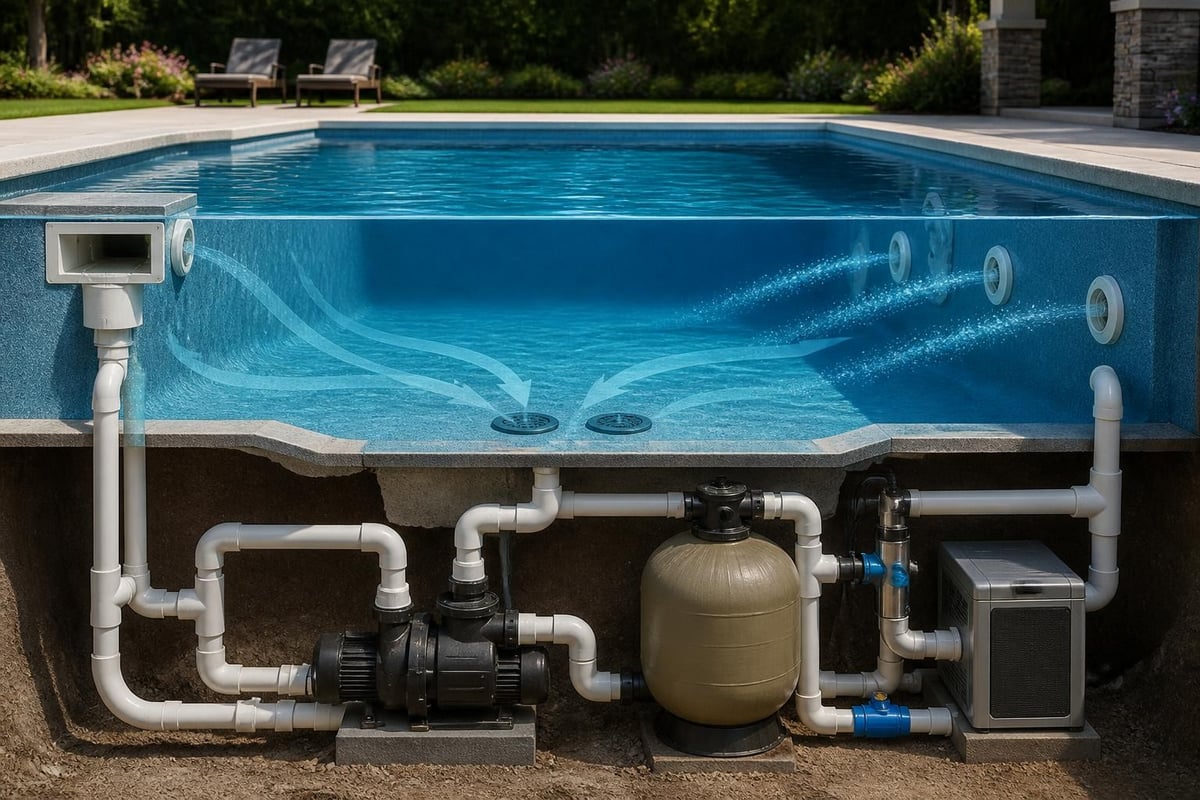
Proper circulation forms the foundation of water quality. Contemporary designs position return jets to eliminate dead zones where debris accumulates and circulation stagnates. Multiple returns at varying depths create mixing patterns that distribute sanitizer evenly and prevent temperature stratification.
Filtration technology has advanced significantly, with options including:
- Sand filters offering reliable, low-maintenance operation
- Cartridge filters providing superior filtration without backwashing
- DE (diatomaceous earth) filters delivering the finest filtration for pristine water
Variable-speed pumps, now mandated in California, reduce energy consumption by 60-80% compared to single-speed models. These pumps adjust flow rates for different tasks, running at lower speeds for circulation and higher speeds for cleaning or water features.
EPA WaterSense guidelines recommend pool covers, proper water chemistry, and regular maintenance to reduce water consumption from evaporation and chemical imbalances requiring dilution.
Sanitization and Chemical Balance
Maintaining proper water chemistry prevents algae growth, protects equipment, and ensures swimmer comfort. Modern construction incorporates salt chlorine generators, ozone systems, or UV sanitizers that reduce reliance on added chemicals while maintaining water quality standards.
Automation systems monitor pH, sanitizer levels, and temperature, making adjustments automatically. These controllers prevent the chemical swings that damage plaster, corrode equipment, and create uncomfortable swimming conditions. Initial investment in quality sanitization equipment reduces long-term chemical costs and maintenance labor.
Working With Professional Contractors
Selecting the right contractor determines project success more than any other single factor. Licensed, experienced professionals navigate permitting, manage subcontractors, source quality materials, and deliver workmanship that lasts decades.
Contractor Qualifications and Selection
California requires contractors performing in ground swimming pool construction to hold appropriate licenses. The CSLB (Contractors State License Board) issues C-53 swimming pool contractor licenses or general contractor B licenses that permit pool construction. Verifying active licenses, insurance coverage, and bonding protects homeowners from liability and ensures contractors meet state competency standards.
Experience matters significantly in pool construction. Contractors with 10+ years in business have refined processes, established supplier relationships, and solved the site challenges that surprise less experienced builders. Ask prospective contractors:
- How many pools have you built in the past three years?
- Can you provide references for projects similar to mine?
- What warranties do you offer on structure and equipment?
- How do you handle site drainage and soil conditions?
- What's your process for changes during construction?
Communication style and transparency during initial consultations predict the working relationship. Professional contractors provide detailed written estimates breaking down costs by component, explain timelines with realistic contingencies, and address concerns directly.
Project Management and Quality Control
Quality construction requires coordination across multiple trades and consistent oversight. Professional contractors schedule inspections at required milestones, maintain clean job sites, and protect existing landscaping and structures during construction. They source materials from reputable suppliers, verify equipment specifications match plans, and employ skilled tradespeople for specialized work.
Homeowners working directly with owners at family-owned pool construction companies often receive more personalized attention and accountability than dealing with sales representatives at large-volume builders. Direct communication streamlines decisions and ensures the vision translates accurately through design and construction phases.
Documentation throughout construction provides records of as-built conditions, equipment specifications, and warranty information. Photographs of steel placement, plumbing installations, and underground conditions prove valuable for future modifications or troubleshooting.
Maintenance and Long-Term Care
Proper maintenance preserves your investment and ensures decades of trouble-free operation. Understanding care requirements influences design decisions and helps homeowners budget for ongoing costs.
Routine Maintenance Requirements
Weekly maintenance tasks include skimming debris, vacuuming, checking chemical levels, and cleaning filters. Automated systems reduce manual labor but require periodic verification. Brushing walls and floors weekly prevents algae establishment and maintains finish appearance.
Monthly tasks involve deep cleaning filters, inspecting equipment for leaks or unusual sounds, and verifying automation system operation. Seasonal maintenance includes opening and winterizing procedures (in climates requiring winterization), equipment servicing, and detailed inspections of tile, coping, and deck surfaces.
Professional service contracts typically cost $100-200 monthly and handle chemical balancing, cleaning, and basic equipment monitoring. Many homeowners start with professional service then transition to self-maintenance as they gain confidence and knowledge.
Resurfacing and Major Repairs
Pool interiors require periodic resurfacing depending on finish type. Plaster surfaces last 8-12 years before roughness, staining, or deterioration necessitate replacement. Aggregate finishes extend 12-20 years, while tile installations can last indefinitely with proper care.
Equipment replacement follows predictable cycles:
| Equipment | Typical Lifespan | Replacement Cost |
|---|---|---|
| Pumps | 8-12 years | $800-2,500 |
| Filters | 10-15 years | $600-1,800 |
| Heaters | 8-12 years | $2,000-4,500 |
| Salt systems | 5-7 years (cells) | $400-900 |
| Automation | 10-15 years | $1,500-3,500 |
Budgeting $500-1,000 annually for repairs and eventual replacement ensures funds availability when equipment fails. Proactive replacement before complete failure prevents inconvenient downtime and potential damage from leaks or malfunctions.
Design Trends and Innovations
Contemporary in ground swimming pool construction reflects evolving lifestyle preferences, technological capabilities, and environmental consciousness shaping the industry in 2026.
Current Design Preferences
Modern pools increasingly blend with overall landscape architecture rather than standing as separate features. Perimeter overflow edges, beach entries, and naturalistic shapes create resort aesthetics that integrate pools into comprehensive outdoor living spaces. Geometric designs with clean lines suit contemporary architecture, while freeform shapes complement traditional and Mediterranean styles.
Tanning ledges, also called baja shelves or sun shelves, have become standard features in custom construction. These shallow platforms (4-9 inches deep) provide lounging areas and safe spaces for young children. Many incorporate built-in umbrella sleeves or seating features.
Fire and water combinations create dramatic nighttime ambiance. Fire bowls, fire pits, and flame features positioned near pools add visual interest and extend usability into cooler evenings. LED lighting technology enables color-changing effects, underwater illumination, and landscape integration previously impossible with incandescent systems.
Sustainable Construction Practices
Environmental considerations influence material selection, equipment specifications, and operational design. Solar heating systems, heat pumps, and high-efficiency gas heaters reduce energy consumption and operating costs. Variable-speed pumps, LED lighting, and automated covers deliver efficiency without sacrificing performance.
Water conservation features include automatic fill valves preventing overfilling, leak detection systems identifying problems early, and covers reducing evaporation by 95%. Cartridge filters eliminate backwash water waste associated with sand filters, saving thousands of gallons annually.
Sustainable construction materials like recycled glass aggregate finishes, permeable paver decking, and locally-sourced stone reduce environmental impact. Rainwater harvesting systems can supplement pool filling and cleaning water, though municipal water remains the primary source for most homeowners.
Homeowners exploring pool construction across Los Angeles communities increasingly prioritize efficiency, requesting energy modeling and lifecycle cost analysis during design. Forward-thinking contractors incorporate these technologies as standard practice rather than expensive upgrades.
Regional Considerations for Los Angeles
In ground swimming pool construction in Southern California presents unique opportunities and challenges shaped by climate, geology, and regulatory environment.
Climate Advantages and Design Implications
Year-round mild weather enables extended pool seasons, justifying investment in features like heating systems, outdoor kitchens, and comprehensive landscaping integration. Los Angeles homeowners use pools 8-10 months annually compared to 3-4 months in northern climates, improving return on investment and encouraging larger budgets for quality construction.
Minimal freeze risk eliminates winterization requirements and freeze-damage concerns that plague pools in cold climates. Equipment and plumbing installations follow simpler protocols without deep burial requirements or specialized antifreeze procedures.
Southern California's outdoor living culture makes pools central to entertainment and daily recreation rather than occasional luxuries. Construction projects in neighborhoods like Encino and Sherman Oaks frequently incorporate extensive hardscaping, outdoor kitchens, and covered living areas that create comprehensive backyard resorts.
Soil and Seismic Considerations
Los Angeles geology ranges from stable sedimentary soils to challenging rocky or expansive clay conditions. Soil reports inform foundation design, ensuring proper structural support and preventing settlement or movement. Rocky areas like La Cañada Flintridge require rock saws or hydraulic hammers, increasing excavation costs but providing excellent bearing capacity.
Seismic design requirements mandate specific steel reinforcement patterns and structural details that allow pools to flex during earthquakes without cracking. California's strict building codes incorporate these provisions, distinguishing properly engineered pools from substandard construction that fails during seismic events.
Hillside properties common in areas like Studio City and Brentwood present engineering challenges requiring retaining walls, extensive grading, and specialized drainage solutions. Professional contractors experienced with slope construction navigate these complexities, obtaining necessary engineering stamps and managing costs effectively.
Water availability and conservation regulations influence pool sizing and equipment selection. While drought restrictions occasionally limit new construction, pools represent minimal water use compared to lawn irrigation, and modern efficiency features align with California's conservation goals.
Successful in ground swimming pool construction requires careful planning, quality materials, skilled execution, and attention to details that determine long-term satisfaction and value. Understanding the construction process, material options, and maintenance requirements positions homeowners to make informed decisions throughout their projects. Whether you're considering a simple pool for exercise and recreation or an elaborate outdoor living environment complete with spas and water features, working with experienced professionals ensures your investment delivers decades of enjoyment. AM BUILDS CA brings 15+ years of licensed pool construction expertise to Los Angeles homeowners, handling every aspect from design and permits through final finishing with clear pricing, direct owner involvement, and no-shortcut craftsmanship. Call (424) 485-4548 for your free estimate and start planning your custom pool today.


