


Installing an in-ground pool transforms your backyard into a private oasis, but understanding the full financial picture is essential before breaking ground. The in ground pool installation cost varies dramatically based on materials, size, features, and regional factors, making it crucial to know what drives pricing in 2026. Los Angeles homeowners face unique considerations, from permit requirements to soil conditions, that directly impact their investment. This comprehensive guide breaks down every cost component so you can budget accurately and make informed decisions about your pool project.
Average In Ground Pool Installation Cost in 2026
The national average for an in-ground pool installation ranges from $45,000 to $85,000, with most homeowners spending around $60,000 for a standard 14×28 foot gunite pool. However, Los Angeles projects typically run 15-25% higher due to local labor rates, stringent building codes, and soil preparation requirements.
Budget tier breakdown:
- Economy tier ($35,000-$50,000): Basic vinyl liner pool with minimal features
- Mid-range tier ($50,000-$75,000): Standard gunite pool with essential equipment
- Premium tier ($75,000-$100,000): Enhanced gunite pool with upgraded finishes and features
- Luxury tier ($100,000-$200,000+): Custom designs with spas, waterfalls, and high-end automation
These figures represent complete installations, but the final in ground pool installation cost depends on dozens of variables unique to your property. Homeowners working directly with a licensed general contractor often receive more transparent pricing than through pool-only companies that subcontract every trade.
How Pool Size Affects Total Investment
Pool dimensions significantly influence overall costs, but the relationship isn't purely linear. Larger pools require more materials and excavation, yet the per-square-foot cost often decreases as size increases.
| Pool Size | Typical Dimensions | Cost Range |
|---|---|---|
| Small | 10×20 to 12×24 | $35,000-$55,000 |
| Medium | 14×28 to 16×32 | $55,000-$75,000 |
| Large | 18×36 to 20×40 | $75,000-$100,000 |
| Extra Large | 20×44+ | $100,000-$150,000+ |
Depth also matters considerably. A standard 3-6 foot depth costs less than pools with deep ends (8-10 feet) designed for diving, which require additional structural engineering and excavation. California building code requirements mandate specific depth-to-size ratios for safety, which can influence your final design.
Material Choices and Cost Implications
The shell material you select represents one of the most significant cost drivers in your project. Each option offers distinct advantages, longevity expectations, and price points.
Gunite and Shotcrete Pools
Gunite pools dominate the Los Angeles market and represent the gold standard for customization and durability. The material costs $50-$75 per square foot of shell, not including excavation, plumbing, or finishing. Our construction cost for swimming pool 2026 price guide covers gunite, fiberglass, and vinyl options side by side. For a full view of planning, permits, materials and timelines, see our guide to new pool construction in 2026.
Key advantages:
- Unlimited shape and design flexibility
- Exceptional durability (50+ year lifespan)
- Ability to incorporate custom features
- Best resale value in premium markets
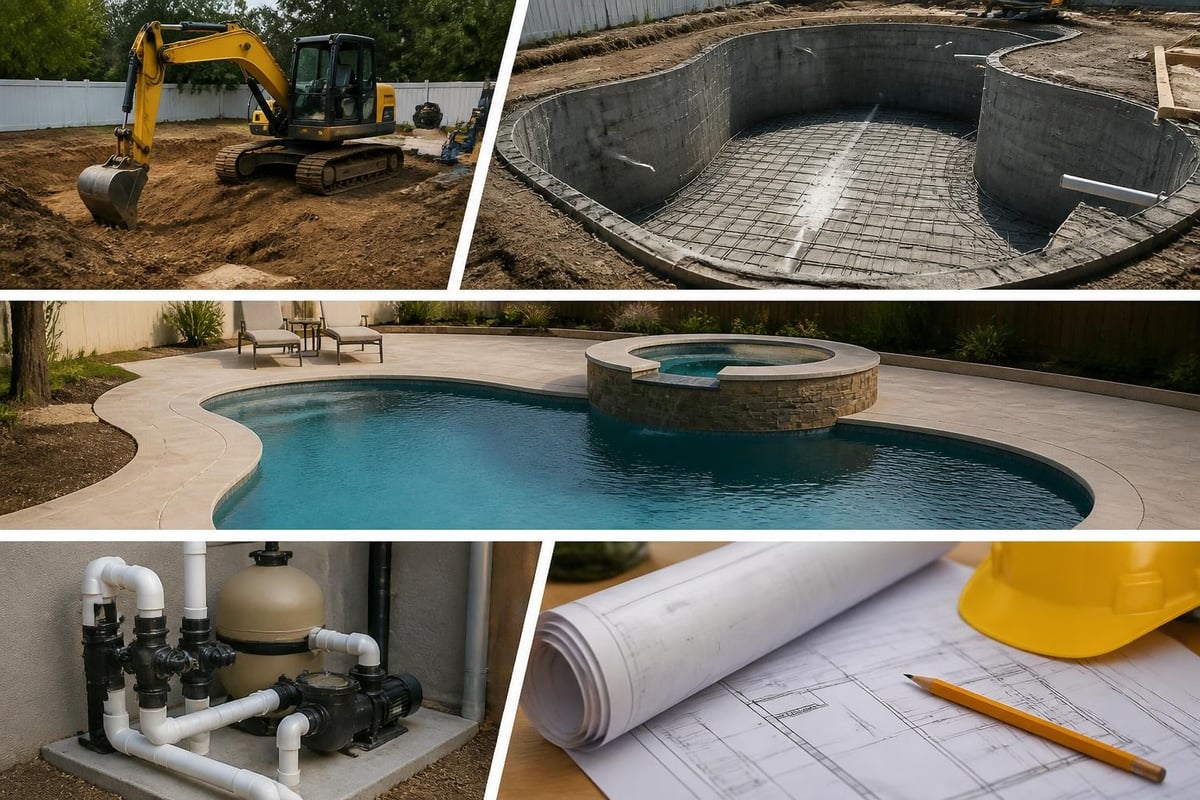
The installation process requires specialized equipment and expertise. Steel rebar is placed in the excavated area, then pneumatically applied concrete creates a monolithic shell. Experienced contractors like those offering in-ground pool construction in Los Angeles handle every phase from engineering through finishing, ensuring structural integrity and code compliance.
Vinyl Liner Pools
Vinyl liner pools cost $25-$40 per square foot, making them the most budget-friendly option. A custom steel or polymer wall frame is installed, then a fitted vinyl liner creates the water barrier.
While initial costs are lower, homeowners must factor in liner replacement every 7-10 years at $3,500-$6,000 per replacement. Over a 20-year ownership period, total costs may approach those of gunite alternatives. Los Angeles' intense UV exposure accelerates vinyl degradation, potentially shortening replacement intervals.
Fiberglass Pool Shells
Fiberglass pools fall between vinyl and gunite in pricing, typically $45-$65 per square foot. Pre-manufactured shells arrive on-site and are craned into prepared excavations, significantly reducing installation time.
Limitations include fixed sizes and shapes determined by manufacturing molds and transportation constraints. The largest shells rarely exceed 16×40 feet, and custom features like integrated spas or tanning ledges must be factory-designed rather than site-customized. Homeowners with a compact yard may find a small pool installation in Los Angeles a more affordable route to a backyard pool.
Excavation and Site Preparation Expenses
Site work represents 10-15% of total in ground pool installation cost but varies dramatically based on your property's unique characteristics. Los Angeles presents particular challenges that influence excavation budgets.
Factors affecting excavation costs:
- Soil composition: Rocky or clay-heavy soil requires specialized equipment
- Slope and grading: Hillside properties need extensive leveling and retaining walls
- Access restrictions: Limited equipment access increases labor hours
- Existing structures: Removing old pools, patios, or landscaping adds expense
Standard excavation runs $3,000-$8,000 for accessible flat lots with favorable soil. Challenging sites can push excavation costs to $15,000-$25,000 when blasting, soil stabilization, or complex grading is required. Professional engineers often conduct soil tests ($500-$1,500) to identify potential issues before construction begins.
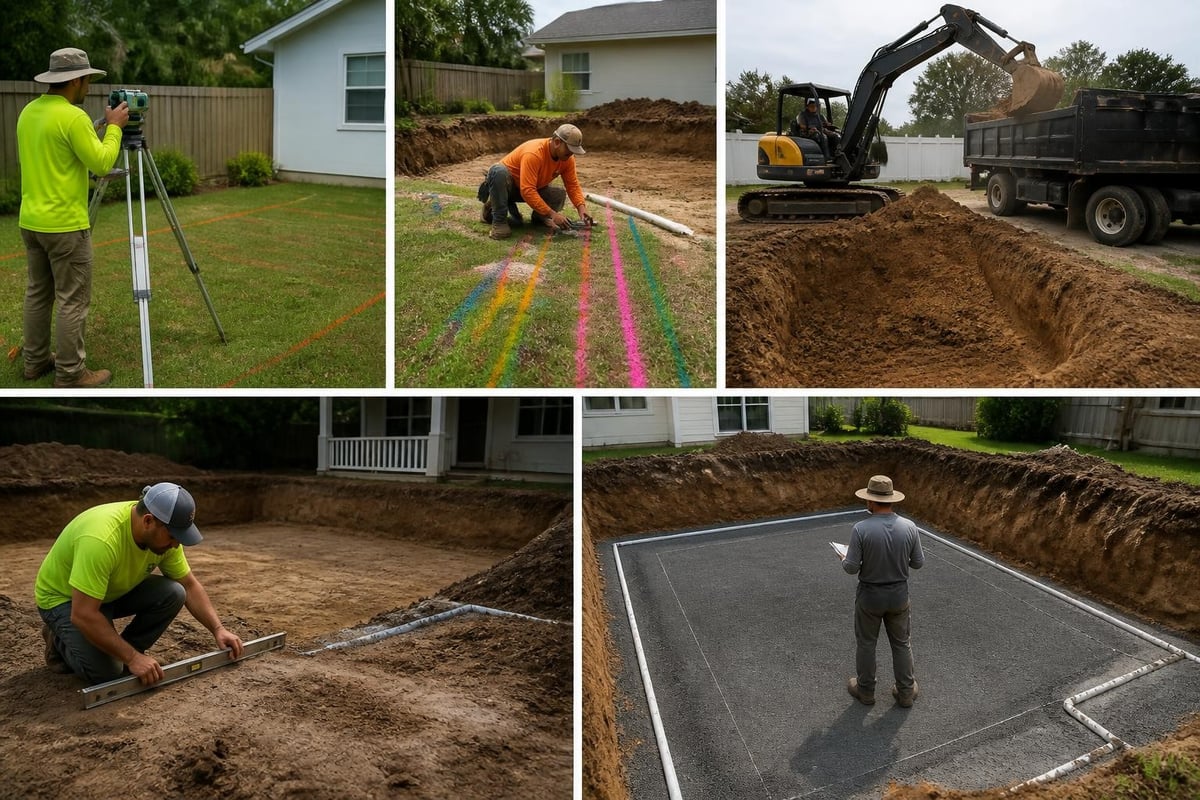
Utility relocation sometimes becomes necessary when gas lines, sewer systems, or electrical services conflict with the pool footprint. Budget $2,000-$8,000 for professional utility work, which must be completed before excavation proceeds.
Permits, Engineering, and Compliance Costs
Los Angeles County and city jurisdictions maintain rigorous permitting requirements that protect homeowners but add 5-10% to project costs. Permit packages typically include:
- Building permits ($1,200-$2,500): Cover structural work and construction authorization
- Electrical permits ($500-$900): Required for all pool electrical systems
- Plumbing permits ($400-$700): Authorize water supply and drainage connections
- Engineering stamps ($800-$2,000): Professional engineer certification for structural plans
Total permitting costs range from $3,000-$6,000 for standard residential pools. Complex projects with spas, water features, or hillside installations may require geotechnical reports and additional engineering, pushing permitting expenses to $8,000-$12,000.
Working with licensed contractors who maintain relationships with local building departments often streamlines the permitting process. They understand jurisdiction-specific requirements and can navigate plan checks efficiently, reducing project delays and revision costs.
Pool Equipment and Systems Investment
Mechanical systems keep your pool clean, safe, and comfortable. Equipment costs represent 15-20% of total budgets, with significant variation based on quality and energy efficiency.
Essential Equipment Package
A complete equipment package includes:
| Component | Budget Option | Premium Option |
|---|---|---|
| Pump | $400-$800 | $1,200-$2,000 (variable speed) |
| Filter | $300-$600 | $800-$1,500 (cartridge) |
| Heater | $1,500-$2,500 (gas) | $3,500-$6,000 (heat pump) |
| Sanitization | $150-$400 (chlorinator) | $800-$1,800 (salt system) |
| Automation | $0 (manual) | $1,500-$4,000 (full control) |
Budget equipment packages start around $3,500-$5,000, while premium energy-efficient systems run $8,000-$15,000. The EPA’s guidance on pool water features emphasizes that efficient equipment can reduce operating costs by 50-70% annually, often justifying higher upfront investment.
Variable-speed pumps, now required by California law for new installations, cost more initially but save $400-$800 annually in electricity. Heat pumps cost double the price of gas heaters but operate at one-third the expense, with modern heat pump technology offering excellent performance in Southern California's climate.
Advanced Features and Upgrades
Enhanced features transform basic pools into backyard resorts but add significantly to the in ground pool installation cost:
- Integrated spa: $8,000-$18,000 depending on size and jet configuration
- Waterfall or fountain: $2,500-$12,000 based on complexity
- Tanning ledge/sun shelf: $2,000-$6,000 for shallow lounging area
- LED lighting package: $1,200-$4,000 for color-changing illumination
- Deck jets: $500-$1,500 per jet installed
- Fire features: $3,000-$10,000 for fire bowls or fire walls
These upgrades should be designed into the initial construction rather than added later, as retrofitting often costs 40-60% more than original installation.
Pool Decking and Surrounding Hardscape
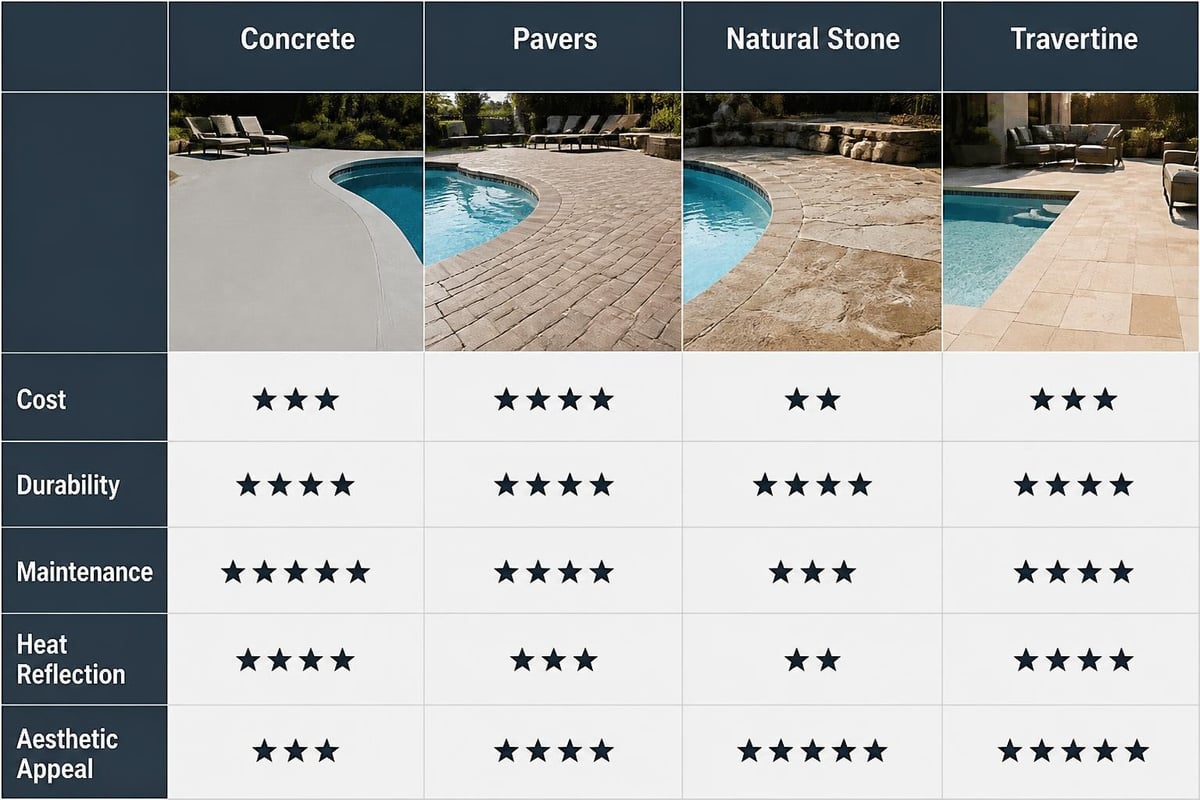
The area surrounding your pool affects both functionality and aesthetics while representing 15-25% of total project costs. Decking materials range from economical to ultra-premium.
Common decking options:
- Poured concrete ($6-$12/sq ft): Cost-effective, customizable with stamps or stains
- Pavers ($12-$25/sq ft): Attractive, slip-resistant, easy to repair individual units
- Natural stone ($20-$45/sq ft): Premium appearance, excellent durability
- Travertine ($15-$30/sq ft): Cool underfoot, elegant Mediterranean aesthetic
- Wood or composite ($15-$35/sq ft): Warm appearance but requires regular maintenance
Most pools require 400-800 square feet of decking for safe circulation. A mid-range paver installation on a 600-square-foot deck costs $10,000-$15,000 including base preparation and edge restraints. Homeowners exploring hardscape options should consider heat retention, slip resistance, and maintenance requirements alongside aesthetics.
Additional hardscape elements include:
- Retaining walls: $25-$75 per linear foot depending on height and material
- Steps and pathways: $15-$40 per square foot
- Outdoor kitchens: $5,000-$30,000 for built-in grills and counters
- Pergolas and shade structures: $3,000-$15,000
Safety Features and Legal Requirements
California law mandates specific safety barriers for residential pools, and non-compliance can result in permit rejections, fines, or liability exposure. The CPSC’s safety barrier guidelines establish minimum standards that most jurisdictions adopt or exceed.
Required safety features:
- Perimeter fencing: 5-foot minimum height with self-closing, self-latching gates
- Door alarms: For any house doors providing direct pool access
- Safety covers or pool alarms: When fence doesn't completely isolate pool from residence
- Anti-entrapment drain covers: Required on all suction outlets
Safety compliance adds $3,000-$8,000 to project costs. Quality fencing runs $15-$45 per linear foot installed, meaning a typical pool perimeter fence costs $2,500-$6,000. Pool alarms ($200-$600) and compliant drain covers ($300-$800) round out essential safety equipment.
Some homeowners opt for additional safety measures beyond minimum requirements:
- Safety covers: $1,200-$3,500 for automatic covers that support adult weight
- Pool enclosures: $8,000-$25,000 for screen enclosures (common in some regions)
- Enhanced fencing: $40-$100 per linear foot for decorative wrought iron or glass panels
Hidden Costs and Budget Contingencies
Experienced contractors recommend adding 10-20% contingency to your base budget for unexpected site conditions and desired changes. Common hidden expenses include:
Underground surprises:
- Unmarked utility lines requiring relocation
- Groundwater requiring dewatering systems ($1,500-$5,000)
- Rock formations necessitating blasting or special excavation
- Contaminated soil requiring removal and replacement
Code compliance additions:
- Upgraded electrical panels to handle pool equipment load ($1,500-$4,000)
- Gas line extensions for heaters ($800-$2,500)
- Drainage solutions for deck runoff ($1,000-$4,000)
Design modifications:
- Mid-project feature additions
- Material upgrades after seeing samples
- Expanded decking or hardscape areas
The California residential building cost handbook provides assessors with reference costs that can help you verify whether contractor quotes align with regional norms. Legitimate contractors provide detailed line-item estimates rather than single lump sums, making it easier to identify reasonable costs versus inflated pricing.
Financing Your Pool Installation
Most homeowners finance their pool projects rather than paying cash. Understanding your options helps you secure favorable terms and avoid predatory lending.
Common financing methods:
- Home equity line of credit (HELOC): Variable-rate credit line using home equity
- Home equity loan: Fixed-rate second mortgage for specific amount
- Cash-out refinance: Replace existing mortgage with larger loan at current rates
- Pool-specific financing: Contractor-arranged or direct lender pool loans
- Personal loans: Unsecured financing based on credit score
The Consumer Financial Protection Bureau provides comprehensive guidance on home equity borrowing options, including risks and protections. HELOCs typically offer the lowest rates (currently 7-10% in 2026) but carry variable rates that can increase over time.
Pool-specific financing often features higher rates (9-15%) but may include promotional periods with deferred interest. Read terms carefully, as deferred interest can be charged retroactively if you don't pay off the balance within the promotional window.
Financing considerations:
- Compare at least three lender offers before committing
- Calculate total interest paid over the loan term, not just monthly payment
- Understand prepayment penalties and fees
- Verify contractor legitimacy before signing financing arranged through them
- Consider tax deductibility of home equity loan interest (consult your tax advisor)
Impact on Property Value and Return on Investment
Pool additions affect home values differently based on location, climate, and market segment. Research from Realtor.com indicates that pools in warm-climate premium markets like Los Angeles typically return 40-60% of installation costs upon resale, though individual results vary significantly.
Value-adding factors:
- Location: Pools add more value in warm climates and upscale neighborhoods
- Market expectations: Higher percentage of competing homes with pools increases buyer expectation
- Quality and condition: Well-maintained pools with modern equipment appeal more than dated installations
- Lot size: Pools on larger lots avoid the "over-improvement" penalty
Consumer Reports' analysis of whether pools increase home value emphasizes that pools appeal to a smaller buyer pool, potentially extending time on market even if increasing perceived value for interested buyers.
Rather than viewing pools purely as financial investments, most homeowners should consider lifestyle value. If your family will use the pool extensively for 10-15 years, the cost-per-use may justify the investment regardless of resale returns. Families with young children might calculate $60,000 divided by 10 swimming seasons equals $6,000 annually for private recreation, often comparable to country club memberships.
Regional Cost Variations in Los Angeles
Los Angeles County encompasses diverse microclimates, property types, and jurisdictional requirements that create significant cost variations within the region. Understanding these differences helps you budget accurately for your specific location.
Higher-cost areas (typically 20-35% above baseline):
- Pacific Palisades and Malibu: Complex access, coastal regulations, premium finishes expected
- Beverly Hills and Bel Air: Luxury market expectations, stringent city codes
- Hollywood Hills and hillside properties: Challenging terrain, extensive engineering
Moderate-cost areas (baseline to 15% above):
- San Fernando Valley communities: Good access, standard soil conditions
- West Los Angeles neighborhoods: Moderate property values, normal construction conditions
- South Bay communities: Coastal proximity but accessible lots
Cost-influencing local factors:
- City versus county jurisdiction (different permit fees and timelines)
- Homeowners association design review requirements
- Historic district restrictions on equipment placement and visibility
- Local water and sewer connection fees
Working with contractors experienced in your specific area provides advantages beyond cost estimation. They understand local inspectors' preferences, know which jurisdictions allow concurrent inspections versus sequential requirements, and maintain relationships that can expedite plan approvals.
Selecting the Right Pool Contractor
Contractor selection significantly impacts both your in ground pool installation cost and project outcome. The lowest bid often leads to the highest total expense when change orders, delays, and quality issues compound.
Essential contractor qualifications:
- Active California contractor's license (verify at CSLB.ca.gov)
- Minimum $1 million general liability insurance
- Workers' compensation coverage for all employees
- Established business with verifiable completed projects
- Detailed written contract specifying all work, materials, and timelines
Warning signs to avoid:
- Requests for large upfront payments (>10% is rarely justified)
- Pressure to sign quickly or "limited time" pricing
- Reluctance to provide references or proof of insurance
- Vague estimates without material specifications
- No permanent business address or landline phone
Family-owned contractors who handle multiple project phases directly often provide better value than large companies subcontracting every trade. Direct relationships with the owner ensure accountability and typically result in cleaner job sites and fewer communication gaps.
Request itemized estimates from at least three licensed contractors. Compare not just totals but specific materials, equipment brands, warranty coverage, and completion timelines. The middle bid often represents fair market value, while the lowest may indicate shortcuts and the highest might include unnecessary profit margins.
Timeline and Seasonal Considerations
Pool construction timelines affect both direct costs and opportunity costs. Most projects require 8-16 weeks from permit submission to final inspection, though complex installations can extend to 20+ weeks.
Typical project phases:
- Design and permitting (3-6 weeks)
- Excavation and site preparation (1-2 weeks)
- Steel and plumbing rough-in (1-2 weeks)
- Gunite application and curing (2-3 weeks)
- Equipment installation and plumbing completion (1 week)
- Interior finish application (1-2 weeks)
- Decking and landscaping (2-4 weeks)
- Startup and final inspections (1 week)
Seasonal pricing and scheduling:
Los Angeles pool construction runs year-round, but demand peaks significantly from February through May as homeowners target summer completion. Starting projects in fall or early winter often yields advantages:
- Lower contractor demand may reduce pricing 5-10%
- More scheduling flexibility and faster permitting
- Completion by late spring/early summer
- Avoiding summer heat during construction
Conversely, rushing completion before summer typically increases costs through overtime labor and premium scheduling. Planning 6-9 months ahead of your target completion date usually produces better outcomes and pricing than compressed timelines.
Understanding the complete scope of in ground pool installation cost empowers you to budget realistically and make informed decisions about materials, features, and contractors. The investment extends beyond the initial construction to include safety compliance, energy-efficient equipment, and quality hardscape that enhances both function and resale value. When you're ready to explore custom pool options for your Los Angeles property, AM BUILDS CA brings 15+ years of licensed expertise to every project, handling design through final inspection with transparent pricing and direct owner involvement. Call (424) 485-4548 for your free, no-obligation estimate.


