


Choosing the right in ground pool builders can transform your backyard into a private oasis or leave you with costly repairs and endless headaches. The difference often comes down to understanding what separates experienced, licensed professionals from contractors who cut corners. With pool construction representing a significant investment-typically ranging from $50,000 to well over $150,000 in major metropolitan areas-homeowners need clear information about the process, standards, and what to expect from qualified builders. This guide walks through the essential factors that define quality pool construction in 2026, from initial planning through final inspection.
Understanding Licensing and Credentials
Professional in ground pool builders operate under strict regulatory frameworks designed to protect homeowners and ensure structural safety. California requires general contractors performing pool construction to hold a valid C-53 Swimming Pool license or an appropriate B General Building license, with many experienced builders maintaining both certifications.
What Licenses Actually Mean
A contractor's license number represents more than paperwork. It confirms the builder has:
- Passed comprehensive examinations covering construction law, safety, and technical knowledge
- Met minimum insurance and bonding requirements
- Submitted to background checks and financial reviews
- Agreed to disciplinary oversight by state licensing boards
Beyond state licensing, membership in organizations like the Pool & Hot Tub Alliance demonstrates commitment to industry standards and continuing education. These credentials separate builders who stay current with evolving codes and techniques from those who simply meet minimum legal requirements.
| Credential Type | What It Verifies | Why It Matters |
|---|---|---|
| State License (C-53/B) | Legal authority, insurance, technical competency | Required for permits; protects against liens and liability |
| Bond & Insurance | Financial backing and liability coverage | Protects homeowner if contractor defaults or causes damage |
| PHTA Membership | Industry education and standards adherence | Access to latest technical guidance and best practices |
Working with properly licensed contractors isn't optional-it's the foundation of legal protection, quality assurance, and recourse if issues arise.
The Design and Planning Phase
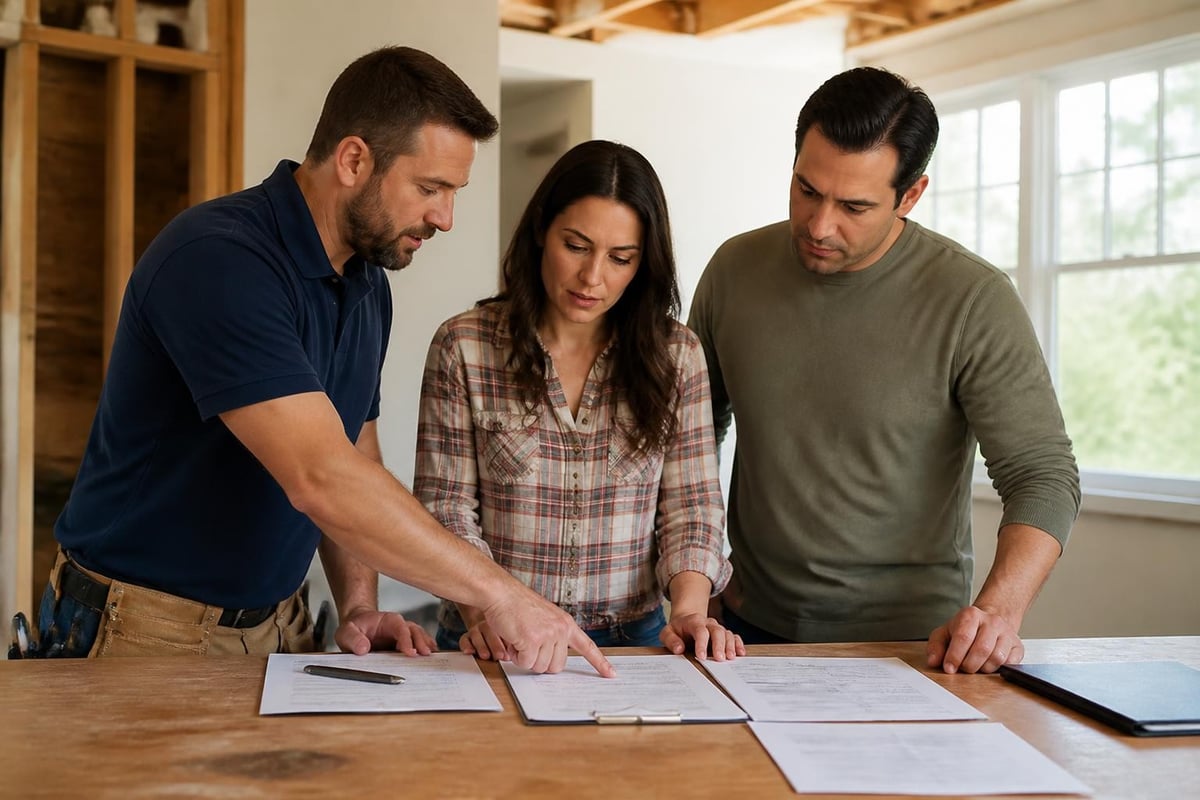
Quality in ground pool builders begin every project with thorough planning that addresses site conditions, regulatory requirements, and client preferences. This phase typically spans 2-4 weeks and determines whether your pool will be a long-term asset or source of problems.
Site Evaluation and Soil Analysis
Professional builders conduct comprehensive site assessments before finalizing designs. Soil composition, groundwater levels, drainage patterns, and proximity to structures all impact construction methods and long-term stability. Properties with expansive clay soils, high water tables, or steep slopes require specialized engineering-factors that geotechnical publications address in detail.
Key site considerations include:
- Soil bearing capacity: Determines foundation requirements and structural design
- Drainage and runoff: Affects placement, deck grading, and stormwater management
- Utility locations: Gas lines, electrical, sewer, and water must be marked and protected
- Access routes: Equipment needs clear paths for excavation and material delivery
- Sun exposure: Influences pool orientation for heating efficiency and usability
Permit Requirements and Code Compliance
All legitimate pool projects require building permits, and navigating this process separates experienced builders from amateurs. The 2024 International Swimming Pool and Spa Code establishes baseline requirements, but local jurisdictions often impose additional standards.
Permits typically cover:
- Structural engineering for pool shell and decking
- Electrical systems meeting National Electrical Code Article 680 requirements
- Plumbing and gas for equipment, heaters, and features
- Barrier/fence compliance for drowning prevention
- Energy efficiency for pumps and heating systems
Expert in ground pool builders handle all permit applications, scheduling inspections, and ensuring work meets code at each phase. This process protects homeowners from future sale complications and liability issues.
Construction Phases and Timeline
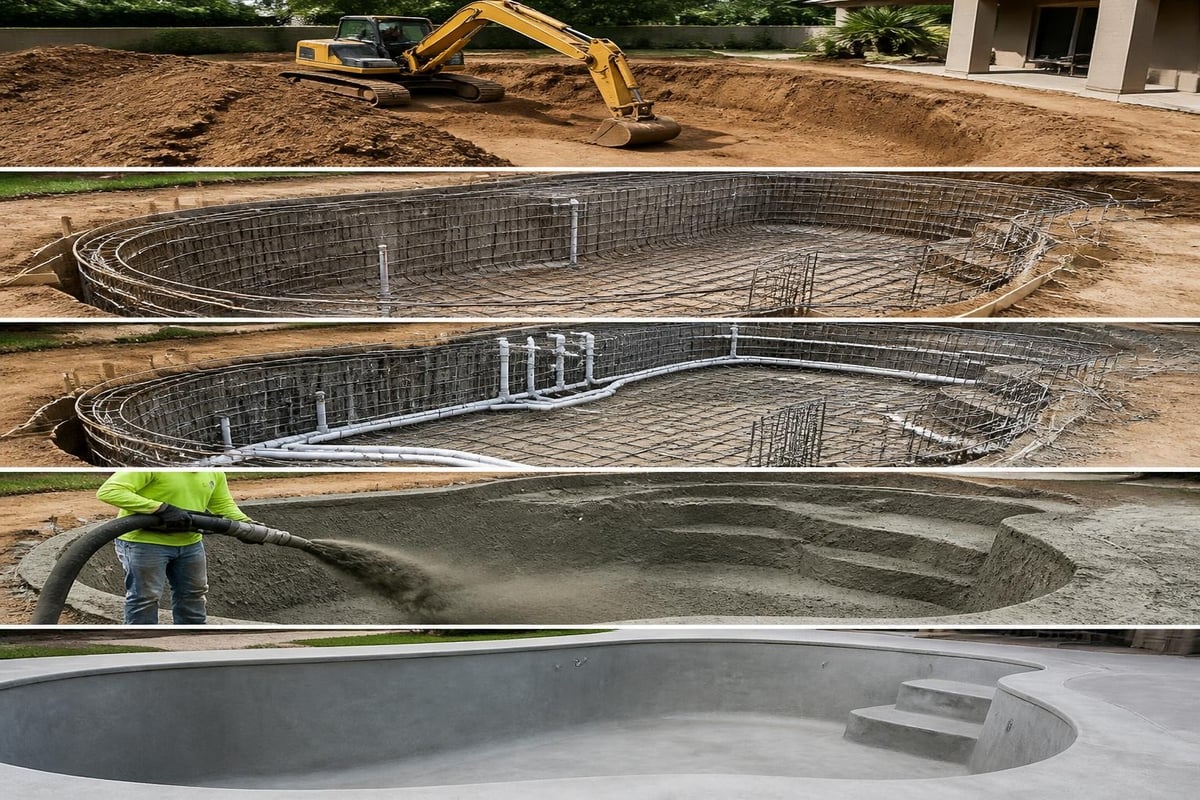
Understanding the construction sequence helps homeowners set realistic expectations and recognize when builders skip critical steps. A typical in ground gunite pool takes 8-12 weeks from excavation to completion, though weather, permits, and custom features can extend timelines.
Excavation and Steel Installation
Construction begins with precision excavation following engineered plans. Depth, slope, and dimensions must match specifications exactly-improper excavation creates structural problems no amount of shotcrete can fix.
After excavation, builders install:
- Rebar framework: Steel reinforcement cage providing tensile strength
- Plumbing lines: Main drains, returns, skimmer connections, and equipment lines
- Electrical conduit: For lighting, automation, and safety systems
- Bonding grid: Continuous electrical ground preventing shock hazards
Quality builders space rebar according to engineering specifications (typically 12-18 inches on center) and ensure proper coverage depth. This phase undergoes inspection before shotcrete application-once concrete is sprayed, the framework becomes impossible to verify.
Shotcrete Application and Curing
The shotcrete (or gunite) shell forms the pool's structural foundation. Professional crews apply 6-10 inches of high-strength concrete pneumatically, creating a monolithic structure without seams or joints. This single-day process requires experienced nozzle operators who maintain consistent thickness and proper finishing.
Critical shotcrete factors include:
| Aspect | Standard Requirement | Why It Matters |
|---|---|---|
| Compressive Strength | Minimum 4,000 PSI | Structural integrity and crack resistance |
| Proper Hydration | 7-28 day wet cure | Achieves full strength; prevents shrinkage cracks |
| Thickness | 6-10 inches (varies by design) | Adequate strength for soil loads and water pressure |
| Rebar Coverage | Minimum 3 inches | Prevents corrosion and maintains structural bond |
Following application, the shell requires proper curing-typically kept moist for 7-14 days. Rushing this process creates long-term problems that manifest as cracks, delamination, and premature failure.
Equipment Selection and Installation
The mechanical systems that filter, heat, and sanitize your pool represent significant ongoing costs. Experienced in ground pool builders guide equipment choices based on pool size, climate, and usage patterns rather than simply installing the cheapest options.
Filtration and Circulation Systems
Proper sizing of pumps, filters, and plumbing ensures efficient operation and longevity. Undersized equipment runs constantly and fails prematurely; oversized pumps waste energy and create excessive wear on pool surfaces.
Modern installations typically include:
- Variable-speed pumps: Required by California energy codes, these units reduce operating costs by 50-75% compared to single-speed models
- Cartridge or DE filters: Sized to turn over the entire pool volume every 8-12 hours
- Automation systems: Allow remote monitoring and scheduling of filtration, heating, and features
- Salt chlorination: Reduces chemical handling while maintaining consistent sanitization
The U.S. Department of Energy’s pool heater guidance provides valuable information on selecting efficient heating systems that balance upfront cost with long-term operating expenses.
Electrical Safety and Bonding
Pool electrical systems demand absolute precision-lives depend on proper installation. All pools must meet National Electrical Code requirements, including:
- GFCI protection on all pool-related circuits
- Equipotential bonding grid connecting all metal within 5 feet of pool
- Proper grounding of equipment and structures
- Weatherproof enclosures rated for outdoor use
- Correct wire sizing for load and distance
Professional builders coordinate with licensed electricians who understand NFPA electrical code requirements specific to aquatic facilities. This isn't an area for shortcuts-improper bonding creates electrocution hazards that may not be apparent until someone is injured.
Finishing Materials and Details
Surface finishes dramatically impact both aesthetics and maintenance requirements. In ground pool builders should present options with honest assessments of durability, cost, and upkeep rather than pushing high-margin products.
Interior Surface Options
The pool's interior finish affects water appearance, texture, and long-term maintenance costs. Common options include:
Plaster (Marcite)
- Traditional white or colored cement-based finish
- Most economical initial cost ($5-8 per square foot)
- Requires resurfacing every 7-12 years
- Rougher texture; can stain over time
Pebble Finishes
- Natural stone aggregate exposed in cement matrix
- Premium appearance and durability ($10-15 per square foot)
- Lasts 15-20+ years with proper chemistry
- More resistant to staining and etching
Tile
- Highest-end option with unlimited design possibilities
- Extremely durable but expensive ($25-50+ per square foot)
- Minimal maintenance when properly installed
- Best for geometric designs and visual impact
Deck and Hardscape Integration
The pool deck extends the project's scope significantly and requires careful coordination with the shell construction. AM Builds Inc.’s hardscape and landscape services demonstrate how integrated planning creates cohesive outdoor spaces that complement the pool design while addressing practical concerns like drainage and slip resistance.
Professional deck installation addresses:
- Slope and drainage: Minimum 1/4-inch per foot away from pool to prevent flooding
- Expansion joints: Accommodate seasonal movement without cracking
- Texture and finish: Balance aesthetics with slip resistance and heat reflection
- Material selection: Pavers, concrete, travertine, or composite decking each offer distinct advantages
Environmental Compliance and Site Management
Modern pool construction operates under increasingly stringent environmental regulations. Quality in ground pool builders incorporate compliance into standard practice rather than treating it as an afterthought.
Stormwater and Erosion Control
California's Construction General Permit requires specific practices when disturbing more than one acre or when part of a larger development. Even smaller projects benefit from proper erosion control that protects neighboring properties and prevents sediment runoff.
The EPA’s Construction General Permit resources outline best management practices including:
- Silt fencing and sediment barriers around disturbed areas
- Stabilized construction entrances preventing soil tracking
- Proper disposal of concrete washout and dewatering discharge
- Vegetation protection and restoration after construction
Job Site Organization
Professional contractors maintain organized, safe work sites that minimize disruption to homeowners and neighbors. This includes:
- Daily cleanup of debris and materials
- Proper storage of equipment and supplies
- Clear communication about schedules and access needs
- Protection of existing landscaping and structures
- Noise management respecting local ordinances
Clean job sites reflect overall professionalism and attention to detail-qualities that extend to the finished product.
Pool construction site management showing erosion control measures, stormwater protection, proper material storage, and coordination with environmental regulations during excavation and building phases
Cost Factors and Budget Planning
Understanding cost drivers helps homeowners evaluate bids and avoid budget overruns. In ground pool builders should provide detailed estimates breaking down labor, materials, and contingencies rather than single lump-sum numbers that hide important details.
Primary Cost Components
Pool construction costs vary dramatically based on size, features, and site conditions. A basic rectangular gunite pool in favorable conditions might start around $50,000, while complex designs with extensive features easily exceed $150,000.
Major cost categories include:
| Category | Typical Range | Variables Affecting Cost |
|---|---|---|
| Design & Engineering | $2,000-$8,000 | Complexity, soil conditions, structural requirements |
| Excavation | $5,000-$15,000 | Access, soil type, disposal fees, depth |
| Steel & Shotcrete | $15,000-$35,000 | Size, shape complexity, thickness requirements |
| Plumbing & Equipment | $8,000-$20,000 | Equipment quality, automation, feature requirements |
| Electrical | $3,000-$8,000 | Distance from panel, lighting, automation integration |
| Finish Materials | $8,000-$25,000 | Surface type, tile details, coping selection |
| Decking | $10,000-$40,000 | Material choice, square footage, complexity |
Hidden Costs and Contingencies
Experienced builders budget for contingencies that less scrupulous contractors omit from initial bids. Common additional expenses include:
- Rock excavation: Unexpected bedrock can add $5,000-$20,000
- Soil remediation: Poor soil conditions requiring engineered solutions
- Utility relocation: Moving gas, electrical, or water lines
- Permit fees and inspections: Vary by jurisdiction but typically $2,000-$5,000
- Engineering upgrades: Required when soil tests reveal challenging conditions
Builders who provide comprehensive estimates with clearly defined contingencies demonstrate transparency and experience. Those offering suspiciously low bids often compensate through change orders once construction begins.
Selecting the Right Builder for Your Project
The contractor selection process determines your entire experience and long-term satisfaction. Homeowners should interview multiple in ground pool builders, checking references and comparing approaches rather than defaulting to the lowest bid.
Questions to Ask Prospective Builders
Thorough vetting separates qualified professionals from contractors likely to create problems:
- What is your license number and how long have you held it? (Verify through state licensing boards)
- Can you provide references from projects completed in the last 12 months? (Recent work reflects current practices)
- How do you handle permits and inspections? (Should include all permits in scope)
- What warranties do you offer on structure and equipment? (Typical: 2-10 years structural, 1-3 years equipment)
- Who will supervise my project daily? (Owner involvement vs. subcontractor management)
- How do you handle change orders and unexpected conditions? (Process and pricing methodology)
- What is your typical project timeline and what factors might extend it? (Realistic scheduling)
Red Flags and Warning Signs
Certain practices indicate builders to avoid:
- Reluctance to provide license numbers or insurance certificates
- Pressure to sign contracts immediately or avoid permits
- Requests for large upfront deposits (>10% before work begins)
- Vague timeline estimates or unwillingness to commit to schedules
- No written warranty or unclear warranty terms
- Poor communication during bidding process
- Unable to provide local references or portfolio
Communities across Los Angeles including Pasadena, Encino, and Sherman Oaks have seen their share of problematic contractors. Homeowners in these areas benefit from selecting builders with established local reputations and verifiable track records.
Industry Standards and Best Practices
Professional in ground pool builders reference established standards rather than relying solely on experience or tradition. The PHTA-5 Standard for Residential Inground Swimming Pools provides comprehensive guidance on design, construction, and installation practices that define quality work.
Structural Requirements
Pools must withstand significant forces including:
- Hydrostatic pressure: Water weight pushing outward on walls (increasing with depth)
- Soil loads: Earth pressure pushing inward when pool is empty or partially drained
- Frost heaving: Seasonal ground movement in areas with freeze-thaw cycles
- Seismic forces: Earthquake resistance requirements in California and other active zones
Proper engineering accounts for all these factors, specifying steel placement, concrete strength, and thickness to ensure decades of service. Builders who skip engineering reviews create pools vulnerable to cracking, shifting, and premature failure.
Ongoing Maintenance Considerations
Design choices impact long-term maintenance requirements and costs. Smart builders discuss these tradeoffs during planning rather than focusing solely on initial construction:
- Automation systems: Higher upfront cost but reduced daily attention and chemical use
- Energy-efficient equipment: Premium prices offset by 50-75% lower operating costs
- Durable finishes: Pebble or tile surfaces cost more initially but last 2-3 times longer than basic plaster
- Proper circulation design: Eliminates dead spots reducing sanitizer effectiveness
- Adequate access: Equipment placement allowing easy maintenance and future replacement
Projects completed by AM Builds Inc. demonstrate how integrated planning creates pools that remain assets rather than becoming burdens. Their in-ground pool construction approach emphasizes long-term performance and homeowner satisfaction through careful attention to design details and quality execution.
Regional Considerations for Los Angeles
Los Angeles presents unique challenges and opportunities for pool construction. Local soil conditions, seismic requirements, and water conservation regulations all influence design and construction approaches.
Seismic Design Requirements
California's seismic activity demands additional engineering rigor. Pools must include:
- Enhanced steel reinforcement schedules
- Flexible connections between pool and deck to accommodate movement
- Proper bonding preventing electrical hazards after ground shifting
- Equipment mounting preventing tip-over during seismic events
These requirements add modest cost but provide essential protection in earthquake-prone regions.
Water Conservation and Efficiency
California's ongoing drought concerns influence pool design and equipment selection. Modern pools incorporate:
- Covers reducing evaporation by 90-95% (mandatory in many jurisdictions)
- Variable-speed pumps meeting Title 20 energy efficiency requirements
- Cartridge filters using less backwash water than sand filters
- Smart controls optimizing pump operation for minimum energy use
- Proper sizing avoiding oversized pools that waste water and energy
Builders familiar with California regulations ensure compliance while educating homeowners about operational best practices.
Choosing qualified in ground pool builders requires understanding the complex interplay of design, engineering, regulatory compliance, and construction quality that defines successful projects. Working with a family-owned, licensed contractor who handles every phase from permits through final inspection ensures your investment delivers decades of enjoyment rather than costly problems. AM BUILDS CA brings 15+ years of experience to custom in-ground pool construction throughout Los Angeles, providing homeowners with direct owner involvement, transparent pricing, and meticulous attention to detail. Call (424) 485-4548 for a free, no-obligation estimate and discover the difference professional craftsmanship makes.


