


California's climate and outdoor lifestyle make it the perfect location for custom pool construction, with homeowners investing in backyard retreats that combine luxury, functionality, and year-round enjoyment. Whether you're in Los Angeles, the Inland Empire, or coastal communities, building a custom pool requires careful planning, compliance with state and local regulations, and selection of the right contractor. From initial design concepts to final finishes, understanding the full scope of custom pools California projects ensures you make informed decisions that protect your investment and deliver the backyard you envision.
Design Elements That Define Custom Pools California
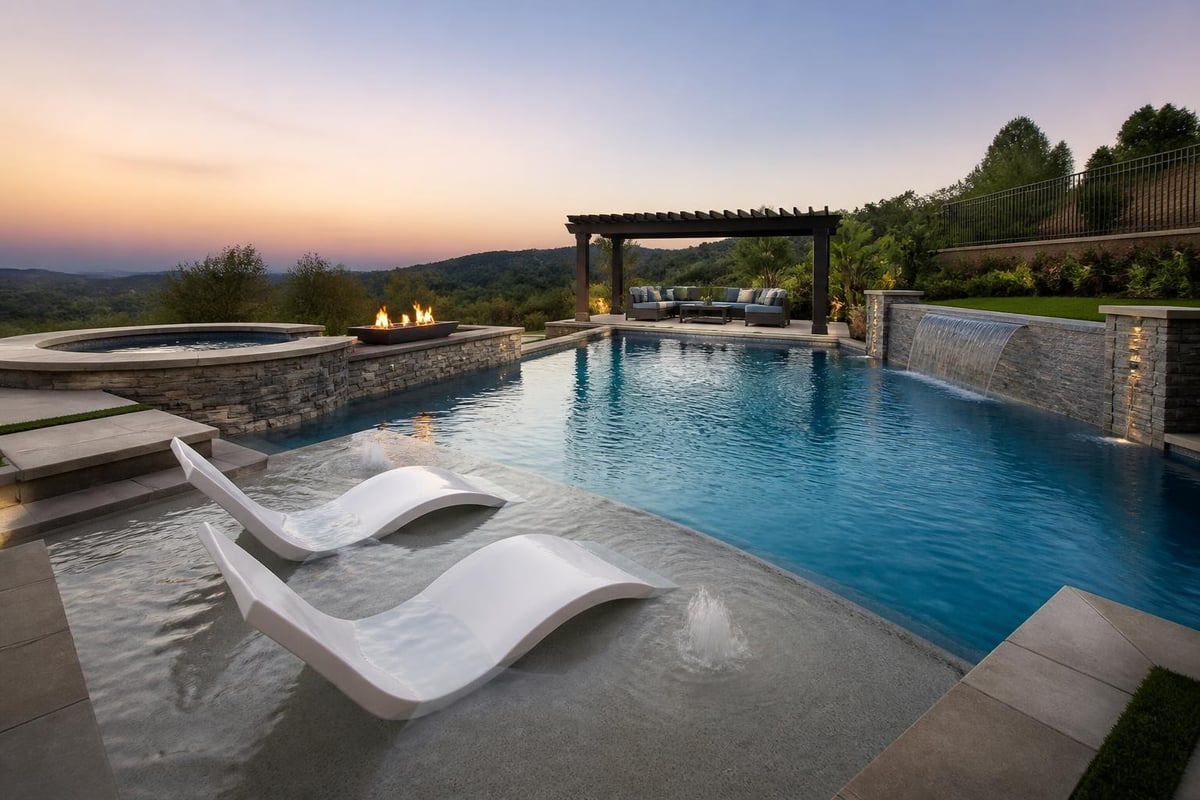
Custom pool design in California goes far beyond rectangular shapes and basic finishes. Modern homeowners incorporate organic freeform shapes, infinity edges that capture hillside views, and integrated spas that blend seamlessly with the main pool body.
Popular Features in Southern California
Tanning ledges have become standard requests, offering shallow lounging areas perfect for young children and adults who want to cool off without full immersion. Beach entries with gradual slopes mimic natural shorelines and improve accessibility for all family members.
Fire and water combinations create dramatic visual effects:
- Fire bowls mounted on raised walls or columns
- Fire pits integrated into adjacent patio areas
- LED lighting synchronized with water features
- Sheer descent waterfalls that cascade from elevated spa spillways
Attached spas positioned at pool perimeter allow the spa water to spill over into the main pool, creating both visual interest and the soothing sound of moving water. These features require precise engineering to manage water flow, heating zones, and equipment sizing.
Material and Finish Selections
Pool interiors in California range from traditional marcite plaster to premium pebble finishes, glass tiles, and quartz aggregates. Each material offers different textures, colors, and durability profiles that affect both aesthetics and long-term maintenance.
| Finish Type | Lifespan | Texture | Cost Range |
|---|---|---|---|
| Marcite plaster | 7-10 years | Smooth | $ |
| Pebble aggregate | 15-20 years | Textured | $$$ |
| Quartz | 12-15 years | Semi-smooth | $$ |
| Glass tile | 20+ years | Smooth | $$$$ |
Coping and decking materials must withstand California's intense UV exposure and temperature fluctuations. Natural stone, pavers, travertine, and slip-resistant cool deck coatings each provide distinct benefits for pool surrounds.
Navigating California Pool Regulations and Permits
Building custom pools California requires compliance with state legislation, local building codes, and utility district requirements. The California Swimming Pool Safety Act establishes baseline safety standards, while municipalities add their own specifications.
Permit Requirements in Los Angeles County
Los Angeles County requires comprehensive permit packages that include engineered plans, soils reports on hillside lots, and detailed equipment specifications. The Los Angeles County pool safety code manual provides explicit guidance on barrier requirements, gate specifications, and alarm installations.
Required permits typically include:
- Building permit for pool structure
- Electrical permit for lighting, equipment, and controls
- Plumbing permit for water supply and drainage
- Gas permit if installing heaters or fire features
- Mechanical permit for pumps and filtration systems
Plan check timelines vary by jurisdiction but generally take three to six weeks. Contractors expedite this process by submitting complete, accurate plans that address all code requirements upfront.
Safety Barriers and Compliance
Every pool must have isolation fencing that prevents unsupervised access by young children. Gates require self-closing, self-latching mechanisms with latches positioned at least 54 inches above grade.
California legislative efforts on pool safety continue to evolve, with recent proposals addressing alarm requirements, drowning prevention education, and enhanced enforcement mechanisms. Staying current with these requirements protects homeowners from liability and ensures projects pass final inspection.
For homeowners considering accessible pool features, ADA guidelines specify requirements for pool lifts, transfer walls, and sloped entries that accommodate individuals with disabilities.
Energy Efficiency and Water Conservation Standards
California's commitment to environmental sustainability directly impacts pool construction and operation. State regulations now mandate specific equipment choices and control systems that reduce energy consumption and water waste.
Pool Equipment Regulations
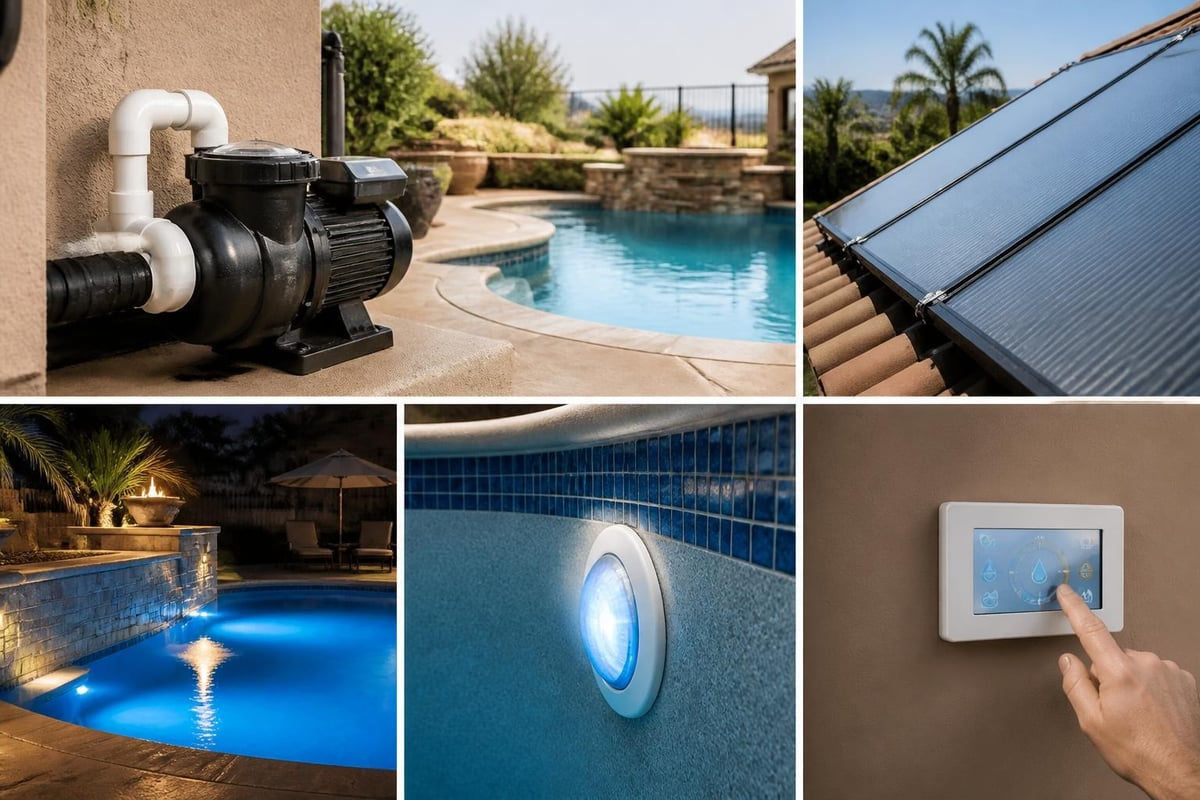
The California Energy Commission’s replacement pool pump standards require variable-speed pumps for most residential installations. These pumps adjust flow rates based on actual demand, reducing energy consumption by 50-75% compared to single-speed models.
Variable-speed pump benefits:
- Lower operating costs year-round
- Quieter operation at reduced speeds
- Extended equipment lifespan
- Compliance with Title 20 requirements
The flexible demand standards for pool controls establish technical requirements for automated systems that optimize pump scheduling, integrate with time-of-use electricity rates, and respond to grid conditions.
Solar heating systems qualify for various incentives and rebates, making them economically attractive for California homeowners. These systems circulate pool water through roof-mounted panels, capturing free solar energy to extend the swimming season without fossil fuel consumption.
Water Conservation Practices
Pool construction in California must account for ongoing water conservation regulations that affect fill procedures, maintenance practices, and landscape integration.
Cover systems reduce evaporation by up to 95%, preserving thousands of gallons annually while maintaining water temperature and reducing chemical consumption. Automatic covers provide convenience and safety benefits beyond water savings.
Proper hydraulic design minimizes water waste during backwashing and routine maintenance. Cartridge filters eliminate backwash requirements entirely, while DE and sand filters can be optimized to reduce backwash frequency and volume.
Cost Factors for Custom Pools California
Custom pool pricing in California varies significantly based on size, features, site conditions, and material selections. Understanding cost drivers helps homeowners budget accurately and make informed trade-offs during the design phase.
Base Construction Costs
A basic custom gunite pool in Los Angeles typically starts at $75,000 to $100,000 for a 300-400 square foot pool with standard finishes and equipment. This baseline includes excavation, steel reinforcement, shotcrete shell, plumbing, basic tile and coping, and code-compliant equipment.
Premium features add incremental costs:
- Attached spa: $15,000-$25,000
- Infinity edge: $20,000-$40,000
- Custom rock waterfalls: $10,000-$30,000
- Fire features: $3,000-$15,000 each
- Premium finishes: $5,000-$20,000 above standard
Site conditions dramatically impact total project costs. Hillside lots require additional engineering, retaining walls, and specialized equipment access. Poor soil conditions may necessitate deeper footings, additional steel, or engineered fill.
Hidden Costs and Budget Planning
Utility upgrades frequently surprise homeowners during pool construction. Electrical service panels may require upgrades to accommodate pool equipment loads, particularly when adding spas, heaters, and extensive lighting systems.
| Cost Category | Typical Range | Notes |
|---|---|---|
| Gas line extension | $1,500-$5,000 | Distance-dependent |
| Electrical panel upgrade | $2,000-$5,000 | If current service insufficient |
| Drainage solutions | $3,000-$15,000 | Site-specific |
| Permit fees | $2,500-$6,000 | Municipality-specific |
| Landscape restoration | $5,000-$20,000 | Scope-dependent |
Professional contractors include contingencies for unforeseen conditions discovered during excavation, such as buried debris, rock formations, or high water tables. A 10-15% contingency protects both parties from budget overruns.
Selecting the Right Pool Contractor
Choosing a qualified contractor represents the single most important decision in your custom pool project. California requires pool builders to hold active contractor licenses, carry adequate insurance, and demonstrate financial stability through bonding requirements.
Verification and Credentials
The California Contractors State License Board maintains public records of all licensed contractors, including license status, classification, bond information, and complaint history. Verify any contractor holds an active C-53 Swimming Pool classification or broader B General Building classification.
Essential contractor qualifications:
- Active California contractor license
- Workers' compensation insurance
- General liability coverage ($1-2 million minimum)
- Payment and performance bonds
- Positive references from recent projects
Experience with local jurisdictions matters significantly. Contractors familiar with Los Angeles permitting processes, inspection protocols, and code interpretations navigate bureaucratic requirements more efficiently than out-of-area builders.
Contract Terms and Protection
Comprehensive written contracts protect homeowners by establishing scope, timeline, payment schedules, and change order procedures. California law limits down payments to $1,000 or 10% of contract price, whichever is less, for contracts under $5,000.
Payment schedules should align with project milestones rather than calendar dates. Typical schedules include payments after excavation, steel and plumbing rough-in, shotcrete, equipment installation, and final completion.
Lien releases from the general contractor and major subcontractors prevent future claims against your property. Conditional releases accompany progress payments, while unconditional releases follow final payment verification.
Construction Timeline and Process
Custom pools California typically require 10-16 weeks from permit issuance to final inspection, though timelines vary based on project complexity, weather, and inspection scheduling. Understanding the construction sequence helps homeowners plan accordingly.
Phase-by-Phase Breakdown
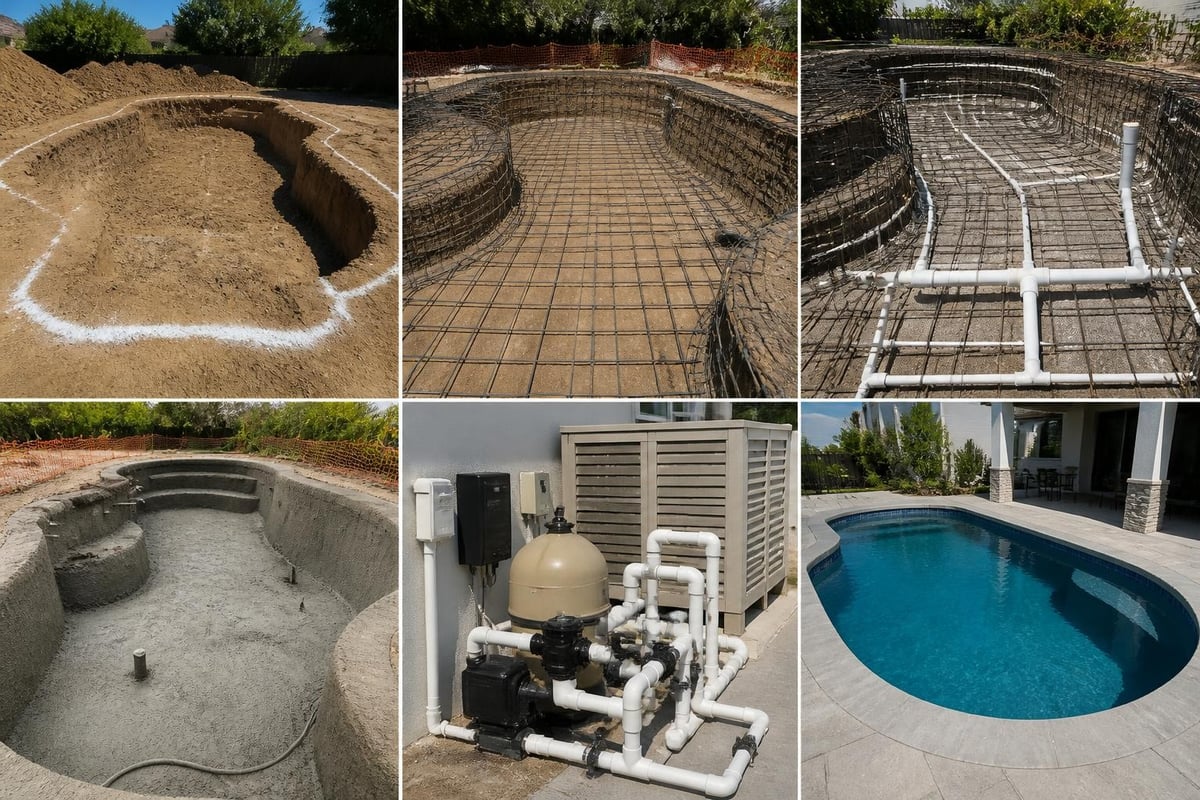
The construction process begins with layout and excavation, where contractors mark pool boundaries, remove soil, and create the rough cavity. Excavation depth accounts for steel framework, shotcrete thickness, and finish materials.
- Layout and excavation (3-5 days)
- Steel reinforcement installation (2-3 days)
- Plumbing rough-in (2-3 days)
- Building department inspection (1 day)
- Shotcrete application (1 day)
- Equipment installation and connections (2-3 days)
- Tile and coping installation (4-6 days)
- Interior finish application (1-2 days)
- Final inspections and startup (2-3 days)
Steel reinforcement creates the structural framework, with rebar tied in grids that resist hydraulic pressure, soil movement, and seismic forces. California's earthquake risk requires enhanced steel specifications compared to other regions.
Shotcrete application represents a critical day in the construction timeline. Specialized crews pneumatically apply concrete mix at high velocity, creating a dense, durable shell. The process requires continuous operation once started, typically completing an average pool in 6-8 hours.
Quality Control Checkpoints
Professional builders implement quality checkpoints throughout construction. Steel inspections verify proper spacing, tie patterns, and chair placement before shotcrete. Pressure testing validates plumbing integrity before backfilling.
Finish application requires specific temperature and humidity conditions. Plaster and pebble crews monitor weather forecasts and delay finishing if conditions fall outside acceptable ranges. Proper curing prevents premature deterioration and ensures warranty compliance.
Specialty Considerations for Los Angeles Pool Projects
Building custom pools California in the Los Angeles area presents unique opportunities and challenges shaped by terrain, climate, and local market dynamics. Many in-ground pool construction projects in Los Angeles leverage the region's mild climate and incorporate design elements that complement indoor-outdoor living spaces.
Hillside and Slope Construction
Los Angeles hillside properties offer spectacular views but require specialized engineering and construction techniques. Pools built into slopes may include infinity edges that seemingly float above the landscape, retaining walls that terrace the property, or cantilevered decks that extend over natural grade.
Geotechnical investigations determine soil stability, groundwater presence, and seismic considerations. Engineers design foundations and structural elements that resist slope movement while maintaining the pool's structural integrity.
Hillside construction challenges:
- Equipment access limitations
- Soil export and import logistics
- Retaining wall integration
- Drainage management systems
- Higher engineering and permitting costs
Successful hillside pools transform challenging terrain into extraordinary outdoor spaces that capitalize on views, privacy, and property topography.
Year-Round Climate Optimization
Southern California's Mediterranean climate allows for extended pool seasons, making heating and cooling systems important considerations. Gas heaters provide rapid temperature increase for occasional use, while heat pumps offer efficient operation for maintaining consistent temperatures.
Shade structures, pergolas, and strategic landscaping help manage summer heat exposure. Positioning pools to capture prevailing breezes while blocking harsh afternoon sun creates comfortable environments even during peak summer months.
Maintenance Planning and Long-Term Ownership
Custom pools California require ongoing maintenance to preserve water quality, protect equipment, and maintain aesthetic appeal. Understanding maintenance requirements during the design phase allows homeowners to incorporate features that simplify routine care.
Equipment Selection Impact
Automation systems control pumps, heaters, lighting, and sanitization equipment through smartphone apps or wall-mounted controls. These systems optimize chemical dosing, manage run times, and alert owners to equipment malfunctions.
Salt chlorine generators eliminate manual chlorine addition by converting dissolved salt into active sanitizer. These systems provide consistent sanitation with fewer chemical fluctuations and reduced handling of concentrated chemicals.
Robotic cleaners navigate pool floors and walls independently, removing debris and brushing surfaces without requiring dedicated plumbing lines or booster pumps. Premium models include programmable schedules and remote operation.
Seasonal Considerations
California's mild winters allow year-round pool operation in most regions, though heating costs increase during cooler months. Many homeowners reduce pool usage in winter while maintaining minimum circulation and sanitation.
Winter maintenance priorities:
- Reduced pump run times (4-6 hours daily minimum)
- Monitor and adjust chemistry weekly
- Remove debris after storms
- Maintain equipment to prevent freeze damage
- Clean filters monthly
Spring preparation includes thorough cleaning, equipment inspection, chemistry balancing, and any necessary repairs before peak swimming season. Professional service providers offer seasonal tune-ups that optimize system performance.
Integrating Hardscape and Landscape Elements
Complete backyard transformations extend beyond the pool itself to include surrounding hardscape, landscaping, and outdoor living spaces. Coordinating these elements during initial planning creates cohesive designs and avoids costly modifications.
Decking and Patio Materials
Pool decking must provide slip resistance, heat reflection management, and durability under constant water exposure. Travertine pavers remain popular for their natural beauty and cool-to-touch surface properties, while porcelain pavers offer contemporary aesthetics with minimal maintenance.
Concrete options include stamped patterns, exposed aggregate, and modern broom finishes. Each provides different texture, appearance, and cost profiles that suit various architectural styles and budgets.
Proper drainage design prevents water accumulation on decks and directs runoff away from pool and home foundations. Subtle slopes (2% grade minimum) move water effectively without creating trip hazards or uncomfortable walking surfaces.
Landscape Integration
Plant selections around pools require consideration of debris generation, root systems, and chemical tolerance. Palm trees provide tropical aesthetics without significant leaf drop, while ornamental grasses add movement and texture with minimal maintenance.
Avoid plants with aggressive root systems that can damage pool shells, plumbing, or decking. Bamboo, certain palms, and mature trees require adequate separation distances or root barrier installation.
Lighting design enhances safety, aesthetics, and usability after dark. LED fixtures offer energy efficiency and long lifespans, with options including path lighting, accent uplighting, underwater pool lights, and perimeter security illumination.
Regional Service Area Considerations
Custom pool construction availability and pricing vary across California regions based on contractor density, material availability, and local market conditions. Los Angeles area homeowners benefit from competitive markets with numerous qualified contractors.
Community-Specific Opportunities
Neighborhoods throughout Los Angeles County each present unique opportunities for custom pool construction. Areas like Studio City, Pacific Palisades, and Brentwood feature established properties where homeowners add pools to enhance lifestyle and property value.
Coastal communities incorporate pools that complement beachside living, while inland areas like Pasadena and La Cañada Flintridge take advantage of warmer temperatures and larger lot sizes.
South Bay areas including Torrance and Palos Verdes often feature hillside construction that captures ocean views, while communities like Calabasas and Encino offer expansive properties suited to resort-style designs.
Valley communities such as Sherman Oaks experience higher summer temperatures that make pools particularly valuable for cooling and recreation. Each area's specific characteristics influence design choices, equipment sizing, and construction approaches.
Future-Proofing Your Pool Investment
Technology evolution, changing regulations, and lifestyle shifts make future-proofing important during initial construction. Building flexibility into designs accommodates future upgrades without major reconstruction.
Technology Integration
Pre-wiring for future automation, additional lighting circuits, and water feature controls costs relatively little during construction but allows easy upgrades later. Conduit runs provide pathways for future technology without breaking concrete.
Smart pool systems continue advancing with features including voice control, AI-powered chemical management, and integration with whole-home automation platforms. Designing electrical infrastructure to support these systems ensures compatibility as you adopt new technologies.
Energy efficiency standards will likely become more stringent over time. Selecting oversized equipment pads, planning for future solar panel additions, and installing variable-speed pumps from the outset positions your pool to meet evolving requirements.
Structural Flexibility
Pool shells built to support future additions like spas, water features, or structural modifications provide long-term value. Discussing potential future enhancements with your contractor during design allows them to incorporate necessary structural provisions.
Plumbing stub-outs for future waterfalls, additional jets, or deck-mounted features require minimal cost during construction but save thousands if added later. Equipment pads sized for additional pumps or heaters accommodate system expansions.
Building custom pools California combines technical expertise, regulatory knowledge, and design creativity to create backyard retreats that enhance property value and quality of life. From understanding state energy requirements and local safety codes to selecting finishes and planning maintenance, successful projects require careful attention throughout the design and construction process. AM BUILDS CA brings 15+ years of experience to custom pool construction in Los Angeles, handling every aspect from initial design through final inspection with transparent pricing and direct owner involvement. Contact us at (424) 485-4548 for a free, no-obligation estimate on your custom pool project.


