


Building an inground pool transforms your backyard into a private oasis, but understanding the full financial picture is essential before breaking ground. The cost to build inground pool varies widely based on size, materials, site conditions, and features, with Los Angeles homeowners typically investing between $60,000 and $150,000 for a complete custom installation. This guide breaks down every expense category, explores the factors that drive pricing up or down, and helps you budget realistically for your project while avoiding costly surprises during construction.
Primary Cost Drivers for Inground Pool Construction
The base cost to build inground pool depends primarily on pool type, size, and structural approach. Gunite (shotcrete) pools dominate the Los Angeles market because they accommodate any shape, depth, or finish and perform well in hillside or challenging terrain.
Pool type pricing breakdown:
- Gunite/shotcrete: $65,000–$150,000+ (most common in LA)
- Vinyl liner: $40,000–$75,000 (rare in Southern California)
- Fiberglass shell: $50,000–$90,000 (limited shapes, faster install)
Size directly impacts material volume, labor hours, and equipment. A standard 300-400 square foot pool costs substantially less than a 600 square foot resort-style design. Depth matters too-adding a deep end for diving or attached spa raises excavation, steel, and shotcrete requirements.
Material and Finish Selection
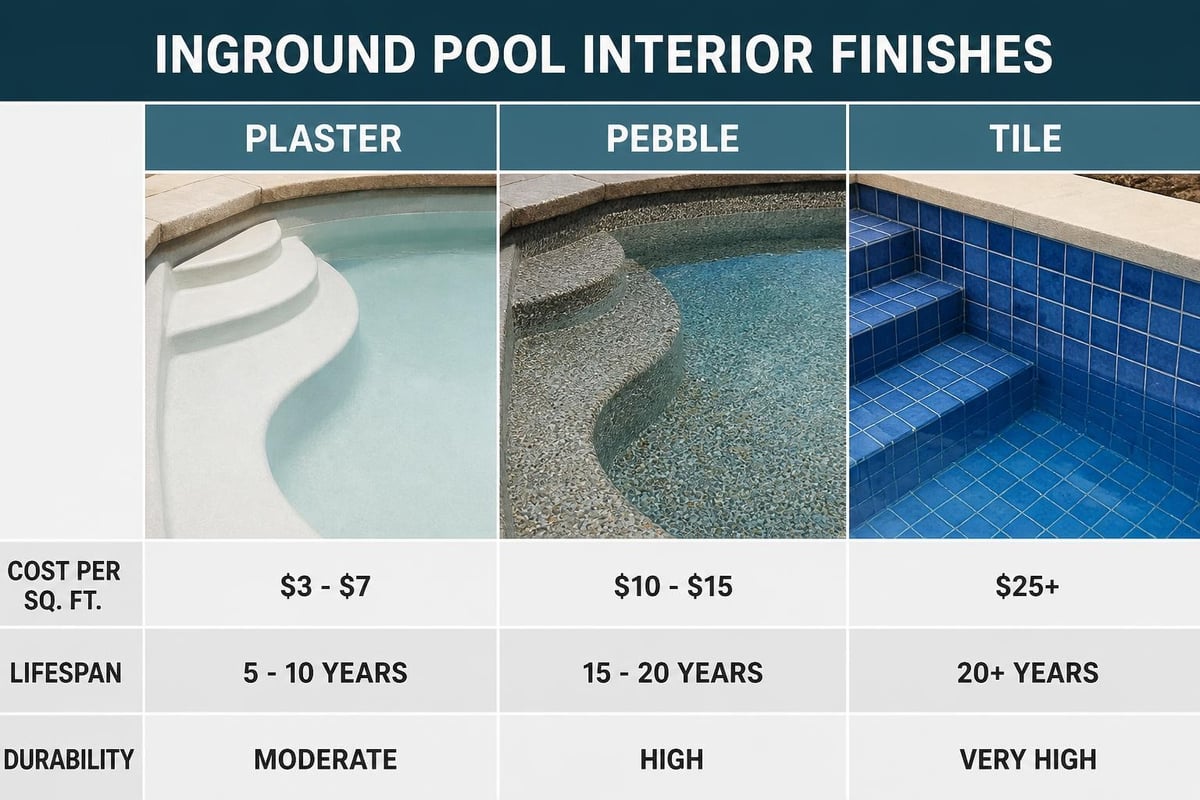
Interior finish choices range from basic plaster to premium pebble, tile, or quartz aggregates. Each tier affects durability, aesthetics, and total project cost.
| Finish Type | Cost per SF | Lifespan | Appearance |
|---|---|---|---|
| White plaster | $3–$5 | 7–10 years | Classic smooth |
| Colored plaster | $4–$6 | 8–12 years | Tinted uniform |
| Pebble aggregate | $7–$12 | 15–20 years | Textured natural |
| Glass tile | $15–$30 | 20+ years | Luxury reflective |
Coping, deck materials, and waterline tile add another layer of expense. Travertine, pavers, stamped concrete, and natural stone each carry different price points and maintenance profiles. Homeowners investing in custom pool construction in Los Angeles often allocate 20–30% of the total budget to decking and hardscape that extends the outdoor living space beyond the water's edge.
Excavation, Engineering, and Site Preparation
Site conditions profoundly influence the cost to build inground pool. Flat, accessible yards with stable soil require minimal preparation, while hillside lots, poor soil, or tight access demand extra engineering, equipment, and labor.
Key site factors that increase costs:
- Sloped terrain: Retaining walls, grading, additional shoring ($5,000–$25,000)
- Rocky soil or hardpan: Rock-breaking equipment, longer excavation time ($3,000–$10,000)
- Poor access: Smaller equipment, hand labor, longer timelines ($2,000–$8,000)
- High water table: Dewatering systems, hydrostatic relief valves ($1,500–$5,000)
- Utility conflicts: Relocation of gas, electric, sewer lines ($2,000–$15,000)
Los Angeles building codes require soils reports and engineering for most pool projects. A geotechnical investigation costs $1,500–$3,500 and identifies soil bearing capacity, expansion potential, and seismic considerations. Structural engineering for the pool shell and deck typically adds $2,000–$5,000.
Permits and Inspections
Every inground pool in Los Angeles requires permits from the local building and safety department. Permit costs vary by city but generally range from $1,200 to $4,000 depending on project scope and valuation. For a full look at fees, plan checks, and inspections, see our guide to pool permit costs in Los Angeles.
Typical permit and compliance expenses:
- Building permit and plan check: $1,200–$3,000
- Energy compliance (Title 24): $300–$800
- Grading permit (if significant earthwork): $500–$1,500
- Electrical and plumbing permits: $400–$1,000
- Final inspections and corrections: $200–$600
The California Board of Equalization provides detailed guidance on residential construction costs, including itemized breakdowns helpful for understanding how assessors value pool improvements and calculate property tax adjustments. This documentation also clarifies which components constitute the pool structure versus accessory features.
Equipment, Plumbing, and Mechanical Systems
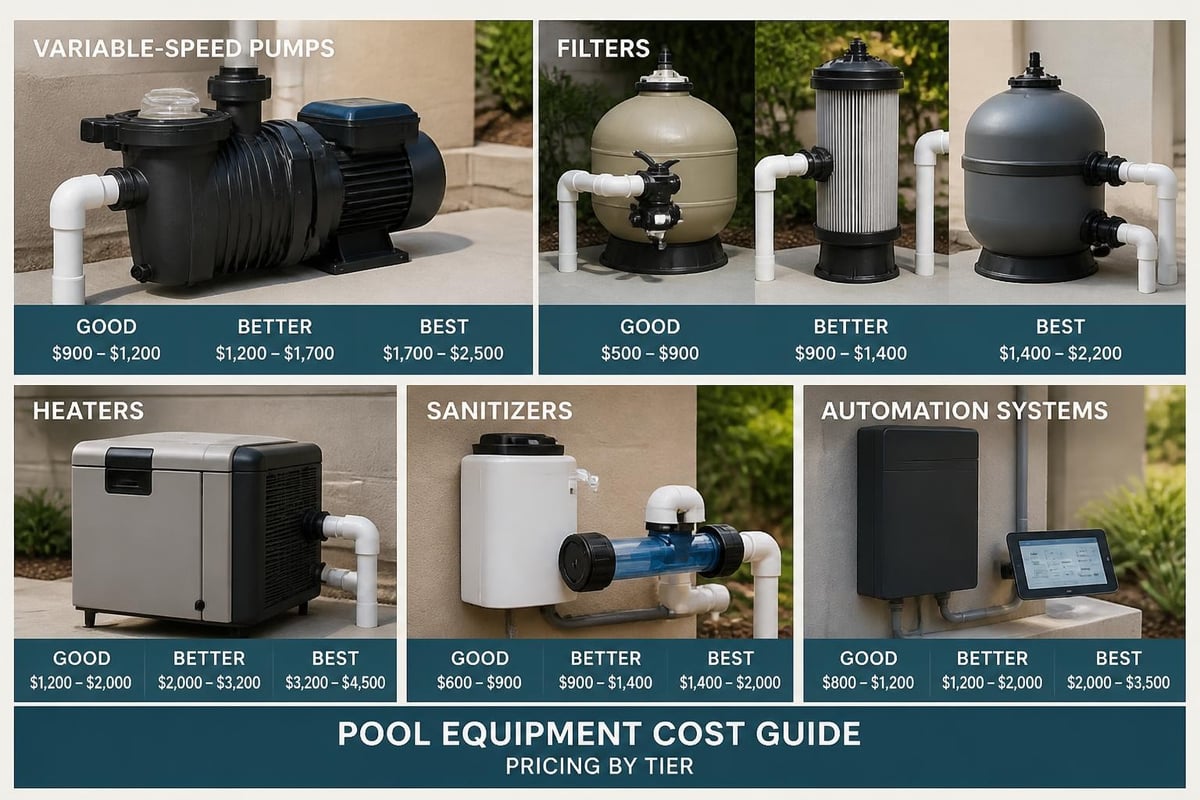
Filtration, heating, sanitation, and automation systems represent 15–25% of the total cost to build inground pool. Equipment quality, efficiency ratings, and feature sets vary dramatically across manufacturers and models.
Filtration and Circulation
Your pool requires a pump, filter, and plumbing network to maintain water quality. Variable-speed pumps meet California energy codes and reduce operating costs by 50–75% compared to single-speed models.
- Variable-speed pump: $1,200–$2,500 (required by Title 24)
- Cartridge filter: $800–$1,500
- Sand filter: $600–$1,200
- DE filter: $900–$1,800
- Main drain and skimmer plumbing: $2,000–$4,000
The EPA offers comprehensive resources on pool water efficiency, including pump selection, cover benefits, and evaporation reduction strategies that lower both initial equipment choices and long-term operating expenses.
Heating and Temperature Control
Heating extends your swimming season but adds both upfront and ongoing costs. Los Angeles' mild climate makes pool heating optional for many homeowners, though attached spas almost always include heaters.
| Heater Type | Equipment Cost | Operating Cost | Heat-Up Speed |
|---|---|---|---|
| Gas (natural/propane) | $2,500–$4,500 | High ($150–$400/mo) | Fast (hours) |
| Electric heat pump | $3,500–$6,500 | Medium ($80–$200/mo) | Moderate (24–48 hrs) |
| Solar panels | $4,000–$8,000 | Low ($10–$30/mo) | Slow (days) |
| Hybrid systems | $6,000–$10,000 | Variable | Optimized |
Additional Features and Upgrades
Spas, waterfalls, lighting, and fire features personalize your pool but increase the overall investment. Budgeting for these elements from the start ensures cohesive design and avoids costly retrofits.
Popular upgrades and typical costs:
- Attached spa (spillover or separate): $12,000–$30,000
- Waterfall or sheer descent: $3,000–$15,000 per feature
- Deck jets or bubblers: $800–$2,500 each
- LED color-changing lighting: $1,500–$5,000
- Fire bowls or fire pit: $2,500–$8,000
- Tanning ledge (Baja shelf): $4,000–$10,000
- Beach entry (zero-edge): $8,000–$20,000
- Automation and smart controls: $2,000–$5,000
Salt chlorine generators offer an alternative to traditional chemical sanitation, with equipment costs of $1,500–$3,000 and reduced ongoing chemical purchases. Many homeowners appreciate the softer water feel and simplified maintenance routine.
Labor, Timeline, and Project Management
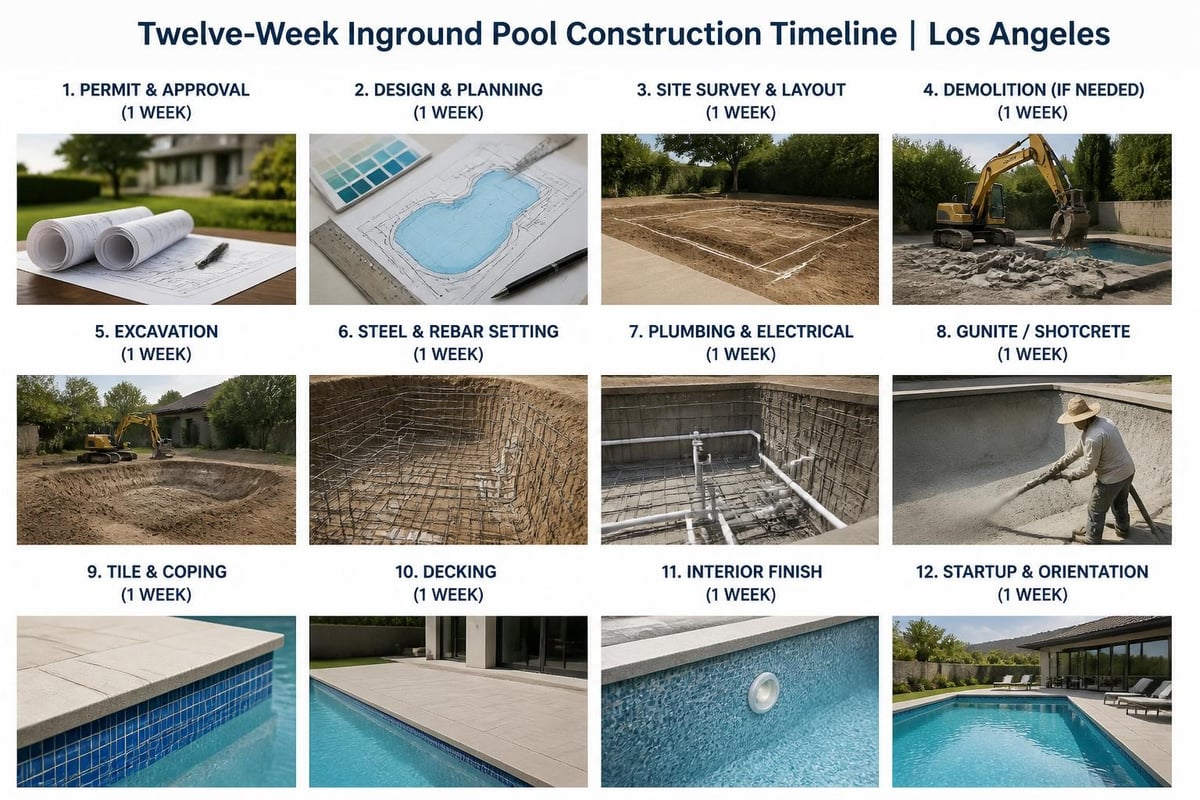
Construction labor represents 35–50% of the total cost to build inground pool in Los Angeles. A licensed, experienced contractor manages subcontractors, scheduling, inspections, and quality control throughout the 8–14 week build process.
Construction Phases and Duration
- Design and permitting (2–6 weeks): Plans, engineering, permit approval
- Excavation and steel (1 week): Dig, set plumbing, tie rebar
- Shotcrete/gunite (1 day): Pneumatic concrete application
- Plumbing and electrical rough-in (1–2 weeks): Equipment installation, conduit
- Tile and coping (1–2 weeks): Waterline tile, pool edge finishing
- Decking and hardscape (2–3 weeks): Concrete, pavers, or stone
- Interior finish (plaster/pebble) (1 day application + 28-day cure): Final surface
- Startup and balancing (1 week): Fill, chemical balance, system testing
Working directly with the owner and a licensed general contractor streamlines communication, eliminates markup layers, and ensures accountability. Family-owned contractors often provide more personalized service and attention to detail than large-volume builders. For a full view of planning, permits, materials and timelines, see our guide to new pool construction in 2026.
Regional and Market Considerations in Los Angeles
Los Angeles pool construction costs run 10–25% higher than national averages due to labor rates, permit complexity, soil conditions, and material transportation. The 2026 state-by-state pool cost analysis confirms California ranks among the top five most expensive markets for inground pool installation.
Los Angeles-specific cost factors:
- Union labor rates and prevailing wage requirements
- Stringent building codes and multi-stage inspections
- Seismic engineering and hillside construction standards
- Water conservation and energy efficiency mandates
- Limited contractor availability during peak season (April–August)
Different neighborhoods experience varying price points based on access, lot characteristics, and project complexity. Building a pool in Pacific Palisades or Brentwood may require additional engineering compared to flatter areas like Torrance or Long Beach.
Seasonal and Economic Influences
Construction material costs fluctuate with broader economic conditions. Steel, concrete, and specialty aggregates saw significant price increases in 2024–2025, with NAHB research showing that residential construction input costs remain elevated compared to pre-pandemic levels.
Scheduling your project during fall or winter can sometimes yield better contractor availability and more competitive pricing, though weather delays become more likely. Most Los Angeles contractors maintain year-round schedules due to the mild climate.
Financing and Return on Investment
Most homeowners finance pool construction through home equity loans, HELOCs, or cash-out refinancing. Personal loans and contractor financing offer alternatives, though typically at higher interest rates.
Financing options and considerations:
- Home equity line of credit (HELOC): Variable rate, draw as needed, tax-deductible interest (consult IRS Publication 530 for current rules)
- Home equity loan: Fixed rate, lump sum, predictable payments
- Cash-out refinance: New mortgage, potentially lower rate, longer payback
- Personal loan: No collateral, faster approval, higher rates (8–14%)
- Contractor financing: Convenience, potentially promotional rates, limited terms
Pools provide lifestyle value but rarely deliver dollar-for-dollar returns at resale. According to Redfin’s analysis of pool value, inground pools in warm climates like Los Angeles typically recoup 40–60% of construction costs, with higher recovery rates in premium neighborhoods where pools are expected amenities.
Hidden Costs and Budget Contingencies
Even well-planned projects encounter unexpected expenses. Setting aside 10–15% contingency helps absorb surprises without derailing the project or forcing compromises on quality.
Commonly overlooked expenses:
- Temporary fence during construction ($800–$2,000)
- Soil export and disposal ($1,500–$5,000)
- Tree removal or root protection ($1,000–$8,000 per tree)
- Landscape restoration around pool area ($2,000–$10,000)
- Pool cover (safety or solar) ($1,200–$4,000)
- Initial chemical startup kit ($300–$600)
- Furniture, shade structures, outdoor kitchen ($5,000–$50,000+)
- Property tax reassessment increase (varies by assessed value)
- Homeowners insurance premium adjustment ($100–$500/year)
- Utility upgrades (gas line, electrical panel) ($1,500–$8,000)
The Pool & Hot Tub Alliance research tracks industry-wide construction trends, cost pressures, and consumer preferences, offering data-driven context for understanding pricing dynamics and helping homeowners set realistic expectations.
Maintenance and Operating Costs
Beyond construction, pools require ongoing chemical treatment, cleaning, equipment maintenance, water, and energy. Annual operating costs in Los Angeles typically range from $1,500 to $4,000 depending on pool size, equipment efficiency, heating habits, and whether you self-maintain or hire service.
| Expense Category | Annual Cost (Self-Maintained) | Annual Cost (Service Contract) |
|---|---|---|
| Chemicals | $300–$600 | Included |
| Water (refills, evaporation) | $150–$400 | $150–$400 |
| Electricity (pump, heater) | $400–$1,200 | $400–$1,200 |
| Professional service | $0 | $1,200–$2,400 |
| Equipment repairs | $200–$800 | Often included |
| Total | $1,050–$3,000 | $1,750–$4,000 |
Investing in energy-efficient equipment, using a pool cover to reduce evaporation and heat loss, and optimizing pump run times substantially lowers operating expenses over the pool's lifetime.
Selecting the Right Contractor
Your contractor choice directly impacts project cost, quality, timeline, and experience. Licensed general contractors carry proper insurance, pull permits, manage inspections, and warranty their work.
Essential contractor qualifications:
- Active California contractor license (CSLB verification)
- General liability and workers' compensation insurance
- Local references and completed project portfolio
- Clear written contract with scope, timeline, payment schedule
- Transparent pricing breakdown and allowance documentation
- Established relationships with suppliers and subcontractors
- Direct owner involvement and communication
Request three detailed bids that specify materials, equipment brands, finishes, and exclusions. The lowest price rarely delivers the best value-evaluate experience, communication, and past client satisfaction alongside cost.
Choosing a licensed pool contractor in Los Angeles who specializes in custom work ensures your project receives the expertise, attention, and problem-solving skills necessary to navigate the city's complex requirements and diverse site conditions.
Cost-Saving Strategies Without Compromising Quality
Strategic decisions during planning can reduce the cost to build inground pool while maintaining structural integrity and long-term performance.
- Right-size your pool: Build for actual use, not maximum dimensions
- Simplify the shape: Rectangular or simple curves cost less than complex free-form designs
- Phase upgrades: Install plumbing/electrical for future spa or water features, add later
- Standard finishes initially: Upgrade plaster or tile during first renovation cycle (10–15 years)
- Manual controls: Add automation later if budget is tight
- Compare deck materials: Concrete costs less upfront than pavers or natural stone
- Efficient equipment: Higher-cost variable-speed pumps and LED lights save thousands in operating costs
Avoid false economies like unlicensed contractors, inadequate steel reinforcement, or skipping permits. These shortcuts create liability, code violations, structural failures, and expensive corrections that far exceed any initial savings.
Understanding the full cost to build inground pool-from excavation through startup-helps you budget accurately, make informed choices, and avoid mid-project surprises. Whether you're planning a simple rectangular lap pool or a resort-style backyard retreat with spa, waterfalls, and custom lighting, transparent pricing and experienced guidance ensure your investment delivers years of enjoyment. AM BUILDS CA brings 15+ years of custom pool construction expertise to Los Angeles homeowners, handling every phase from free estimate and design through permits, engineering, and final startup. Call (424) 485-4548 to discuss your backyard vision and receive a detailed, no-obligation proposal.


