


Selecting the right concrete pool deck contractors for your backyard project requires more than comparing prices and checking availability. The deck surrounding your pool faces unique challenges: constant moisture exposure, foot traffic, chemical contact from pool water, and year-round UV exposure in Southern California. A poorly installed deck cracks prematurely, creates drainage problems, and becomes a safety hazard. The best contractors understand the technical requirements for proper slope, reinforcement, control joints, and finishes that balance aesthetics with slip resistance and durability. This guide walks you through every consideration when hiring concrete pool deck contractors in 2026, from verifying credentials to understanding finish options and ensuring your investment lasts decades.
Why Concrete Pool Deck Contractors Require Specialized Skills
Pool deck installation differs fundamentally from standard flatwork. Concrete pool deck contractors must account for waterproofing, drainage, thermal expansion from pool equipment, and connections to existing structures.
Technical Requirements Beyond Basic Flatwork
Standard driveway or patio contractors may lack experience with the 1/4-inch per foot minimum slope required for pool decks. Water must drain away from the pool and structure foundations, requiring careful grading and sub-base preparation.
Proper reinforcement becomes critical near pool edges and equipment pads. Steel placement, tie spacing, and concrete cover specifications follow different standards than typical exterior slabs. The American Concrete Institute provides technical guidance on shotcrete and cast-in-place applications specific to pool construction that experienced contractors reference during planning.
Key technical considerations include:
- Minimum 4-inch slab thickness (6 inches near heavy equipment)
- Proper rebar grid spacing and chair height
- Control joint placement every 8-10 feet maximum
- Isolation joints at pool coping and structure connections
- Sub-base compaction to 95% minimum density
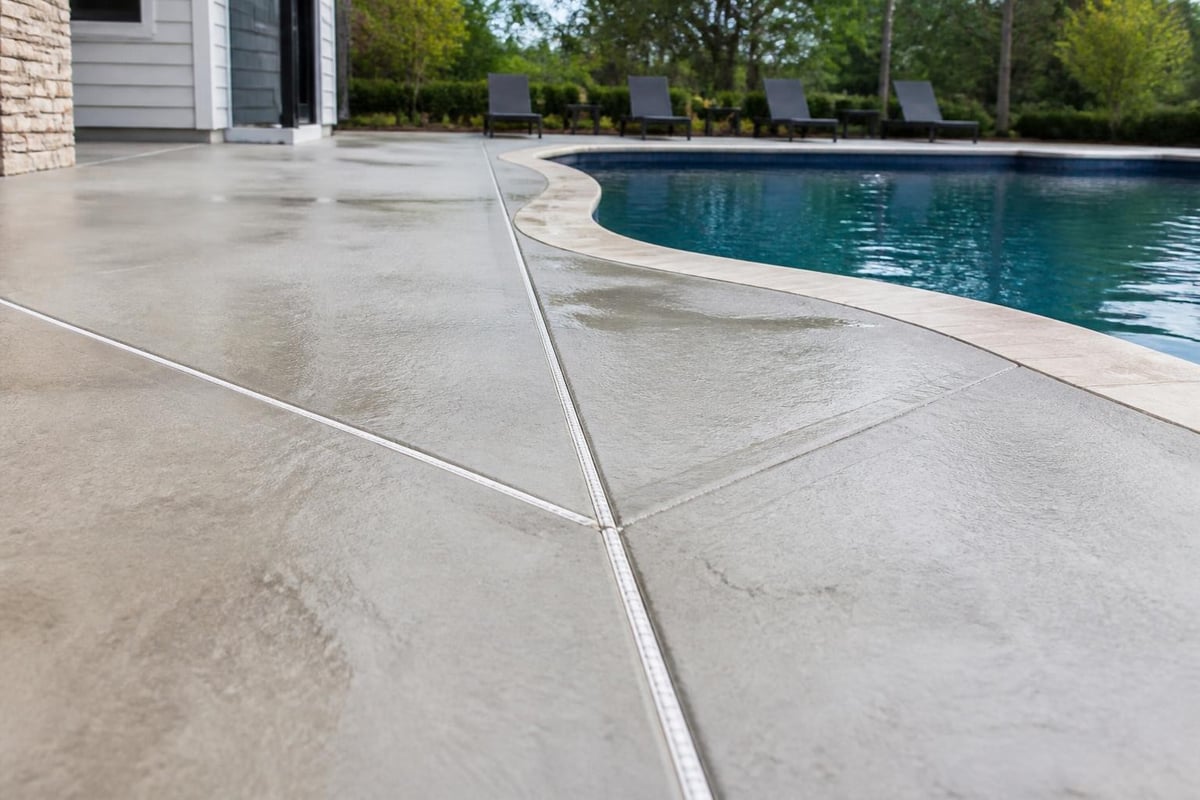
Licensed concrete pool deck contractors understand these requirements aren't optional. They affect long-term performance, crack control, and compliance with building codes.
Material Selection and Mix Design
The concrete mix for pool decks requires specific characteristics. Standard 3,000 PSI mixes used for driveways often prove inadequate for the constant wet-dry cycling around pools.
Most experienced contractors specify 4,000 PSI minimum with air entrainment between 5-7% for freeze-thaw protection (critical in mountain communities, less so in coastal Los Angeles). Water-cement ratio stays below 0.45 to minimize permeability and surface scaling.
| Mix Component | Pool Deck Specification | Standard Flatwork |
|---|---|---|
| Compressive Strength | 4,000+ PSI | 3,000 PSI |
| Air Entrainment | 5-7% | 3-5% or none |
| Water-Cement Ratio | ≤ 0.45 | 0.50-0.55 |
| Slump | 4-5 inches | 3-4 inches |
Admixtures like plasticizers improve workability without excess water, while integral waterproofing compounds add another layer of protection. Quality concrete pool deck contractors discuss these options during estimates rather than defaulting to standard mixes.
Questions to Ask Before Hiring Concrete Pool Deck Contractors
Vetting contractors thoroughly prevents costly problems. Beyond basic licensing and insurance verification, specific questions reveal experience level and installation approach.
Licensing, Insurance, and References
California requires a C-27 (Landscaping) or B (General Building) license for pool deck installation. Verify the license number through CSLB and confirm it's active with no major violations.
General liability insurance should cover at least $1 million per occurrence, and workers' compensation must cover all employees. Request certificates and verify coverage dates extend through your project timeline.
Ask for three recent pool deck references, preferably within the past 12 months. Contact each and ask:
- Did the contractor maintain a clean job site daily?
- How did they handle unexpected issues or change orders?
- Has the deck developed any cracks or drainage problems since installation?
- Would you hire them again for another project?
Technical Process and Quality Standards
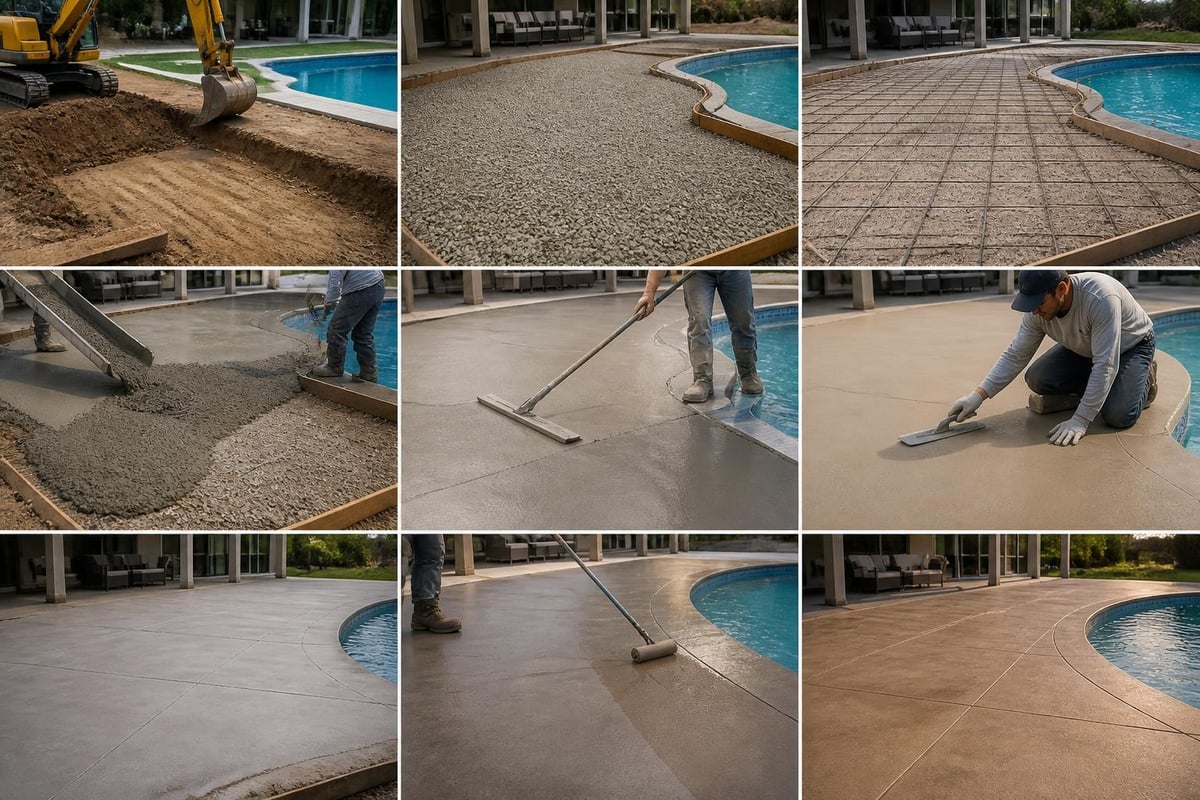
Understanding their installation process reveals professionalism. Qualified concrete pool deck contractors provide detailed answers about each phase.
Critical process questions:
- What sub-base preparation do you perform (excavation depth, compaction equipment, aggregate type)?
- How do you control slab thickness and reinforcement placement during pour?
- What curing method do you use and for how long?
- How do you cut control joints (wet-saw timing and depth)?
- What product do you apply for sealing, and when?
Vague answers like "we follow standard procedures" indicate less experience. Detailed responses citing ACI decorative concrete guidelines or specific manufacturer protocols demonstrate expertise.
For projects involving both the pool structure and surrounding hardscape, working with teams that offer comprehensive hardscape and landscape design services ensures coordination between the pool shell, coping, and deck for proper drainage and aesthetic continuity.
Timeline and Communication Protocols
Concrete work depends on weather, curing time, and coordination with other trades. Realistic timelines indicate experience.
A typical pool deck project requires 2-3 weeks from excavation to final seal coat application. Rush jobs compromise quality through inadequate curing or poor weather conditions.
Ask how they communicate progress, handle delays, and manage change orders. Weekly photo updates, documented change order approvals, and a dedicated project contact prevent misunderstandings.
Finish Options That Balance Beauty and Safety
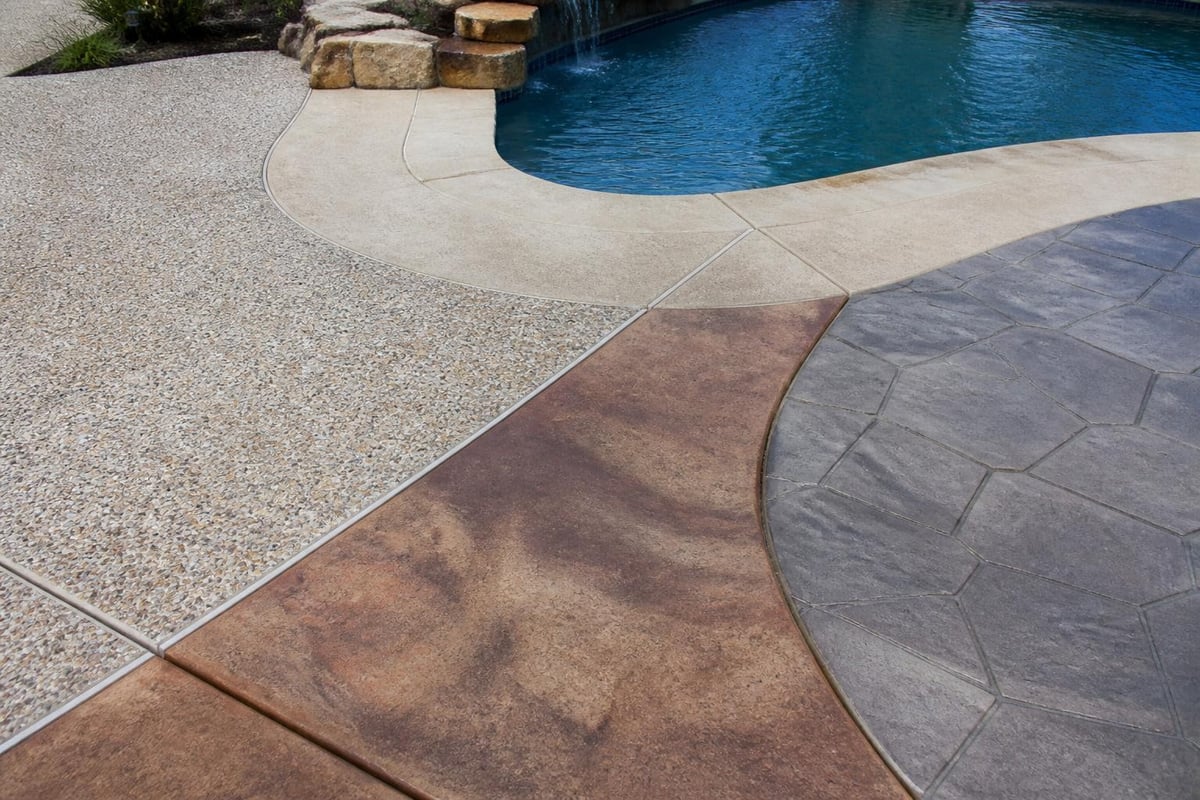
Decorative finishes transform standard gray concrete into custom hardscape. Concrete pool deck contractors should present options that meet slip-resistance requirements while matching your design vision.
Textured and Slip-Resistant Finishes
Smooth troweled finishes look elegant but become dangerously slippery when wet. Building codes and liability concerns require textured surfaces around pools.
Popular slip-resistant finishes:
- Broom finish: Stiff-bristle broom dragged across fresh concrete creates linear texture; most affordable, excellent traction
- Exposed aggregate: Top layer of paste removed to reveal decorative stone; naturally slip-resistant, available in custom stone colors
- Salt finish: Rock salt pressed into surface then dissolved after curing; creates shallow pockmarks with good traction
- Spray knockdown: Sprayed texture partially flattened; less aggressive than broom but more refined appearance
Experienced contractors test slip resistance with industry-standard methods. The National Ready Mixed Concrete Association provides guidance on proper finishing techniques for exterior flatwork that ensure both safety and durability.
Stamped and Stained Concrete
Stamped concrete replicates natural stone, brick, or tile patterns at lower cost than pavers. Quality stamping requires skill in timing, release agent application, and joint placement.
Color options include:
- Integral color: Mixed throughout concrete; won't wear off but offers limited palette
- Dry-shake hardener: Broadcast and troweled into surface; more color options and increased surface hardness
- Acid stain: Chemical reaction creates variegated, translucent tones; applied after curing
- Water-based stain: Opaque coating in wider color range; sits on surface rather than penetrating
The Portland Cement Association offers technical guidance on achieving consistent results with architectural concrete finishes. Reputable concrete pool deck contractors provide samples of previous work and explain maintenance requirements for each finish type.
Sealing and Long-Term Protection
Unsealed concrete absorbs pool chemicals, stains from organic matter, and deteriorates faster from moisture penetration. Professional sealing extends deck life and simplifies maintenance.
| Sealer Type | Finish Appearance | Durability | Reapplication |
|---|---|---|---|
| Penetrating | Natural (matte) | 5-7 years | Every 5-7 years |
| Acrylic | Low to high gloss | 1-3 years | Every 1-3 years |
| Polyurethane | Satin to gloss | 3-5 years | Every 3-5 years |
| Epoxy | High gloss | 5-10 years | Every 5-10 years |
Quality concrete pool deck contractors include initial sealing in their scope. They wait minimum 28 days for full cure before applying penetrating sealers, or 7-14 days for topical coatings depending on manufacturer specifications.
Evaluating Bids and Comparing Contractors
Three detailed bids help identify fair pricing and scope differences. Concrete pool deck contractors should provide written estimates that itemize every component.
Understanding Bid Components
Comprehensive bids break down labor, materials, and specific tasks. Avoid contractors who provide only lump-sum totals without detail.
Standard bid sections include:
- Site preparation (excavation, grading, haul-away)
- Sub-base materials and compaction
- Reinforcement (rebar, wire mesh, fiber)
- Concrete volume and mix specifications
- Finishing type and detail level
- Curing method and duration
- Sealing products and application
- Cleanup and final grading
Compare these line items across bids rather than just the bottom line. A lower total price may reflect thinner slabs, minimal reinforcement, or excluded sealing that costs more long-term.
Red Flags During Contractor Selection
Certain warning signs indicate contractors to avoid regardless of price.
Watch for these red flags:
- Requests for large upfront deposits (over 10% before work begins)
- Inability to provide proof of licensing and insurance
- Pressure to sign contracts immediately with "today only" discounts
- Vague timeline or scope descriptions
- No references from pool deck projects specifically
- Unwillingness to put warranties in writing
Legitimate concrete pool deck contractors earn trust through transparency. They provide detailed contracts, maintain proper licensing, and stand behind their work with transferable warranties.
Contract Terms and Payment Structure
Fair payment schedules align with work milestones. Typical structures include small deposit (10%), payment after excavation and forms (30%), payment after concrete placement (40%), and final payment after sealing and cleanup (20%).
Contracts should specify:
- Exact concrete mix design (PSI, admixtures, slump)
- Slab thickness and reinforcement details
- Finish type with samples or photos
- Total square footage and unit pricing
- Start date and substantial completion deadline
- Warranty terms (typical: 1 year workmanship, material warranties vary)
- Change order process and pricing method
- Lien release requirements
Never sign contracts with blank sections or verbal-only agreements. Everything discussed should appear in writing with both parties' signatures.
Maintenance Requirements After Installation
Even the best installation requires proper maintenance. Concrete pool deck contractors should educate clients about care procedures that protect their investment.
Initial Curing and Break-In Period
Concrete reaches full strength over 28 days. During this period, avoid heavy equipment, excessive foot traffic, and premature sealing.
First-month guidelines:
- Keep surface damp for 7 days minimum (spray light mist 2-3 times daily)
- Avoid dragging furniture or sharp objects across surface
- Don't apply sealer until contractor-specified cure time
- Expect slight color variations that even out as concrete fully cures
- Report any immediate cracking wider than hairline to contractor
Responsible contractors follow up during the curing period and address any concerns before final payment.
Seasonal Care and Cleaning
Pool deck maintenance varies by finish type and local climate. Los Angeles' mild weather simplifies care compared to freeze-thaw regions, but consistent cleaning prevents buildup and staining.
Basic maintenance includes weekly hosing to remove debris, monthly cleaning with pH-neutral cleaner (avoid harsh acids or degreasers on decorative finishes), annual sealer inspection and touch-up as needed, and immediate stain treatment (oils, rust, organic matter).
For communities with occasional freezing temperatures like Pasadena or La Cañada Flintridge pool areas, winter preparation includes removing standing water from low spots and avoiding salt-based de-icers that damage concrete surfaces.
Long-Term Repairs and Resurfacing
Proper installation and maintenance extend deck life to 20-30 years before major repairs. Minor hairline cracks are normal and don't compromise structural integrity.
Address these issues promptly:
- Cracks wider than 1/8 inch (may indicate underlying problems)
- Spalling or flaking surface (freeze-thaw damage or poor mix)
- Settled or uneven sections (sub-base failure)
- Widespread staining that cleaning won't remove
Many concrete pool deck contractors offer maintenance services and can resurface or repair damaged sections. Early intervention costs less than full replacement.
Accessibility and Code Compliance Considerations
For commercial pools or residential projects with accessibility needs, concrete pool deck contractors must follow specific regulations beyond standard building codes.
ADA Requirements for Pool Decks
The U.S. Access Board provides detailed guidance on swimming pool accessibility under ADA and ABA standards. While primarily affecting public facilities, these guidelines inform best practices for universal design.
Key accessibility features include:
- Minimum 36-inch clear deck width around pool perimeter
- Maximum 2% cross-slope (1/4 inch per foot) in accessible routes
- Firm, stable, slip-resistant surface throughout
- Maneuvering clearances at pool lifts and ramps
- Detectable warnings at pool edges in some applications
Homeowners planning aging-in-place features or rental properties should discuss these standards with contractors during design. Incorporating accessibility from the start costs less than retrofitting.
Drainage and Waterproofing Standards
Proper waterproofing protects adjacent structures and prevents deck failure. Beyond surface slope, contractors should address sub-surface drainage where needed.
The RCABC grade-level waterproofing standard outlines best practices for waterproofing slabs at grade, including recommendations for vapor barriers, perimeter drains, and connections to foundation drains.
Quality installations include:
- Compacted sub-base with minimum 4-inch granular layer
- Vapor barrier under slab where groundwater is present
- Weep screeds or drains at structure connections
- Proper slope maintained throughout (away from pool and buildings)
- Sealed control joints to prevent water infiltration
These details separate experienced concrete pool deck contractors from general flatwork crews. The investment in proper drainage prevents foundation damage, settled sections, and premature concrete failure.
Regional Considerations for Los Angeles Pool Decks
Los Angeles County's diverse microclimates and soil conditions affect concrete pool deck installation. Local concrete pool deck contractors understand these variables and adjust accordingly.
Soil Types and Foundation Concerns
Expansive clay soils common in areas like Encino and Sherman Oaks require deeper excavation and more robust sub-base preparation. These soils expand when wet and shrink when dry, creating movement that cracks inadequately supported decks.
Coastal areas like Pacific Palisades and Long Beach often feature sandy soils with better drainage but lower bearing capacity. Contractors compensate with thicker sub-base layers and potentially deeper excavation.
Climate Impact on Material Selection
Southern California's year-round sun exposure fades color treatments faster than in cloudier climates. UV-stable stains and sealers with UV inhibitors extend color life.
Hot summer surfaces reach temperatures that can burn bare feet. Lighter colors reflect heat better than dark finishes. Exposed aggregate with light-colored stones stays cooler than dark stamped patterns.
Minimal freeze-thaw cycling means air entrainment requirements are less critical than in northern climates, but occasional cold snaps in mountain-adjacent communities like Calabasas still warrant proper mix design.
Permit and Inspection Requirements
Los Angeles County and individual cities have varying permit requirements for pool deck construction. Most require permits for new deck installation, especially when connected to pool construction projects.
Experienced concrete pool deck contractors handle permit applications and coordinate required inspections at reinforcement placement, before concrete pour, and after completion. They understand local code officials' expectations and common issues that cause delays.
Working with established local contractors familiar with jurisdictions like Pasadena, Torrance, or Brentwood streamlines the approval process and prevents code violations that require costly corrections.
Hiring qualified concrete pool deck contractors protects your investment through proper installation that lasts decades with minimal maintenance. The technical requirements for drainage, reinforcement, and slip-resistant finishes demand specialized knowledge beyond standard flatwork. AM BUILDS CA brings 15+ years of experience to every pool deck project, with a licensed team (CSLB #1153503) that handles design through final sealing while maintaining clean job sites and transparent pricing. Los Angeles homeowners receive direct owner communication and detail-driven work built to code. Call (424) 485-4548 for a free estimate.


