


Choosing a concrete pool contractor represents one of the most significant investments you'll make in your property. Unlike prefabricated pools, custom concrete pools require specialized knowledge, proper licensing, and years of hands-on experience to deliver a structure that will last decades. The right contractor brings together engineering precision, construction expertise, and project management skills to navigate complex permits, coordinate multiple trades, and build a pool that perfectly matches your vision. Understanding what distinguishes an exceptional concrete pool contractor from an average one helps you make informed decisions that protect your investment and ensure your backyard transformation exceeds expectations.
Understanding Concrete Pool Construction Methods
A qualified concrete pool contractor works primarily with two closely related materials: gunite and shotcrete. While many use these terms interchangeably, understanding the technical differences helps you appreciate the craftsmanship involved.
Gunite involves mixing dry cement and sand that's pneumatically applied through a hose, with water added at the nozzle. Shotcrete refers to wet-mix concrete that's already combined before being sprayed. Both methods create incredibly strong, monolithic structures when applied by skilled crews.
Why Concrete Pools Require Specialized Contractors
The construction process demands expertise across multiple disciplines:
- Structural engineering for shell design and steel reinforcement
- Hydraulic knowledge for circulation, filtration, and drainage systems
- Soils analysis to address site-specific ground conditions
- Code compliance for safety, setbacks, and municipal requirements
- Waterproofing techniques to prevent leaks and structural issues
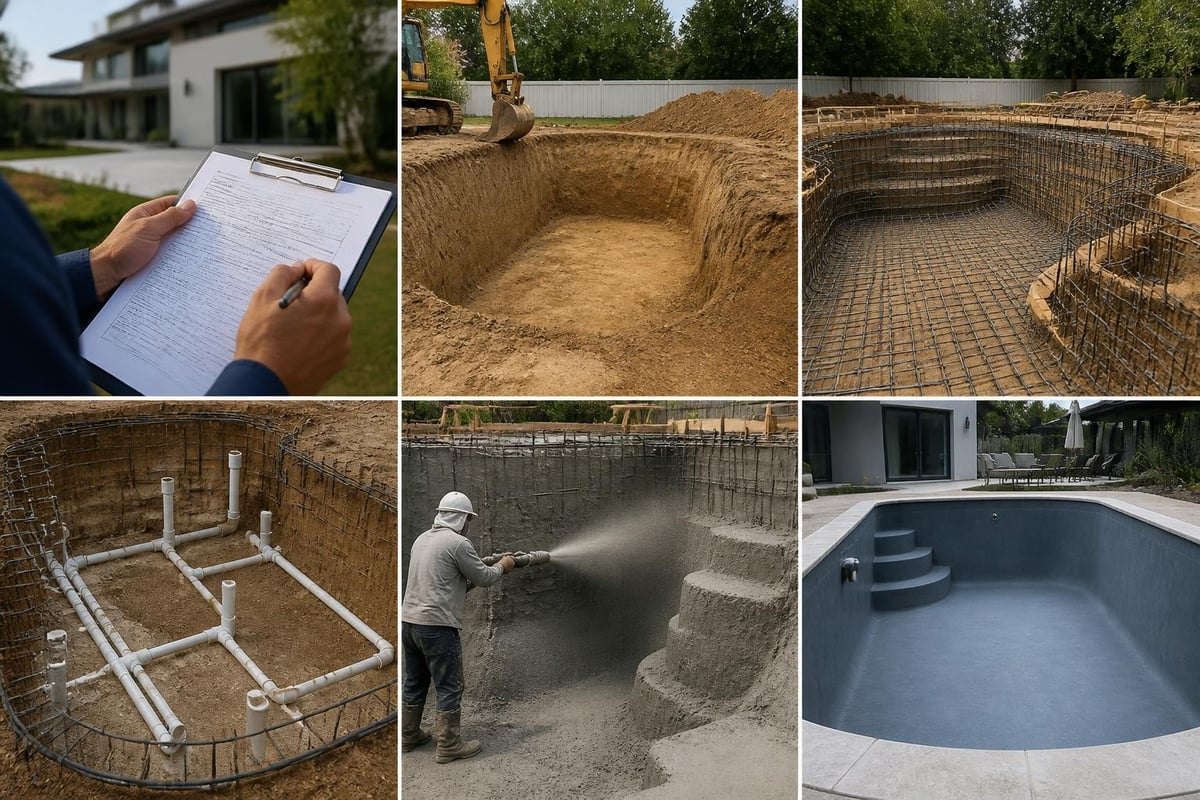
A concrete pool contractor manages these complex systems simultaneously while coordinating plumbers, electricians, steel workers, and equipment installers. This orchestration requires experience that only comes from completing dozens of successful projects.
What Separates Experienced Concrete Pool Contractors
Experience matters dramatically in pool construction. A contractor with 15+ years in the field has encountered virtually every soil condition, design challenge, and unexpected complication that can arise.
Licensing and Credentials
California requires contractors to hold specific licenses for pool construction. The Contractors State License Board (CSLB) issues these credentials only after verifying experience, passing comprehensive exams, and posting bonds to protect consumers.
| Credential Type | What It Means | Why It Matters |
|---|---|---|
| CSLB License | State-verified contractor authorization | Legal requirement, consumer protection |
| Insurance Coverage | Liability and workers' compensation | Protects homeowner from accidents |
| Bond | Financial guarantee | Recourse if contractor fails to perform |
| Local Permits | Municipality approval | Ensures code compliance |
Working with a licensed contractor isn't optional. It's your guarantee that the builder meets minimum professional standards and maintains proper insurance coverage.
Design Capabilities
The best concrete pool contractors don't just execute plans, they help create them. During initial consultations, experienced builders assess your space and discuss:
- Site constraints including slope, access, and utility locations
- Architectural style that complements your home
- Functional features like attached spas, tanning ledges, or swim-outs
- Equipment selection for energy efficiency and performance
- Budget optimization to maximize value
Custom in-ground pool construction requires balancing aesthetics, functionality, and structural integrity while staying within budget parameters.
The Concrete Pool Construction Process
Understanding the construction timeline helps you set realistic expectations and recognize quality workmanship when you see it.
Phase One: Planning and Permits
Before breaking ground, your concrete pool contractor handles extensive preparation work. This includes drafting detailed plans, submitting permit applications, and coordinating inspections. Los Angeles County requires multiple permits covering grading, plumbing, electrical, and structural work.
The permitting process typically takes 4-8 weeks, depending on municipality workload and plan complexity. Experienced contractors know exactly what each jurisdiction requires and maintain relationships with building departments that facilitate smoother approvals.
Phase Two: Excavation and Steel Installation
Once permits arrive, excavation begins. The contractor carefully digs to exact specifications, accounting for shell thickness, plumbing trenches, and proper drainage. This precision matters enormously because corrections after concrete application become exponentially more expensive.
Steel reinforcement follows excavation. Certified steel workers bend and tie rebar according to engineered drawings, creating the skeleton that gives your pool its structural strength. This phase typically requires inspection before proceeding.
- Rebar spacing must match specifications exactly
- Corner reinforcement prevents cracking
- Vertical bars tie to horizontal grids
- All connections meet ACI standards
Phase Three: Plumbing and Equipment Rough-In
Before applying concrete, all plumbing lines, electrical conduits, and structural elements must be perfectly positioned. Your contractor installs:
Main drains positioned per code for safety and circulation
Return lines that distribute filtered water evenly
Skimmer connections for surface debris removal
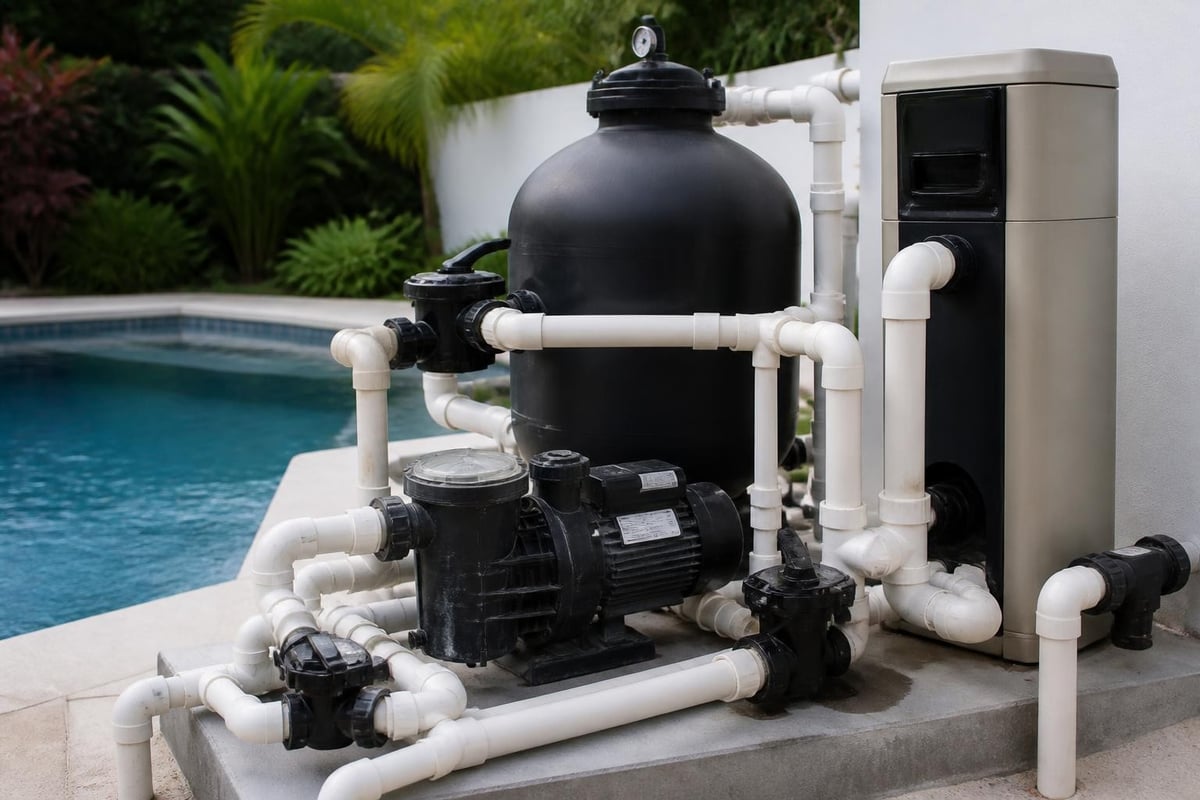
Equipment pads for pumps, filters, and heaters
This underground infrastructure determines how well your pool functions for decades. There's no opportunity to relocate pipes after concrete encases them.
Shotcrete Application: The Critical Phase
Applying the concrete shell represents the most technically demanding phase of construction. This work happens in a single continuous pour to avoid cold joints that could leak.
Nozzleman Expertise
The shotcrete nozzleman controls material application, water ratio, and thickness consistency. This position requires years of training because improper technique creates weak spots, excessive rebound (wasted material), or thickness variations.
According to American Concrete Institute guidelines on shotcrete for pools, proper application techniques significantly impact long-term durability and structural performance.
Quality concrete pool contractors employ certified nozzlemen and maintain strict quality control throughout application. They understand that this phase determines whether your pool lasts 15 years or 50 years.
Curing and Finishing
After shotcrete application, proper curing is essential. The contractor maintains moisture levels and temperature conditions that allow concrete to reach full strength. This typically requires 7-14 days before proceeding with interior finishes.
The National Ready Mixed Concrete Association provides quality control resources that professional contractors reference to ensure concrete meets specified strength and durability standards.
Finishing Options and Interior Surfaces
Your concrete pool contractor coordinates the final interior finish, which directly impacts aesthetics and long-term maintenance. Several options exist, each with distinct advantages.
Plaster Finishes
Traditional white plaster remains popular for its smooth feel and classic appearance. Modern formulations incorporate pozzolans and polymer additives that improve durability and stain resistance. Colored plasters allow customization while maintaining the smooth texture pool owners prefer.
Aggregate Finishes
Exposed aggregate finishes incorporate small pebbles or glass beads for enhanced durability and visual interest. These surfaces last longer than standard plaster and hide minor etching better. The Portland Cement Association offers technical guidance on various finish options and their application requirements.
Tile Applications
Many concrete pool contractors incorporate tile at the waterline or throughout the entire interior. Tile provides exceptional longevity and design flexibility but increases project cost significantly.
| Finish Type | Expected Lifespan | Maintenance Level | Cost Range |
|---|---|---|---|
| Standard Plaster | 7-10 years | Moderate | $ |
| Colored Plaster | 8-12 years | Moderate | $$ |
| Pebble Aggregate | 15-20 years | Low | $$$ |
| Glass Tile | 25+ years | Very Low | $$$$ |
Pool Decking and Hardscape Integration
An experienced concrete pool contractor understands that the deck surrounding your pool matters as much as the pool itself. This surface area dominates the visual experience and impacts safety, functionality, and maintenance.
Decking Material Selection
Paver systems remain the most popular choice in Southern California for several compelling reasons. They resist cracking, allow easy repairs, stay cooler underfoot than poured concrete, and offer unlimited design possibilities.
Your contractor should help you evaluate:
- Travertine for natural elegance and heat resistance
- Concrete pavers for budget-friendly versatility
- Porcelain pavers for modern aesthetics and minimal maintenance
- Brick pavers for traditional charm
Proper installation requires 6-8 inches of compacted base, edge restraints, and polymeric sand to prevent weed growth. Experienced contractors handle this hardscape work with the same precision they apply to pool construction.
Drainage Considerations
California building codes require proper drainage around pool decks to prevent water from flowing toward structures or creating erosion issues. Your concrete pool contractor designs deck slope, drainage channels, and catch basins that comply with EPA stormwater management best practices.
Selecting the Right Concrete Pool Contractor
With significant investment at stake, choosing your contractor deserves careful consideration. Several factors separate exceptional builders from those who cut corners.
Direct Owner Involvement
Family-owned contractors often provide advantages that larger companies cannot match. When you work directly with the owner on pool projects throughout Los Angeles, communication stays clear, decisions happen quickly, and accountability remains absolute.
- Meet the actual builder who will oversee your project
- Review detailed contracts that specify materials and timelines
- Verify license status through CSLB website
- Check insurance coverage including workers' compensation
- Request client references from recent similar projects
Transparent Pricing
Reputable concrete pool contractors provide detailed, itemized estimates that break down costs by category. This transparency allows you to understand exactly where your money goes and make informed decisions about optional features.
Beware of contractors who:
- Provide only verbal estimates
- Require large upfront deposits
- Offer prices significantly below competitors
- Rush you to sign contracts
- Cannot provide proof of licensing
Portfolio and Experience
Request to see completed projects similar to what you're planning. A contractor specializing in pool construction across diverse LA neighborhoods has encountered the full range of site conditions and design challenges.
Visit completed projects if possible. Quality construction reveals itself in:
Consistent tile lines indicating careful installation
Clean coping joints showing attention to detail
Level deck surfaces demonstrating proper grading
Functioning equipment installed to manufacturer specifications
Common Challenges and How Professionals Handle Them
Even well-planned projects encounter unexpected issues. How your concrete pool contractor responds to challenges reveals their true expertise and character.
Soil and Groundwater Issues
Southern California presents diverse soil conditions from stable decomposed granite to expansive clay. Experienced contractors conduct soil tests before finalizing designs and adjust construction methods accordingly.
High groundwater requires installing hydrostatic relief valves that prevent your pool from "floating" when empty. Some sites need permanent dewatering systems. A knowledgeable contractor identifies these requirements during initial site evaluation, not after excavation reveals problems.
Utility Conflicts
Underground utilities sometimes appear exactly where your pool needs to go. Professional contractors contact DigAlert before excavation and develop alternative routing when conflicts arise. They understand that moving gas lines or electrical conduits adds cost and time but never compromise safety.
Weather Delays
Shotcrete application requires specific weather conditions. Rain during or shortly after placement can compromise strength, while extreme heat affects curing. Experienced concrete pool contractors monitor forecasts carefully and delay pours when necessary, even when it pushes timelines.
Maintenance Considerations That Begin During Construction
Long-term pool enjoyment depends partly on decisions made during construction. A forward-thinking concrete pool contractor helps you make choices that minimize future maintenance and operating costs.
Equipment Efficiency
Modern variable-speed pumps use 70-90% less energy than traditional single-speed models. Quality contractors recommend appropriately sized equipment that balances performance with efficiency rather than oversizing systems that waste energy.
Consider during planning:
- Salt systems that eliminate manual chlorine addition
- Automation for convenient scheduling and control
- LED lighting for dramatic ambiance at minimal operating cost
- Cartridge filters that eliminate backwashing water waste
Access Panels
Smart contractors install access panels at key plumbing points, allowing future repairs without breaking concrete. This seemingly minor detail can save thousands when equipment eventually requires service.
Water Chemistry and Surface Longevity
The finish you select during construction determines your long-term chemical maintenance routine. Aggressive plaster finishes require careful chemistry management to prevent etching. More durable aggregate surfaces tolerate wider pH ranges and require less vigilant monitoring.
Your contractor should explain these relationships during finish selection, ensuring you choose materials that match your maintenance preferences and commitment level.
Working With Your Contractor Throughout Construction
The best outcomes result from collaborative relationships between homeowner and builder. Understanding your role during construction helps projects proceed smoothly.
Communication Expectations
Establish communication protocols at project start. Professional contractors provide:
- Weekly progress updates via phone or email
- Access to the owner for questions or concerns
- Advance notice before major milestones requiring decisions
- Transparency about any issues that arise
Don't hesitate to ask questions, but understand that daily interruptions slow progress. Many contractors schedule weekly site meetings that provide dedicated time for discussion.
Decision Timing
Some choices must happen before construction begins, others during specific phases. Your concrete pool contractor should provide a decision schedule that prevents delays.
Pre-construction decisions include pool size, shape, depth, and major features
During excavation finalize exact placement and orientation
Before shotcrete confirm all plumbing and equipment locations
During finishing select final tile, coping, and deck materials
Site Access and Logistics
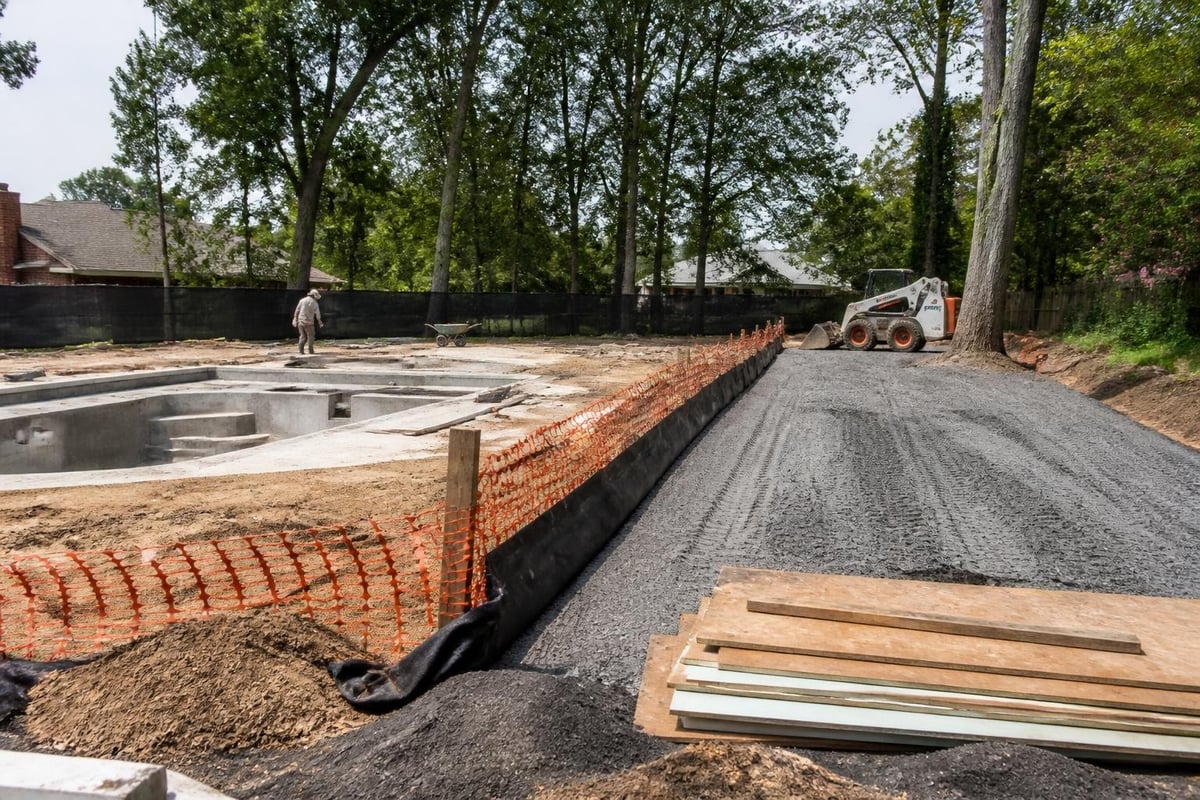
Pool construction requires substantial equipment and material deliveries. Ensure your contractor can access your backyard with excavators, concrete pump trucks, and material deliveries. Restricted access increases costs as equipment size decreases.
Professional contractors protect your property during construction. They should:
- Install temporary fencing around work areas
- Protect existing landscaping and hardscape
- Control dust and debris
- Maintain organized, safe job sites
- Complete daily cleanup
Regional Considerations for Los Angeles Pool Construction
Building in Los Angeles presents unique opportunities and challenges that experienced local concrete pool contractors navigate routinely.
Climate Advantages
Southern California's mild winters allow year-round construction. Unlike contractors in regions with freezing temperatures, Los Angeles builders rarely face weather delays. This enables predictable timelines and efficient scheduling.
The climate also influences design choices. Infinity edges, vanishing boundaries, and outdoor living integration make sense here in ways they don't in climates with short swimming seasons.
Municipal Code Variations
Los Angeles County contains dozens of municipalities, each with distinct building codes, setback requirements, and permit processes. Contractors serving areas from Pacific Palisades to Long Beach understand these variations and design accordingly.
Some cities require additional safety barriers, specific equipment enclosures, or enhanced drainage systems. Working with a contractor familiar with local requirements prevents costly redesigns after permit rejection.
Water Conservation Requirements
California's ongoing drought concerns influence pool design and equipment selection. Modern pools incorporate:
Covers that reduce evaporation by 95%
Efficient filtration that minimizes backwash water waste
Proper sizing to avoid unnecessary water volume
Integrated spas that share circulation systems
Knowledgeable contractors design systems that conserve water while maintaining beautiful, functional pools. You can explore additional pool construction resources for ideas specific to Southern California conditions.
Investment Protection and Warranties
Your concrete pool represents a major investment requiring protection through proper warranties and ongoing maintenance.
Understanding Warranty Coverage
Reputable concrete pool contractors provide tiered warranties covering different systems:
| Component | Typical Coverage | Provider |
|---|---|---|
| Pool Structure | 10-25 years | Contractor |
| Equipment | 1-3 years | Manufacturer |
| Finish Surface | 1-10 years | Contractor/Installer |
| Tile/Coping | 1-5 years | Contractor |
Read warranty terms carefully. Some contractors offer lifetime structural warranties while others provide 10 years. Understand what's covered, what's excluded, and what actions void coverage.
Startup and Training
Professional contractors don't just build pools and disappear. They provide comprehensive startup services including:
- Water chemistry balancing
- Equipment operation training
- Maintenance schedule recommendations
- Troubleshooting guidance
- Emergency contact information
This knowledge transfer ensures you can properly care for your investment from day one.
Future-Proofing Your Pool Investment
Smart contractors help you make decisions during construction that accommodate future needs and technological advances.
Rough-In Considerations
Even if budget doesn't currently allow certain features, thoughtful contractors can rough-in plumbing and electrical for:
Water features like deck jets or spillways
Fire bowls for dramatic evening ambiance
Additional lighting zones for future installation
Heating systems if not initially included
Adding these rough-ins during construction costs minimally compared to retrofitting later.
Technology Integration
Pool automation systems continue advancing rapidly. Smart controllers now offer smartphone operation, remote monitoring, and integration with home automation platforms. Installing conduit for future technology upgrades provides flexibility as systems evolve.
Some homeowners opt for areas around their pool that complement outdoor living. Whether you're considering backyard transformations beyond the pool itself or focusing solely on the water feature, coordinating all elements during initial planning creates cohesive results.
Selecting a concrete pool contractor requires careful evaluation of experience, licensing, communication, and construction methodology. The difference between adequate and exceptional work becomes evident over years of ownership through structural performance, maintenance requirements, and lasting enjoyment. A family-owned, licensed contractor with proven local expertise delivers the personalized attention, technical knowledge, and quality craftsmanship that transforms backyard visions into reality. When you're ready to discuss your custom pool project, AM BUILDS CA brings 15+ years of concrete pool construction experience, direct owner involvement, and comprehensive service from design through completion to create pools built to last.


