


Selecting the right commercial pool builders represents one of the most critical decisions property owners and facility managers make when planning aquatic amenities. Unlike residential pools, commercial installations must meet stringent regulatory requirements, accommodate higher usage volumes, and deliver return on investment through durability and operational efficiency. The complexity of these projects demands specialized expertise, comprehensive planning, and a contractor who understands both construction fundamentals and the unique challenges of commercial aquatic facilities.
Understanding Commercial Pool Construction Requirements
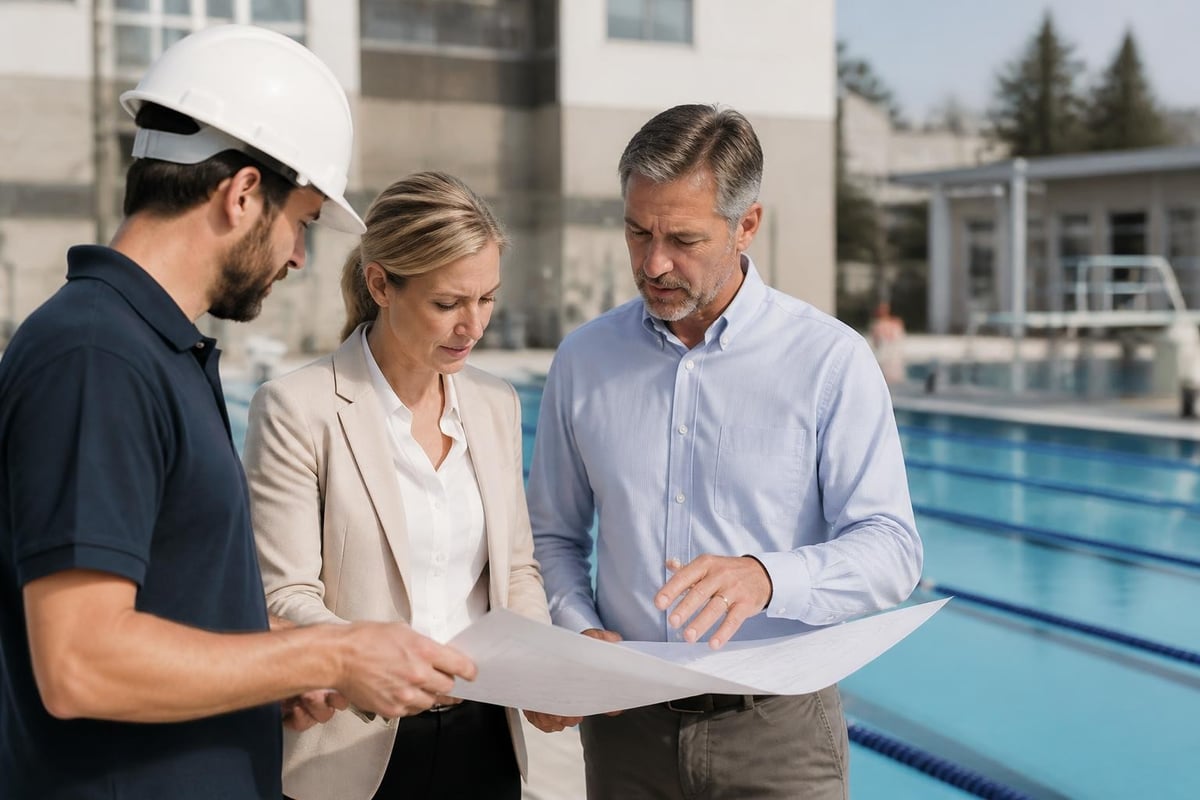
Commercial pool projects differ fundamentally from residential installations in scope, regulatory oversight, and technical complexity. Commercial pool builders must navigate a dense framework of local, state, and federal regulations that govern everything from structural engineering to water chemistry systems.
Regulatory Compliance and Code Standards
The Uniform Swimming Pool, Spa and Hot Tub Code provides comprehensive requirements for public and commercial pool design, materials, construction, and inspection procedures. This model code addresses circulation systems, filtration, chemical feed equipment, and safety features specific to commercial applications.
Key regulatory areas include:
- Structural engineering and soil reports
- Health department approvals
- ADA accessibility compliance
- Environmental discharge permits
- Building department plan review
Commercial pool builders must also reference PHTA standards which provide industry-recognized best practices for design, construction, water quality, and equipment installation. These ANSI-recognized standards establish performance benchmarks that protect both operators and users.
Accessibility and ADA Requirements
The Americans with Disabilities Act mandates specific accessibility features for commercial pools. ADA guidance from the U.S. Access Board details requirements for pool lifts, transfer walls, stairs with handrails, and compliant deck access routes.
| ADA Requirement | Specification | Application |
|---|---|---|
| Pool Lifts | Seat height 16-19 inches | Required for most pools |
| Transfer Walls | 12-16 inches wide, 16-19 inches high | Alternative means of entry |
| Stairs | Minimum 12-inch tread depth | Must include handrails on both sides |
| Deck Access | 36-inch minimum clear width | Slip-resistant surfaces required |
Commercial pool builders incorporate these elements during initial design rather than as afterthoughts, ensuring seamless integration with the overall aesthetic and functional program.
Types of Commercial Pool Projects
The commercial aquatic sector encompasses diverse project types, each presenting unique design and construction challenges. Understanding these differences helps property owners select contractors with relevant experience.
Hospitality and Resort Pools
Hotels, resorts, and vacation properties prioritize visual impact and guest experience. These pools often feature custom shapes, integrated spas, beach entries, and dramatic water features. Commercial pool builders working in hospitality must balance aesthetics with operational efficiency and safety.
Construction timelines for resort pools typically accommodate seasonal demands, with builders completing work during off-peak periods to minimize revenue disruption.
Fitness and Wellness Centers
Lap pools, therapy pools, and aquatic fitness facilities require precise dimensional control and specialized circulation systems. These installations emphasize functionality over decorative elements, with focus on lane configurations, depth consistency, and water clarity.
- Regulation lap pools: 25 meters or 25 yards
- Lane width: 7-9 feet standard
- Depth requirements: 4 feet minimum for competitive use
- Bulkhead systems for flexible programming
Multifamily and HOA Facilities
Apartment complexes, condominiums, and homeowner associations need durable, low-maintenance pools that withstand heavy seasonal use. Budget constraints often drive decision-making in this sector, making lifecycle cost analysis essential.
Commercial pool builders serving multifamily properties emphasize equipment reliability, automated systems, and design features that reduce ongoing operational expenses.
The Commercial Pool Design Process
Successful commercial projects begin with comprehensive design development that addresses program requirements, site constraints, budget parameters, and regulatory compliance. This phase establishes the foundation for efficient construction execution.
Initial Planning and Feasibility
Property owners should engage commercial pool builders early in the planning process to assess site conditions, identify regulatory requirements, and establish realistic budget expectations. Preliminary soil analysis reveals geotechnical challenges that influence foundation design and construction methodology.
Critical planning considerations include:
- Site access and staging area requirements
- Utility locations and connection points
- Drainage patterns and stormwater management
- Setback requirements and zoning compliance
- Phasing strategies for occupied properties
Mechanical System Design
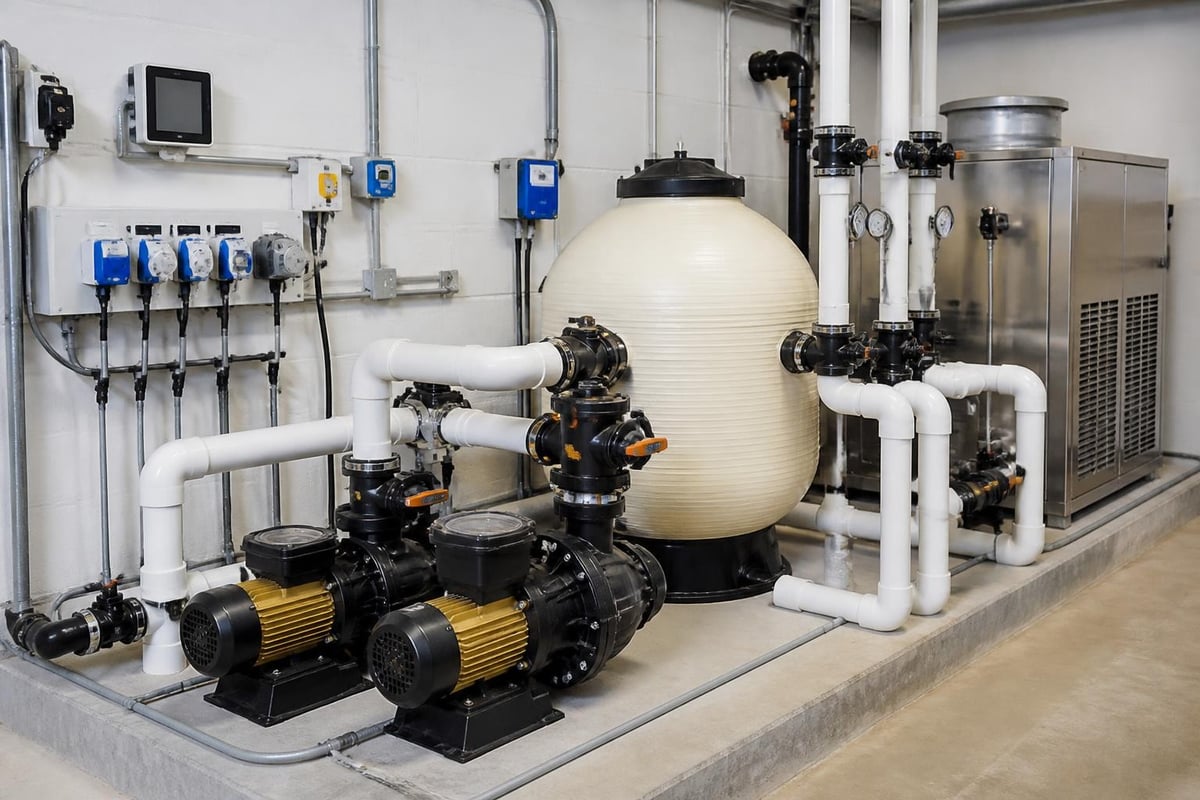
Commercial pools require sophisticated mechanical systems engineered for specific performance parameters. Circulation turnover rates, filtration capacity, heating loads, and chemical automation must align with anticipated usage patterns and local health codes.
Many jurisdictions now mandate energy-efficient equipment to meet building code requirements. ASHRAE Standard 90.1 includes prescriptive requirements for pool dehumidification, heat recovery, and overall energy performance in commercial aquatic facilities.
Indoor Pool Special Considerations
Indoor commercial pools present additional complexity through HVAC integration, humidity control, and dehumidification requirements. The ASHRAE Handbook guidance on indoor pool ventilation and moisture control provides authoritative technical direction for these challenging environments.
Uncontrolled humidity damages building structures, creates uncomfortable conditions, and increases operational costs. Commercial pool builders coordinating indoor projects must ensure proper integration between pool mechanical systems and building HVAC equipment.
Construction Methodology and Phases
Commercial pool construction follows a sequential process requiring careful coordination between trades, inspections at critical milestones, and quality control throughout execution. Understanding these phases helps property owners manage expectations and evaluate contractor capabilities.
Site Preparation and Excavation
Commercial excavations often encounter challenging soil conditions, underground utilities, and access constraints. Commercial pool builders develop detailed excavation plans that address shoring requirements, spoil removal logistics, and temporary erosion control measures required by EPA stormwater regulations.
Laser-guided excavation equipment ensures precise depth control and proper floor slopes for main drains and circulation patterns. Over-excavation is intentional in most cases, allowing for compacted base material and proper structural thickness.
Structural Shell Construction
Gunite (dry-mix shotcrete) and wet-mix shotcrete represent the industry standard for commercial pool shells due to superior strength, design flexibility, and longevity. The construction sequence includes:
- Steel reinforcement installation per engineered drawings
- Plumbing rough-in and pressure testing
- Shotcrete application and finishing
- Curing period (typically 28 days minimum)
- Acid wash and surface preparation
Quality commercial pool builders employ ACI-certified shotcrete nozzlemen and maintain proper mix designs, application techniques, and curing protocols to ensure structural integrity.
Deck and Surrounding Hardscape
Pool decks for commercial facilities must meet specific slip-resistance standards while providing durability and aesthetic appeal. Material options include concrete (broom-finished or textured), pavers, natural stone, and specialty coatings.
| Deck Material | Slip Resistance | Durability | Maintenance | Typical Cost |
|---|---|---|---|---|
| Textured Concrete | Excellent | Very High | Low | $8-15/sq ft |
| Concrete Pavers | Very Good | High | Medium | $12-20/sq ft |
| Natural Stone | Good | Very High | Medium-High | $18-35/sq ft |
| Spray Deck Coating | Excellent | Medium | Medium | $6-12/sq ft |
For property owners seeking high-quality hardscape installation around pools, experienced contractors provide guidance on material selection, proper substrate preparation, and drainage integration to prevent long-term problems.
Equipment Selection and Specification
Commercial aquatic facilities demand commercial-grade equipment engineered for continuous operation, high flow rates, and simplified maintenance protocols. Equipment selection directly impacts operational costs, water quality consistency, and facility reliability.
Circulation and Filtration Systems
Commercial pools typically employ high-rate sand filters or regenerative media filters sized for complete pool volume turnover every 6-8 hours, though specific requirements vary by jurisdiction. Pump systems must deliver required flow rates while optimizing energy efficiency through variable-speed technology.
Critical equipment specifications include:
- Filter media type and surface area
- Pump horsepower and efficiency ratings
- Valve manifold configuration
- Flow meter integration
- Backwash waste handling capacity
Chemical Automation and Control
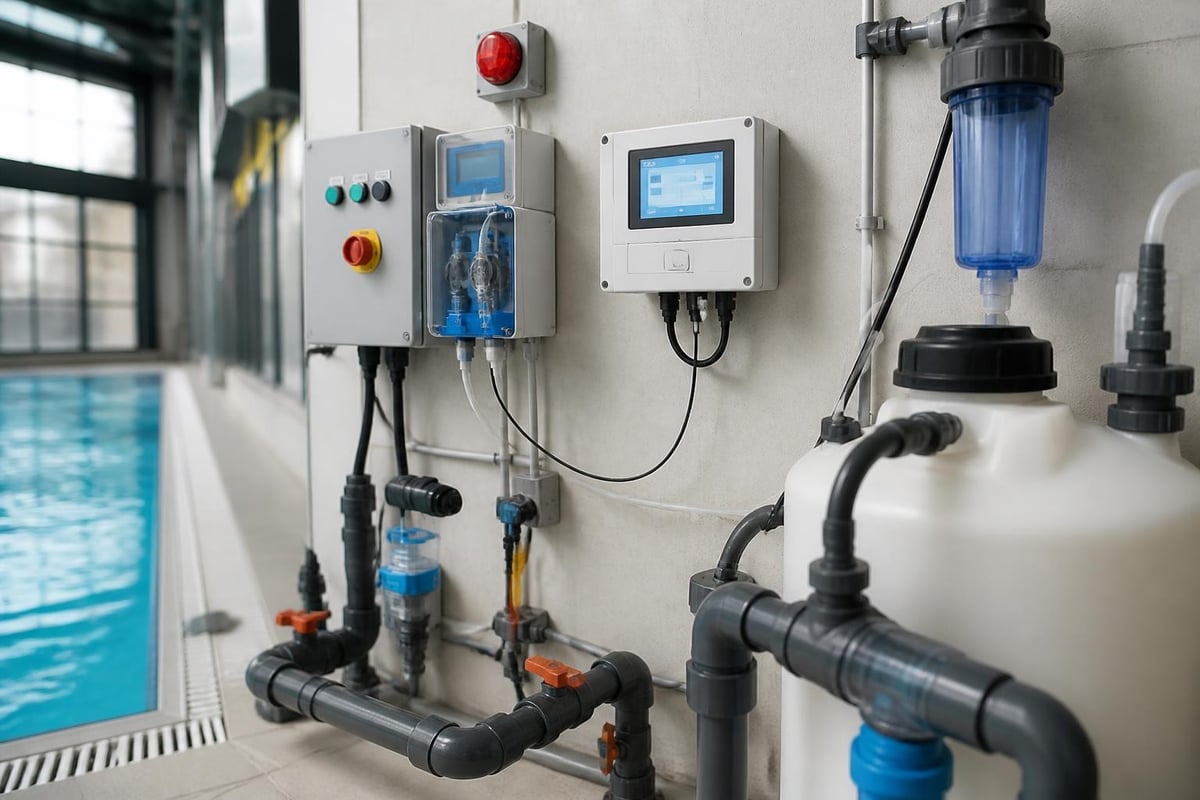
Automated chemical feed systems maintain consistent pH and sanitizer levels while reducing labor requirements and chemical consumption. Commercial installations utilize either salt chlorine generators, liquid chlorine feeders, or calcium hypochlorite systems based on specific operational preferences and local regulations.
Controllers continuously monitor water parameters and adjust chemical feed rates accordingly. Advanced systems provide remote monitoring, alarm notifications, and data logging for compliance documentation.
Safety Equipment and Features
UL certification for electrical equipment ensures pool components meet rigorous safety and performance standards. Commercial pool builders specify UL-listed pumps, heaters, lighting, and control systems to meet code requirements and minimize liability exposure.
Safety features mandated for commercial pools include emergency shut-offs, drain cover compliance, anti-entrapment systems, and proper bonding/grounding of electrical components.
Selecting Qualified Commercial Pool Builders
Contractor selection represents the most impactful decision in commercial pool development. Property owners should evaluate candidates through multiple criteria beyond initial bid pricing.
Licensing and Insurance Verification
Commercial pool builders must maintain appropriate contractor licenses, liability insurance, and workers' compensation coverage. In California, verify contractor license status through CSLB and confirm coverage limits adequate for project scope.
Request certificates of insurance naming the property owner as additional insured. Minimum recommended coverage includes $2 million general liability and $1 million workers' compensation.
Experience and Reference Verification
Review portfolios of completed commercial projects similar in scope and complexity. Commercial pool builders with relevant experience understand regulatory requirements, anticipate challenges, and execute efficiently.
Contact previous clients to discuss:
- Schedule adherence and communication quality
- Problem-solving approach when issues arose
- Final cost vs. original budget
- Post-completion support and warranty service
- Overall satisfaction and likelihood to rehire
Financial Stability Assessment
Large commercial projects require contractors with sufficient working capital to manage cash flow, purchase materials, and maintain adequate staffing. Request financial statements, bonding capacity, and trade references from suppliers.
Bonding requirements provide additional protection for property owners, ensuring project completion even if the contractor encounters financial difficulty. Performance bonds typically cost 1-2% of contract value.
Budget Development and Cost Control
Commercial pool projects involve significant capital investment requiring detailed budget development and proactive cost management. Understanding cost drivers helps property owners make informed decisions and avoid budget overruns.
Typical Cost Ranges
Commercial pool construction costs vary dramatically based on size, features, site conditions, and regional market factors. General ranges for 2026 include:
- Basic commercial lap pool: $150,000 – $300,000
- Resort/hospitality pool with features: $300,000 – $750,000
- Large aquatic center or waterpark: $1,000,000+
These ranges include pool shell, equipment, decking, and standard features. Site work, utilities, accessibility features, and specialty finishes add to base costs.
Value Engineering Strategies
Property owners facing budget constraints can work with commercial pool builders to identify value engineering opportunities that reduce costs without compromising essential functionality or code compliance.
Effective value engineering approaches:
- Optimize pool size and shape for program needs
- Select cost-effective finishes meeting performance requirements
- Phase feature implementation over multiple budget cycles
- Standardize equipment specifications
- Simplify deck layouts and reduce ornamental elements
Contingency Planning
Commercial projects warrant 10-15% contingency allocation to address unforeseen conditions, code changes, or owner-requested modifications. Adequate contingency prevents mid-project value engineering that compromises design intent.
Project Management and Timeline Considerations
Successful commercial pool projects require comprehensive project management coordinating multiple trades, inspections, material deliveries, and stakeholder communications. Understanding typical timelines helps property owners plan accordingly.
Typical Project Phases and Duration
| Phase | Duration | Key Activities |
|---|---|---|
| Design Development | 4-8 weeks | Drawings, engineering, specifications |
| Permitting | 6-12 weeks | Plan review, approvals, revisions |
| Procurement | 2-4 weeks | Equipment ordering, material scheduling |
| Construction | 12-20 weeks | Excavation through final finishes |
| Startup/Training | 1-2 weeks | System commissioning, staff training |
Total project timeline: 6-12 months from design initiation to operational status, depending on complexity and permitting authority responsiveness.
Seasonal Scheduling Considerations
Many commercial pool builders recommend scheduling construction during off-peak seasons to minimize disruption for operating facilities. However, winter construction in some climates presents challenges for concrete curing and finish work.
Spring and fall typically offer ideal construction conditions in most regions, with summer providing longest daylight hours for accelerated schedules.
Operations Planning and Handover
The transition from construction to operations requires careful planning to ensure staff readiness, proper equipment operation, and regulatory compliance from day one.
Staff Training Requirements
Commercial pool builders should provide comprehensive operations training covering:
- Equipment operation and routine maintenance procedures
- Water chemistry testing and adjustment protocols
- Emergency procedures and safety equipment location
- Filter backwashing and cleaning schedules
- Record-keeping and compliance documentation
Plan for multiple training sessions ensuring all relevant staff receive proper instruction. Video documentation of training sessions provides ongoing reference material.
Warranty and Maintenance Programs
Standard warranties typically include one year for equipment, two years for structural shell, and various terms for finishes. Clarify warranty terms, exclusions, and required maintenance procedures to preserve coverage.
Consider negotiating extended service agreements with builders or equipment suppliers to ensure professional maintenance during critical initial operating periods. Regular professional service extends equipment life and prevents minor issues from becoming major problems.
Initial Fill and Startup
First-time pool filling requires careful water chemistry management and equipment startup procedures. Many jurisdictions require health department inspection before public use authorization.
Startup checklist includes:
- Water quality testing and chemical balancing
- Equipment operational verification
- Leak detection and correction
- Safety equipment functionality confirmation
- Staff training completion documentation
- Final health department inspection
For residential pool applications requiring similar attention to quality and detail, homeowners benefit from working with experienced contractors. In-ground pool construction specialists bring the same technical expertise to custom residential projects, handling design, permitting, construction, and startup with the same professional approach.
Emerging Trends in Commercial Aquatics
The commercial pool industry continues evolving through technological advancement, sustainability initiatives, and changing user expectations. Forward-thinking commercial pool builders incorporate these trends to deliver facilities that remain competitive and efficient.
Energy Efficiency and Sustainability
Rising energy costs and environmental awareness drive demand for high-efficiency pool systems. Variable-speed pumps reduce energy consumption by 50-75% compared to single-speed alternatives. LED lighting, pool covers, and heat recovery systems further reduce operational costs.
Solar heating systems, while requiring significant initial investment, provide long-term operational savings and environmental benefits appealing to sustainability-focused property owners.
Advanced Filtration Technologies
Regenerative media filtration, UV sanitization, and ozone systems reduce chemical consumption while maintaining superior water quality. These technologies particularly benefit indoor pools where chloramines create air quality concerns.
Initial costs exceed conventional systems, but operational savings and improved user experience often justify the investment for high-volume facilities.
Smart Pool Technology
IoT-enabled monitoring systems provide real-time data on water chemistry, equipment status, energy consumption, and usage patterns. Remote management capabilities allow facility operators to respond to issues immediately, preventing problems from escalating.
Predictive maintenance algorithms analyze equipment performance trends, scheduling service before failures occur and minimizing unexpected downtime.
Successful commercial pool projects require careful planning, qualified contractors, and comprehensive understanding of regulatory requirements and construction best practices. Whether you're developing a resort amenity, fitness facility, or multifamily pool, partnering with experienced professionals ensures your investment delivers lasting value. AM BUILDS CA brings 15+ years of pool construction expertise to every project, handling design, permitting, construction, and startup with the professionalism and attention to detail your commercial or residential pool deserves. Contact us at (424) 485-4548 for a free consultation.


