


Finding the right commercial pool builders near me requires more than a quick online search. Commercial pool construction demands specialized expertise, proper licensing, comprehensive insurance, and experience navigating complex building codes and ADA requirements. Whether you're planning a hotel pool, fitness center aquatic facility, apartment complex amenity, or community recreation center, selecting a qualified contractor will determine the success, safety, and longevity of your investment. This guide walks you through every critical consideration when evaluating commercial pool construction companies in your area.
Understanding Commercial vs. Residential Pool Construction
Commercial pool projects differ fundamentally from residential installations in scope, regulation, and execution. While both require skilled craftsmanship, commercial work operates under stricter building codes and more comprehensive oversight.
Regulatory Requirements and Code Compliance
Commercial pools must comply with state and local health department regulations, commercial building codes, and federal accessibility standards. The Americans with Disabilities Act (ADA) requirements for accessible pools mandate specific entry and exit points, including sloped entries, pool lifts, or transfer walls, depending on the facility size and type.
Key regulatory differences include:
- Mandatory safety equipment and emergency systems
- Specific filtration and chemical handling requirements
- Commercial-grade plumbing and electrical installations
- Regular health department inspections and permits
- Occupancy load calculations affecting design
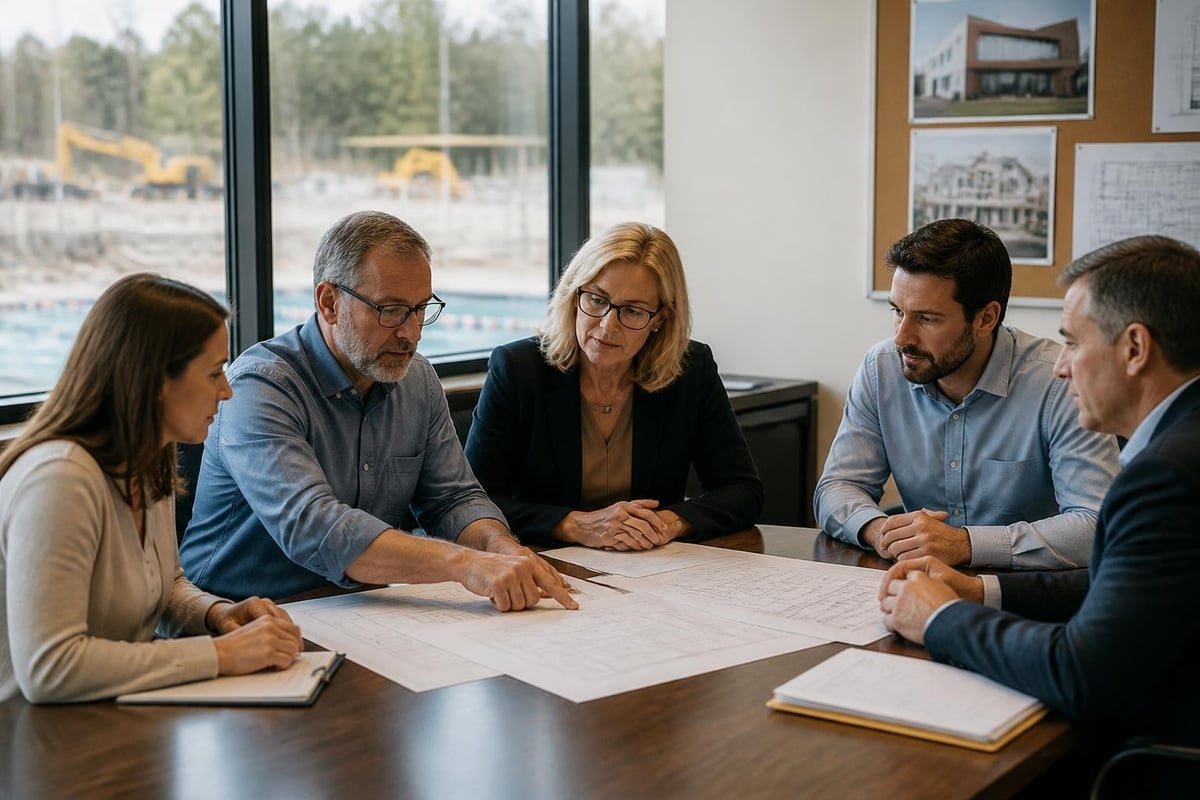
Building departments scrutinize commercial pool construction far more intensively than residential projects. Your contractor must demonstrate familiarity with these requirements before breaking ground.
Load Capacity and Structural Engineering
Commercial pools serve multiple users simultaneously, requiring enhanced structural engineering and larger mechanical systems. The pool shell must withstand constant use, higher bather loads, and extended operating hours compared to residential installations.
Engineers calculate hydraulic loading, determine appropriate deck drainage, and specify reinforcement schedules that exceed residential standards. When searching for commercial pool builders near me, verify that candidates work with licensed structural engineers experienced in commercial aquatic facilities.
Essential Qualifications for Commercial Pool Contractors
Not every pool builder possesses the credentials necessary for commercial work. Distinguishing qualified contractors from general builders protects your project timeline, budget, and legal compliance.
Licensing and Certification Standards
Commercial pool construction requires specific contractor licensing that varies by state. In California, contractors must hold an active C-53 Swimming Pool Contractor license or operate under a broader B General Building Contractor license, both issued by the Contractors State License Board (CSLB).
| Qualification Type | Why It Matters | Verification Method |
|---|---|---|
| State Contractor License | Legal requirement; demonstrates baseline competency | Check CSLB database online |
| Commercial Experience | Proven ability to navigate complex projects | Request reference list |
| Insurance Coverage | Protects against liability and worker injury | Request certificate of insurance |
| Bonding | Financial protection for project completion | Verify bond status with surety |
Beyond licensing, examine whether contractors maintain certifications from organizations like the Association of Pool & Spa Professionals (APSP) or National Plasterers Council (NPC). These credentials indicate ongoing education and industry commitment.
Insurance and Bonding Requirements
Commercial projects demand higher insurance limits than residential work. Adequate coverage protects building owners from catastrophic financial exposure if accidents occur during construction.
Minimum insurance coverage should include:
- General liability: $2-5 million aggregate
- Workers' compensation: Statutory state limits
- Commercial auto: Coverage for all company vehicles
- Pollution liability: Protection against environmental incidents
Request certificates of insurance naming your business as an additional insured. Verify coverage directly with the insurance carrier rather than accepting documentation at face value.
Project Planning and Design Considerations
Successful commercial pool projects begin with thorough planning and detailed design documentation. Rushing this phase inevitably creates costly change orders and construction delays.
Needs Assessment and Programming
Define your facility's specific requirements before contacting commercial pool builders near me. Consider user demographics, anticipated daily usage, seasonal patterns, and programming needs.
A hotel pool serves different purposes than a therapy pool at a physical rehabilitation center. Lap pools require different dimensions than splash pads for family entertainment centers. Clear programming drives design decisions.
- Determine primary use cases (recreation, therapy, training, competition)
- Estimate peak occupancy and daily user volumes
- Identify required amenities (spas, water features, deck space)
- Establish budget parameters including construction and long-term operation
- Review zoning restrictions and setback requirements
Work with your contractor to translate these programmatic needs into technical specifications. In-ground pool construction in Los Angeles requires careful consideration of soil conditions, water table depth, and seismic requirements specific to Southern California.
ADA Compliance and Accessibility Features
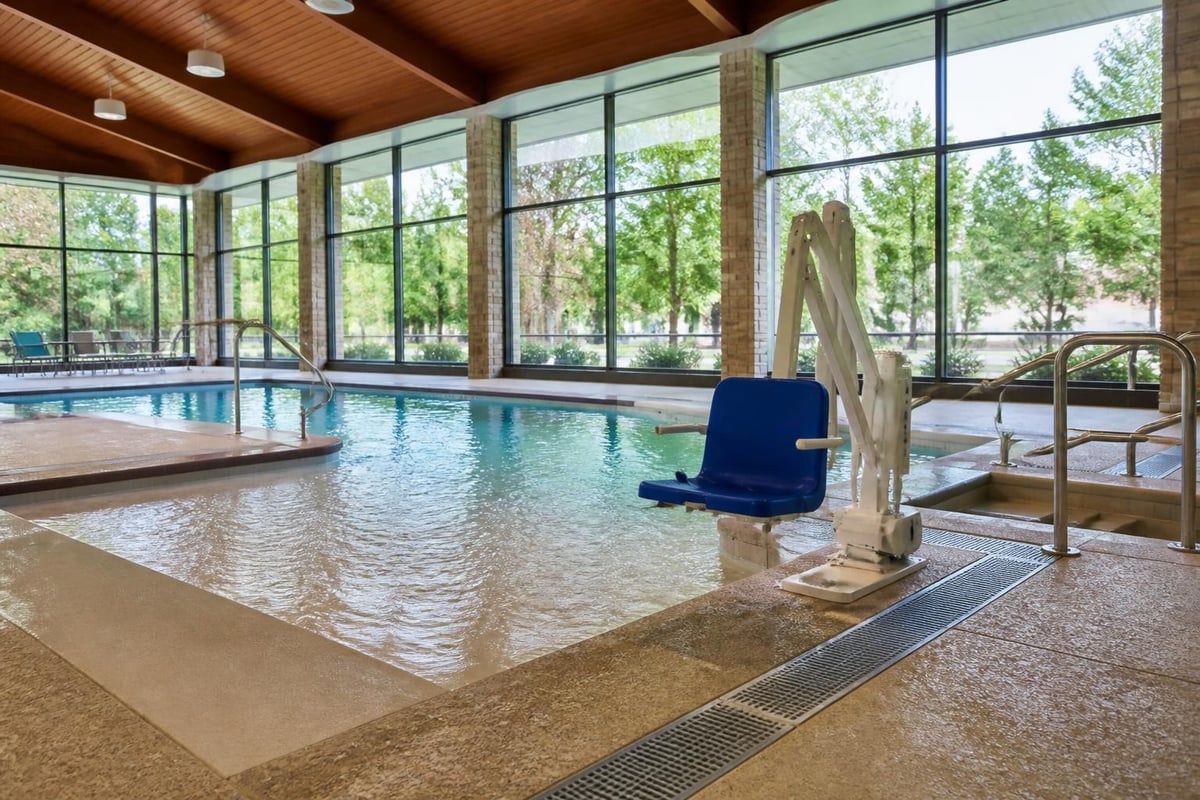
Federal law requires commercial pools to provide accessible means of entry and exit. The ADA Accessibility Guidelines for swimming pools detail specific technical requirements based on pool size and number of pools at the facility.
Typical accessibility features include:
- Pool lifts with specified seat height and weight capacity
- Sloped entries with handrails and slip-resistant surfaces
- Transfer walls with grab bars at regulation heights
- Accessible routes connecting parking, changing facilities, and pool deck
- Compliant signage and tactile warnings
Retrofitting accessibility features after construction proves significantly more expensive than incorporating them during initial design. Ensure your contractor understands these requirements comprehensively.
Mechanical Systems and Equipment Selection
Commercial pool systems operate continuously under demanding conditions. Equipment selection impacts operating costs, maintenance requirements, and user experience for decades.
Filtration and Circulation Requirements
Commercial pools require significantly larger pumps, filters, and chemical feeders than residential installations. Health codes mandate specific turnover rates, meaning the entire pool volume must circulate through filtration within a defined timeframe (typically 6-8 hours).
Calculate required flow rates based on pool volume, then specify commercial-grade equipment rated for continuous operation. Undersizing equipment creates ongoing water quality problems and regulatory violations.
| System Component | Residential Standard | Commercial Requirement |
|---|---|---|
| Turnover Rate | 8-12 hours | 4-6 hours |
| Filter Type | Single sand or cartridge | Multiple sand filters with backup |
| Pump Design | Single-speed residential | Variable-frequency drive commercial |
| Chemical Feed | Manual or simple erosion feeders | Automated controllers with monitoring |
Commercial installations benefit from redundant systems. When one pump or filter requires maintenance, backup equipment maintains water quality and prevents facility closures.
Energy Efficiency and Operational Costs
Operating costs often exceed initial construction expenses over a commercial pool's lifespan. Energy-efficient equipment reduces utility bills while supporting sustainability goals.
Variable-frequency drive (VFD) pumps adjust motor speed to match demand, consuming 50-70% less energy than traditional single-speed pumps. LED pool lighting uses 75% less electricity than incandescent alternatives while lasting 10-15 years longer.
Solar heating systems, heat recovery systems, and pool covers significantly reduce heating costs. When evaluating commercial pool builders near me, ask about energy modeling and lifecycle cost analysis. The ASHRAE Handbook guidance on indoor swimming pools provides detailed recommendations for mechanical systems, ventilation, and humidity control in commercial aquatic facilities.
Construction Process and Timeline Management
Commercial pool construction follows a defined sequence requiring coordination among multiple trades, inspectors, and suppliers. Understanding this process helps evaluate contractor proposals and timelines.
Pre-Construction Phase Activities
Before excavation begins, contractors must secure permits, complete engineering, order long-lead equipment, and coordinate utility locates. This phase typically requires 6-12 weeks depending on jurisdiction review times.
Critical pre-construction tasks include:
- Geotechnical investigation and soil analysis
- Structural engineering and calculations
- Mechanical, electrical, and plumbing design
- Permit application and plan review
- Material procurement and equipment orders
Experienced commercial pool builders near me maintain relationships with building officials that can expedite permit review. However, expect municipal review processes to take longer than residential projects due to increased complexity.
Construction Sequencing and Milestones
Pool construction follows a logical sequence with specific inspection points. Rushing stages or working out of sequence creates structural problems and code violations.
- Site preparation and excavation (1-2 weeks)
- Steel reinforcement installation and inspection (1 week)
- Plumbing rough-in and pressure testing (1-2 weeks)
- Shotcrete or gunite application (1-2 days)
- Curing period and waterproofing (2-4 weeks)
- Equipment installation and electrical (2 weeks)
- Deck construction and finish work (2-4 weeks)
- Tile, coping, and plaster application (1-2 weeks)
- Final inspections and startup (1 week)
Total construction timelines range from 12-24 weeks for standard commercial pools. Complex projects with custom features, indoor enclosures, or challenging site conditions require extended schedules.
Cost Factors and Budget Planning
Commercial pool construction represents a significant capital investment. Understanding cost drivers enables accurate budget planning and helps evaluate contractor proposals.
Square Footage and Volume Calculations
Pool construction costs correlate directly to size, but commercial projects incur additional expenses beyond simple volume calculations. Deck area, equipment capacity, and accessibility features substantially impact total investment.
Basic commercial pools start around $300-500 per square foot of water surface area in major metropolitan markets. This baseline includes standard finishes, basic equipment, and code-minimum amenities. Custom features, premium materials, and complex shapes increase costs significantly.
Major cost variables include:
- Excavation complexity: Rocky soil, high water tables, or limited access increase costs
- Structural requirements: Seismic zones demand additional reinforcement
- Finish selections: Tile quality, coping materials, and deck surfaces vary widely
- Equipment specifications: Commercial-grade systems cost 3-5x residential equivalents
- Site conditions: Slope, utilities, and existing structures affect difficulty
Request itemized proposals from commercial pool builders near me rather than lump-sum bids. Detailed breakdowns enable meaningful comparisons and identify potential cost-saving opportunities.
Long-Term Operating and Maintenance Costs
Initial construction costs represent only one component of total ownership expenses. Operating costs including utilities, chemicals, maintenance, and staffing continue indefinitely.
| Annual Operating Expense | Typical Range | Cost Reduction Strategies |
|---|---|---|
| Utilities (electric, gas, water) | $15,000-40,000 | VFD pumps, solar heating, pool covers |
| Chemicals and water treatment | $5,000-15,000 | Automation systems, salt chlorination |
| Routine maintenance and cleaning | $8,000-20,000 | Service contracts, preventive programs |
| Equipment repairs and replacement | $3,000-10,000 | Quality equipment, regular servicing |
| Regulatory compliance and testing | $2,000-6,000 | Automated monitoring systems |
Energy-efficient design decisions during construction reduce operating expenses for decades. Investing in higher-quality equipment extends service life and minimizes unexpected repairs.
Safety and Regulatory Compliance
Commercial pools operate under comprehensive safety regulations designed to protect users and staff. Non-compliance creates legal liability and potential facility closures.
Water Quality and Chemical Management
Health departments mandate specific water quality parameters including pH, chlorine levels, alkalinity, and clarity. Commercial pools require automated chemical controllers and regular testing protocols.
The EPA guidance on swimming pool wastewater discharges addresses environmental compliance for backwash water and drain-down procedures. Improper discharge of pool water can result in significant fines and environmental violations.
Required safety systems include:
- Automated chemical feeders with monitoring
- Emergency gas detection and ventilation
- Main drain anti-entrapment covers and systems
- Electrical ground-fault protection
- Emergency shut-off controls and signage
When evaluating commercial pool builders near me, verify their understanding of Virginia Graeme Baker Pool and Spa Safety Act requirements, which mandate specific drain cover configurations and suction outlet protections.
Ongoing Inspection and Certification Requirements
Commercial pools undergo regular health department inspections, typically monthly or quarterly depending on jurisdiction. Maintaining compliance requires detailed record-keeping and proactive maintenance.
Certified pool operators (CPO) must be on staff or contracted to manage water chemistry, equipment operation, and safety protocols. Many states require facilities to employ CPO-certified personnel during operating hours.
Selecting the Right Commercial Pool Builder
With numerous contractors marketing themselves as commercial pool builders near me, distinguishing qualified candidates requires systematic evaluation and due diligence.
Request for Proposal (RFP) Development
Create a comprehensive RFP document outlining your project requirements, timeline expectations, and evaluation criteria. Detailed RFPs enable meaningful proposal comparisons and establish clear project parameters.
Essential RFP components include:
- Project overview and programming requirements
- Site surveys, soil reports, and existing conditions
- Design preferences and required amenities
- Budget range and payment schedule expectations
- Timeline requirements and milestone deliverables
- Insurance, bonding, and licensing requirements
- Reference requirements and qualification criteria
Distribute the RFP to 3-5 pre-qualified contractors. More proposals create excessive evaluation work; fewer limit competitive pricing.
Reference Checking and Site Visits
Never select a contractor based solely on proposal pricing. References and completed project visits reveal work quality, problem-solving abilities, and client satisfaction.
Contact at least three recent commercial clients for each finalist contractor. Ask specific questions about timeline performance, budget adherence, communication quality, and post-completion support.
- Schedule site visits to completed commercial pools similar to your project
- Observe finish quality including tile work, coping details, and deck integration
- Ask facility managers about equipment performance and contractor responsiveness
- Review warranty documentation and understand coverage limitations
- Verify licensing status through state contractor boards
For projects in Southern California, AM Builds Inc. brings over 15 years of experience in complex pool construction with comprehensive permitting expertise and direct owner involvement throughout every phase.
Contract Negotiation and Project Protection
Commercial construction contracts require specific provisions protecting both parties while clearly defining responsibilities, payment terms, and dispute resolution procedures.
Critical contract elements include:
- Detailed scope of work with specifications
- Payment schedule tied to completion milestones
- Change order procedures and pricing
- Timeline with liquidated damages provisions
- Warranty coverage and duration
- Lien release requirements
- Insurance and bonding verification
Have an attorney experienced in construction law review contracts before signing. Standard form agreements often lack provisions specific to commercial pool projects.
Workplace Safety and Liability Protection
Commercial construction sites present inherent hazards requiring comprehensive safety programs and proper worker training. OSHA guidance for commercial diving operations applies when workers perform underwater tasks during construction, inspection, or maintenance activities.
Contractor Safety Programs
Qualified commercial pool builders near me maintain formal safety programs including regular toolbox talks, hazard assessments, and accident prevention protocols. Request safety records and workers' compensation experience modification rates (EMR) from prospective contractors.
Companies with strong safety cultures demonstrate lower EMRs (below 1.0), indicating fewer workplace injuries than industry averages. High EMRs suggest poor safety management and increased liability risk.
Verify contractors implement:
- Daily job site safety inspections
- Personal protective equipment requirements
- Fall protection systems for elevated work
- Confined space entry procedures
- Electrical safety lockout/tagout protocols
Site accidents create project delays, increase costs through workers' compensation claims, and expose building owners to potential liability. Contractor safety performance directly impacts your risk profile.
Integrating Landscaping and Hardscape Elements
Commercial pool areas extend beyond the water's edge. Thoughtful hardscape and landscape design creates cohesive outdoor spaces that enhance user experience while managing drainage, access, and maintenance requirements.
Pool decking material selection affects slip resistance, heat retention, maintenance needs, and aesthetic compatibility with surrounding architecture. Options include concrete with various finishes, natural stone pavers, porcelain tile, and specialized pool deck coatings.
Coordinate hardscape installation with pool construction to ensure proper drainage slopes, expansion joints, and structural integration. Retrofitting deck improvements after pool completion costs significantly more than integrated construction.
Technology Integration and Smart Pool Systems
Modern commercial pools incorporate sophisticated automation and monitoring technology. Smart systems enable remote monitoring, automated chemical dosing, energy management, and predictive maintenance alerts.
Building management systems (BMS) can integrate pool equipment for centralized facility control. Temperature scheduling, lighting programs, and filtration cycles operate automatically based on occupancy patterns and facility schedules.
Advanced technology features include:
- Cloud-based monitoring with mobile alerts
- Automated chemical controllers with remote adjustment
- Energy management and usage analytics
- Predictive maintenance notifications
- Digital log books and compliance documentation
Technology integration requires contractors experienced with control systems, network connectivity, and ongoing technical support. Verify that commercial pool builders near me specify compatible equipment and provide staff training.
Warranty Coverage and Post-Completion Support
Commercial pool construction warranties typically provide tiered coverage with different durations for structural elements, equipment, and finish materials.
Standard warranty structures include:
| Component | Typical Coverage Period | What's Covered |
|---|---|---|
| Structural shell | 10-25 years | Leaks, structural failures |
| Equipment | 1-3 years | Manufacturing defects |
| Plaster/finish | 1-2 years | Delamination, cracking |
| Tile and coping | 1 year | Installation defects |
| Workmanship | 1-2 years | Construction defects |
Understand warranty exclusions and maintenance requirements. Most warranties become void if facilities fail to maintain proper water chemistry or perform required preventive maintenance.
Finding qualified commercial pool builders near me requires thorough evaluation of licensing, experience, safety records, and technical capabilities. Successful commercial pool projects begin with comprehensive planning, detailed specifications, and selection of contractors experienced in complex commercial construction. Whether you're developing a hospitality amenity, fitness facility, or community recreation center, partnering with an experienced team ensures code compliance, quality construction, and long-term performance. AM BUILDS CA combines 15+ years of pool construction expertise with licensed, owner-managed project execution throughout Los Angeles and surrounding communities, delivering custom in-ground pools with transparent pricing and meticulous attention to detail. Contact us at (424) 485-4548 for a free, no-obligation estimate on your commercial pool project.


