


Building a concrete swimming pool represents one of the most substantial investments a homeowner can make in their property. Unlike prefabricated alternatives, concrete pools offer unlimited design flexibility, exceptional durability, and the ability to create truly custom features that match your exact vision. The process involves multiple specialized trades, precise engineering, and a thorough understanding of structural requirements, waterproofing principles, and local building codes. Whether you're considering a simple lap pool or an elaborate resort-style oasis with integrated spas and water features, understanding the construction process helps ensure you make informed decisions and work effectively with your contractor.
Understanding Concrete Pool Construction Methods
The term "concrete pool" encompasses several application methods, though gunite and shotcrete dominate the residential market. Both techniques involve pneumatically applied concrete that creates a monolithic, watertight shell.
Gunite uses a dry concrete mix that combines with water at the nozzle during application. This method allows for extended working time and reduced material waste, making it popular among pool builders. Shotcrete employs pre-mixed wet concrete sprayed through a hose, offering consistent mixture proportions and reduced rebound. Our guide to concrete pool construction covers the materials, costs, and key decisions behind a project like this.
The American Concrete Institute provides comprehensive guidance on shotcrete application for swimming pools, covering everything from material specifications to testing protocols. These standards ensure structural integrity and long-term performance.
Key Structural Advantages
Concrete pools deliver several performance benefits that justify their higher initial cost:
- Design flexibility: Create any shape, depth, or configuration without mold constraints
- Structural strength: Properly reinforced concrete withstands significant hydrostatic and soil pressures
- Longevity: Well-built concrete pools regularly exceed 50 years of service life
- Customization: Integrate benches, tanning ledges, beach entries, and complex water features
- Property value: Concrete pools typically command higher resale premiums than other types
Planning and Design Phase
Successful concrete pool projects begin with thorough planning that addresses site conditions, design preferences, budget constraints, and regulatory requirements.
Site Assessment and Soil Analysis
Professional builders evaluate several site-specific factors before finalizing designs:
- Soil composition and bearing capacity: Determines foundation requirements and structural engineering needs
- Groundwater levels: Affects excavation timing, dewatering requirements, and hydrostatic valve specifications
- Drainage patterns: Influences grading, deck slope, and surface water management
- Utility locations: Identifies conflicts with gas, electric, water, and sewer lines
- Access constraints: Determines equipment requirements and staging areas
Los Angeles area projects face unique challenges including seismic requirements, hillside regulations, and water conservation mandates. Working with experienced in-ground pool construction specialists ensures compliance with LA County and municipal codes while addressing site-specific challenges.
Permits and Engineering
Building a concrete swimming pool in Los Angeles requires multiple permits and professional certifications:
| Permit Type | Issuing Authority | Typical Timeline |
|---|---|---|
| Building Permit | City/County Building Department | 2-6 weeks |
| Electrical Permit | Building Department | Concurrent |
| Plumbing Permit | Building Department | Concurrent |
| Grading Permit | Building Department (if needed) | 2-4 weeks |
Licensed contractors handle permit applications, engineering submissions, and inspection scheduling. Structural engineers stamp pool plans to verify compliance with seismic codes and soil conditions.
Excavation and Foundation Preparation
Once permits are secured, excavation marks the first visible construction phase. This critical step establishes the pool's footprint and sets the stage for structural work.
Excavation crews dig 18-24 inches beyond the pool's final dimensions to accommodate steel reinforcement and shotcrete thickness. Depth varies based on design, but most residential pools range from 3.5 to 8 feet at the deep end.
Excavation considerations include:
- Soil removal and disposal (typically 150-300 cubic yards for average pools)
- Over-excavation for poor soils or engineered fill requirements
- Trenching for plumbing and electrical conduits
- Grade verification and base compaction
- Temporary shoring for unstable soil conditions
The excavated hole receives a compacted base, typically 4-6 inches of crushed aggregate, creating a stable platform for the concrete shell. Proper base preparation prevents settlement and ensures uniform support.
Plumbing Installation
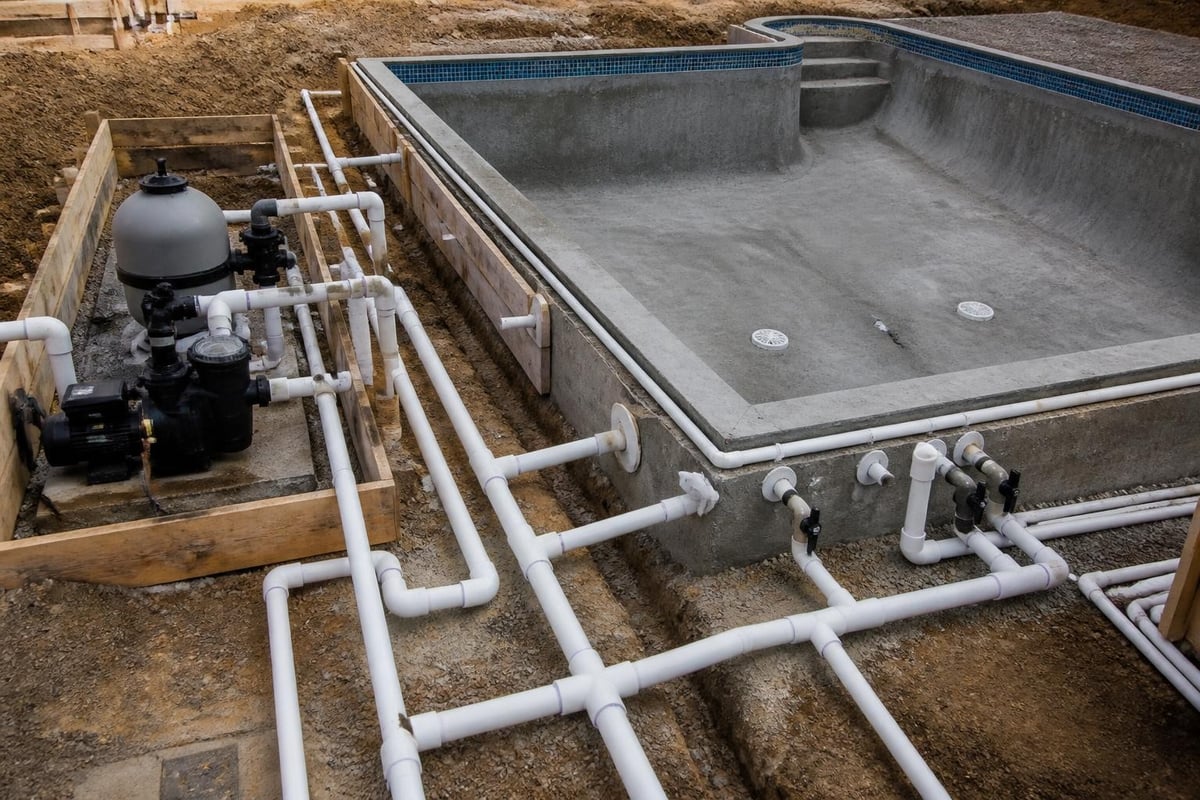
Before steel placement, plumbers install main drain assemblies, skimmer rough-ins, return line conduits, and equipment pad connections. Modern pools incorporate:
- Variable-speed pump connections (California energy code requirement)
- Automatic pool cleaners with dedicated suction lines
- Spillover spa plumbing with isolated heating and filtration
- Water feature supply lines for waterfalls, deck jets, or bubblers
All underground plumbing undergoes pressure testing before proceeding to steel installation, preventing costly repairs after concrete application.
Steel Reinforcement and Structural Framework
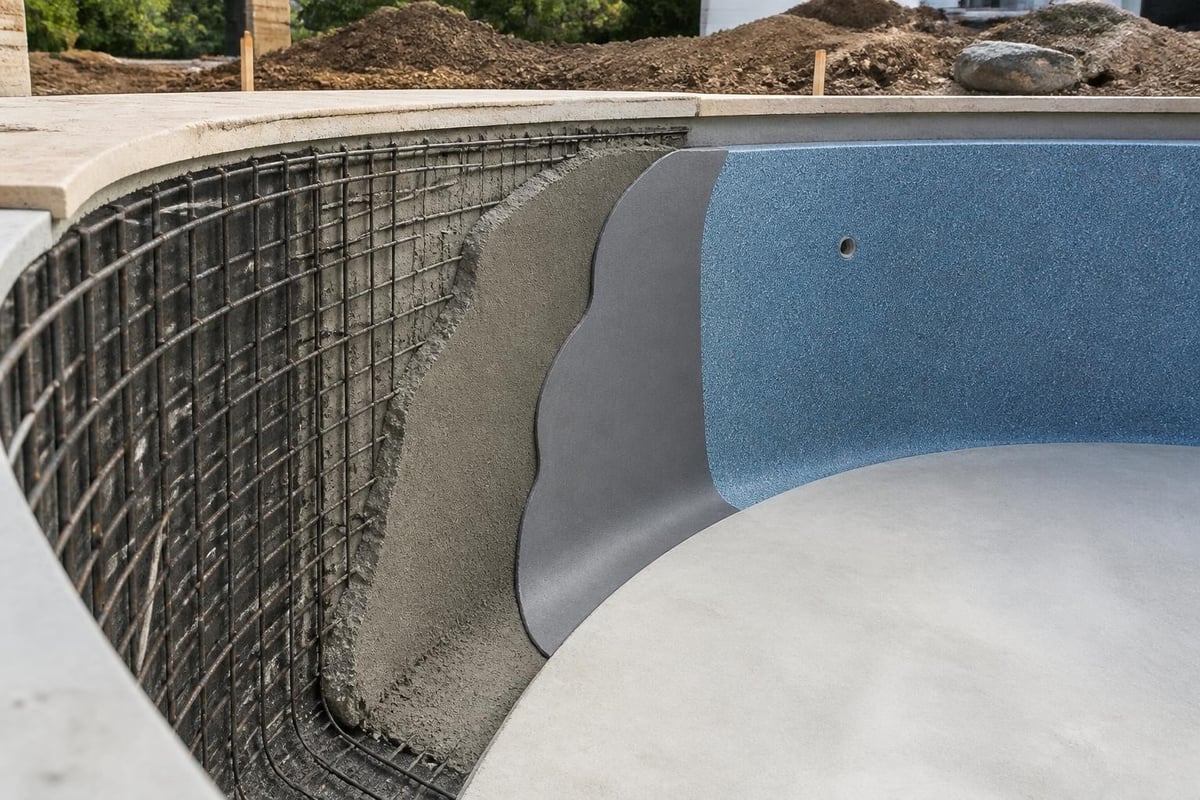
The reinforcing steel (rebar) grid provides tensile strength that concrete alone cannot achieve. This critical phase transforms an excavated hole into an engineered structure.
Rebar Installation Standards
Professional installers create a three-dimensional cage using #3 or #4 rebar (3/8" or 1/2" diameter) spaced 8-12 inches on center in both directions. The ACI 318 structural concrete code specifies minimum reinforcement ratios, concrete cover requirements, and lap splice lengths.
Critical reinforcement details include:
- Concrete cover: Minimum 3 inches between rebar and soil/water interfaces protects steel from corrosion
- Corner reinforcement: Additional diagonal bars resist cracking at stress concentration points
- Step and bench framing: Supplementary reinforcement at configuration changes
- Bond beam perimeter: Structural ring beam around pool perimeter ties walls to deck
Installers use plastic chairs, dobies, and tie wire to maintain proper spacing and positioning during shotcrete application. Quality reinforcement work directly impacts long-term structural performance and crack resistance.
Shotcrete Application Process
Building a concrete swimming pool reaches its most critical phase with shotcrete application. This single-day operation creates the monolithic shell that defines the pool's structural integrity.
Pre-Application Preparation
Before shotcrete crews arrive, contractors verify:
- Steel reinforcement positioning and tie-off completion
- Plumbing line protection and support
- Embedment installation (lights, fittings, anchors)
- Concrete delivery scheduling and mix verification
- Nozzle crew coordination and equipment staging
Shooting Sequence and Technique
Certified nozzle operators begin at the deep end, working methodically toward shallow areas. The American Shotcrete Association publishes detailed guidance on application techniques, including proper nozzle distance, air pressure settings, and material rebound management.
Proper shooting technique achieves:
- Minimum 8-inch floor thickness for structural floors
- 6-8 inch wall thickness depending on height and soil pressure
- Complete steel encapsulation without voids or honeycombing
- Proper compaction through air pressure and nozzle manipulation
Experienced crews minimize rebound (wasted material that bounces off the surface) through optimal angles and controlled application rates. Quality shotcrete work produces a dense, homogeneous shell with excellent compressive strength.
Curing Requirements
Concrete gains strength through hydration, a chemical process requiring adequate moisture and temperature control. Pool shells need continuous moist curing for at least seven days, often achieved through:
- Periodic water spray or soaker hoses
- Curing compound application
- Wet burlap or curing blankets
- Shallow water flooding (after initial set)
Proper curing prevents surface cracking, maximizes strength development, and enhances long-term durability.
Waterproofing and Durability Considerations
While properly mixed and cured concrete resists water penetration, additional waterproofing measures enhance performance and extend service life.
Concrete Permeability Management
Several strategies reduce concrete permeability:
| Waterproofing Method | Application | Effectiveness |
|---|---|---|
| Low water-cement ratio | Mix design | High – reduces capillary porosity |
| Crystalline admixtures | Added to concrete | Very High – self-seals micro-cracks |
| Exterior membrane | Applied to soil side | High – redundant barrier |
| Cementitious coatings | Applied to pool side | Moderate – requires proper surface prep |
The National Ready Mixed Concrete Association provides guidance on mix design considerations for water-retaining structures, including permeability-reducing admixtures and supplementary cementitious materials.
Interior Finish as Water Barrier
The pool's interior finish provides the primary waterproof barrier. The National Plasterers Council clarifies that while concrete shells should be "watertight," the interior finish must be "waterproof" to maintain water quality and prevent chemical interaction with the structural shell.
Common interior finishes include:
- Standard plaster: White or colored cement-based coating (7-12 year lifespan)
- Quartz aggregate: Plaster with quartz crystals for enhanced durability (10-15 years)
- Pebble finishes: Exposed aggregate providing texture and longevity (15-20 years)
- Tile: Glass or ceramic tile offering unlimited design options and maximum longevity
Equipment Installation and Startup
Building a concrete swimming pool concludes with equipment installation, deck construction, and system commissioning.
Filtration and Circulation Equipment
Modern pool systems emphasize energy efficiency and automated control:
- Variable-speed pumps: Required by California Title 24, reducing energy consumption by 50-75%
- Cartridge or DE filters: Sized for flow rate and pool volume
- Salt chlorine generators: Automated sanitization reducing manual chemical handling
- Heaters: Natural gas, propane, or heat pump options for extended season use
- Automation systems: Smartphone-controlled pumps, lights, heaters, and water features
Professional installation ensures proper hydraulic design, preventing inadequate circulation or excessive friction loss. The Construction Specifier offers insights on long-term durability considerations for water-related structures.
Pool Deck Construction
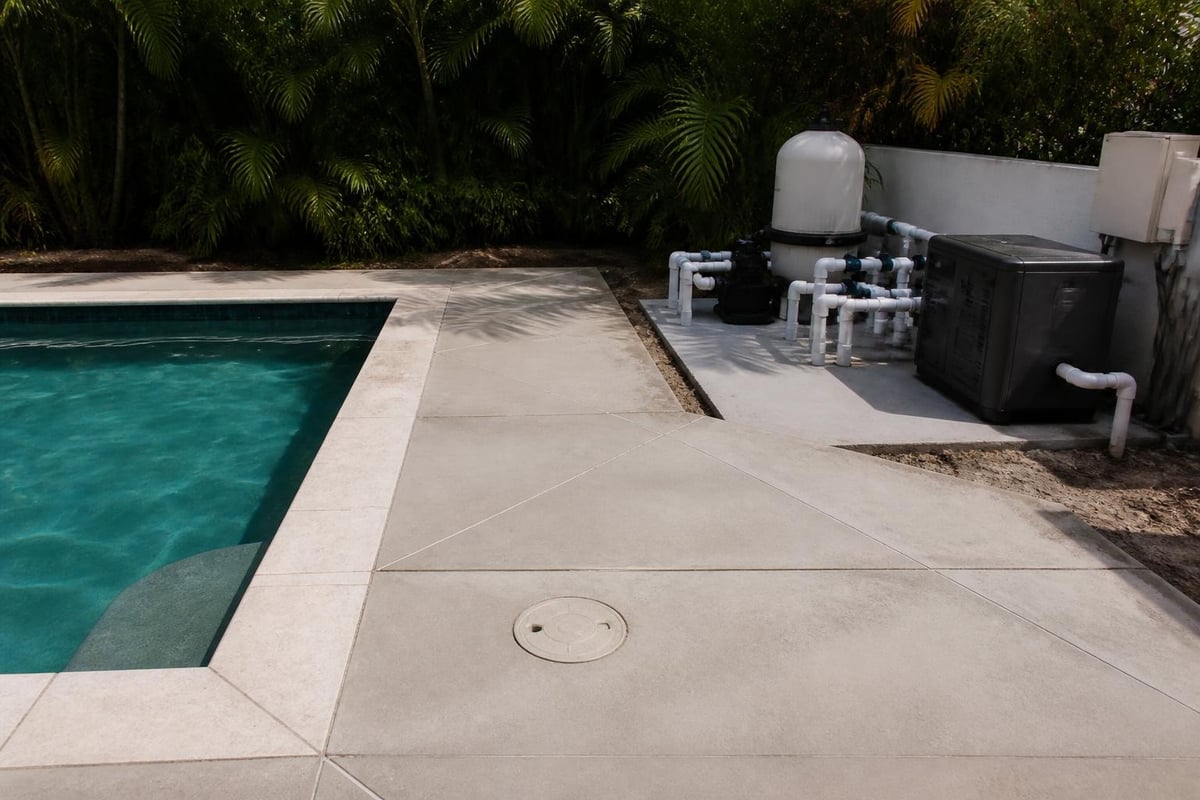
The surrounding deck completes the pool environment while serving critical drainage and safety functions. Options include:
- Concrete with brushed, stamped, or colored finishes
- Natural stone coping and decking
- Pavers in various patterns and colors
- Travertine for slip-resistance and heat reflection
Proper deck grading (minimum 1/4" per foot away from pool) prevents water intrusion behind coping and protects the pool structure.
Timeline and Budget Considerations
Homeowners planning concrete pool projects should understand realistic timelines and cost factors that influence overall investment.
Construction Timeline Breakdown
| Phase | Duration | Variables Affecting Timeline |
|---|---|---|
| Design & Permits | 4-10 weeks | Permit authority workload, design complexity |
| Excavation & Plumbing | 3-5 days | Soil conditions, access, weather |
| Steel & Shotcrete | 5-7 days | Pool size, cure time requirements |
| Tile/Plaster Preparation | 14-21 days | Cure time, finish selection |
| Equipment & Deck | 2-4 weeks | Deck material, equipment complexity |
| Total Project | 12-20 weeks | All factors combined |
Weather delays, permit revisions, and material availability can extend timelines, particularly during peak construction seasons.
Cost Components
Building a concrete swimming pool in the Los Angeles area typically ranges from $75,000 to $200,000+ depending on size, features, and site conditions. Major cost drivers include:
- Pool size and depth: Larger volumes require more material, labor, and equipment capacity
- Site access and conditions: Difficult access, poor soil, or steep slopes increase costs
- Custom features: Spas, water features, tanning ledges, and beach entries add complexity
- Finish selections: Premium tile, exotic stone, or custom mosaics significantly impact budgets
- Decking area and materials: Extensive paver decks or natural stone increase costs
- Equipment upgrades: High-efficiency heaters, advanced automation, and lighting systems
Experienced contractors provide detailed, itemized estimates that break down material and labor costs for each construction phase. For projects in communities like Encino, Calabasas, or Pacific Palisades, site-specific challenges may influence overall project costs.
Code Compliance and Safety Requirements
California maintains rigorous pool safety codes protecting children and ensuring proper construction standards.
Required Safety Features
All pools built in 2026 must incorporate multiple layers of protection:
- Barrier enclosure: Minimum 5-foot fence with self-closing, self-latching gates
- Door alarms: Audible alarms on house doors providing direct pool access
- Pool covers: Safety covers meeting ASTM standards (alternative to fencing)
- Main drain anti-entrapment: Dual main drains or approved safety systems per VGBA
Water Quality and Environmental Compliance
Pool construction and operation must address environmental considerations including water conservation, chemical storage, and drainage. The EPA provides guidance on water quality criteria relevant to pool water management and backwash disposal.
Local water districts may require:
- Pool covers to reduce evaporation
- Auto-fill shut-off devices preventing overflow
- Backwash water recycling or proper disposal
- Salt system discharge management
Maintaining Your Concrete Pool Investment
Proper maintenance protects your investment and ensures decades of reliable service.
Short-Term Maintenance (First Year)
New plaster finishes require special care during the first month:
- Brush daily: Remove plaster dust and prevent staining
- Balance chemistry carefully: Maintain proper LSI to prevent etching
- Avoid aggressive cleaning: Allow finish to cure fully
- Monitor equipment: Verify proper operation and settings
Long-Term Care Strategy
Building a concrete swimming pool creates a permanent structure requiring ongoing attention:
- Weekly water testing: Maintain balanced pH, alkalinity, and sanitizer levels
- Regular brushing: Prevent algae and stain development
- Filter maintenance: Clean or backwash based on pressure readings
- Equipment servicing: Annual professional inspection of pumps, heaters, and automation
- Acid washing: Every 3-5 years to restore plaster brightness
- Replastering: Every 10-15 years depending on finish type and maintenance
Homeowners who stay current with routine maintenance avoid costly repairs and maximize finish longevity. Resources from pool remodeling specialists provide guidance on renovation timing and finish restoration options.
Selecting the Right Contractor
The contractor you choose fundamentally determines project success, quality, and long-term satisfaction.
Essential Contractor Qualifications
Verify these credentials before signing contracts:
- Valid contractor's license: CSLB license specific to pool construction (C-53 classification)
- Current insurance: General liability and workers' compensation coverage
- Local experience: Familiarity with municipal codes and permit processes
- Financial stability: Bonding capacity and established business operations
- References: Recent projects with verifiable homeowner contacts
Red Flags to Avoid
Protect yourself by recognizing warning signs:
- Requests for large upfront deposits (exceeding 10% or $1,000)
- Pressure tactics or limited-time discount offers
- Unlicensed workers or subcontractors
- Vague contracts lacking detailed specifications
- Reluctance to provide references or proof of insurance
Family-owned, licensed contractors with established track records typically deliver superior communication, accountability, and craftsmanship compared to high-volume operations or unlicensed builders.
Design Trends Shaping 2026 Pool Projects
Contemporary pool design reflects evolving lifestyle preferences and technological capabilities.
Popular Feature Integration
Modern concrete pools increasingly incorporate:
- Tanning ledges: Shallow sun shelves with integrated loungers
- Integrated spas: Elevated spillover designs creating visual interest
- Perimeter overflow: Vanishing edge or infinity designs maximizing views
- Fire features: Fire bowls, linear burners, or fire pits integrated with water
- Smart controls: Voice-activated systems managing all pool functions
Sustainability Focus
Environmental consciousness influences design decisions:
- Solar heating systems reducing energy consumption
- LED lighting dramatically lowering electrical use
- Variable-speed pumps meeting efficiency mandates
- Salt chlorination reducing chemical transportation and storage
- Pool covers minimizing water loss and heat escape
Homeowners exploring options for backyard remodeling projects increasingly view pools as integrated outdoor living spaces rather than isolated recreation features.
Building a concrete swimming pool delivers unmatched design flexibility, structural durability, and property value enhancement when executed by experienced professionals using proven construction methods. Understanding the construction process, from initial design through final startup, helps homeowners make informed decisions and set realistic expectations. Whether you're considering a project in Studio City, Pasadena, or anywhere across Los Angeles County, working with a family-owned, licensed contractor ensures direct communication, transparent pricing, and quality craftsmanship built to last. AM BUILDS CA brings 15+ years of concrete pool construction experience to every project, handling everything from permits through final finish with the owner directly involved at every stage-call (424) 485-4548 for a free, no-obligation estimate.


