


A builders swimming pool represents one of the most significant investments a homeowner will make in their property, transforming outdoor living space into a private oasis for decades to come. Unlike pre-fabricated options or DIY projects, a professionally built custom pool requires expertise across multiple disciplines including structural engineering, plumbing, electrical systems, waterproofing, and local code compliance. Choosing the right contractor and understanding the construction process ensures your investment delivers lasting value, structural integrity, and the aesthetic vision you've imagined for your backyard retreat.
What Defines a Professional Builders Swimming Pool Project
The term "builders swimming pool" encompasses the entire scope of custom in-ground pool construction managed by licensed general contractors who specialize in aquatic structures. These professionals bring comprehensive knowledge of excavation, steel reinforcement, gunite or shotcrete application, plumbing networks, filtration systems, and finish materials.
A professional pool builder coordinates all phases from design through final inspection. This includes site assessment, engineering calculations, permit acquisition, utility coordination, and warranty support. The distinction between a qualified builder and an unlicensed installer becomes evident in structural longevity, code compliance, and ability to handle unforeseen site conditions.
Licensed vs. Unlicensed Pool Construction
California requires contractors performing pool work exceeding $500 in labor and materials to hold an active Contractors State License Board (CSLB) license. Licensed builders carry insurance, post bonds, and demonstrate technical competency through examination. They understand local building codes and safety standards that govern pool construction.
Unlicensed operators may offer lower initial bids but expose homeowners to liability risks, structural failures, permit violations, and zero recourse when problems arise. A builders swimming pool constructed by a licensed professional includes proper inspections at critical phases, ensuring long-term structural integrity and legal compliance.
Essential Planning Phases Before Construction Begins
Every successful builders swimming pool project starts with thorough planning that addresses both aesthetic goals and practical constraints. Rushing into construction without proper preparation leads to budget overruns, design compromises, and delayed completion.
The planning phase typically spans four to eight weeks depending on site complexity and permit processing times. Homeowners should allocate this time to make informed decisions rather than reactive choices during active construction.
Site Assessment and Feasibility Analysis
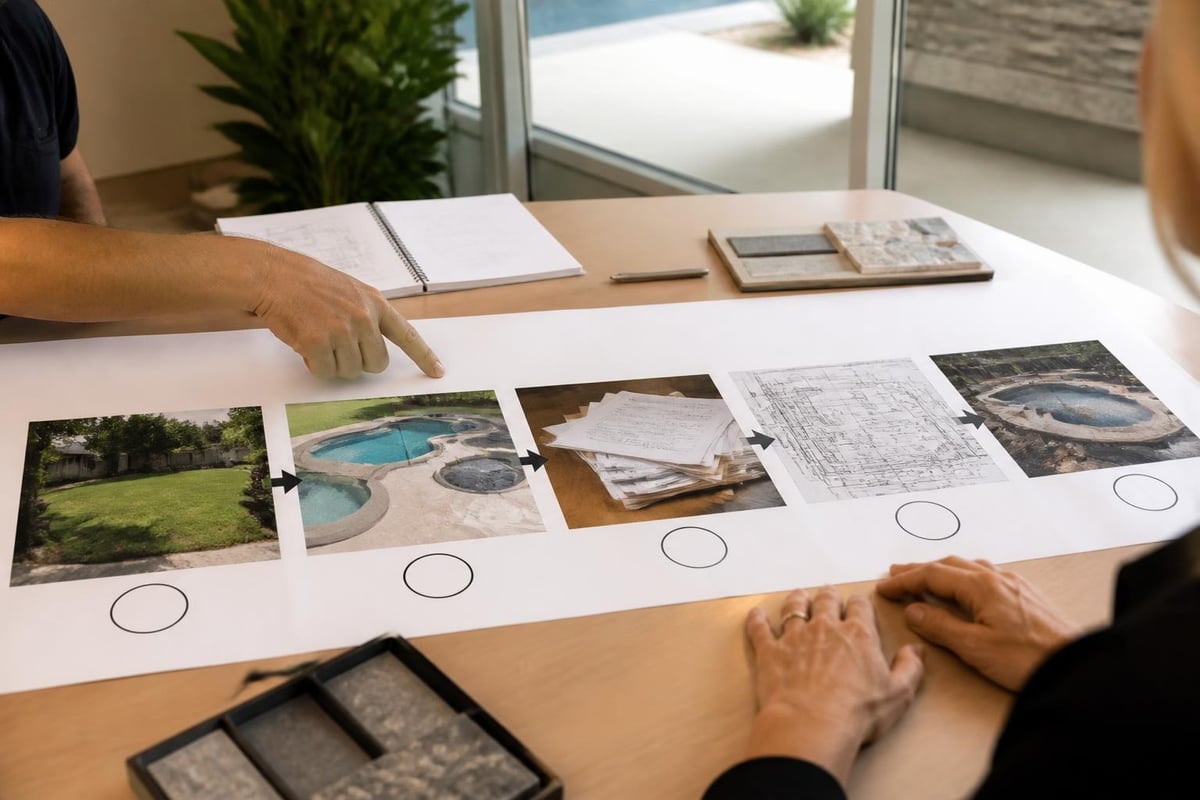
Professional builders begin with comprehensive site evaluation examining:
- Soil composition and bearing capacity – determines excavation approach and structural requirements
- Drainage patterns and water table depth – affects waterproofing strategies and hydrostatic relief systems
- Utility locations – identifies conflicts with gas, electric, water, and sewer lines
- Access constraints – ensures equipment can reach the build site
- Setback requirements – confirms compliance with property line restrictions
- Slope and grading – impacts retaining walls, deck elevations, and drainage solutions
This analysis reveals site-specific challenges before breaking ground, allowing builders to adjust design and budget accordingly. Unexpected conditions discovered during excavation become costly change orders when site assessment is incomplete.
Design Development and Material Selection
The design phase transforms vision into buildable plans. Licensed builders typically collaborate with pool designers or architects to create stamped engineering drawings showing:
- Pool shell dimensions and depths – swim-out areas, deep ends, benches
- Hydraulic systems – pump locations, plumbing runs, equipment pad placement
- Electrical layouts – lighting circuits, equipment power, GFCI protection
- Deck and coping details – material transitions, expansion joints, drainage
- Water features and add-ons – spas, waterfalls, fire bowls, bubblers
Material choices significantly impact both budget and long-term satisfaction. Homeowners select finishes for the pool surface (plaster, pebble, tile), coping edge treatments, and surrounding hardscape. When planning deck materials, many builders offer guidance on paver patios and pool deck options that complement the pool design while providing slip resistance and durability.
Navigating the Permitting and Engineering Process
Builders swimming pool projects require multiple permits and engineering approvals before construction can legally commence. This regulatory framework protects public safety and ensures structures meet minimum standards for stability, sanitation, and accessibility.
The permitting timeline varies by jurisdiction but typically requires three to six weeks in Los Angeles County. Experienced builders manage this process efficiently, avoiding common pitfalls that delay approvals.
Required Permits and Inspections
Most municipalities require separate permits for different construction phases:
| Permit Type | Coverage | Typical Inspection Points |
|---|---|---|
| Building Permit | Structural shell, equipment, barriers | Foundation, steel placement, gunite, final |
| Plumbing Permit | Water supply, drains, circulation | Rough plumbing, pressure test, gas connections |
| Electrical Permit | Bonding, lighting, equipment power | Conduit placement, bonding grid, final connections |
| Grading Permit | Excavation, soil export, drainage | Pre-excavation, compaction testing, final grading |
Each inspection must pass before proceeding to subsequent phases. Failed inspections require corrective work and re-inspection, potentially delaying the entire project. A qualified builders swimming pool contractor schedules inspections strategically and ensures work meets code before calling for review.
Engineering Stamped Plans and Calculations
California Building Code requires professional engineer review and stamping for pool structures. Engineers verify structural adequacy of the shell design, reinforcement specifications, and hydrostatic considerations. They calculate loads, design retaining walls if needed, and ensure compliance with seismic requirements.
The technical standards for shotcrete application provided by the American Concrete Institute guide engineers in specifying proper mix designs, placement methods, and curing procedures. These specifications become part of the permitted plans builders must follow during construction.
Core Construction Phases of Custom Pool Building
A builders swimming pool progresses through distinct construction phases, each requiring specialized skills and equipment. Understanding this sequence helps homeowners anticipate what happens when and recognize quality workmanship at each step.
The typical construction timeline spans eight to twelve weeks from excavation to startup, though site conditions, weather, and customization complexity influence duration.
Excavation and Steel Reinforcement Installation
Construction begins with layout and excavation. Builders mark the exact pool footprint with spray paint or stakes, then excavate to specified depths plus additional clearance for steel and concrete thickness. Proper excavation maintains wall angles that prevent cave-ins and creates the precise shape defined in plans.
Following excavation, plumbing lines are installed in trenches for main drains, returns, skimmers, and equipment connections. These lines undergo pressure testing before proceeding to steel work.
Steel reinforcement provides tensile strength that concrete lacks. Builders install rebar cages following engineered spacing requirements, typically using:
- #4 or #5 rebar on 8-12 inch centers for walls
- #3 or #4 rebar for floors
- Additional reinforcement around steps, benches, and penetrations
- Proper clearance from excavated surfaces for concrete encasement
The steel grid must be rigidly tied and supported to prevent movement during concrete placement. Inspection approval at this stage confirms structural integrity before proceeding to the most critical phase.
Gunite Application and Waterproofing
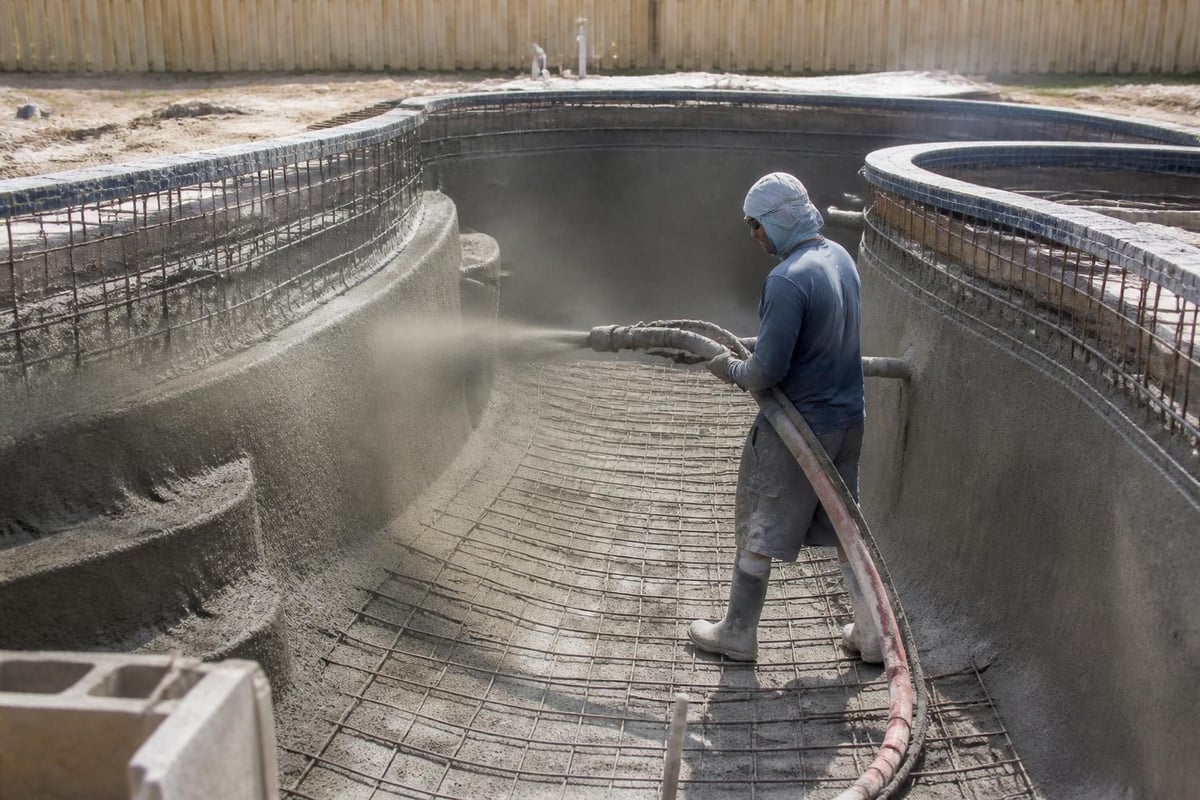
Gunite (dry-mix shotcrete) or wet-mix shotcrete application creates the monolithic concrete shell. Specialized crews use pneumatic equipment to spray concrete at high velocity onto the steel framework, building up thickness in passes until reaching specified dimensions (typically 8-10 inches for walls, 6-8 inches for floors).
Proper gunite work requires experienced nozzlemen who maintain consistent distance, angle, and speed to avoid weak spots, voids, or delamination. The American Shotcrete Association provides best practices for pool construction that professional builders follow to ensure quality placement.
Quality indicators include:
- Consistent thickness with no visible voids or honeycombing
- Proper encapsulation of all steel reinforcement
- Smooth transitions at corners and radius sections
- Adequate curing protection for seven days minimum
- Compliance with specified compressive strength (typically 4,000-5,000 PSI)
After curing, the shell undergoes bond beam construction, coping installation, and tile setting. The bond beam provides a reinforced perimeter that ties the structure together and supports deck loads.
Plumbing, Equipment, and Deck Construction
While the shell cures, builders complete equipment installation and deck preparation. The equipment pad houses pumps, filters, heaters, and automation systems. Proper placement considers noise, access for maintenance, and efficient plumbing runs.
Deck construction varies based on material selection but follows common principles:
- Proper base preparation with compacted aggregate
- Drainage slope away from pool (minimum 1/4 inch per foot)
- Expansion joints to accommodate movement
- Slip-resistant surface finishes for safety
- Integration with existing landscaping and structures
Many builders swimming pool projects incorporate complete backyard transformations that extend beyond the pool itself to create cohesive outdoor living environments.
Interior Finish Options and Surface Longevity
The interior finish provides the pool's final appearance and waterproof barrier. This decision impacts aesthetics, texture, maintenance requirements, and longevity. Builders swimming pool contractors offer several finish categories, each with distinct characteristics.
Finish selection should balance initial budget, expected lifespan, and aesthetic preferences. The surface endures constant water exposure, chemical treatments, and UV radiation, making durability a primary consideration.
Plaster-Based Finishes
Traditional white plaster remains the most economical finish option, providing a smooth surface that's been used for decades. Standard white plaster typically lasts 7-10 years before requiring refinishing, with longevity depending on water chemistry maintenance and usage patterns.
Enhanced plaster formulations include:
- Quartz plaster – adds crushed quartz aggregates for increased durability and subtle texture
- Pebble finishes – incorporate larger aggregate stones for natural appearance and 15-20 year lifespan
- Glass bead finishes – use recycled glass for shimmer effects and smooth feel
Proper application requires skilled plasterers who work quickly to maintain consistent thickness and avoid cold joints. The finish cures underwater for 28 days while pH is carefully managed to prevent etching or soft spots.
Tile and Specialty Surfaces
Full-tile interiors offer maximum longevity (30+ years) and unlimited design options but command premium pricing. Builders typically reserve full tile for luxury installations, geometric designs, or pools with complex shapes where durability justifies investment.
Hybrid approaches use tile for waterline bands, steps, and spa spillways while finishing the main body with plaster or pebble. This provides visual impact and reduces maintenance in areas prone to scaling without the expense of complete tile coverage.
Equipment Selection for Efficiency and Performance
Modern builders swimming pool installations incorporate sophisticated equipment that dramatically reduces operating costs compared to older systems. Technology advances in pumps, filters, heaters, and automation deliver better performance while consuming less energy.
Equipment represents approximately 10-15 percent of total project cost but determines ongoing monthly expenses for decades. Investing in quality equipment pays dividends through lower utility bills and reduced maintenance.
Filtration and Circulation Systems
The circulation system moves water through filters, heaters, and sanitization equipment while creating surface skimming action that removes debris. Key components include:
Variable-speed pumps – Modern brushless motors adjust speed to match demand, reducing energy consumption by 50-75 percent compared to single-speed pumps. California Title 24 energy code now requires variable-speed pumps on new pools, making them standard in professional installations.
Filter types – Three technologies dominate:
| Filter Type | Maintenance | Filtration Micron Rating | Best For |
|---|---|---|---|
| Sand | Backwash weekly | 20-40 microns | Low maintenance preference |
| Cartridge | Clean monthly, replace yearly | 10-15 microns | Balanced performance |
| DE (Diatomaceous Earth) | Backwash as needed | 2-5 microns | Maximum clarity |
Builders size pumps and filters based on pool volume, turnover requirements (typically 8-12 hours), and head pressure calculations. Undersized equipment struggles to maintain clarity, while oversized systems waste energy and create excessive turbulence.
Heating and Sanitization Options
Climate control extends swimming season and enhances comfort. Los Angeles's mild climate makes pools swimmable year-round with appropriate heating. Options include:
- Natural gas heaters – rapid temperature rise, ideal for occasional use
- Heat pumps – efficient for maintaining consistent temperatures in moderate climates
- Solar heating – zero operating cost but requires roof space and sun exposure
Sanitization methods have expanded beyond traditional chlorine to include salt chlorine generators, ozone systems, and UV treatment. Salt systems remain popular for their reduced chemical handling and softer water feel, though they require compatible equipment and materials.
Quality Control Standards and Construction Best Practices
Professional builders swimming pool contractors follow industry standards and manufacturer specifications to ensure structural integrity and system performance. Quality control encompasses material testing, installation verification, and systematic inspections throughout construction.
Homeowners should expect builders to reference established standards rather than relying solely on "industry norms" or past practice. Written standards provide objective benchmarks for evaluating work quality.
Material Testing and Compliance Verification
Concrete quality directly impacts pool longevity. Responsible builders document:
- Batch tickets showing mix design, water-cement ratio, and admixtures
- Field density tests confirming proper compaction
- Compressive strength test cylinders (minimum three per pour)
- Steel reinforcement certification and mill test reports
These records prove compliance with engineered specifications and provide documentation if warranty issues arise. ASTM International standards guide material testing protocols that builders reference for concrete, steel, and finish products.
Critical Inspection Points
Beyond municipal inspections, quality-focused builders perform internal reviews at key milestones:
- Post-excavation – verify dimensions, depths, and plumbing placement
- Steel installation – confirm spacing, coverage, and tie quality
- Pre-gunite – final check of steel position and embedment items
- Post-gunite – measure thickness, inspect for voids, verify bond beam
- Equipment startup – test all systems, verify proper operation, train homeowner
Each inspection creates an opportunity to identify and correct issues before they're buried or become expensive to remedy. Professional builders welcome scrutiny because it validates their craftsmanship and protects both parties.
Working Directly with Licensed Pool Builders
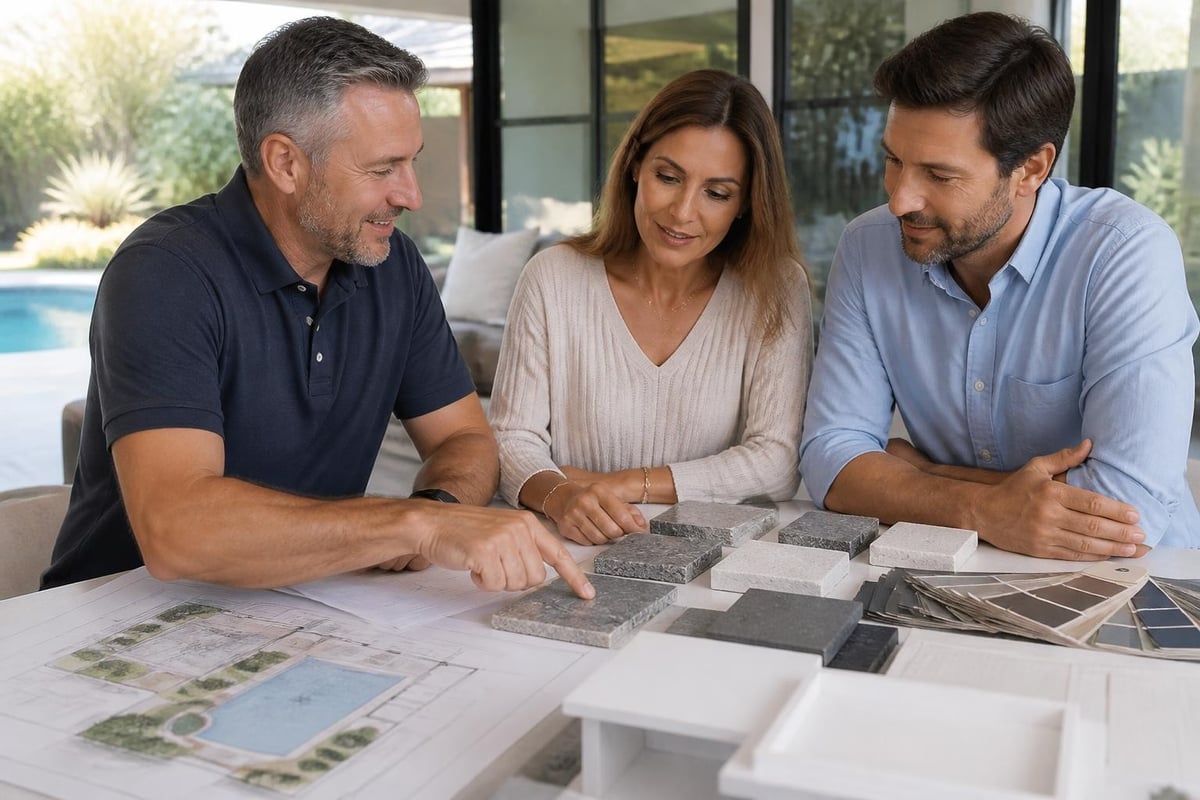
The relationship between homeowner and builder significantly influences project satisfaction. Direct communication with the license holder ensures decisions are made by someone with authority and accountability rather than filtered through sales representatives or project coordinators.
Family-owned builders often provide more personalized service and direct owner involvement compared to large-volume companies that assign projects to foremen. This relationship model works particularly well for custom pools where design preferences and site-specific decisions require ongoing collaboration.
What to Expect During Construction
Professional builders maintain organized job sites with clear staging areas, protected landscaping, and daily cleanup. Construction generates noise, dust, and disruption that respectful contractors minimize through:
- Defined work hours (typically 7 AM to 5 PM weekdays)
- Protected access paths preventing lawn and hardscape damage
- Regular debris removal rather than accumulation
- Advance notice before particularly disruptive phases
- Clear communication about timeline and upcoming work
Transparency about progress and challenges builds trust. Experienced builders proactively communicate delays, change order requirements, or unexpected conditions rather than hoping problems resolve themselves.
Pricing Structure and Payment Schedules
Builders swimming pool contracts typically follow milestone-based payment schedules tied to completion of major phases:
- 10-15% deposit upon contract signing
- 25-30% after excavation and steel installation
- 25-30% after gunite and tile completion
- 20-25% after equipment startup and deck completion
- 10-15% final payment after inspection approval and cleanup
This structure ensures builders maintain cash flow for materials and labor while protecting homeowners from paying for incomplete work. Licensed contractors follow regulations limiting deposit amounts and requiring specific contract language about mechanics liens, change orders, and dispute resolution.
Never pay the full contract amount before completion and final inspection. Retaining final payment provides leverage for punch-list items and ensures builder commitment to warranty support.
Maintenance Planning and Long-Term Performance
A builders swimming pool requires ongoing maintenance to preserve water quality, equipment function, and surface appearance. Establishing maintenance routines from day one prevents problems that develop from neglect or improper chemical balance.
Professional builders provide startup training covering basic operation, chemical testing, cleaning procedures, and troubleshooting common issues. This knowledge transfer ensures homeowners understand their system and can identify problems early.
Weekly Maintenance Essentials
Consistent weekly attention prevents most pool problems:
- Test and adjust water chemistry – pH, alkalinity, chlorine/sanitizer levels
- Skim surface and brush walls – removes debris before it sinks or stains
- Empty skimmer and pump baskets – maintains proper flow and pump performance
- Vacuum or run automatic cleaner – prevents sediment accumulation
- Inspect equipment operation – listen for unusual sounds, check for leaks
Water chemistry balance protects both swimmers and pool surfaces. Improper pH or alkalinity causes plaster etching, equipment corrosion, and uncomfortable swimming conditions. Weekly testing takes five minutes but prevents thousands in repair costs.
Seasonal Tasks and Professional Service
Beyond weekly care, pools require periodic professional service:
Spring opening (even in Los Angeles) – equipment inspection, deep cleaning, chemical balancing after winter reduction
Filter maintenance – cartridge cleaning or sand/DE replacement per manufacturer schedules
Equipment inspection – annual review of pumps, heaters, valves for wear or needed adjustments
Surface care – acid washing plaster every 3-5 years to remove embedded staining and restore brightness
Many homeowners engage weekly service companies for routine maintenance, reserving their time for swimming rather than testing and cleaning. This approach ensures consistent care and early problem detection by trained technicians.
Enhancing Pool Areas with Complementary Features
A complete builders swimming pool project often includes features beyond the basic shell and equipment. These enhancements transform functional pools into destination spaces that extend outdoor living.
Popular additions include:
- Attached spas – shared equipment, separate heating, elevated for spillover effect
- Tanning ledges – shallow shelves for lounging, safe for children
- Beach entries – gradual slope from zero-depth to swimming areas
- Water features – deck jets, sheer descents, rock waterfalls, scuppers
- Fire elements – bowls, pits, or linear features for evening ambiance
- LED lighting – color-changing fixtures for pools, spas, and landscaping
- Automation systems – smartphone control of pumps, heaters, lights, and water features
These features typically add 20-40 percent to base pool costs but significantly enhance usability and aesthetic impact. Builders help prioritize additions based on budget, ensuring core pool quality isn't compromised by over-reaching on extras.
Special Considerations for Los Angeles Pool Construction
Los Angeles presents unique challenges and opportunities for builders swimming pool projects. Local conditions influence design approaches, permitting requirements, and construction timing.
Climate and Water Conservation
Southern California's Mediterranean climate enables year-round swimming with modest heating, but chronic drought conditions make water conservation important. Modern builders incorporate:
- Pool covers to reduce evaporation (saving hundreds of gallons weekly)
- Efficient filtration reducing backwash frequency and volume
- Automated controllers optimizing run times and chemical dosing
- Drought-tolerant landscaping minimizing irrigation demands
Los Angeles Department of Water and Power offers rebates for pool covers and efficient equipment, helping offset initial costs while reducing environmental impact.
Seismic Design Requirements
California's seismic activity requires pools to withstand ground movement without catastrophic failure. Engineers design flexible connections between pool shells and rigid deck structures, allowing differential movement during earthquakes. Properly reinforced gunite pools perform well seismically due to their monolithic construction and tensile steel reinforcement.
Hillside and Challenging Sites
Many desirable Los Angeles neighborhoods feature sloped lots requiring retaining walls, complex drainage solutions, and creative access for construction equipment. Experienced builders working in areas like Pacific Palisades, Brentwood, and the Hollywood Hills develop specialized techniques for challenging terrain.
Hillside pools often incorporate:
- Engineered retaining walls designed by geotechnical engineers
- Perimeter drainage systems managing hillside water flow
- Infinity edges taking advantage of elevation and views
- Multi-level designs integrating with natural topography
These sites add complexity and cost but create dramatic results impossible on flat lots.
Evaluating Pool Builders and Making Final Selection
Choosing the right contractor determines whether your builders swimming pool becomes a source of joy or ongoing frustration. The decision deserves careful research beyond simply accepting the lowest bid.
Verification and Due Diligence Steps
Before signing contracts, verify:
License status – Confirm active CSLB license, bond, and insurance through the California Contractors State License Board website. Check for disciplinary actions, license restrictions, or expired coverage.
References and portfolio – Visit completed projects if possible, speak with recent clients about communication, quality, and problem resolution. Review photo galleries showing construction phases, not just finished results.
Financial stability – Established builders with years of operation and permanent facilities present less risk than newly formed companies operating from temporary addresses.
Written warranties – Understand what's covered (structure, equipment, finishes), duration (typically 1-2 years for workmanship), and claim procedures.
Insurance coverage – Request certificates of insurance for general liability and workers compensation covering the project period.
Red Flags Indicating Builder Problems
Certain warning signs suggest contractors to avoid:
- Pressure for large upfront deposits (over 10% or $1,000, whichever is less)
- Reluctance to provide references or portfolio documentation
- Vague contracts lacking specifications, timelines, or payment schedules
- No permanent business address or references from recent projects
- Unwillingness to pull permits or handle inspections directly
- Significantly lower bids suggesting corners will be cut
Professional builders welcome questions, provide detailed written proposals, and demonstrate pride in their craftsmanship through transparent communication and accessible work history. For homeowners researching the best pool builders in their area, these verification steps separate qualified professionals from risky operators.
The Value of Experience and Specialized Focus
Builders swimming pool construction requires specialized knowledge distinct from general residential building. Contractors who focus primarily on pools develop deeper expertise in shotcrete placement, hydraulic design, water chemistry, and aquatic equipment than generalists who occasionally build pools alongside other projects.
A fifteen-year track record in pool construction means hundreds of projects worth of experience solving site challenges, managing inspections, and refining installation techniques. This accumulated knowledge prevents problems before they occur and enables efficient solutions when unexpected conditions arise.
Family-owned businesses often provide continuity and accountability that larger corporations cannot match. When homeowners work directly with the owner, decisions happen quickly, communication stays clear, and someone with authority and pride in their reputation oversees every detail. This relationship model particularly benefits custom projects where personalized service and design flexibility matter more than standardized production.
Building a custom in-ground pool transforms your property into a private retreat for family enjoyment, exercise, and entertainment while adding substantial value to your home investment. Working with a licensed, experienced builders swimming pool contractor ensures your project meets structural standards, complies with all codes, and delivers lasting performance. If you're ready to explore custom pool options for your Los Angeles property, AM BUILDS CA brings 15+ years of specialized experience, direct owner involvement, and comprehensive service from design through final startup. Contact us at (424) 485-4548 for a free consultation and discover how a family-owned, licensed contractor can bring your backyard vision to life with quality craftsmanship and transparent pricing.


