


Choosing the best pool liner determines how your pool looks, how long it lasts, and how much maintenance you'll handle for years to come. Whether you're building a new pool or replacing an aging surface, the liner you select affects water quality, energy efficiency, comfort underfoot, and resale value. In Los Angeles, where sun exposure is intense and many pools operate year-round, selecting a liner that balances aesthetics, durability, and budget is especially important. This guide walks you through the most popular liner types, their pros and cons, and what homeowners across LA need to know before committing to a finish.
Understanding Pool Liner Types and Materials
Pool liners fall into three main categories: vinyl, fiberglass gel coat, and cementitious finishes like plaster, pebble, or quartz. Each material brings distinct advantages and trade-offs in cost, lifespan, appearance, and installation complexity.
Vinyl Liners
Vinyl liners are custom-fabricated sheets of flexible PVC (polyvinyl chloride) that fit the exact dimensions of your pool. They're most common in above-ground and some in-ground pools, especially in regions with freeze-thaw cycles. Vinyl liners typically range from 20 to 30 mils in thickness (1 mil = 0.001 inch), with thicker gauges offering better puncture resistance.
Key characteristics of vinyl liners include:
- Low upfront cost: Vinyl is often the least expensive liner option per square foot of pool surface.
- Smooth surface: The non-porous finish resists algae and feels soft underfoot.
- Limited lifespan: Most vinyl liners last 7–12 years before UV degradation, seam wear, or chemical damage requires replacement.
- Pattern variety: Manufacturers offer dozens of colors and patterns, from solid blue to tile-look prints.
Because vinyl relies on plasticizers to remain flexible, regulatory scrutiny around compounds like phthalates has prompted manufacturers to shift toward safer alternatives. Recent studies on PVC performance in outdoor environments highlight the importance of UV stabilizers and how formulation affects longevity in high-sun climates like Southern California.
Fiberglass Gel Coat
Fiberglass pools come with a factory-applied gel coat finish, a smooth, non-porous resin layer bonded to the fiberglass shell. Unlike removable liners, gel coat is an integral part of the pool structure and cannot be replaced independently.
| Feature | Fiberglass Gel Coat | Vinyl Liner |
|---|---|---|
| Installation | One-piece shell set by crane | Custom-fit sheet installed on-site |
| Surface texture | Smooth, slightly glossy | Smooth, matte or printed |
| Lifespan | 15–25 years (re-gel every 10–15) | 7–12 years (full replacement) |
| Algae resistance | Excellent (non-porous) | Good (smooth but seams can harbor growth) |
| Customization | Limited shapes, sizes | Unlimited shapes in liner-compatible pools |
Gel coat resists staining and requires minimal chemical maintenance, but surface crazing, fading, and blistering can occur over time. Re-gelling the surface is a specialized process and adds to long-term ownership cost.
Cementitious Finishes: Plaster, Pebble, and Quartz
For gunite and shotcrete pools-the dominant construction method in Los Angeles-cementitious finishes are the industry standard. These finishes are troweled or sprayed onto the pool shell and bond directly to the concrete substrate.
Standard white plaster is the most affordable cementitious option. It provides a classic, bright appearance and lasts 7–10 years before etching, staining, and roughness develop. Homeowners who prioritize initial cost and a traditional look often start here.
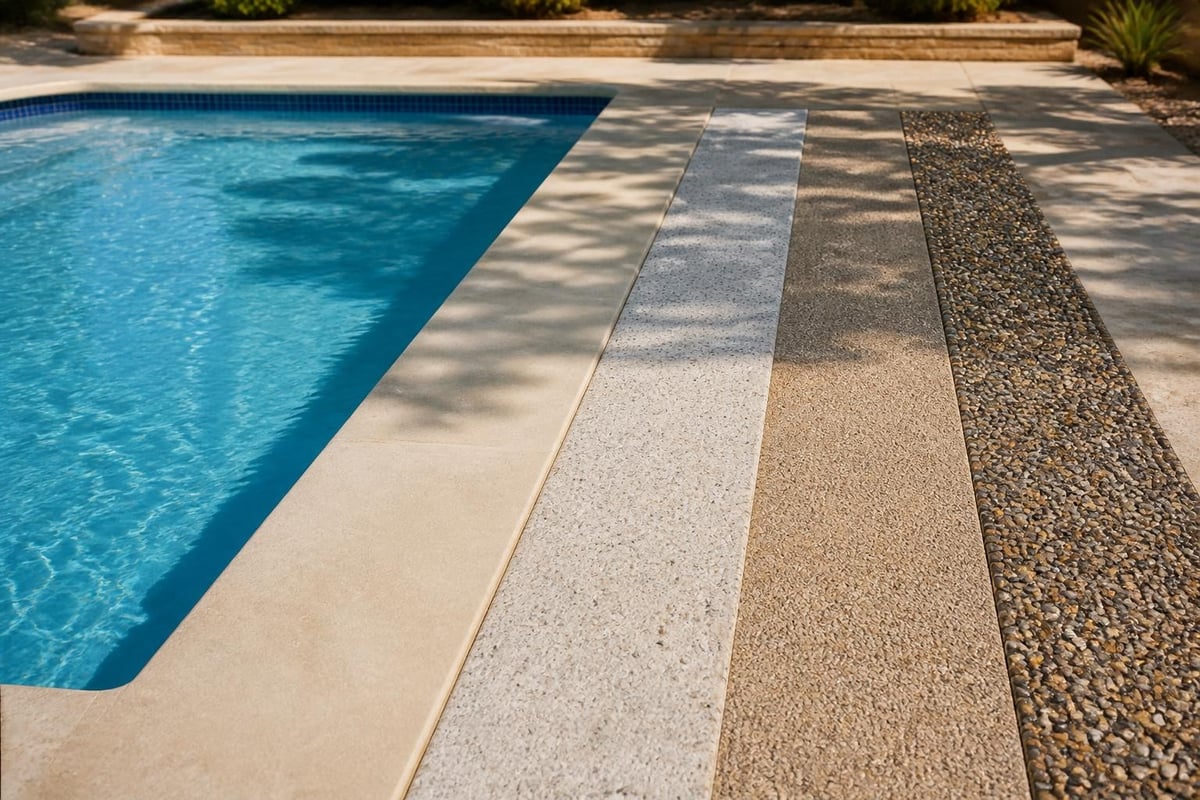
Pebble finishes blend small river pebbles with cement and expose the aggregate for a textured, natural appearance. Pebble is highly durable-often lasting 15–20 years-and hides water chemistry imbalances better than smooth plaster. The textured surface can feel rough on bare feet, which some families find less comfortable, especially for young children.
Quartz and glass bead finishes combine crushed quartz or glass with modified plaster for a smoother feel and enhanced color range. These mid-tier finishes last 10–15 years and offer a good balance of aesthetics, durability, and comfort.
For most custom in-ground pool construction projects in Los Angeles, cementitious finishes dominate because they integrate seamlessly with gunite shells, offer design flexibility, and hold up well in year-round use.
Evaluating Durability and Longevity
The best pool liner for your project depends heavily on expected lifespan and how well the material tolerates your specific conditions-sun exposure, bather load, water chemistry, and maintenance habits.
UV Resistance and Climate Considerations
Los Angeles pools face intense UV exposure nearly year-round. Vinyl liners degrade faster here than in cooler, cloudier regions. UV stabilizers slow this process, but even premium vinyl rarely exceeds 12 years in full-sun installations. Plaster and pebble finishes are inherently UV-stable because they're mineral-based, not polymer-based.
Fiberglass gel coat sits between the two. Quality gel coats include UV inhibitors, but prolonged sun exposure can cause fading and surface oxidation. Coastal installations in areas like Pacific Palisades or Torrance may see slightly accelerated wear due to salt air and moisture.
Chemical Resistance and Water Balance
All pool liners require balanced water chemistry, but sensitivity varies:
- Vinyl: Susceptible to plasticizer leaching and surface degradation when chlorine or pH levels run high for extended periods.
- Plaster: Etches and pits when pH or alkalinity drop too low; stains when metals or algae are present.
- Pebble/Quartz: More forgiving than plaster; the exposed aggregate resists etching and hides minor staining.
- Gel coat: Generally stable across a broad pH range but can blister if water chemistry is neglected long-term.
Proper water testing, weekly adjustments, and adherence to PHTA standards ensure any liner reaches its expected lifespan.
Structural and Physical Wear
Vinyl liners are vulnerable to punctures from sharp objects, pet claws, and pool toys. Even small tears can expand quickly, leading to leaks and urgent replacement. Fiberglass and cementitious finishes are far more resistant to physical damage, though fiberglass can crack under severe ground movement, and plaster can chip if struck by heavy objects.
In earthquake-prone areas throughout Los Angeles County, gunite pools with cementitious finishes typically handle ground shifts better than one-piece fiberglass shells, which may develop stress cracks at the gel coat surface.
Cost Analysis: Upfront Investment vs. Lifetime Value
Understanding both initial cost and long-term expenses helps you identify the best pool liner for your budget and ownership timeline.
Initial Material and Installation Costs
| Liner Type | Material Cost (per sq ft) | Installation Labor | Total Cost (20×40 pool, approx.) |
|---|---|---|---|
| Vinyl liner | $3–$6 | $1,500–$3,000 | $4,000–$8,000 |
| White plaster | $4–$6 | Included in gunite bid | $5,000–$9,000 |
| Pebble finish | $8–$12 | Included in gunite bid | $10,000–$16,000 |
| Quartz finish | $6–$10 | Included in gunite bid | $8,000–$14,000 |
| Fiberglass (gel coat) | Included in shell | Crane set + backfill | $25,000–$60,000 (full pool) |
Vinyl offers the lowest entry cost but applies primarily to liner-compatible pool structures. For gunite pools, plaster is the baseline, with pebble and quartz as upgrades. Fiberglass pools bundle the shell and finish, so cost comparisons require evaluating the entire pool system, not just the liner.
Replacement and Maintenance Costs Over Time
Vinyl liners need full replacement every 7–12 years, at $4,000–$8,000 per replacement. Over a 30-year ownership period, expect at least two or three replacements, totaling $12,000–$24,000 in liner costs alone.
Plaster typically requires resurfacing every 7–10 years, at $5,000–$9,000 per refinish. Pebble extends that interval to 15–20 years, reducing the number of resurfacing cycles. Quartz falls in between, often needing attention around the 12-year mark.
Fiberglass gel coat lasts longest without major intervention-15–25 years-but when re-gelling is needed, costs run $8,000–$15,000. Factoring in chemical usage, cleaning frequency, and stain treatment, non-porous finishes (vinyl, fiberglass) generally demand less weekly labor than textured cementitious surfaces.
Return on Investment and Resale Impact
Pools with modern, well-maintained finishes add measurable value to Los Angeles homes. Buyers favor pebble and quartz for their durability and aesthetics. Vinyl liners are less common in the LA market and may raise questions about the pool's construction quality. Fiberglass appeals to buyers seeking low-maintenance options, though the limited size and shape selection can be a drawback for custom-oriented buyers in neighborhoods like Encino or Calabasas.
Investing in a premium liner upfront often pays dividends when selling, both in faster sales and higher offers.
Installation Complexity and Professional Requirements
Liner installation quality directly impacts performance, appearance, and longevity. Each liner type demands distinct skills, equipment, and coordination.
Vinyl Liner Installation
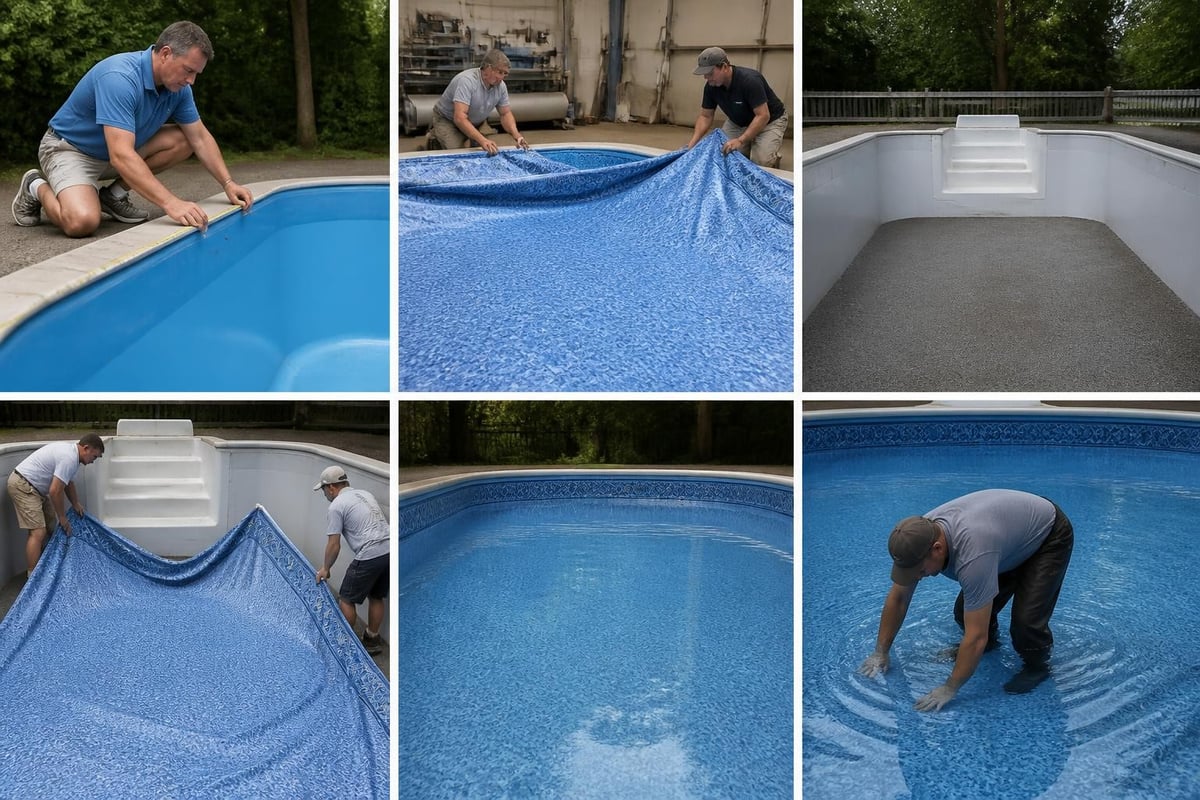
Vinyl installation begins with precise measurement of the pool interior, including all steps, benches, and contours. The liner is then fabricated off-site to these exact dimensions. On installation day, the crew removes the old liner (if replacing), inspects and repairs the pool walls and floor, and installs a foam or vermiculite base layer to cushion the vinyl and provide a smooth substrate.
Typical installation steps include:
- Drain and clean the pool completely
- Inspect walls and floor for damage; repair as needed
- Install protective base layer
- Position the new liner and secure the top edge in the bead receiver or coping track
- Begin filling with water while smoothing out wrinkles
- Vacuum behind the liner to draw it tight against the walls
- Trim excess material and lock in the final edge
Improper measurement or rushing the smoothing process results in wrinkles, which become permanent once the pool is full. Hiring experienced installers is essential, as vinyl work requires specialized tools and technique.
Cementitious Finish Application
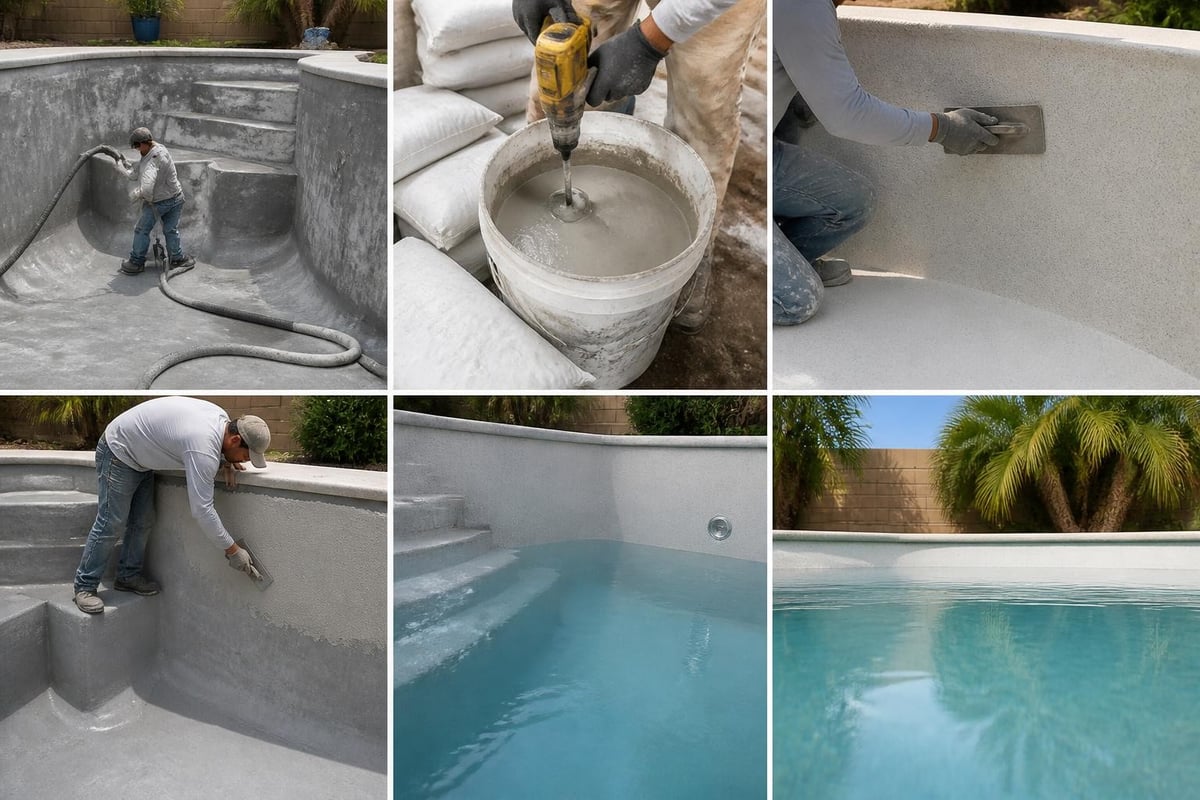
Plaster, pebble, and quartz finishes are applied to the cured gunite or shotcrete shell in a single, continuous pour. Crews typically work in teams to trowel the entire pool surface in one day, ensuring uniform color and texture without cold joints (visible seams between batches).
The finish must cure underwater for at least 28 days. During this period, water chemistry is carefully balanced to prevent etching and ensure proper curing. Rushed curing or improper water balance during startup can permanently damage the finish, leading to premature wear and discoloration.
Because finish application is integrated into the broader pool construction process, it's nearly always handled by the same contractor managing the gunite work. Coordination, timing, and weather all factor into scheduling the finish pour.
Fiberglass Shell Delivery and Set
Fiberglass pools arrive on-site as a complete shell. A crane lifts the shell into a pre-excavated, leveled hole. The crew levels and supports the shell with temporary bracing, then backfills around it with gravel or flowable fill, ensuring even support and preventing voids that could cause the shell to flex or crack.
Because the gel coat is already applied at the factory, there's no on-site finishing work beyond minor touch-ups if the shell is scuffed during transport. The main complexity lies in excavation precision, crane access, and backfill compaction. Tight or sloped lots can make fiberglass installation challenging or impossible.
Health, Safety, and Environmental Considerations
Modern pool owners increasingly weigh health and environmental impacts when selecting materials. The best pool liner balances performance with responsible sourcing and end-of-life management.
Chemical Additives in Vinyl Liners
Vinyl liners rely on plasticizers to stay flexible. Historically, phthalates like DEHP and DINP were common, but regulatory reviews such as the EPA’s TSCA evaluation of DINP have prompted manufacturers to adopt safer alternatives. Today, many premium vinyl liners use non-phthalate plasticizers or reduced concentrations.
Pool water does not directly contact swimmers' skin in harmful concentrations, but off-gassing and gradual leaching remain areas of ongoing study. Parents with young children or families sensitive to chemical exposure may prefer liners certified as low-VOC or phthalate-free.
Sustainability and Lifecycle Impact
Vinyl liners have a limited lifespan and are difficult to recycle. Most end up in landfills, where PVC can persist for decades. Research on PVC environmental risks highlights concerns around production, incineration byproducts, and degradation pathways.
Cementitious finishes, while mineral-based and inert, require cement production, which carries a significant carbon footprint. However, their longer lifespan and local sourcing (most plaster and aggregate come from regional suppliers) reduce overall lifecycle impact.
Fiberglass production involves resins and energy-intensive processes, but the long service life and reduced chemical usage over decades offset some initial impact. As with any construction material, the best environmental choice depends on the full lifecycle, not just the installation phase.
Compliance with Building and Health Standards
All pool finishes must meet local building codes and industry standards. In California, pools are subject to Title 24 energy regulations, barrier requirements, and material safety standards. The PHTA standards catalog provides technical guidance on finish materials, curing procedures, and performance testing.
Licensed contractors ensure that liner selection and installation comply with these standards, protecting homeowners from liability and ensuring safe, durable results.
Matching Liner Type to Pool Use and Design Goals
The best pool liner varies by how you use your pool, your design vision, and your tolerance for maintenance and cost.
Family Pools with High Bather Load
Families with children, frequent guests, or daily use need durable, low-maintenance finishes. Pebble and quartz finishes excel here-they resist staining, hide wear, and tolerate the occasional dropped toy or rough play. The textured surface can be harder on feet, so many families choose a mid-range pebble (smaller stones) or polished quartz for a smoother feel.
Vinyl works well for families prioritizing a soft, smooth surface, but puncture risk and shorter lifespan mean more frequent replacements. Budgeting for liner replacement every decade is essential.
Aesthetic-Focused Luxury Pools
Homeowners in Brentwood or Pasadena seeking a showpiece pool often choose dark plaster, premium quartz, or glass bead finishes. These materials offer rich colors-deep blues, blacks, aquas-and a polished, reflective surface that enhances water clarity and light play.
Darker finishes absorb more heat, raising water temperature naturally and reducing heating costs. They also show calcium deposits and waterline buildup more readily, demanding diligent maintenance.
Integrating the pool finish with surrounding hardscape elements like paver patios and pool decks creates a cohesive outdoor living space and elevates the overall design.
Low-Maintenance Vacation Pools
Second homes and pools used seasonally benefit from finishes that tolerate irregular maintenance. Fiberglass gel coat and pebble finishes top this category-they resist algae, forgive minor chemistry swings, and don't require constant vigilance.
Vinyl liners, while smooth and comfortable, can develop issues if a pool sits unused for long periods without proper winterization or chemical management.
Budget-Conscious New Builds
For homeowners building their first pool and managing costs carefully, white plaster offers a proven, affordable baseline. It looks clean, feels smooth, and lasts long enough to justify the investment. Planning for resurfacing in 7–10 years allows you to upgrade to pebble or quartz once your budget allows, without compromising the initial build quality.
If you're exploring pool construction options across LA, discussing finish upgrades with your contractor early ensures your budget and timeline align with your long-term vision.
Key Factors in Selecting the Best Pool Liner
Choosing the best pool liner involves balancing competing priorities. No single material is perfect for every situation, so weighing these factors helps you make an informed decision.
Longevity and Durability
If you plan to own your home and pool for 20+ years, investing in a long-lasting finish like pebble or fiberglass gel coat minimizes the number of resurfacing cycles and long-term cost. Vinyl and plaster require more frequent attention but cost less upfront.
Comfort and Aesthetics
Smooth finishes feel better on bare feet and make the pool more inviting for lounging. Textured finishes offer visual interest and better hide imperfections but may be less comfortable for extended contact.
Color and pattern choice affect water appearance, heat absorption, and how well the pool integrates with your landscape. Light finishes create a bright, tropical look; dark finishes deliver a contemporary, lagoon-like aesthetic.
Maintenance Commitment
Non-porous finishes (vinyl, gel coat) resist algae and require less scrubbing. Porous finishes (plaster) demand more frequent brushing and closer attention to water chemistry. If you prefer low-maintenance weekends, prioritize materials that forgive occasional neglect.
Budget and Financing
Upfront cost is often the deciding factor, especially for new pool builds. Balancing initial investment with lifecycle cost prevents buyer's remorse. Financing options, contractor payment schedules, and resurfacing timelines all factor into the total cost of ownership.
Local Climate and Sun Exposure
Pools in full sun need UV-stable finishes. Shaded pools experience less UV degradation but may battle algae more aggressively due to lower chlorine activation. Matching your liner to your site conditions extends its life and reduces headaches.
Selecting the best pool liner is one of the most consequential decisions in pool ownership, directly affecting beauty, durability, maintenance, and cost for years to come. Vinyl, fiberglass, plaster, pebble, and quartz each bring distinct advantages, and the right choice depends on your budget, usage patterns, and design goals. Whether you're building a new pool or replacing an aging finish, working with experienced professionals ensures quality results and long-term satisfaction. AM BUILDS CA specializes in custom in-ground pool construction throughout Los Angeles, delivering expert guidance on finishes, materials, and installation backed by 15+ years of family-owned service and a commitment to clean, detail-driven work. Call (424) 485-4548 for a free estimate and start planning your ideal pool today.


